Leave your desk job for the trades: a realistic path
This curriculum takes a white-collar professional from zero knowledge of the trades through a confident, informed career transition decision. It begins by challenging assumptions about blue-collar work and building cultural context, then moves into practical comparison of specific trades and how to enter them, and finally deepens into the economics, philosophy, and long-term strategy of a hands-on career — including why skilled trades are uniquely resilient in an age of automation.
Foundations: Reframing Blue-Collar Work
BeginnerShatter white-collar bias, understand the cultural and economic dignity of skilled trades, and build the vocabulary and mindset needed to evaluate a career switch seriously.
▸ Study plan for this stage
Pace: 6–8 weeks total: Weeks 1–4 for "Shop Class as Soulcraft" (~20–25 pages/day, allowing time to reflect on its philosophical depth), and Weeks 5–8 for "Blue-Collar Cash" (~25–30 pages/day, a more practical read that pairs well with journaling exercises).
- The 'Cognitive Elite' Myth (Crawford): Crawford's critique of the knowledge-economy narrative — the idea that white-collar, abstract work is inherently superior — and why this bias is culturally constructed rather than economically or philosophically justified.
- Embodied Intelligence & 'Thinking with Your Hands' (Crawford): The argument that skilled manual work demands genuine intellectual engagement, problem-solving, and mastery — challenging the false split between thinking and doing.
- The Motorcycle Mechanic as Philosopher (Crawford): Crawford's use of his own career pivot from a think-tank job to running a motorcycle repair shop as a lived case study in meaning, autonomy, and craftsmanship.
- Stochastic vs. Deterministic Work (Crawford): The distinction between work that confronts real-world resistance and unpredictability (trades) versus work insulated from tangible feedback — and why the former builds deeper competence and satisfaction.
- The 'Clear Vision' Framework (Rusk): Rusk's three-part model of Visualize → Plan → Execute as the practical engine for designing a blue-collar career with intention, not just by default.
- Financial Dignity in the Trades (Rusk): Rusk's data-driven reframe that skilled tradespeople can achieve homeownership, savings, and generational wealth without a four-year degree — dismantling the 'debt-for-a-diploma' assumption.
- Contentment vs. Complacency (Rusk): Rusk's distinction between building a life you genuinely want (contentment) versus settling out of fear — and how trades can be a deliberate, ambitious choice.
- Vocabulary of the Career Switcher: Core terms to internalize across both books — craftsmanship, mastery, autonomy, apprenticeship, trade equity, skilled-labor shortage, and vocational dignity.
- After reading Crawford, can you articulate in your own words why he left a high-paying policy job for motorcycle repair — and what that decision reveals about the limits of 'prestige' as a career metric?
- Crawford argues that manual trades require a form of intelligence that white-collar work often does not. What specific examples does he use, and do you find his argument convincing? Where does it hold up or fall short for you personally?
- How does Rusk's 'Clear Vision' framework differ from generic career advice, and how does it specifically address the psychological barriers someone from a white-collar background might face when considering the trades?
- Using Rusk's financial examples, can you sketch a rough 10-year financial trajectory for a tradesperson (e.g., a plumber or electrician) entering the field today — and how does it compare to a college-graduate peer carrying student debt?
- Both Crawford and Rusk push back against the same cultural bias but from very different angles (philosophy vs. personal finance). What does each author's approach reveal that the other's misses?
- What is one assumption about blue-collar work you held before starting this stage that has been most challenged by these two books? What evidence from the texts shifted your thinking?
- Bias Audit Journal (Week 1): Before finishing Chapter 1 of Crawford, write a one-page uncensored list of every assumption — positive or negative — you hold about skilled trades workers. Seal it. Revisit and annotate it after finishing both books to track your mindset shift.
- The 'Hands-On Hour' Challenge (During Crawford): Once per week while reading Shop Class, do one hour of manual repair or building work — fix a leaky faucet, change your oil, assemble furniture without instructions. Afterward, journal about what 'thinking with your hands' felt like in practice.
- Salary & Debt Reality Spreadsheet (During Rusk): Using Rusk's financial framework and current data from the Bureau of Labor Statistics (bls.gov), build a simple spreadsheet comparing a 4-year college graduate's 10-year financial picture (with average student debt) against an apprentice electrician or plumber starting at the same age.
- Informational Interview (End of Stage): Reach out to one working tradesperson — a plumber, welder, HVAC tech, electrician, or carpenter — and conduct a 20–30 minute conversation. Use questions drawn directly from both books: Do they find their work intellectually engaging (Crawford)? Have they achieved the financial goals Rusk describes? What do they wish they'd known earlier?
- The 'Reframe' Essay (End of Stage): Write a 400–600 word personal essay titled 'Why I Used to Undervalue the Trades — and What Changed.' Draw explicitly on at least three ideas from Crawford and two from Rusk. This becomes the personal foundation document for the rest of your curriculum.
- Trade Landscape Map (End of Stage): Create a one-page visual map of 5–7 skilled trades you'd be willing to explore. For each, note: estimated entry path, apprenticeship availability in your region, median wage (BLS data), and one thing from Rusk or Crawford that makes it feel viable to you personally.
Next up: By dismantling white-collar bias and building a vocabulary of vocational dignity through Crawford and Rusk, the reader is now psychologically and intellectually ready to move from 'Should I consider the trades?' to 'Which trade, and how do I actually get in?' — the practical exploration and pathway research that the next stage demands.
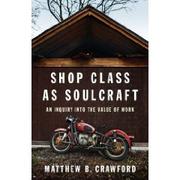
The essential starting point — a philosopher and motorcycle mechanic dismantles the myth that knowledge work is superior, making the intellectual and personal case for working with your hands. Establishes the core vocabulary and ethos for everything that follows.

A successful contractor speaks directly to career-changers, showing how trades careers build real wealth and life satisfaction. Read second to convert Crawford's philosophy into concrete personal motivation.
Mapping the Trades: Comparing Your Options
BeginnerUnderstand the landscape of specific skilled trades — electrical, plumbing, HVAC, carpentry, welding, and more — so the learner can identify which trade fits their aptitudes, interests, and local market.
▸ Study plan for this stage
Pace: 2–3 weeks, ~20–25 pages/day — "Welding for Dummies" by Steven Robert Farnsworth is roughly 350–400 pages; read it at a relaxed beginner pace, spending extra time on chapters covering different welding processes (MIG, TIG, Stick, Oxy-Acetylene) and career/safety sections rather than rushing through t
- The major welding processes (MIG/GMAW, TIG/GTAW, Stick/SMAW, Flux-Core, Oxy-Acetylene) and what distinguishes each in terms of skill demand, equipment cost, and typical applications
- The types of industries and employers that hire welders — manufacturing, construction, pipefitting, shipbuilding, aerospace, and custom fabrication — and how demand varies by region
- Physical and aptitude demands of welding: steady hands, spatial reasoning, comfort with heat and confined spaces, attention to detail, and physical stamina
- Core safety requirements: PPE (helmet, gloves, respirator), ventilation, fire hazards, and electrical safety — signaling the non-negotiable responsibility culture of the trades
- The metals welders commonly work with (steel, aluminum, stainless steel) and how material choice affects which process a welder specializes in
- Entry pathways into welding: community college programs, trade school certificates, apprenticeships, and AWS (American Welding Society) certifications
- Earning potential and career progression — from entry-level welder to certified welding inspector (CWI), welding engineer, or business owner
- How welding compares to adjacent trades (pipefitting, ironworking, sheet metal) so the learner can triangulate whether welding or a related trade is the better fit
- After reading about the different welding processes in 'Welding for Dummies,' which one or two processes seem most aligned with the industries or work environments that appeal to you, and why?
- What physical and personal aptitudes does Farnsworth highlight as important for welders, and how honestly do those match your own strengths and tolerances (e.g., heat, repetitive precision work, safety discipline)?
- What does the book reveal about the range of industries that employ welders? Which of those industries exists in your local job market?
- What certifications (such as AWS credentials) does Farnsworth mention, and what is the typical first certification a new welder would pursue?
- Based on the safety and equipment overview in the book, what is the realistic startup cost and physical environment of welding — and does that fit your circumstances?
- How does welding connect to or overlap with other skilled trades like pipefitting or ironworking, and does that broaden or narrow your interest in this career path?
- Trade Comparison Journal: After finishing each major section of 'Welding for Dummies,' write 3–5 sentences comparing what you just learned about welding to one other trade you're curious about (e.g., plumbing, electrical). By the end of the book you'll have a side-by-side personal comparison log.
- Local Market Research Sprint: Use your state's labor department website or the Bureau of Labor Statistics (BLS) Occupational Outlook Handbook to look up welder employment data for your region — number of jobs, median wage, and projected growth. Compare this to at least two other trades to ground the book's content in your actual geography.
- Aptitude Self-Assessment: Create a simple two-column list — 'Welding Demands' (drawn directly from Farnsworth's descriptions) vs. 'My Profile.' Rate yourself honestly on each demand (1–5). This surfaces whether welding is a strong fit or a starting point for exploring adjacent trades.
- Virtual or In-Person Shop Visit: Contact a local community college welding program, vocational school, or fabrication shop and ask for a tour or a 15-minute informational conversation with an instructor or working welder. Use the vocabulary and process names from the book to ask informed questions.
- Certification Roadmap Sketch: Using the AWS website alongside the certification information in 'Welding for Dummies,' map out the specific steps — program length, cost, and credential name — needed to become an entry-level certified welder in your area. This turns abstract career info into a concrete action plan.
- Process Video Library: For each welding process described in the book (MIG, TIG, Stick, Oxy-Acetylene), watch one short professional demonstration video online. Note one thing the book described well and one thing that only became clear when you saw it in action — reinforcing both the reading and your visual/kinesthetic understanding of the trade.
Next up: By building a detailed, ground-level understanding of welding's processes, demands, and career pathways through Farnsworth's book, the learner now has a concrete reference point — a fully fleshed-out trade profile — that makes it much easier to systematically evaluate and compare other skilled trades in subsequent stages of the curriculum.

Using one trade as a deep example, this accessible guide shows what hands-on skill-building actually looks like in practice — building intuition about the learning curve any trade demands.
Getting In: Apprenticeships, Licensing & Real Earnings
IntermediateUnderstand exactly how to enter a trade through apprenticeships, union and non-union pathways, licensing requirements by trade, and what journeymen and master tradespeople actually earn at each career stage.
Provides rich historical and structural context for the apprenticeship model, helping the reader understand what they are entering — the obligations, the culture, and the payoff of the master-apprentice relationship.
The Economics of Hands-On Work
IntermediateAnalyze the real financial picture of trades careers — income trajectories, business ownership potential, retirement, and how trades wages compare to degree-required white-collar jobs burdened by student debt.
▸ Study plan for this stage
Pace: 4–5 weeks total: Week 1–2 — "The Millionaire Next Door" (~30 pages/day, reading all chapters with a notebook for data points on PAW/UAW profiles and occupational breakdowns); Week 3–4 — "Rich Dad, Poor Dad" (~25 pages/day, slower pace to map each financial concept to a trades-career context); Week 5
- Prodigious Accumulator of Wealth (PAW) vs. Under Accumulator of Wealth (UAW): Stanley's data shows that many millionaires are self-employed tradespeople and small-business owners, NOT high-income professionals — reframe what a 'successful career' looks like financially.
- Income vs. Wealth distinction: High income (e.g., a doctor burdened with student debt and lifestyle inflation) does not equal high net worth — a plumber who lives below their means can out-accumulate a physician over a lifetime.
- The 'Big Hat, No Cattle' trap: Stanley's research on consumption habits reveals how degree-required white-collar workers often spend to signal status, eroding the very wealth their income could build — trades workers are statistically less prone to this.
- Offense vs. Defense in personal finance: Stanley frames wealth-building as playing great defense (frugality, low consumption) AND offense (self-employment income, business equity) — both levers are highly accessible in the trades.
- The Cashflow Quadrant mindset from Kiyosaki — Employee (E), Self-Employed (S), Business Owner (B), Investor (I): Trades careers offer a uniquely direct path from E → S → B, often within 5–10 years, without a degree gating the transition.
- Assets vs. Liabilities redefined (Kiyosaki): A trades business, a service van, tools, and rental properties bought with trades income are assets that generate cash flow — student loan debt is a liability that consumes it before wealth-building even begins.
- The 'Rat Race' and how trades workers can avoid it: Kiyosaki's rat race is driven by debt and lifestyle creep; a tradesperson who avoids student debt, earns journeyman wages early, and invests the difference starts the wealth clock years ahead of a degreed peer.
- Trades-specific income trajectory reality: Unlike salaried white-collar roles, skilled trades income can scale non-linearly — apprentice → journeyman → master → contractor/business owner, with business ownership unlocking the B and I quadrants Stanley and Kiyosaki both identify as the true wealth en
- According to Stanley's research in 'The Millionaire Next Door,' what occupational categories are overrepresented among American millionaires, and how do self-employed tradespeople fit that profile?
- How does Stanley define the PAW formula, and if a 35-year-old electrician earns $85,000/year, what would their 'expected' net worth be — and is that target realistic given a debt-free trades entry?
- Kiyosaki distinguishes between the E, S, B, and I quadrants. Map a typical trades career arc (apprentice → journeyman → master contractor → property investor) onto these four quadrants. At what stage does real wealth acceleration begin, and why?
- Both books argue that high income alone does not create wealth. Using evidence from both Stanley's data and Kiyosaki's asset/liability framework, explain how a licensed plumber earning $75,000 could out-accumulate a lawyer earning $150,000 over 20 years.
- Stanley's research shows that UAWs tend to prioritize consumption over investment. What specific consumption behaviors does he identify, and which of these traps are most relevant to a tradesperson who starts earning strong journeyman wages young?
- Kiyosaki argues that the school system trains people to be employees and never teaches financial literacy. How does this critique apply specifically to the trades vs. college debate, and what financial education gaps must a career-changer into the trades proactively fill?
- Net Worth Snapshot & PAW Calculation: Using Stanley's formula (Age × Pre-tax income ÷ 10), calculate your current expected net worth. Then project it forward at ages 35, 45, and 55 assuming a trades income trajectory (use real BLS wage data for your target trade). Compare the same projection for a college-educated peer starting with $50,000 in student debt.
- The Debt-Free Head Start Model: Build a simple spreadsheet comparing two career starters at age 22 — one enters a 4-year apprenticeship (earning ~$40K–$60K, zero tuition debt) and one enters a 4-year degree program (earning $0, accruing $50K debt). Model net worth at 10-year intervals to age 60, assuming identical savings rates and a 7% annual return. Let the numbers speak.
- Asset vs. Liability Audit (Kiyosaki Framework): List every financial item in your current life and classify it as an asset (puts money in your pocket) or a liability (takes money out). Then brainstorm 3 specific assets a trades business owner could acquire within 5 years of going independent — e.g., a second service vehicle leased to an employee, a rental property funded by contractor profits.
- Millionaire Next Door Profile Research: Find and interview (or research online) one self-employed tradesperson or trades business owner in your target field. Map their story onto Stanley's PAW profile: frugality habits, business equity, investment behavior. Write a one-page summary of how their financial life matches or diverges from Stanley's data.
- Quadrant Roadmap for Your Target Trade: Draw Kiyosaki's four quadrants on paper. Write a concrete, time-bound career plan that moves you from E → S → B in your chosen trade. Include: how long to journeyman status, estimated cost to go independent (tools, licensing, insurance, van), and what your first 'B-quadrant' hire would look like.
- Lifestyle Inflation Stress Test: Stanley documents that UAWs spend heavily on cars, clothes, and status goods. For one full week, track every discretionary purchase and tag it as 'wealth-building' or 'status spending.' Calculate what that status spending would compound to in 20 years at 8% annual return — then decide if it's worth it.
Next up: Having internalized the financial case that trades careers can generate serious, compounding wealth — especially through business ownership and early debt-free investing — the reader is now ready to explore the practical mechanics of actually entering a trade: how apprenticeships work, how to choose the right trade, and what the day-to-day realities of hands-on work look like on the ground.
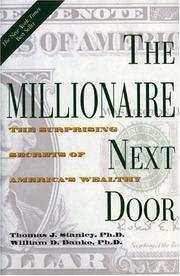
Classic data-driven study showing that tradespeople and small business owners — not high-salaried professionals — are disproportionately wealthy; reframes the financial calculus of a trades career compellingly.
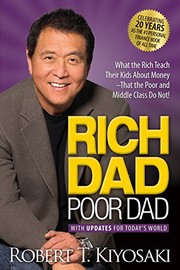
Widely read framework for thinking about assets, cash flow, and self-employment that applies directly to a tradesperson considering running their own contracting business — read after Stanley for a practical mindset layer.
Future-Proofing: AI, Automation & the Long Game
ExpertUnderstand why skilled trades are among the most automation-resistant careers, how to position yourself for long-term relevance, and how to think strategically about mastery, reputation, and business-building in a changing economy.
▸ Study plan for this stage
Pace: 4–5 weeks total: Week 1–2 — "The Second Machine Age" (~25–30 pages/day, including time to annotate charts/data sections); Week 3–4 — "So Good They Can't Ignore You" (~20–25 pages/day, journaling alongside each section); Week 5 — synthesis, review, and completing all exercises.
- The 'bounty and spread' framework from The Second Machine Age: automation creates enormous wealth but distributes it unevenly — understanding which side of that divide skilled tradespeople land on
- Brynjolfsson's distinction between routine vs. non-routine tasks and physical vs. cognitive work — and why trades sit at the intersection that machines struggle most to replicate (dexterity, judgment, unpredictable environments)
- Moravec's Paradox as applied to trades: what is trivially hard for humans (crawling under a house, reading a corroded pipe) remains extraordinarily hard for robots
- The 'race with the machine' mindset: rather than competing against automation, learning to use digital tools (BIM software, diagnostic tech, estimating apps) as force multipliers for your trade skills
- Cal Newport's core argument against 'follow your passion' — passion follows mastery, not the other way around — and why this reframes how a career-changer should think about the early grind in a trade
- Career Capital: the rare and valuable skills you accumulate through deliberate practice in your trade, and why this is your primary long-term asset in an automated economy
- The Craftsman Mindset vs. the Passion Mindset: showing up focused on what value you can offer (quality work, reliability, expertise) rather than what the job offers you emotionally
- Control and Mission as the payoff of career capital: how master tradespeople convert deep expertise into autonomy (their own business, specialist niche, premium pricing) and a compelling career mission
- According to Brynjolfsson, what specific characteristics make a job resistant to automation, and how do at least three skilled trades (e.g., plumbing, electrical, HVAC) satisfy those criteria?
- What does Newport mean by 'career capital,' and how would you describe the career capital you are currently building or plan to build in your chosen trade over the next five years?
- Brynjolfsson argues that workers who thrive will 'race with the machine' rather than against it — what does that look like concretely for a tradesperson (tools, certifications, business practices)?
- Newport warns that chasing control before you have enough career capital is a 'control trap' — what are the warning signs that a tradesperson is making this mistake too early (e.g., going independent too soon)?
- How do the concepts of deliberate practice (Newport) and the 'spread' of automation risk (Brynjolfsson) together inform a 10-year mastery roadmap for someone entering the trades today?
- Newport identifies 'adjacent to your current work' as the best place to find a career mission — what are two or three mission-level opportunities (niche specialization, green energy retrofits, training others, etc.) that sit at the frontier of your trade?
- Automation Audit: List every core task in your target trade (e.g., 20 tasks for an electrician). Using Brynjolfsson's routine/non-routine and physical/cognitive framework, rate each task's automation risk on a 1–5 scale. Identify the top 5 highest-value, lowest-risk tasks and make them your deliberate-practice priorities.
- Career Capital Inventory: Draw a T-chart. On one side list the rare and valuable skills you already possess (from any prior career); on the other, list the skills your trade demands at the journeyman and master level. Write a 1-page gap analysis and a concrete plan to close the three most important gaps in the next 12 months.
- Deliberate Practice Log (2-week commitment): Inspired by Newport's research on deliberate practice, identify one specific sub-skill in your trade that is just beyond your current comfort level. Practice it with focused intention for 30 minutes daily for two weeks, logging what you attempted, what failed, and what improved.
- Race-With-the-Machine Tech Scan: Research three digital tools actively used in your trade (e.g., Trimble for surveying, HVAC load-calculation software, drone inspection tools). Write a one-paragraph summary of each: what it does, what skill is required to use it well, and how mastering it would increase your career capital rather than replace you.
- Mission Brainstorm using Newport's 'Little Bets' method: Identify two or three frontier opportunities in your trade (emerging niches, underserved markets, green/sustainability applications). For each, define one small, low-risk experiment you could run in the next 90 days to test whether it could become a career mission (e.g., shadow a specialist, take a weekend course, bid on one niche job).
- Synthesis Essay — Your 10-Year Strategic Position: Write a 500-word personal strategy memo combining both books. Answer: (1) Why is your chosen trade automation-resistant? (2) What career capital will you build and by when? (3) What technology will you race with? (4) What is your long-game mission? This document becomes a living reference to revisit annually.
Next up: By internalizing why trades are structurally durable and how deliberate mastery compounds into autonomy and mission, the reader is now equipped to move from strategic thinking into the practical business and financial layer — understanding how to price expertise, build a client base, and structure a trade business for long-term wealth.
The authoritative economic analysis of which jobs automation threatens and which it cannot — reading this confirms with data why dexterous, judgment-intensive trades work is structurally AI-resistant.
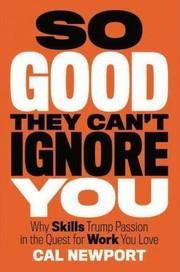
The ideal capstone: Newport's evidence-based argument for building rare, valuable skills (rather than following passion) maps perfectly onto the trades mastery path and gives the career-changer a long-term strategy for becoming exceptional.
Discussion
Keep reading
Paths that share books, cover the same subject, or open a related topic.