House flipping: an ordered reading list to buy, renovate, and profit
This curriculum takes a complete beginner from zero real estate knowledge to confidently executing profitable house flips. It builds in four logical stages: first establishing a real estate and financial mindset, then mastering the core mechanics of flipping, then diving deep into renovations and contractor management, and finally sharpening deal-finding and exit strategies for consistent profit.
Foundations: Mindset & Real Estate Basics
BeginnerBuild the financial mindset and basic real estate vocabulary needed to think like an investor before spending a dollar.
▸ Study plan for this stage
Pace: 4–5 weeks, ~40–50 pages/day. Week 1–2: "Rich Dad, Poor Dad" (approximately 336 pages); Week 3–5: "The Book on Investing in Real Estate with No (and Low) Money Down" (approximately 400 pages). Allow 2–3 days between books for reflection and concept consolidation.
- Assets vs. liabilities: understanding that real estate can be an asset that generates cash flow, not just a personal residence (liability)
- Cash flow mindset: the difference between income, expenses, and net cash flow, and why cash flow matters more than net worth
- The power of leverage: using other people's money (OPM) to control larger assets and amplify returns without proportional capital outlay
- Financial statements and accounting basics: reading balance sheets and income statements to evaluate real estate deals
- The investor's perspective: shifting from employee/consumer thinking to business owner and investor thinking
- Creative financing strategies: understanding conventional loans, seller financing, partnerships, and alternative funding sources for real estate
- Deal analysis fundamentals: calculating cap rates, cash-on-cash returns, and other metrics to evaluate whether a property is a good investment
- Risk management and due diligence: identifying red flags, understanding market conditions, and protecting yourself in real estate transactions
- What is the difference between an asset and a liability, and why does Robert Kiyosaki argue that your primary residence is typically a liability rather than an asset?
- Explain the concept of cash flow and why Kiyosaki emphasizes that 'cash flow is king' in real estate investing.
- How does leverage work in real estate, and what are the potential benefits and risks of using other people's money to finance a property purchase?
- What are at least three creative financing strategies Brandon Turner discusses for investing in real estate with little or no money down?
- Walk through the process of analyzing a real estate deal: what metrics would you calculate, and what would each one tell you about whether the property is a good investment?
- How does the investor's mindset differ from an employee's mindset, according to Kiyosaki, and how does this mindset shift apply to real estate investing?
- Create a personal balance sheet: list all your assets and liabilities, then categorize each as either generating cash flow or consuming cash flow. Reflect on how your current financial situation aligns with or diverges from investor thinking.
- Analyze three real properties in your local market (using Zillow, Redfin, or local MLS data): calculate the cap rate, cash-on-cash return, and cash flow for each, assuming a 20% down payment and standard financing. Identify which property would be the best investment based on these metrics.
- Interview a local real estate investor or wholesaler: ask them about their first deal, what financing strategy they used, and what they wish they'd known before starting. Document their answers and reflect on how their experience relates to concepts from the books.
- Create a 'deal evaluation checklist' based on Turner's frameworks: list the 10–15 questions you would ask or research before committing to a property purchase, including market analysis, property condition, financing options, and exit strategies.
- Role-play a negotiation: find a property listing and draft a creative offer that uses leverage (e.g., seller financing, partnership, or subject-to deal) instead of conventional financing. Write a one-page summary of your strategy and why it aligns with investor principles.
- Track your personal cash flow for one week: document every dollar in and out, categorize it, and calculate your net cash flow. Then project this forward annually and identify one area where you could improve cash flow (reduce expenses or increase income).
Next up: This stage establishes the mental framework and vocabulary required to evaluate real estate opportunities, positioning you to move into the next stage where you'll learn specific property types, market analysis, and deal-sourcing strategies to identify and execute your first investment.

Reframes how you think about money, assets, and investing — essential mental groundwork before tackling real estate tactics. Read this first to shed employee-mindset thinking.
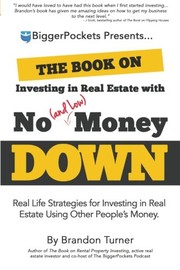
Introduces core real estate investing concepts and creative financing in plain language, giving beginners the vocabulary and confidence to understand how deals are funded.
Core Mechanics: How House Flipping Actually Works
BeginnerUnderstand the full house-flipping process end-to-end — finding deals, running numbers, and structuring a flip for profit.
▸ Study plan for this stage
Pace: 4–5 weeks, ~40–50 pages/day. Start with "The Book on Flipping Houses" (weeks 1–3, ~300 pages), then move to "The Book on Estimating Rehab Costs" (weeks 4–5, ~150 pages). Allocate 2–3 days per week for exercises and real-world application.
- The complete house-flipping workflow: sourcing deals, due diligence, cost estimation, financing, renovation execution, and exit strategy
- How to identify and evaluate potential flip properties using the 70% rule and other investment formulas
- Detailed cost estimation methodology: breaking down labor, materials, permits, and contingencies by trade and room
- The difference between cosmetic rehabs and structural/systems work, and how each impacts timeline and profitability
- How to build accurate rehab budgets that account for hidden costs, scope creep, and regional variations
- Financing strategies for flips: cash, hard money, partnerships, and how to structure deals for maximum returns
- The importance of contractor relationships, project management, and quality control during renovation
- Exit strategies: selling at market value, holding for rental income, or wholesaling to other investors
- Walk through the complete house-flipping process from finding a deal to closing the sale. What are the critical decision points?
- How do you use the 70% rule to evaluate whether a property is worth flipping? What other metrics should you consider?
- Explain the difference between a cosmetic rehab and a major structural rehab. How does this affect your timeline and budget?
- What are the main cost categories in a rehab estimate, and why is it important to break them down by trade (electrical, plumbing, etc.)?
- How do you account for contingencies and hidden costs when estimating rehab expenses? What percentage buffer is realistic?
- Describe three different financing options for a flip and the pros/cons of each. Which would you choose for your first flip and why?
- What role does contractor selection and project management play in keeping a flip profitable? How do you prevent scope creep?
- Find a real property listing in your target market and run the 70% rule calculation. Determine the after-repair value (ARV), estimate your costs, and decide whether it's a viable flip.
- Create a detailed rehab cost estimate for a sample property using the framework from 'The Book on Estimating Rehab Costs.' Break costs down by trade (kitchen, bathroom, flooring, HVAC, etc.) and include labor, materials, and a contingency buffer.
- Interview or survey 3–5 local contractors (electrician, plumber, general contractor) to gather real-world cost data for common rehab items in your area. Compare their estimates to the book's benchmarks.
- Build a simple financial model (spreadsheet) for a hypothetical flip: purchase price, ARV, rehab costs, holding costs, financing costs, and profit. Test how changes to each variable affect your bottom line.
- Analyze a completed flip in your market (from MLS history, investor forums, or local real estate news). Reverse-engineer the likely purchase price, rehab costs, and profit margin based on the sale price.
- Create a project timeline and scope of work for a sample property, identifying which tasks are critical path items and which can be done in parallel to minimize carrying costs.
Next up: This stage equips you with the mechanics and math of a successful flip; the next stage will likely deepen your expertise in either advanced financing strategies, scaling to multiple simultaneous projects, or mastering the legal and tax implications of house flipping.

The single most comprehensive beginner guide to flipping — covers the entire process from finding and buying to renovating and selling. Start here for the complete framework.

Read immediately after the flipping overview; this companion volume teaches you to build accurate renovation budgets line-by-line, the skill that makes or breaks a flip's profit.
Renovation Mastery: Contractors, Projects & Budgets
IntermediateManage contractors confidently, avoid costly renovation mistakes, and know which upgrades actually add resale value.
▸ Study plan for this stage
Pace: 4–5 weeks, ~40–50 pages/day (approximately 280–350 pages total across both books)
- Contractor vetting, hiring, and management best practices to protect your investment and timeline
- Scope of work documentation and detailed project specifications to prevent scope creep and disputes
- Budget creation, contingency planning, and cost control strategies for renovation projects
- Value-add renovations that increase resale price versus cosmetic upgrades with poor ROI
- Inspection protocols and identifying hidden problems before they become expensive surprises
- Project management fundamentals: scheduling, communication, and quality control on-site
- Financial analysis of fix-and-flip deals including accurate cost estimation and profit margins
- Legal and contractual protections when working with contractors and managing liability
- How do you identify and vet a reliable contractor, and what red flags should disqualify them from your project?
- What should a detailed scope of work document include, and why is it critical to have one in writing before work begins?
- How do you build a realistic renovation budget with contingencies, and what percentage buffer is recommended for unexpected costs?
- Which renovations typically add the most resale value (kitchen, bathrooms, etc.), and which upgrades often don't justify their cost?
- What is the process for inspecting a property before purchase and during renovation to catch problems early?
- How do you manage a contractor relationship to ensure quality work, stay on schedule, and handle disputes professionally?
- What financial metrics should you use to evaluate whether a flip deal is worth pursuing, and how do you calculate true profit?
- Create a detailed scope of work document for a hypothetical flip project (kitchen remodel, bathroom upgrade, or whole-house renovation), including materials, labor, timeline, and payment schedule
- Research and interview 3–5 local contractors in your market; document their qualifications, references, insurance, and pricing to practice vetting
- Build a renovation budget spreadsheet for a sample property, including line-item costs, labor, permits, contingencies (15–20%), and profit margin calculations
- Analyze 2–3 recent comparable sales in your target market; identify which upgrades were present in higher-priced homes and estimate their value contribution
- Conduct a mock property inspection using a checklist (foundation, roof, electrical, plumbing, HVAC, structural); document findings and estimate repair costs
- Draft a contractor agreement template covering scope, timeline, payment terms, change order process, and dispute resolution based on principles from the books
- Create a project timeline and communication plan for a renovation, including weekly check-ins, milestone payments, and quality checkpoints
Next up: This stage equips you with the operational and financial discipline to execute flips profitably; the next stage will likely focus on scaling your business, analyzing markets strategically, and building systems to manage multiple projects simultaneously.

Though focused on rentals, its deep coverage of managing contractors, handling repairs, and vetting workers directly applies to flip renovations — a critical skill set at this stage.
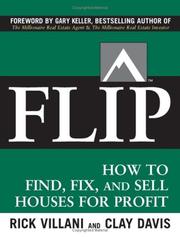
Provides a systematic, process-driven approach to the renovation phase, including project management workflows and how to keep rehabs on time and on budget.
Advanced Strategy: Deals, Markets & Scaling Profit
ExpertSource off-market deals consistently, analyze markets with precision, and build a repeatable system for flipping at scale.
▸ Study plan for this stage
Pace: 6–8 weeks, ~40–50 pages/day with 2–3 days per week for analysis and deal modeling
- The T Model of real estate investing: the importance of lead generation, lead conversion, and transaction management as the foundation for scaling
- Off-market deal sourcing through direct mail, bird dogs, wholesalers, and relationship networks rather than relying on MLS listings
- Market analysis frameworks: identifying high-appreciation markets, cash-flow markets, and emerging opportunity zones using demographic and economic data
- The 1% rule and cash-on-cash return metrics for evaluating deals at scale and filtering out low-performing properties
- Building a repeatable acquisition system with documented processes, checklists, and KPIs to remove emotion and inconsistency
- Leverage and financing strategies: using other people's money (OPM) to amplify returns while managing risk across a growing portfolio
- The importance of team building and delegation: assembling property managers, contractors, and acquisition specialists to scale beyond personal capacity
- What is the T Model and how does each component (lead generation, lead conversion, transaction management) directly impact your ability to scale a flipping business?
- Name at least three off-market deal sourcing channels and explain why they are more profitable than MLS deals for a scaling investor
- How do you use demographic and economic data to identify markets with the highest appreciation or cash-flow potential?
- What are the 1% rule and cash-on-cash return, and how would you use these metrics to reject a deal that looks attractive on the surface?
- Describe a repeatable acquisition system you would implement to consistently source and close deals without relying on your personal involvement in every step
- How can leverage and OPM strategies increase your returns while maintaining risk management across a multi-property portfolio?
- Build a lead generation action plan: design a direct mail campaign, identify 3–5 bird dog sources, and outline a wholesaler relationship strategy for your target market
- Conduct a market analysis for two different markets: gather demographic data, economic indicators, and appreciation/cash-flow trends, then rank them by investment potential
- Analyze 5–10 real or hypothetical deals using the 1% rule and cash-on-cash return metrics; document which deals you would reject and why
- Create a documented acquisition system: write out your process from lead intake to closing, including checklists, decision gates, and KPIs to track
- Model a financing scenario: calculate returns using different leverage ratios (60%, 70%, 80% LTV) on a sample flip to understand how OPM impacts your cash-on-cash return
- Interview or shadow a successful local investor who sources off-market deals; document their sourcing channels, market selection criteria, and scaling strategies
Next up: Mastering the T Model and repeatable deal-sourcing systems positions you to move into portfolio optimization and risk management, where you'll learn how to manage multiple properties simultaneously, structure your business entity for tax efficiency, and scale profitably without overextending capital or personal time.

Synthesizes how top investors think about markets, deal criteria, and building a scalable business — elevates your strategy from one-off flips to a sustainable investing model.
Discussion
Keep reading
Paths that share books, cover the same subject, or open a related topic.