Nonprofit management: an ordered reading list to lead mission-driven work
This four-stage curriculum takes a beginner from the core concepts of nonprofit management all the way through advanced leadership and lasting organizational impact. Each stage builds directly on the last — starting with the "why" and structure of nonprofits, moving through the critical operational skills of fundraising and grant writing, then into board governance and program strategy, and finally into the visionary leadership needed to sustain mission-driven organizations for the long haul.
Foundations: Understanding the Nonprofit World
BeginnerUnderstand what nonprofits are, how they are structured, and the core principles that distinguish mission-driven organizations from for-profit ones.
▸ Study plan for this stage
Pace: 4–5 weeks, ~25–30 pages/day (approximately 600–700 pages total across both books)
- The legal and tax-exempt status of nonprofits (501(c)(3) designation and its implications)
- Organizational structures: governance models, board roles, and staff hierarchies in mission-driven organizations
- The mission-driven distinction: how nonprofit values, accountability, and stakeholder relationships differ fundamentally from for-profit models
- The nonprofit sector's ecosystem: funding sources (grants, donations, earned revenue), stakeholder relationships, and interdependencies
- Core principles of nonprofit management: transparency, mission alignment, and stewardship of resources
- The role of governance and leadership in ensuring mission fidelity and organizational sustainability
- Sector-wide challenges: resource constraints, sustainability, and the tension between mission and operational efficiency
- What are the defining legal and tax characteristics of a nonprofit organization, and why does 501(c)(3) status matter?
- How do nonprofit governance structures and board responsibilities differ from for-profit corporate governance?
- What are the primary funding sources for nonprofits, and how do they shape organizational priorities and decision-making?
- How do mission-driven principles influence nonprofit management practices, organizational culture, and stakeholder relationships?
- What are the key structural and operational differences between nonprofits and for-profit organizations?
- What systemic challenges do nonprofits face in balancing mission fulfillment with financial sustainability?
- Create a comparative matrix: list 3–4 nonprofits and 3–4 for-profit companies, then map their governance structures, funding sources, stakeholder relationships, and mission statements to identify key differences
- Research and document the 501(c)(3) status of a local nonprofit: find their IRS Form 990, identify their stated mission, revenue sources, and board composition; write a 1–2 page analysis of how legal status shapes their operations
- Interview or survey 2–3 nonprofit staff members or board members about their organization's mission, funding challenges, and how mission guides daily decisions; synthesize findings in a brief report
- Map the nonprofit ecosystem for a specific cause area (e.g., education, health, environment): identify 5–6 organizations, their funding relationships, partnerships, and how they collectively address the issue
- Draft a mission statement and governance charter for a hypothetical nonprofit addressing a social problem of your choice; justify structural and leadership decisions based on concepts from the readings
- Analyze a nonprofit's annual report or strategic plan: identify how mission is reflected in budget allocation, program priorities, and stakeholder communication; note tensions between mission and financial constraints
Next up: This foundational understanding of nonprofit structure, governance, and mission-driven principles provides the essential framework for the next stage, which will dive deeper into strategic planning, financial management, and operational execution—the practical tools needed to lead and sustain mission-driven organizations.

A comprehensive, accessible primer covering every major function of a nonprofit — from governance to finance to marketing — making it the ideal first read to build a complete mental map of the sector.
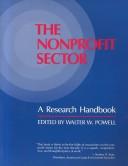
Grounds the reader in the history, theory, and social role of nonprofits, providing the intellectual context needed before diving into operational skills.
Fundraising & Grant Writing: Securing the Mission
BeginnerDevelop practical skills in individual donor fundraising, relationship-building, and grant writing — the financial lifeblood of any nonprofit.
▸ Study plan for this stage
Pace: 8–10 weeks, ~25–30 pages/day, with 1–2 weeks per book plus integration time
- Relationship-centered fundraising: building authentic, long-term donor relationships based on shared values rather than transactional asks
- The psychology and mechanics of asking: overcoming fear, timing, framing, and the specific language that moves donors to give
- Individual donor cultivation pipeline: prospect identification, research, engagement, solicitation, and stewardship cycles
- Grant writing fundamentals: understanding funder priorities, crafting compelling narratives, and aligning organizational needs with foundation interests
- Proposal structure and components: executive summaries, needs statements, goals/objectives, evaluation plans, and budgets that funders expect
- Diversified revenue strategy: balancing individual giving, grants, and other income streams to reduce dependency and build financial resilience
- Ethical fundraising practices: transparency, donor respect, and accountability as core nonprofit values
- What is the difference between transactional and relationship-centered fundraising, and why does Kim Klein argue the latter is more sustainable?
- What are the key steps in Laura Fredricks' asking framework, and how do you overcome the emotional barriers that prevent fundraisers from making the ask?
- How do you identify, research, and qualify a prospect before approaching them for a gift?
- What are the essential components of a grant proposal, and how does each section serve the funder's decision-making process?
- How do you align your nonprofit's mission and needs with a foundation's funding priorities and guidelines?
- What is the role of stewardship in the fundraising cycle, and how does it differ from the solicitation phase?
- Create a prospect profile for a real or hypothetical individual donor, including their capacity, interests, connections, and giving history; then draft a 3-month cultivation plan based on Klein's relationship-building principles
- Role-play the ask with a peer: practice Fredricks' framework by making a specific, time-bound request for a gift amount, then debrief on what felt natural or uncomfortable
- Research a foundation using their website and IRS Form 990-PF; write a 1-page analysis of their funding priorities, recent grants, and how your (or a sample) nonprofit aligns with their mission
- Draft a complete grant proposal (5–8 pages) for a real or fictional nonprofit using Geever's structure: executive summary, needs statement, goals/objectives, evaluation plan, and budget narrative
- Audit your organization's (or a sample nonprofit's) current donor database and create a tiered prospect list (major donors, mid-level, annual fund) with next steps for each segment
- Write a stewardship plan for three donors at different giving levels, including thank-you timelines, impact updates, and re-engagement strategies
Next up: This stage equips you with the core revenue-generation skills that sustain nonprofit operations; the next stage will build on this foundation by exploring how to manage and scale these fundraising efforts, measure their effectiveness, and integrate them into broader organizational strategy and financial planning.
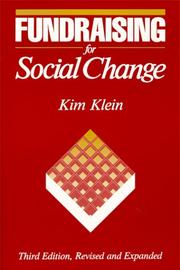
The definitive grassroots fundraising guide; Klein demystifies asking for money and builds the reader's confidence with individual donors before moving to institutional funders.
Focuses specifically on the art and science of making the ask — a skill that directly extends Klein's relationship-building framework into concrete conversations.
The gold-standard grant writing manual published by the Foundation Center; reading it after mastering individual fundraising shows how institutional funder relationships mirror donor relationships at scale.
Governance & Strategy: Building a High-Performing Organization
IntermediateLearn how to build and lead an effective board, design impactful programs, and align organizational strategy with mission.
▸ Study plan for this stage
Pace: 8–10 weeks, ~25–30 pages/day (approximately 3 weeks per book with overlap for reflection and integration)
- The three modes of governance (fiduciary, strategic, and generative) and when to deploy each
- Board composition, recruitment, and development practices that drive organizational performance
- Strategic planning frameworks that align mission, market conditions, and competitive advantage
- Program design and portfolio management to maximize social impact and sustainability
- Theory of change and logic models as tools for clarifying organizational impact
- Key performance indicators (KPIs) and metrics that matter for nonprofit accountability and learning
- Network effects and collaborative measurement in the nonprofit ecosystem
- Data-driven decision-making and building a culture of evaluation within organizations
- What are the three modes of governance described in 'Governance As Leadership,' and how do you know when your board should shift between them?
- How does David La Piana define nonprofit strategy, and what are the core elements of his strategy revolution framework?
- What is a theory of change, and how does it differ from a logic model? Why does each matter for program design?
- According to 'Measuring the Networked Nonprofit,' what are the key differences between traditional nonprofit metrics and network-based measurement approaches?
- How would you design a board recruitment and development process that supports both fiduciary oversight and generative thinking?
- What metrics would you select to measure success for a specific nonprofit program, and how would you justify those choices to stakeholders?
- Map your organization's (or a case study organization's) current board against the three governance modes—identify which mode dominates and design a transition plan to strengthen the underutilized modes
- Conduct a board composition audit: assess skills, diversity, networks, and giving capacity against organizational strategy; create a targeted recruitment profile
- Develop a theory of change and logic model for a real or hypothetical nonprofit program; test it with stakeholders and iterate based on feedback
- Create a strategic plan using La Piana's framework: define competitive advantage, identify strategic priorities, and align resource allocation
- Build a balanced scorecard or KPI dashboard for a nonprofit, including financial health, program outcomes, stakeholder satisfaction, and organizational capacity metrics
- Design a network measurement approach for a collaborative initiative: identify shared outcomes, agree on data collection methods, and create a shared learning dashboard
Next up: This stage equips you with the governance structures, strategic frameworks, and measurement systems needed to lead high-performing organizations; the next stage will deepen your ability to execute these strategies through financial management, fundraising, and stakeholder engagement.

Reframes board governance from a compliance exercise into a strategic partnership between staff and trustees — essential reading before tackling organizational strategy.

Offers a practical, real-time approach to nonprofit strategy that replaces the outdated annual planning cycle, building directly on the governance foundation established in the previous book.

Introduces data-driven program evaluation and social media strategy, teaching readers how to measure whether programs are actually achieving mission — a critical bridge to advanced leadership.
Leadership & Lasting Impact: Leading for the Long Game
ExpertSynthesize everything into a leadership philosophy capable of sustaining organizational culture, navigating change, and driving lasting social impact.
▸ Study plan for this stage
Pace: 4–5 weeks, ~25–30 pages/day. Week 1–2: "Forces for Good" (approx. 250 pages); Week 2–3: transition and reflection (~1 week); Week 3–5: "The Advantage" (approx. 300 pages). Allocate 2–3 days for synthesis and capstone work.
- The five practices of high-impact nonprofits: adaptive leadership, networks and partnerships, evidence-based decision-making, culture of learning, and long-term vision (from Forces for Good)
- Organizational health as the foundation for strategy and impact—the four disciplines of healthy organizations: clarity, communication, competence, and accountability (from The Advantage)
- How to build and sustain a culture of continuous learning and adaptation in mission-driven organizations
- The role of the leader in modeling vulnerability, fostering psychological safety, and creating conditions for honest dialogue
- Translating external social impact goals into internal organizational systems and behaviors
- Navigating the tension between short-term results and long-term systemic change
- Building coalitions and networks as a leadership strategy for multiplying impact beyond organizational boundaries
- What are the five practices that distinguish high-impact nonprofits from their peers, and how do they work together to create lasting social change?
- How does organizational health (clarity, communication, competence, accountability) directly enable or constrain a nonprofit's ability to achieve its mission?
- What does adaptive leadership look like in practice, and how can a nonprofit leader cultivate it within their organization?
- How can a nonprofit leader use networks and partnerships strategically to amplify impact beyond what the organization could achieve alone?
- What specific systems and behaviors must a leader embed in the organization to sustain a culture of learning and evidence-based decision-making?
- How do you balance the pressure for immediate results with the need to invest in long-term organizational health and systemic change?
- Conduct a self-assessment of your organization (or a case study nonprofit) against the five practices from Forces for Good. Score each practice 1–5 and identify the top two gaps. Write a 2–3 page action plan to address the weakest practice.
- Map your organization's current communication patterns and decision-making processes. Identify where clarity is missing, where communication breaks down, and where accountability is weak. Design one intervention for each of Lencioni's four disciplines.
- Interview 3–5 leaders or staff members from your organization using open-ended questions about organizational culture, learning, and change. Synthesize findings into a brief report on cultural strengths and vulnerabilities.
- Identify a major external partnership or network your organization is part of (or could join). Write a strategy document outlining how this partnership could amplify your impact, including roles, shared metrics, and governance.
- Write a personal leadership philosophy statement (1–2 pages) that integrates the five practices and four disciplines. Include specific commitments about how you will model vulnerability, foster psychological safety, and drive organizational health.
- Design a 90-day organizational health sprint: select one of Lencioni's four disciplines, define the current state, set a clear goal, and outline weekly actions to improve it. Include how you'll measure progress and communicate it to the team.
Next up: This stage equips you with a coherent leadership philosophy grounded in both external impact (the five practices) and internal organizational health (the four disciplines), positioning you to lead complex, adaptive organizations through sustained change—the foundation for any advanced work in scaling impact, governance, or organizational transformation.

Studies the practices of the most high-impact nonprofits in America, revealing that lasting change requires working beyond organizational walls — a paradigm shift for emerging leaders.
Argues that organizational health — clarity, trust, and cohesive leadership — is the ultimate competitive advantage, providing a leadership operating system applicable directly to nonprofit teams.
Discussion
Keep reading
Paths that share books, cover the same subject, or open a related topic.