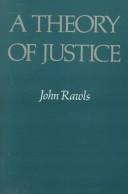
A theory of justice
John Rawls · 1971 · 607 pages
As an Amazon Associate we earn from qualifying purchases. Some book links are affiliate links; you pay the same price and we may earn a small commission.
About this book
The principles of justice Rawls set forth in this book are those that free and rational people would accept in an initial position of equality. In this hypothetical situation, which corresponds to the state of nature in social contract theory, no one knows his or her place in society; his or her class position or social status; his or her fortune in the distribution of natural assets and abilities; his or her intelligence, strength, and the like; or even his or her conception of the good. Thus, deliberating behind a veil of ignorance, people determine their rights and duties. The first section of A Theory of Justice addresses objections to the theory and discusses alternative positions, especially utilitarianism. Rawls then applies his theory to the philosophical basis of constitutional liberties, the problem of distributive justice, and the grounds and limits of political duty and obligation. He includes here a discussion of civil disobedience and conscientious objection. Finally, he connects his theory of justice with a doctrine of the good and of moral development. This enables him to formulate a conception of society as a social union of social unions, and to use his theory of justice to explain the values of community. Since its first appearance in 1971, A Theory of Justice has been continuously taught and debated, and translated into twenty-four languages. This revised edition includes changes, discussed in the preface, which Rawls considered to be significant, especial
Appears in these reading paths

The Best Books on Liberalism

The Best Books to Understand John Rawls


How to learn Philosophy

Political philosophy: the ideas behind power
Related reading guides
Reader reviews
Ratings and notes from readers — tagged with how deep into the subject they were.
Loading reviews…