Philip Roth Reading Order: Where to Start
This curriculum moves through Philip Roth's major fictional worlds in roughly the order they reward a serious reader: starting with the explosive, accessible entry point that made him famous, then tracing the Zuckerman alter-ego across decades, then tackling the dense, historically ambitious American Trilogy, and finally arriving at the stripped-down late masterworks where Roth confronts mortality and legacy. Each stage builds the thematic and stylistic fluency needed for the next.
The Entry Point
IntermediateGet hooked on Roth's voice — his confessional energy, dark comedy, and obsession with desire, guilt, and Jewish-American identity — before committing to longer arcs.
▸ Study plan for this stage
Pace: 2–3 weeks, ~25–30 pages/day — the novel is roughly 275 pages and reads fast thanks to its monologue-driven, propulsive voice; allow extra days to re-read key passages and journal
- The confessional monologue as literary form: Portnoy's Complaint is structured as a psychoanalytic session, blurring the line between therapy, stand-up comedy, and self-indictment — understand how Roth uses the single-speaker monologue to create intimacy, unreliability, and dark humor simultaneously
- The Jewish-American identity crisis: Roth dramatizes the tension between assimilation and ethnic loyalty, between the suffocating warmth of the Jewish family and the seductive freedom of mainstream American life — trace how Alex Portnoy experiences Jewishness as both a source of pride and an unbeara
- The overbearing mother as cultural archetype: Sophie Portnoy is one of American literature's most iconic maternal figures — analyze how Roth uses her as both a comic device and a serious psychological force that shapes Alex's guilt, sexuality, and self-image
- Desire, guilt, and the body: The novel's frank, often shocking treatment of sexuality is inseparable from its moral and psychological argument — Roth presents desire not as liberation but as another arena in which guilt and self-sabotage play out
- Dark comedy as critique: Roth's humor is never merely funny — it is the vehicle for social criticism, self-exposure, and pathos; study how jokes and grotesque exaggeration carry the novel's most serious emotional weight
- The unreliable narrator and self-awareness: Alex knows he is performing, contradicting himself, and possibly lying — examine how Roth builds a narrator who is simultaneously his own analyst, defendant, and prosecutor
- The 'complaint' as form and theme: The title operates on multiple levels (a medical diagnosis, a grievance, a lament) — consider how the act of complaining structures the entire novel and what it reveals about Alex's relationship to agency and victimhood
- How does the psychoanalytic framing (Alex speaking to Dr. Spielvogel) shape the reader's trust in Alex as a narrator, and what does Roth gain by never letting the analyst speak until the final line?
- In what specific ways does Roth portray the Jewish family — and Sophie in particular — as both loving and psychologically imprisoning? Where does the novel invite sympathy for Sophie versus casting her as villain?
- How does Alex's sexuality function as an act of rebellion, and why does that rebellion consistently fail to deliver the freedom he seeks? What does this suggest about the novel's view of desire?
- Where is Portnoy's Complaint genuinely funny, and where does the comedy tip into something darker or more uncomfortable? What is Roth arguing by making these two registers inseparable?
- How does Alex's Jewishness intersect with his experience of American identity — does he want to escape his heritage, reclaim it, or something more complicated?
- What is the significance of the novel's final word, 'Now vee may perhaps to begin'? How does this single line reframe everything that came before it?
- Voice immersion read-aloud: Choose any two pages of Alex's monologue and read them aloud, paying attention to rhythm, interruption, and escalation — then write one paragraph in Roth's confessional style about a moment of personal embarrassment or guilt, imitating his run-on energy and self-interruption
- Character dossier — Sophie Portnoy: Collect every scene or passage in which Sophie appears or is described, and write a one-page analysis arguing whether she is primarily a comic figure, a tragic one, or both, using specific textual evidence
- Complaint taxonomy: Go through the novel and categorize Alex's complaints into at least four buckets (e.g., complaints about his mother, about being Jewish, about women, about himself) — then write a short reflection on which category reveals the most about his psychology
- The joke autopsy: Select three moments of dark humor that made you laugh or cringe, and for each one write 2–3 sentences explaining what serious emotional or social truth the joke is smuggling in — practice seeing Roth's comedy as argument
- Comparative identity journal: After finishing the novel, write a one-page personal reflection on a cultural, familial, or social identity you have felt simultaneously proud of and burdened by — use Alex's ambivalence as a model for honest self-examination
- Final-line close reading: Write a 300-word close reading of the novel's last line alone — who is speaking, what the shift in register means, what it implies about everything Alex has said, and why Roth chose to end on a beginning
Next up: Portnoy's Complaint establishes Roth's core obsessions and his wildly intimate voice in a single, concentrated blast — mastering how he uses the confessional mode, Jewish-American tension, and dark comedy here gives you the interpretive toolkit needed to follow those same threads as they deepen, fracture, and evolve across his longer and more structurally ambitious works.
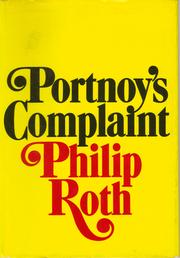
The ideal entry novel: a single volcanic monologue that announces every major Roth theme — sex, mothers, Jewishness, self-laceration, America — in the most entertaining and accessible form he ever found. Reading this first calibrates your ear for his comedy and fury.
The Zuckerman Novels
IntermediateFollow Nathan Zuckerman, Roth's great alter-ego, from his scandalous debut through middle age, learning how Roth uses the novelist-within-the-novel to interrogate fame, art, and the cost of imagination.
▸ Study plan for this stage
Pace: 10–12 weeks total, reading roughly 25–30 pages per day: Week 1–2 for The Ghost Writer (~180 pp), Weeks 3–4 for Zuckerman Unbound (~225 pp), Weeks 5–7 for The Anatomy Lesson (~290 pp), and Weeks 8–12 for The Counterlife (~325 pp), with one buffer day per book for journaling and reflection.
- The alter-ego and autobiographical fiction: how Roth constructs Nathan Zuckerman as a semi-permeable membrane between author and self, neither purely Roth nor purely invented
- The novelist as subject: each book treats the act of writing — its ambitions, costs, and moral hazards — as its own dramatic content, not merely a backdrop
- Fame, scandal, and the Jewish family: Zuckerman Unbound dramatizes how literary celebrity ruptures ethnic and familial loyalty, asking whether art justifies the betrayal of one's origins
- Suffering and vocation in The Anatomy Lesson: physical pain becomes a metaphor for creative crisis, forcing the question of whether the artist can survive the loss of his art
- Metafiction and narrative self-consciousness: The Counterlife systematically dismantles the boundary between story and storyteller by killing and resurrecting characters across contradictory chapters, exposing fiction-making as the novel's true subject
- Jewishness as contested identity: across all four books, Roth stages arguments about assimilation, Israel, diaspora, and anti-Semitism — never resolving them, always dramatizing the conflict
- The unreliable, self-serving imagination: Zuckerman's tendency to fictionalise everyone around him is both his gift and his ethical liability, a theme that escalates from book to book
- Roth's use of dialectical structure: characters rarely win arguments; instead, Roth gives equal rhetorical force to opposing positions, making the reader do the moral adjudication
- In The Ghost Writer, young Zuckerman imagines that Amy Bellette is Anne Frank — what does this fantasy reveal about his anxieties over Jewish identity, literary ambition, and the ethics of turning suffering into art?
- How does Zuckerman Unbound trace the specific social and psychological damage caused by the success of Carnovsky, and what does Roth suggest about the relationship between artistic freedom and communal responsibility?
- The Anatomy Lesson presents Zuckerman's writer's block and chronic pain as intertwined afflictions — how does Roth use the body as a site of meaning, and what does Zuckerman's plan to become a doctor symbolize about his crisis of vocation?
- The Counterlife is structured around mutually exclusive versions of events — what is Roth arguing about the nature of selfhood and narrative by refusing to let any single version of Nathan or Henry Zuckerman stand as definitive?
- Across all four novels, how does Roth develop the idea that the imagination is both morally dangerous and humanly necessary — and does Zuckerman ever arrive at a stable ethical position regarding his use of real people as raw material?
- How does Roth's treatment of Israel in The Counterlife complicate or deepen the questions about Jewish identity first raised in The Ghost Writer?
- Close-reading log: After each book, select one scene where Zuckerman explicitly thinks about or defends his writing. Write a one-page analysis of how Roth frames the ethics of fiction-making in that scene — track how this framing shifts across all four books.
- Character-mapping exercise: Draw a diagram of every real or semi-real figure Zuckerman fictionalizes or projects onto (E.I. Lonoff, Amy Bellette/Anne Frank, his father, Milton Appel, Henry in The Counterlife). Annotate each node with what Zuckerman's projection reveals about his own fears and desires rather than the actual person.
- Dialectical debate journal: The Counterlife is full of set-piece arguments (about Israel, circumcision, assimilation). Choose one debate and write a 500-word essay that steelmans both sides as Roth presents them, then state your own verdict and defend it.
- Structural comparison: Create a side-by-side outline of the narrative structure of The Ghost Writer (linear, classical) versus The Counterlife (fragmented, self-canceling). Write a paragraph explaining what each structure enacts thematically — what can the later form do that the earlier one cannot?
- Intertextual reading: Research the real critical reception of Portnoy's Complaint (the novel that stands in for Carnovsky). Write a one-page reflection on how knowing that context changes your reading of Zuckerman Unbound — where does Roth seem to be settling scores, and where does he seem to be genuinely interrogating himself?
- Cumulative essay: After finishing all four books, write a 750–1000 word essay answering the question: 'Does Nathan Zuckerman grow morally across these four novels, or does Roth deliberately deny him growth?' Use at least one specific scene from each book as evidence.
Next up: Mastering the Zuckerman novels — especially The Counterlife's radical metafictional architecture — equips the reader to tackle Roth's later, more explicitly autobiographical work, where the boundary between Philip Roth the character and Philip Roth the author collapses even further, and the themes of aging, mortality, and American history take center stage.

The first and most elegant Zuckerman novel; a young writer visits his literary hero and conjures a fantasy about Anne Frank. Read first to meet Zuckerman at his most idealistic and to see Roth's mature prose style at its most compressed.
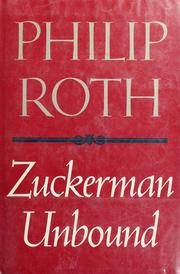
Zuckerman is now famous and hated after a Portnoy-like novel — a direct meta-commentary on Roth's own life. Follows naturally from The Ghost Writer and deepens the theme of the writer as public target.

A middle-aged Zuckerman in physical and creative crisis; the darkest and most formally daring of the early Zuckerman books, best appreciated after the first two have established the character's arc.
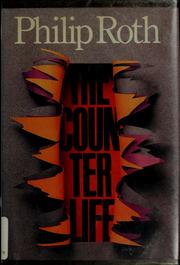
Roth's most structurally radical novel: Zuckerman and his brother live out contradictory, mutually exclusive life-stories across five chapters. Read last in this stage because it demands — and rewards — full familiarity with the Zuckerman persona.
The American Trilogy
ExpertEngage Roth's most historically ambitious work — three interlocking novels that reread twentieth-century American history through individual catastrophe, requiring the thematic stamina built in earlier stages.
▸ Study plan for this stage
Pace: 10–12 weeks total (~25–30 pages/day, 5 days/week): Weeks 1–4 for American Pastoral (~423 pp), Weeks 5–8 for I Married a Communist (~323 pp, slightly lighter pace to allow deeper political annotation), Weeks 9–12 for The Human Stain (~361 pp, with the final week reserved for cross-trilogy synthesis a
- The pastoral myth and its destruction — in American Pastoral, the Swede's idealized American Dream life is systematically dismantled, forcing a reckoning with the illusion of innocence at the heart of national identity
- Historical catastrophe as personal ruin — each novel anchors a specific American trauma (1960s radicalism/Vietnam in American Pastoral, McCarthyism in I Married a Communist, the Clinton-era culture wars in The Human Stain) inside one individual's downfall, arguing that history is always intimate
- The unreliable narrator and the limits of knowing — Nathan Zuckerman serves as the frame narrator across all three novels, and his speculative, imaginative reconstruction of others' lives foregrounds the impossibility of fully knowing another person or a historical moment
- Identity as performance and self-invention — the Swede constructs a model-American persona, Ira Ringold reinvents himself as a radio hero of the left, and Coleman Silk passes as white, each enacting the quintessentially American fantasy of self-creation and each being destroyed by it
- The betrayer and the betrayed — each novel turns on an act of devastating betrayal (Merry's bombing, Eve Frame's HUAC letter, Faunia/Delphine's exposure of Coleman), linking private treachery to the public mechanisms of political and social persecution
- American idealism and its discontents — Roth treats idealism — political, domestic, racial — not as virtue but as a dangerous blindness that leaves its adherents catastrophically unprepared for reality's complexity
- Zuckerman as historiographer — across the trilogy, Zuckerman's aging, ill, and increasingly isolated perspective raises meta-fictional questions about who gets to narrate history, whose version survives, and what storytelling costs the teller
- The body, mortality, and American masculinity — physical vitality (the Swede's athletic grace, Ira's imposing size, Coleman's virility) is established only to be ravaged, linking bodily decline to the decline of a certain vision of American manhood and possibility
- How does Roth use the structure of the pastoral — the retreat from complexity into an idealized, simplified world — as both a narrative form and a critique of American self-delusion across all three novels, and where does each protagonist's 'pastoral' specifically reside?
- In I Married a Communist, the novel is narrated retrospectively by Murray Ringold to an aging Zuckerman; how does this double remove (Murray's memory filtered through Zuckerman's reconstruction) shape what we can trust about Ira's story, and how does it mirror the distortions of the McCarthyite period itself?
- Coleman Silk in The Human Stain chooses to pass as white and constructs an entirely new identity, yet is ultimately destroyed by a false accusation of racism; how does Roth use this irony to interrogate the relationship between America's racial history and the individual's capacity for self-determination?
- Each trilogy novel features a woman whose radicalism or agency is portrayed as catastrophically destructive (Merry Levov, Eve Frame, Delphine Roux); how does Roth frame female agency in these novels, and what is the most defensible reading of his intent — misogyny, tragic irony, or something more ambiguous?
- How does the specific historical moment assigned to each novel (late 1960s, late 1940s–early 1950s, late 1990s) function not merely as backdrop but as an active force that makes each protagonist's particular form of self-invention impossible to sustain?
- By the end of The Human Stain, Nathan Zuckerman has appeared in all three novels as a framing consciousness; how has his role and his own situation evolved across the trilogy, and what does Roth suggest about the relationship between the act of narration and the narrator's own need for meaning?
- Trilogy timeline map — create a single annotated timeline spanning 1945–2000 and, as you finish each novel, plot the key biographical and historical events of that book onto it; at the end of the trilogy, look for structural echoes (e.g., moments of public accusation, moments of physical peak, moments of catastrophic fall) to see how Roth choreographs the three arcs against each other
- Close-reading journal on the pastoral opening — each novel opens by establishing its protagonist at or near the height of his powers; write a 500-word close reading of the opening pages of each book, tracking the specific language Roth uses to construct the illusion of success, then annotate how early the cracks appear
- Zuckerman reliability audit — keep a running log of every moment in all three novels where Zuckerman explicitly admits he is guessing, imagining, or reconstructing; at the end, write a one-page argument for how reliable or unreliable you find him as a historical witness, using specific passages as evidence
- Comparative betrayal analysis — for each novel, identify the central act of betrayal, the betrayer, the betrayed, and the public mechanism that amplifies private betrayal into public destruction (the media, HUAC, campus politics); write a comparative paragraph arguing which betrayal Roth treats with the most moral complexity and why
- Rewrite a scene from the accused's perspective — choose one scene in any of the three novels where a protagonist is being judged, exposed, or condemned (e.g., the Swede confronting Merry, Ira being named by Eve, Coleman facing the racism accusation) and rewrite it in 400–600 words from the perspective of the accuser, using evidence from the text to make their case as sympathetic as possible; then
- Synthesis essay — after completing all three novels, write a 1,000-word essay responding to this prompt: 'Roth's American Trilogy argues that the American Dream is not merely unattainable but actively dangerous. Using specific evidence from all three novels, evaluate this claim.'
Next up: Mastering the trilogy's interlocking historical vision and Zuckerman's meta-fictional role as unreliable narrator equips the reader to engage Roth's more explicitly autobiographical and formally experimental late work, where the boundary between the author, his narrators, and his life story collapses even further.
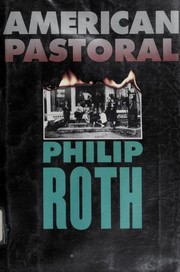
The first and most celebrated of the trilogy; the Swede's pastoral American dream is destroyed by the 1960s. Start here because its Zuckerman frame connects directly to the earlier stage and its realism is the most accessible of the three.
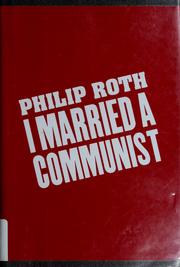
Moves the historical lens to McCarthyism and the 1950s Red Scare. Read second; its radio-drama world and theme of public betrayal contrast productively with the suburban tragedy of American Pastoral.
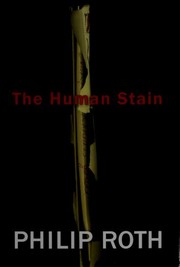
The trilogy's capstone, set during the Clinton impeachment, exploring race, identity, and the American compulsion to purify. The most complex of the three and best read last, when the trilogy's tragic rhythm is fully felt.
The Late Work
ExpertExperience Roth's final creative phase — shorter, starker, and more personal — where he strips away the alter-egos and confronts aging, dying, and what a life in fiction means.
▸ Study plan for this stage
Pace: 6–7 weeks total: Week 1–2 — "Everyman" (~180 pp., ~25 pp./day, re-read the opening funeral scene before moving on); Week 3–4 — "The Dying Animal" (~156 pp., ~22 pp./day, pause mid-book to journal on Kepesh's self-justifications); Week 5–6 — "Nemesis" (~280 pp., ~35 pp./day); Week 7 — synthesis: comp
- The body as fate: all three novels treat physical deterioration — cardiac disease, erotic obsession, polio — as the inescapable condition that exposes character and strips away illusion
- Stripping of the alter-ego: unlike the Zuckerman or Kepesh cycles, 'Everyman' and 'Nemesis' use unnamed or thinly named protagonists, signaling Roth's move toward a more nakedly confessional register
- Mortality as narrative engine: each book opens in or near death (the funeral in 'Everyman', the retrospective grief in 'The Dying Animal', the epidemic dread in 'Nemesis') and works backward or inward, making dying the structural spine rather than a climax
- Guilt, responsibility, and self-deception: Kepesh in 'The Dying Animal' and Bucky Cantor in 'Nemesis' are both men who construct elaborate self-narratives to manage guilt — Roth interrogates how much self-knowledge is possible
- The unreliable retrospective narrator: 'The Dying Animal' is told entirely in Kepesh's self-serving monologue; 'Nemesis' deploys a late-revealed narrator who reframes everything — both demand active readerly skepticism
- Roth's late minimalism: sentence-level compression, shorter chapters, and the near-total elimination of comic digression mark a deliberate stylistic late turn — compare prose texture across the three books
- American idealism under siege: 'Nemesis' explicitly frames Bucky's story as the destruction of a certain mid-century American innocence and physical confidence, connecting the personal to the historical
- What a life in fiction means: taken together the three novels read as Roth meditating on legacy, regret, and whether storytelling can redeem or only record a life
- In 'Everyman', the protagonist's life is reconstructed through the frame of his own funeral — how does this structural choice shape the reader's sympathy, and what does Roth gain by leaving the man unnamed?
- How does Kepesh's monologue in 'The Dying Animal' function as both confession and self-exculpation, and at what moments does Roth allow the reader to see through the narrator's rationalizations?
- In 'Nemesis', the late revelation of Arnie Mesnikoff as narrator fundamentally recontextualizes Bucky's story — what does this narrative device argue about the limits of self-knowledge and the role of the witness?
- All three books center on male bodies in crisis (failing heart, erotic compulsion, paralytic disease) — how does Roth use the specific physical condition in each novel as a moral and philosophical lens rather than merely a medical one?
- How does Roth's prose style in these three late novels differ from the expansive, digressive mode of earlier work, and what thematic purposes does the compression serve?
- Taken as a triptych, what cumulative argument do 'Everyman', 'The Dying Animal', and 'Nemesis' make about guilt, regret, and the possibility — or impossibility — of living without self-deception?
- Close-reading log: Select one passage of roughly one page from each novel that you consider the emotional or philosophical core. Write 300–400 words per passage analyzing diction, syntax, and how Roth's late minimalist style carries the thematic weight — then compare all three entries for patterns.
- Narrator reliability audit for 'The Dying Animal': As you read, keep a running list of at least 8–10 moments where Kepesh's account of events seems designed to flatter or protect himself. After finishing, write a one-page 'counter-narrative' of the Consuela story from her implied perspective, using only evidence the text provides.
- Structural diagram of 'Nemesis': Map the novel's timeline in two columns — the 1944 polio-summer events and Arnie's retrospective narration — then annotate where the two timelines create irony or dramatic tension. Write a paragraph on what Roth sacrifices and gains by withholding Arnie's identity until late.
- Thematic comparison essay (800–1,000 words): Argue for or against the following claim — 'In all three novels, the protagonist's greatest enemy is not disease or death but his own story about himself.' Use specific textual evidence from each book.
- Sentence-style imitation: Choose a paragraph from 'Everyman' that strikes you as quintessentially 'late Roth' in its compression. Rewrite it first in the expansive, clause-heavy style of an earlier Roth novel you have read, then reflect in a short paragraph on what is lost and gained — this sharpens awareness of his deliberate late-career stylistic choices.
- Synthesis discussion or written reflection: After completing all three novels, write a 500-word response to this prompt — 'Roth strips away the alter-egos in this final phase. What, if anything, takes their place, and does the work feel more or less honest for it?'
Next up: Mastering the stark interiority and mortality-obsessed compression of these three late novels equips the reader to engage Roth's critical and autobiographical prose — essays, interviews, and 'The Facts' — where the same questions about self-deception, legacy, and the cost of a life devoted to fiction are examined without the protective membrane of narrative at all.

A slim, brutal meditation on the body's decline and the approach of death, modeled on the medieval morality play. The perfect bridge into the late work: short, direct, and devastating after the epic scale of the trilogy.
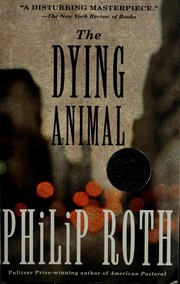
Roth's most concentrated study of Eros and mortality through the aging professor David Kepesh; its unflinching erotic obsession and elegiac tone reward readers who have already absorbed Roth's full moral universe.

Roth's final novel — a polio epidemic in 1944 Newark — is a quiet, classical tragedy about guilt, fate, and the stories we tell to survive. Reading it last gives it the weight of a farewell from a writer you now know deeply.
Discussion
Keep reading
Paths that share books, cover the same subject, or open a related topic.