Start with Radetzky march — catalogued here under that spelling, and published in English as The Radetzky March. It is the book in which Roth finally found the subject everything else in his work circles: the slow, unglamorous dissolution of the Habsburg empire, traced through three generations of one family the empire made and then discarded.
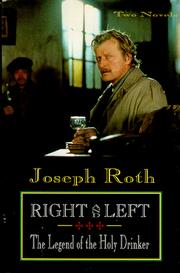
The obvious alternative is to begin with something short. The legend of the holy drinker runs about fifty pages and is the most anthologised thing he wrote, and Job, the story of a simple man was his first real success in English. Both are worth reading. Neither is a good first Roth, because both are parables, and a reader who meets Roth as a fabulist is later surprised by how much of his work is patient, unshowy realist novel-writing. Read the novel that shows what he could actually do, and the parables hit harder afterwards.
The Habsburg core
The Radetzky March, then The Emperor's Tomb. The second is a loose sequel following a cousin branch of the same family, and it carries the story forward to 1938 and the Anschluss. Most readers find it thinner and more hurried than the first — Roth wrote it late, in exile and in bad health — but the last pages are among the most desolate things he wrote, and they only work if you have read the earlier book.
If those two move you, read The Wandering Jews next. It is not fiction. It is a short 1927 book of reportage about Eastern European Jewish migration westward, and it is the documentary ground beneath the novels: the same displaced people, described without the consolation of plot.
The Weimar novels
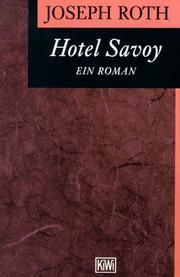
These are earlier, faster, angrier books, written while Roth was working as a journalist in Germany, and they read very differently from the Habsburg novels. Hotel Savoy — the record in our catalogue is a German-language edition titled Hotel Savoy. Ein Roman — puts returning prisoners of war in a hotel where each floor is a social class. Flight Without End follows an officer who comes home to a country that has no use for him. Die Rebellion, published in English as Rebellion, is the bleakest and shortest: a wounded veteran with a licence to play a barrel organ, destroyed by a single accusation. Right and left and Confession of a Murderer belong here too, the second a bar-room confession from a Tsarist informer.
Read one or two of these, not all five in a row. They share a temperature.
The parables, last
Job, the story of a simple man transplants the Book of Job to a shtetl and then to New York, and it is the book that made Roth briefly famous. The legend of the holy drinker, finished months before he died in Paris in 1939, is about a homeless alcoholic granted a run of small miracles. Read it last. It is the shortest thing on this list and the one that hurts most if you already know the shape of his life.
A note on translations
An unusual amount of the current English Roth comes from one translator, Michael Hofmann, which is why the voice stays so consistent from book to book — the reportage in The Wandering Jews sounds like the fiction. Older translations exist for several titles and are not all bad, but if you are choosing between editions, checking the copyright page is worth thirty seconds. Where the catalogue records a German edition, as with Hotel Savoy and Rebellion, an English translation does exist under the plain title.
Where to stop
Three books is a complete Roth for most people: The Radetzky March, Job and The Legend of the Holy Drinker. Add The Emperor's Tomb if the first one worked on you, and the Weimar novels only if you want the journalist rather than the elegist. There is no late masterpiece waiting further down the list — the order above front-loads the best of him deliberately.
If the collapse-of-empire mode is what you came for, the modernist contemporaries at James Joyce cover the same years from a different angle.
Follow the full ordered path here: Joseph Roth Reading Order: Where to Start.