Start with Ubik. It is about 220 pages, it is the most concentrated version of what this writer does, and it needs no context. A team of corporate telepaths is caught in an explosion, and afterwards the world begins running backwards — objects regressing to earlier forms, money bearing the wrong face, everyone dying slowly except one man who may be the only one still alive. The reality of the situation is revised four or five times, and the last revision is not a resolution.
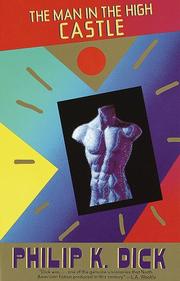
The usual recommendation is Do Androids Dream of Electric Sheep?, and it is a genuinely great novel, but Blade Runner has made it almost impossible to read on its own terms — readers arrive looking for the film and find a stranger, sadder book about a bounty hunter who wants to own a real sheep and about a religion based on shared suffering. Read it second, once you know the voice. The Man in the High Castle is his most respectable novel and the one that won the Hugo, and it is also his least characteristic: an alternate history where the Axis won, told with unusual restraint and structural discipline. It makes a poor introduction precisely because it is so controlled.
The core novels, in order
Ubik, then The Man in the High Castle, then Do Androids Dream of Electric Sheep?, then The three stigmata of Palmer Eldritch, then A Scanner Darkly.
The three stigmata of Palmer Eldritch is the most aggressive of the group — colonists on Mars use drugs to hallucinate a shared doll-house existence, and something has entered the hallucination that will not leave. It is where the theological anxiety that dominates the late work first becomes explicit.
A Scanner Darkly is the best-written thing he did. An undercover narcotics agent is assigned to surveil himself, and his brain hemispheres separate under the influence of the drug he is investigating. It is also barely science fiction: the drug culture, the shared house, the paranoia and the author's note listing friends who were damaged or died are drawn from life. If you read only two Dick novels, make them Ubik and A Scanner Darkly.
The VALIS trilogy, and the honest warning
Valis, The Divine Invasion and The Transmigration of Timothy Archer are grouped as a trilogy, but they share themes rather than a plot. You do not need to read them together and they do not build a single narrative.
Valis is the hard one. In 1974 Dick experienced a series of events he spent the rest of his life trying to explain, filling thousands of pages of private notes; the novel is a fictionalised account, in which the protagonist splits into two characters — one called Philip K. Dick and one called Horselover Fat — so the author can argue with himself about whether he is mad or has been contacted. It is fascinating, undisciplined and genuinely difficult, and it is not a novel to read fifth in a row.
The Divine Invasion is a more conventional theological science fiction novel and the least essential. The Transmigration of Timothy Archer is the surprise: an almost entirely realist novel, narrated by a woman, about a bishop who loses his faith and his family. It is his last book and among his best, and it works completely on its own.
What to expect
Dick wrote fast, frequently under financial pressure, and it shows. The prose is often flat, the female characters are frequently thin, and the endings can feel arrived at rather than constructed. What he had instead was an unmatched instinct for one question — how would you know if your reality had been substituted — and the discipline to keep taking it seriously.
Several major novels including Flow My Tears, the Policeman Said and Martian Time-Slip are not in this collection and are worth seeking out afterwards.
Where to stop
Stopping before Valis is entirely reasonable and very common. If you want the complete picture without the trilogy, end on A Scanner Darkly. If you want the whole arc, skip The Divine Invasion and go from Valis straight to The Transmigration of Timothy Archer.
More science fiction reading paths are on Discover.
Follow the full ordered path here: Philip K. Dick Reading Order: Where to Start.