Start with American Pastoral. It is the novel that won him the Pulitzer, it is the best thing he wrote, and it is the one that gives a new reader an accurate impression of the writer. Seymour Levov, an athlete and factory owner who has done everything American life asked of him, watches his teenage daughter bomb a post office in protest against Vietnam, and the book becomes an autopsy on the idea that a life can be built correctly.
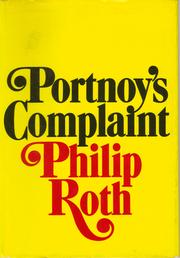
The default recommendation is Portnoy's Complaint, and it is the wrong one. It made him famous in 1969, it is genuinely funny, and it is a stunt: a monologue delivered to a psychoanalyst, sustained at a single pitch of comic hysteria for its whole length. Read it and you will conclude that Roth is a provocateur who writes about sex and his mother. He was that, for a while. He was also, later, one of the most formally ambitious American novelists of his generation, and American Pastoral is where that is undeniable.
The Zuckerman novels
Nathan Zuckerman, a novelist, narrates or appears in nine books across thirty years, and this is the spine of the career.
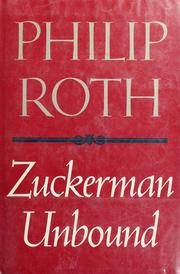
The early sequence runs The Ghost Writer, Zuckerman unbound, The Anatomy Lesson and then The Counterlife. The Ghost Writer is the best of the early group and a good alternative starting point — a young writer spends a night at the house of a reclusive older novelist and constructs a fantasy about a guest that is one of the most audacious things Roth ever wrote. There is a short novel between The Anatomy Lesson and The Counterlife, The Prague Orgy, which is not in this collection; it is brief and skippable on a first pass.
The Counterlife is the pivot. It presents contradictory versions of the same events in successive sections, each cancelling the last, and it is where Roth stops writing comic autobiography and starts building novels as arguments about what fiction can claim.
The American trilogy
American Pastoral, I married a communist, The Human Stain. All three are Zuckerman-narrated and each takes an American political convulsion — the 1960s, McCarthyism, the Clinton impeachment year — and puts a single life through it.
An honest note: I married a communist is the weakest of the three. It is more polemical, its villain is thinner, and it has been widely read as settling a personal score. The Human Stain recovers completely: a classics professor is forced out over a misheard word and is concealing something far larger. Read the trilogy in order but do not let the middle book stop you.
The late short novels
Roth's final decade produced a run of short, cold books about physical decline. Everyman opens at a funeral and works backwards through a life measured in surgeries. The dying animal is a return to the sexual-obsession material of the early work, narrated by an ageing critic, and it is more self-aware than its predecessors.
Nemesis is the last novel he published, in 2010, and it is a quiet surprise: a polio outbreak in wartime Newark and a young playground director who does everything right and is destroyed anyway. It has none of the verbal showmanship and it is one of his most moving books. It is the right place to finish.
Where to stop
Two sensible plans. The short version: American Pastoral, The Human Stain, The Ghost Writer, Nemesis. Four books, the full range, no filler.
The long version: the four early Zuckerman books, then the American trilogy, then the late short novels. Skip the middle-period novels not represented here unless you become a completist.
One thing worth stating plainly: Roth's handling of women is the standing objection to his work, made by serious critics throughout his career and still argued about. Readers disagree sharply about whether the novels examine misogyny or reproduce it, and there is no reading order that resolves that question.
More American literature reading paths are on Discover.
Follow the full ordered path here: Philip Roth Reading Order: Where to Start.