Philip K. Dick Reading Order: Where to Start
Philip K. Dick's work spans paranoid thrillers, classic science fiction, and dense metaphysical speculation — and the best way to read him is to follow that same arc. This curriculum starts with his most accessible and gripping novels to build intuition for his core obsessions (reality, identity, authority), moves through his major canonical works, and culminates in the late VALIS trilogy where his philosophy reaches its most profound and challenging form.
The Perfect Entry Point
BeginnerGet hooked on Dick's voice and his central question — 'What is real?' — through his most readable and thrilling novel.
▸ Study plan for this stage
Pace: 3–4 weeks total: Week 1–2 — Read "The Man in the High Castle" (~20–25 pages/day, ~250 pages); Week 3–4 — Read "Do Androids Dream of Electric Sheep?" (~15–20 pages/day, ~210 pages), leaving time for reflection and exercises.
- The Central Dickian Question — 'What is Real?': Both novels destabilize the reader's sense of a fixed, trustworthy reality; Dick treats reality not as a backdrop but as the central problem to be solved.
- Alternate History & Constructed Worlds: 'The Man in the High Castle' presents an Axis-victory America to show that 'official' history and shared reality are fragile, human-made constructs that could easily have been otherwise.
- Authenticity vs. Fakery: From the counterfeit Americana artifacts traded in 'The Man in the High Castle' to the electric animals and empathy-simulating Mercerism in 'Do Androids Dream of Electric Sheep?', Dick obsessively probes what makes a thing — or a person — genuine.
- Empathy as the Marker of Humanity: 'Do Androids Dream of Electric Sheep?' proposes empathy as the defining trait that separates humans from androids (replicants), then systematically undermines our confidence that humans actually possess it.
- The Novel-Within-the-Novel / Meta-Fiction: 'The Man in the High Castle' contains 'The Grasshopper Lies Heavy,' a fictional novel imagining an Allied victory — a reality within an alternate reality — introducing Dick's trademark layering of nested fictions.
- Identity Under Erasure: Characters in both novels struggle to know who — or what — they truly are; Juliana Frink, Frank Frink, and Rick Deckard all face moments where their sense of self collapses.
- Technology & Dehumanization: The Voigt-Kampff empathy test and the prevalence of artificial animals in 'Do Androids Dream' show how technology can both simulate humanity and strip it away.
- The I Ching as an Oracle of Uncertainty: In 'The Man in the High Castle,' characters (and reportedly Dick himself) consult the I Ching to make decisions, framing reality as fundamentally indeterminate and guided by chance rather than fixed causality.
- In 'The Man in the High Castle,' how does the existence of 'The Grasshopper Lies Heavy' (the novel-within-the-novel) challenge the characters' — and the reader's — sense of which reality is 'true'?
- How does the trade in fake vs. authentic American artifacts in 'The Man in the High Castle' serve as a metaphor for Dick's broader theme of authenticity and constructed reality?
- In 'Do Androids Dream of Electric Sheep?', the Voigt-Kampff test is supposed to distinguish humans from androids by measuring empathy — by the end of the novel, do you believe it succeeds? What does Dick suggest about empathy as a reliable boundary?
- Rick Deckard retires androids for a living, yet grows increasingly uncertain about his own humanity. What specific moments in 'Do Androids Dream' trigger this doubt, and what does Dick want the reader to feel about it?
- Both novels feature characters who discover that a foundational 'truth' of their world may be false (the Axis victory; Mercerism). How does each author — through Juliana and through Isidore/Deckard — respond emotionally to that revelation?
- What do real and artificial animals symbolize in 'Do Androids Dream of Electric Sheep?', and how does owning (or pretending to own) a real animal connect to the novel's themes of status, empathy, and authenticity?
- Reality Audit Journal: After each reading session, write 2–3 sentences describing one moment in the text where a character's reality was destabilized. At the end of both books, review your entries and identify the pattern in Dick's technique.
- Artifact Authenticity Debate: Choose one 'fake' object from each novel (e.g., a counterfeit Colt .44 from 'The Man in the High Castle'; an electric sheep from 'Do Androids Dream'). Write a one-page argument for why it should — or should not — be considered as valuable as the 'real' thing, using evidence from the text.
- Voigt-Kampff Yourself: Design 3–5 original Voigt-Kampff-style empathy questions of your own, then reflect in writing: do you think these questions could truly distinguish a human from a very sophisticated android? What does the exercise reveal about the limits of the test?
- Parallel Timeline Map: Draw a simple diagram showing the layers of reality in 'The Man in the High Castle' — the Axis-victory world, the world of 'The Grasshopper Lies Heavy,' and our own historical timeline. Annotate each layer with one quote from the novel that hints at its 'realness' or 'fakeness.'
- Character Identity Comparison Essay (300–400 words): Pick one character from each novel — Frank Frink and Rick Deckard are natural choices — and compare how each confronts a crisis of identity. What do they lose, and what (if anything) do they gain by the end?
- First-Time Reader Recommendation Letter: Write a short letter (half a page) to a friend who has never read Philip K. Dick, explaining — using only these two books — why his central question ('What is real?') still matters in today's world of AI, deepfakes, and social media.
Next up: By wrestling with Dick's core question — 'What is real?' — through these two accessible, plot-driven novels, the reader has built the intuitive foundation needed to tackle his more philosophically dense and structurally experimental works in the next stage, where Dick pushes the same themes into stranger, more destabilizing territory.
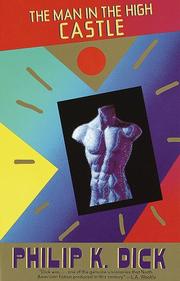
Dick's Hugo Award-winning alternate history is his most structurally clean and accessible novel, introducing his signature theme of false realities without the density of his later work. It's the ideal first step because it grounds his paranoia in a recognizable, if twisted, world.

Familiar through the Blade Runner films, this novel is the perfect second read — it layers Dick's reality-questioning onto the urgent question of what makes us human. Reading it after High Castle shows how he applies the same paranoid lens to identity itself.
The Major Works
IntermediateEncounter the full range of Dick's classic-era genius: drug-induced unreality, political paranoia, and the fragmentation of the self.
▸ Study plan for this stage
Pace: 6–8 weeks total: Week 1–2 — Ubik (~25–30 pages/day, including re-reading the prologue after finishing); Week 3–4 — The Three Stigmata of Palmer Eldritch (~20–25 pages/day, slower pace to track the nested reality layers); Week 5–6 — A Scanner Darkly (~25–30 pages/day); Week 7–8 — review, journaling,
- Ontological instability: the recurring Dickian question of what is real, dramatized in Ubik's entropic half-life world, Eldritch's Chew-Z hallucinations, and Darkly's drug-scrambled perception
- The commodity as existential threat: Ubik literalizes capitalism's promise of preservation and renewal while exposing its hollow core; Eldritch weaponizes a product that colonizes identity itself
- Corporate and governmental paranoia: shadowy organizations (Runciter Associates, the Can-D/Chew-Z cartels, the New-Path rehabilitation system and its police informants) function as engines of control and deception
- Fragmentation and dissolution of the self: Joe Chip's uncertain agency in Ubik, the merging of identities under Palmer Eldritch's stigmata, and Bob Arctor's split consciousness as both addict and undercover narc in A Scanner Darkly
- Drug-induced altered states as epistemological crisis: substances in all three novels are not mere plot devices but philosophical tools that collapse the boundary between subjective experience and shared reality
- Empathy, complicity, and moral ambiguity: Dick refuses clean heroes — Arctor surveils himself, Barris betrays friends, and the Runciter employees may already be dead without knowing it
- Entropy and decay as metaphysical forces: Ubik's regressing world and Eldritch's corrupted Martian colonies frame physical deterioration as a mirror of spiritual and cognitive collapse
- The author's autobiographical shadow: A Scanner Darkly draws directly on Dick's own experiences with amphetamine culture, lending the novel a documentary grief absent from the more speculative earlier works
- In Ubik, who — or what — is actually in control of the half-life world by the novel's end, and what does the final image of Joe Chip on a coin suggest about the nature of reality and power in the book?
- How does Palmer Eldritch's Chew-Z differ from Can-D as a philosophical threat, and in what sense does Eldritch himself become less a character than a metaphysical condition that spreads through other people?
- A Scanner Darkly is dedicated to real people Dick knew who were 'burned out' by drugs. How does that dedication reframe the novel's tone, and where in the narrative does satire give way to elegy?
- All three novels feature protagonists who are simultaneously victims and agents of the systems that oppress them. Trace this dynamic in one book of your choice: how does Dick use it to complicate the reader's sympathy?
- Dick uses brand names, consumer products, and corporate slogans extensively across these three books. What is the cumulative effect of this technique on the reader's sense of reality versus simulation?
- How does the concept of identity 'bleed' or merge across characters in The Three Stigmata of Palmer Eldritch, and what does this suggest about Dick's view of individuality under totalizing ideological or chemical influence?
- Reality-layer mapping: After finishing each book, draw a diagram charting the nested or competing levels of reality (e.g., half-life vs. waking world in Ubik; Can-D layout vs. Chew-Z reality vs. baseline Mars in Eldritch). Compare the three diagrams — note where Dick's architecture grows more or less complex.
- Passage annotation sprint: Select one chapter from each novel where a character's sense of self visibly fractures (e.g., Joe Chip receiving change from a coin bearing his own face; Barney Mayerson seeing Eldritch's stigmata on a colleague; Arctor watching his own surveillance tapes). Annotate every sentence where the narrative point-of-view becomes unreliable, then write a one-paragraph summary of
- The commodity audit: List every named product, brand, or commercial service that appears in Ubik (there are many in the chapter epigraphs alone). Write a short essay (300–500 words) arguing what Dick's satire of consumerism in Ubik adds to — or contradicts — the horror of the plot.
- Comparative character study: Write a 400-word profile of one 'unreliable self' from each book (Joe Chip, Leo Bulero or Barney Mayerson, Bob Arctor). Identify the specific moment in each novel where that character's self-knowledge collapses most completely, and explain what narrative device Dick uses to signal it.
- Empathy exercise — the Dedication: Read A Scanner Darkly's author's note/dedication aloud. Then re-read the novel's final chapter. Write a journal entry in the voice of Dick himself explaining why he chose to end the book the way he did, drawing only on evidence from the text.
- Thematic debate: Stage a written debate (two paragraphs per side) on the proposition: 'In these three novels, drugs are primarily a metaphor for capitalism, not for consciousness.' Use specific scenes from all three books as evidence for and against.
Next up: Mastering Dick's classic-era techniques — layered unreality, corporate paranoia, and self-dissolution — equips the reader to tackle his later, more theologically and autobiographically dense work, where these same themes are pushed to their most extreme and personal conclusions.
Widely considered his masterpiece of ontological horror, Ubik escalates the reality-collapse of his earlier work into something genuinely vertiginous. It should come before A Scanner Darkly because it establishes the 'decaying world' motif at its purest.

A terrifying meditation on drugs, God, and identity-dissolution, this novel bridges his pulp sci-fi roots and his later theological obsessions. Reading it here prepares the reader for the spiritual themes that dominate the final stage.
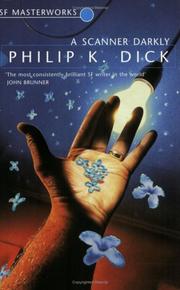
His most emotionally devastating novel, drawn from personal experience with drug culture, it is also his most humanist. It closes this stage on a note of grief and compassion that reframes everything Dick was really writing about.
The Late Metaphysical Vision
ExpertEngage with Dick's final, most ambitious and difficult work — the VALIS trilogy — where he attempts to synthesize theology, Gnosticism, and his own mystical experiences into a unified cosmology.
▸ Study plan for this stage
Pace: 10–12 weeks total: ~3–4 weeks per book, reading 20–25 pages/day. VALIS is the densest and should be read slowly with a notebook; The Divine Invasion can be read at a slightly brisker pace as a more overtly narrative text; The Transmigration of Timothy Archer, Dick's most novelistic and accessible of
- The VALIS (Vast Active Living Intelligence System) entity: Dick's conception of a divine, information-transmitting satellite or cosmic mind that intersects with ordinary reality, introduced in VALIS through Horselover Fat's pink-light revelation
- The Exegesis as living document: VALIS is saturated with excerpts from Dick's real-life private Exegesis, blurring the boundary between the author, the narrator, and the character 'Horselover Fat' — understanding this autobiographical fracture is essential
- Gnostic cosmology and the Black Iron Prison: Dick's adaptation of Gnosticism — the idea that the material world is a flawed or evil creation of a false god (the Demiurge), and that a hidden divine light (Sophia/Logos) works to liberate imprisoned souls — runs through all three books
- The Dialectic of the Two-Source Cosmology: In The Divine Invasion, Dick dramatizes the conflict between Yah (the true God returning to Earth) and Belial (the false ruler of the world), staging Gnostic theology as science fiction narrative
- Sophia as redemptive feminine principle: The character of Zina/Sophia in The Divine Invasion embodies Dick's belief in a hidden, playful, and healing divine feminine that counterbalances a stern or absent masculine God
- Anamnesis — the recovery of forgotten divine knowledge: Across all three books, characters experience sudden, overwhelming memories of a truer reality beneath the surface of the mundane, echoing Plato's theory of recollection and Gnostic awakening
- The role of grief, doubt, and secular humanism as counterweight: Angel Archer in The Transmigration of Timothy Archer serves as a rational, skeptical narrator who mourns the destruction wrought by unchecked mystical obsession, grounding the trilogy's theology in human cost
- Synthesis and irresolution — Dick's cosmology as open system: The trilogy never resolves into a single doctrine; VALIS, The Divine Invasion, and The Transmigration of Timothy Archer together enact a restless, self-questioning theology that treats uncertainty as spiritually honest
- In VALIS, what is the significance of Dick splitting himself into two characters — the narrator 'Phil Dick' and 'Horselover Fat' — and how does the eventual reintegration of these two figures function thematically?
- How does Dick adapt Gnostic mythology in The Divine Invasion, and in what ways does the novel's science-fiction setting (Earth under theocratic occupation, Herb Asher's return from space) serve as an allegory for the Gnostic condition of divine exile?
- What does the character of Zina/Sophia represent in The Divine Invasion, and how does her playful, game-like relationship with Yah challenge or complicate a straightforward reading of Dick's theology as orthodox or even coherent?
- Angel Archer in The Transmigration of Timothy Archer is often read as Dick's most fully realized female protagonist and as a voice of rational humanism. How does her perspective reframe or critique the mystical quests of Bishop Timothy Archer and Kirsten, and what does her survival (as narrator) imply about Dick's own ambivalence toward his metaphysical obsessions?
- How does the concept of anamnesis — the sudden recovery of hidden, divine memory — manifest differently across all three books, and what triggers it for characters like Horselover Fat, Herb Asher, and Timothy Archer?
- Taken as a trilogy, do VALIS, The Divine Invasion, and The Transmigration of Timothy Archer arrive at a unified cosmology, or does the sequence deliberately resist resolution? Use specific textual evidence from each book to support your answer.
- Exegesis Journaling: After each chapter of VALIS, write a 1–2 paragraph 'personal exegesis' entry in Dick's style — attempt to explain one event or image from the chapter using any theological, philosophical, or scientific framework that feels true to you. At the end of the book, re-read your entries and note where your thinking evolved or contradicted itself, mirroring Dick's own process.
- Gnostic Glossary: Build a running reference document as you read all three books. Define and track key Gnostic terms as Dick uses them (Demiurge, Pleroma, Sophia, Logos, Kenoma, anamnesis, pneumatics vs. hylics). For each term, record the page and context in which Dick deploys it, and note where his usage diverges from classical Gnostic sources.
- Character Voice Comparison: Write a single-page dialogue between Angel Archer (The Transmigration of Timothy Archer) and Horselover Fat (VALIS) in which they debate whether Dick's 2-3-74 experience (his February–March 1974 pink-light revelation) was genuine divine contact or a symptom of mental illness. Stay true to each character's established voice and worldview.
- Cosmology Map: After finishing The Divine Invasion, draw or diagram Dick's cosmology as the trilogy presents it — place entities (VALIS, Yah, Belial, Sophia, the Demiurge, the Black Iron Prison, the Palm Tree Garden), and draw arrows showing their relationships, conflicts, and communications. Update the map after finishing The Transmigration of Timothy Archer to reflect any additions or contradict
- Comparative Theology Essay (500–800 words): Choose one of the following real-world theological or philosophical systems Dick draws on — Gnosticism, Neoplatonism, Zoroastrianism, or Jungian psychology — and write a short essay tracing how Dick borrows from, distorts, and personalizes that system across the three books, citing specific passages.
- Skeptic's Reading: Re-read the final chapter of The Transmigration of Timothy Archer through Angel Archer's eyes and write a one-page reflection from her point of view on what the trilogy as a whole 'proved' or failed to prove about the existence of VALIS/God. Then write a one-paragraph rebuttal from Horselover Fat's perspective.
Next up: Completing the VALIS trilogy equips the reader with Dick's fully developed metaphysical vocabulary and his most unguarded autobiographical voice, providing the essential interpretive lens needed to revisit and recontextualize his earlier, more oblique works — or to engage critically with secondary scholarship and the posthumously published Exegesis itself.

The first and most novelistic entry in the trilogy, VALIS is Dick's fictionalized account of his own 1974 mystical experience and the obsessive theorizing that followed. The prior stages make its themes feel like a culmination rather than a shock.

The second book in the VALIS trilogy retells the story of God's return to Earth in a more mythic, allegorical register. It deepens the theological framework introduced in VALIS and should be read immediately after.

Dick's final novel and the conclusion of the VALIS trilogy, written in a strikingly realistic style, it is his most mature and elegiac work. It serves as the perfect capstone — a quiet, human resolution to a lifetime of cosmic questioning.
Discussion
Keep reading
Paths that share books, cover the same subject, or open a related topic.