Peter Carey Reading Order: Where to Start
Peter Carey is a two-time Booker winner whose novels swing between historical ventriloquism and contemporary satire, so publication order is the wrong entry route — the third novel is the one that hooks most readers. This path starts with the two big historical novels that made his name, works back to the shaggy early fiction, then moves out into the later American and Australian books and the short stories he began with.
Start With the Prize Winners
BeginnerMeet Carey at full power in the two novels that won the Booker, and see what he does with the nineteenth century.
▸ Study plan for this stage
Pace: 6 weeks. Oscar and Lucinda is 515 pages and is built from very short chapters, some barely a page, so it takes interruption well — three weeks at 25 pages a day. True History of the Kelly Gang is 384 pages written without conventional punctuation, which slows most readers by about a third for the fi
- Carey has won the Booker Prize twice, for both books in this stage, and starting here rather than at the beginning of his career is deliberate: the early novels are stranger and the later ones cooler, and these two are where the ambition and the warmth coincide
- Oscar and Lucinda pairs an English clergyman who cannot stop gambling with an Australian heiress who owns a glassworks, and drives them toward a wager involving a church made of glass transported up a river into country neither of them understands
- Its structure is the tell: hundreds of very short chapters, narrated by a descendant a century later, so the whole book is family legend being reconstructed rather than events being reported
- Gambling is the organising metaphor and Carey takes it seriously as theology — Oscar's argument that faith is itself a wager is the intellectual spine of the novel and is not a joke
- The glass church's journey inland is where the novel turns from comedy to something much harder, and it is the moment Carey's Australia stops being a backdrop and becomes a place with people already in it
- True History of the Kelly Gang is narrated entirely by Ned Kelly, the nineteenth-century Australian bushranger, in a voice built from the surviving Jerilderie Letter — barely punctuated, ungrammatical, and utterly sustained across four hundred pages
- The conceit is that Kelly is writing for a daughter he will never meet, which supplies the tenderness that keeps a novel about a hunted killer from being merely violent
- Kelly is a genuine national argument in Australia — folk hero to some, murderer to others — and Carey's novel is a claim in that argument, told from inside the head of an Irish-Australian underclass that had every reason to hate the police
- Why does Carey narrate Oscar and Lucinda from a century's distance through a descendant? What does the family-legend frame permit that direct narration would not?
- State Oscar's wager argument as he would. Is the novel persuaded by it, and where can you see its verdict?
- What happens to the glass church, and what does the expedition cost people who had no stake in it? The novel is careful about this and readers often are not.
- Read the first ten pages of True History of the Kelly Gang aloud. What does the missing punctuation do to the rhythm, and what would be lost by adding it?
- Who is Kelly writing for, and how does the intended reader shape what he admits and what he justifies?
- Both books take real material — a real hoax of Australian history in one case, a real outlaw in the other. Where is Carey inventing, and does he signal it?
- Read the first three chapters of Oscar and Lucinda in one sitting. They are very short, they jump between two lives and a century, and the structure only becomes clear in bulk.
- For the Kelly novel, read fifty pages before deciding whether the voice works. Nearly every reader who abandons it does so in the first twenty.
- Look up the Jerilderie Letter and read a paragraph of the real thing. Seeing the source Carey built the whole voice from is fifteen minutes very well spent.
- Keep a note of every scheme in Oscar and Lucinda — the glassworks, the wager, the church, the expedition. Beautiful doomed schemes are Carey's lifelong subject and this is where the pattern starts.
Next up: Both prize winners are colonial Australians arguing with an English inheritance, which is the obsession the next stage takes head on.
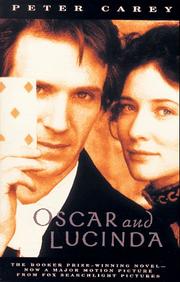
The best door into Carey: a gambling clergyman, an heiress with a glassworks, and a glass church floated up an Australian river. Read it first because it is his most emotionally direct novel and it teaches you his taste for beautiful, doomed schemes.

The second Booker, written entirely as Ned Kelly's unpunctuated voice. Read it second — after Oscar and Lucinda you will trust Carey enough to stay inside a voice this strange for four hundred pages.
The Novels That Talk Back to England
IntermediateFollow Carey's central obsession — a colony writing back at the empire that invented it.
▸ Study plan for this stage
Pace: 6 weeks. Jack Maggs is 350 pages and moves fast — two and a half weeks. Parrot and Olivier in America is 451 pages in two alternating voices and is the funniest thing Carey wrote, so it goes down easily; three weeks at 25 pages a day. Read Jack Maggs first. You do not need to have read Great Expecta
- This is Carey's central obsession stated plainly: a colony writing back at the empire that invented it, and specifically at the English literature that told the colony what it was
- Jack Maggs takes the convict from Great Expectations — the transported criminal who secretly funds a gentleman — and gives him the novel. He returns illegally to London to find the young man he has been paying for, and finds that nobody wants him there
- The Dickens figure in the book is a young, ambitious, ruthlessly extractive novelist called Tobias Oates who mesmerises Maggs to steal his memories for a book. Carey's charge is specific: English literature made its material out of colonial lives and then declined to give them a hearing
- Maggs is not a victim in Carey's telling. He is competent, dangerous and self-deceiving about the young gentleman, and the novel's best pages are the ones where his fantasy fails
- The book is set in a London of servants, footmen, mesmerists and hidden rooms, and Carey writes the period pastiche well enough that the argument arrives disguised as a Victorian novel
- Parrot and Olivier in America moves the same move to America: a French aristocrat plainly modelled on Alexis de Tocqueville tours the young United States with an English servant who has had a far more interesting life than his master
- The two voices alternate, and the comedy comes from Olivier's earnest sociology of democracy being repeatedly undercut by Parrot, who has actually lived among the people Olivier is theorising
- Its argument is Carey's constant one in a new setting — that the people who write the accounts and the people who live the material are rarely the same, and the accounts are the ones that survive
- What is Tobias Oates doing to Jack Maggs, and what does Carey want you to conclude about how novelists get their material?
- Maggs believes something about the young gentleman he has funded. What is it, and where does the novel dismantle it?
- If you know Great Expectations, what does Carey keep, what does he invert, and what does he refuse? If you do not, what does Jack Maggs assume you know?
- In Parrot and Olivier, what does Olivier get right about American democracy and what does he miss entirely? Parrot is the control.
- Why give the servant the more interesting life? What does that structural choice do to the aristocrat's observations?
- Both novels are historical pastiche with a modern argument inside. Where is the seam visible, and does it matter?
- Read a summary of Great Expectations before Jack Maggs if you have not read the novel — twenty minutes changes the whole book. Reading the Dickens itself is better and is not a small commitment.
- In Jack Maggs, mark every mesmerism scene. They are the mechanism by which the memories are extracted and they are the novel's argument in dramatised form.
- In Parrot and Olivier, keep a note of what Olivier concludes about America at the end of each section. Setting his conclusions beside what the reader has just watched is where the comedy is.
- Write one paragraph on what Carey thinks England owes Australia. Both books answer it and they do not answer it identically.
Next up: The historical novels are the disciplined Carey; the early ones are where the invention runs loose, and they are much easier to take once you know what he does with it.
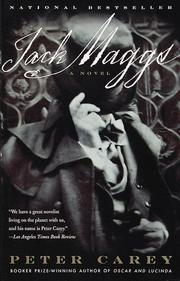
Great Expectations retold from the convict's side, with Dickens himself in the frame. Read it after the Kelly novel; the two are the same argument in different keys.

A Tocqueville figure and his English servant loose in the young United States. It extends the Jack Maggs move from Australia to America and is the funniest of the historical books.
Back to the Early Carey
IntermediateGo back to the sprawling, tall-tale novels of the 1980s that the later precision grew out of.
▸ Study plan for this stage
Pace: 8 weeks. Bliss is 300 pages and takes two. Illywhacker is 600 and is the hardest book in the path — four weeks at 20 pages a day, and expect to lose the thread at least once. The Tax Inspector (279) takes two weeks but is emotionally heavier than its length, so do not schedule it for a bad fortnight
- This stage is deliberately placed late. These are the 1980s novels — shaggier, wilder and less controlled than the prize winners — and they are far more enjoyable when you already trust the writer
- Bliss was his first novel: an advertising executive dies for nine minutes, comes back convinced he is in Hell, and accumulates enough evidence that the reader starts to agree with him
- Carey spent years in advertising himself, and the industry satire is written from inside — the account of what an adman actually does all day is the most authentic material in the book
- Its comic method is deadpan escalation: an absurd premise stated flatly, then followed through with total logical rigour, which is the technique underneath everything he wrote later
- Illywhacker is 600 pages narrated by Herbert Badgery, who announces in the first paragraph that he is 139 years old and a liar, and then tells you the history of twentieth-century Australia. An illywhacker is Australian slang for a con man
- The confession up front is the design: nothing in the book can be trusted, and Carey is arguing that a national history is itself a story sold by people with an interest in the sale. It is his most demanding book and the one this path is building toward
- The Tax Inspector is the counterweight — a failing car dealership, an audit, and a family whose damage the novel refuses to make funny. It is the bleakest thing in the catalogue and contains material about the abuse of children that lands hard and without warning
- Read together, the three show Carey's range at its widest: farce, epic tall tale and something close to horror, all inside one decade
- Is Harry Joy in Hell? Assemble the evidence Bliss gives on each side and notice how carefully Carey keeps it balanced.
- What is Bliss saying about advertising specifically, rather than about capitalism generally? Carey is precise about the mechanism.
- Herbert Badgery tells you he is a liar on the first page. Which parts of Illywhacker do you nevertheless believe, and why those?
- What is the pet-shop image at the end of Illywhacker doing? It is the novel's thesis about Australia and it is stated in a single sustained metaphor.
- The Tax Inspector has almost no comedy. What has Carey removed, and what does the removal reveal about how the other novels work?
- Across all three, what is the relationship between lying and storytelling? Carey returns to it constantly and does not always give the same answer.
- For Illywhacker, keep a family tree and a rough decade-by-decade timeline. It spans a century and three generations and readers who do not track it get lost around the halfway point.
- Note every point in Illywhacker where Badgery contradicts something he said earlier. The contradictions are deliberate and finding them is the intended activity.
- In Bliss, list the pieces of evidence that Harry is in Hell. The list is funnier and more persuasive than any summary of the plot.
- Read the last thirty pages of The Tax Inspector and the last thirty of Illywhacker in the same week. The two endings are as far apart as Carey ever went and the contrast defines the decade.
- Write a paragraph on what Carey thinks Australia is. Illywhacker gives one answer, the Kelly novel gave another, and they are not compatible.
Next up: The early novels are Carey writing from inside Australia; the later ones are written from New York and turn the same instincts on fakes, forgers and the art market.
His first novel — an adman dies for nine minutes, comes back convinced he is in Hell, and is probably right. Short, savage, and the cleanest sample of early Carey.
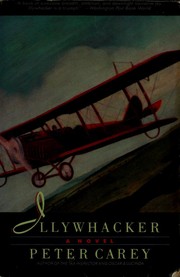
Six hundred pages narrated by a 139-year-old liar. Deliberately placed late: it is the most demanding book he wrote and rewards readers who already know his tricks.
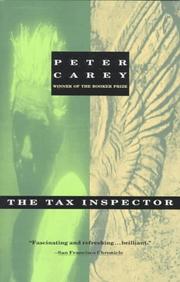
A car dealership, an audit, and a family coming apart. The bleakest thing in the catalogue and the counterweight to Illywhacker's exuberance.
The Later Books
IntermediateSee what Carey does once he has moved to New York and turned the ventriloquism on art, forgery and memory.
▸ Study plan for this stage
Pace: 7 weeks. My Life as a Fake and Theft are both 288 pages and take two weeks each; A Long Way from Home is 352 and takes three. Read My Life as a Fake and Theft consecutively — they are a matched pair about authenticity — and finish with A Long Way from Home, which is his return to Australian material
- Carey moved to New York around 1990 and the later fiction is written from that distance, which sharpens rather than dulls the Australian material — several of these books are about how a country looks to someone who left it
- My Life as a Fake is built out of the Ern Malley affair, a real Australian literary hoax in which two poets invented a dead modernist and submitted his nonsense to an avant-garde magazine, which published it in earnest and was humiliated
- Carey's twist is to have the invented poet turn up alive, demanding a life from the man who made him up. It is the purest distillation of his lifelong interest in fakes that become real, and it is also a horror story
- It is narrated at several removes — an editor hearing the story from the hoaxer — so the reader can never verify anything, which is the formal joke of a novel about forgery
- Theft alternates between a disgraced painter trying to re-enter the market and his brother, whose narration is damaged, digressive and often the more reliable of the two
- Its subject is the art market as a machine for converting attribution into money, and Carey is unsentimental about the fact that a painting's value has almost nothing to do with the painting
- A Long Way from Home is a 1950s car race around the whole continent of Australia, told partly by a woman navigator, and it turns into a reckoning with what the race is driving across — the dispossession of Aboriginal people, and one character's discovery of his own origins
- That turn is the point of the book and Carey has said the subject is one he approached carefully and late. Read it as a white Australian novelist writing about a history his earlier books skirted, and judge it on that basis
- In My Life as a Fake, who created whom by the end? The novel keeps reversing the relationship and the last reversal is the argument.
- Why narrate a novel about forgery at several removes, with no verifiable source? What would a direct telling have destroyed?
- In Theft, which brother do you trust, and what makes the damaged narrator more reliable than the professional one?
- What does Theft say determines the price of a painting? List the factors the novel identifies and notice how few concern the work.
- In A Long Way from Home, what does the race make visible about the country it circles? Name the specific moments where the comedy stops.
- Carey has written about Australia from New York for thirty years. What does the distance give him, and what does it cost?
- Read a short account of the real Ern Malley hoax before My Life as a Fake. The novel departs from it wildly and the departures are only visible if you know the original.
- In Theft, read one section from each brother back to back rather than continuously. The two voices are a duet and the contrast is sharper in alternation.
- For A Long Way from Home, look up the route of a 1950s round-Australia trial on a map. The geography is the book's structure and the places matter.
- List the fakes across all three novels — a poet, a painting, a person's own history. Then go back to Illywhacker's narrator. It is the same preoccupation thirty years apart.
Next up: Ten novels in, the short stories he started with will read as a set of blueprints rather than juvenilia.
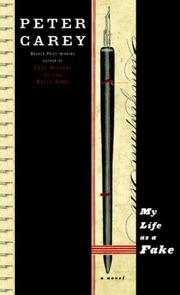
Built from the real Ern Malley hoax — an invented poet who turns up alive. The purest distillation of Carey's interest in fakes who become real.
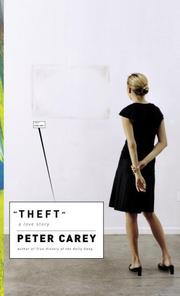
A disgraced painter and his damaged brother, in alternating voices. Read it after My Life as a Fake; they are a matched pair about authenticity and the art market.

A 1950s car race around Australia that turns into a reckoning with what the race drives across. His late return to Australian subject matter and a good place to stop.
Where He Began
IntermediateFinish with the short fiction that Carey was known for before he wrote a novel at all.
▸ Study plan for this stage
Pace: 2 weeks for 186 pages, one story a sitting. The Fat Man in History is a short book and could be read in two evenings; do not. These stories are cold, surreal and highly compressed, and they work by leaving you with an image you cannot place — which needs a day to do its work. Read one, stop, come ba
- Carey was known as a short-story writer before he published a novel, and this was his first book. Reading it last is the design of the path: the novels explain what he was reaching for here
- The mode is surreal and deadpan — an invented society, a flatly stated impossible premise, and then a rigorously logical account of daily life inside it. There is no whimsy anywhere
- The title story concerns fat men in a society that has decided to despise them, plotting in a shared house, and it is as bleak and as funny as anything he wrote later
- Several stories are unmistakably about colonisation and extraction told as science fiction — a foreign power arrives, remakes the place, and the locals adapt. The obsession that drives Jack Maggs is fully formed decades earlier
- The cruelty is the striking thing. These stories are markedly colder than the novels, and the warmth that makes Oscar and Lucinda work is almost entirely absent
- What is already present is the SENTENCE: precise, unhurried, refusing to signal that anything unusual is happening. That flatness is the single most durable feature of his prose
- Read against the novels, the stories look like a set of premises he later learned to give people to inhabit. Several of the novels are recognisably one of these stories with three hundred pages of characterisation added
- It is also a corrective to the two-time-Booker-winner framing this path opened with: he arrived as an experimental short-story writer, and the prize novels came out of that, not out of a taste for historical fiction
- Take any story and state its premise in one sentence. Then say what the story does with it that the premise does not contain.
- Which story most obviously anticipates a later novel? Name the pair and say what the novel added.
- These stories are colder than the novels. What is missing, and did Carey gain or lose by adding it later?
- Several stories describe a society being remade by an outside power. Written by an Australian in the 1970s, what are they about?
- How does Carey signal that a story is not realist? In most cases he does not — find one where the impossibility is simply reported and note the effect.
- Read one story per sitting with a day in between. The compression needs the gap and reading the book straight through blunts every story after the second.
- After each story, write the premise and the last image on one line. At the end you will have the collection's whole method on a single page.
- Pick the story you find most disturbing and identify exactly which sentence does it. It will almost always be a flat one.
- Reread the first page of Bliss immediately after finishing. The first novel is the seventh story with room to move, and the continuity is unmistakable.
Next up: That is Carey across four decades and two continents, and it is enough to read any contemporary novelist retelling a canonical book and see at once whether they are arguing with it or just borrowing it.

His first book, a set of surreal, cold-blooded stories. Read last: the novels explain what he was reaching for here, and the stories show how early he had the sentence.
Discussion
Keep reading
Paths that share books, cover the same subject, or open a related topic.