Peter Hessler Reading Order: Where to Start
Peter Hessler has written six books and they divide cleanly: three about China in the boom years, one collection of magazine pieces, one about Egypt after the revolution, and one about returning to China two decades later. Publication order happens to be the right order here, because the later books explicitly answer the earlier ones — the students he taught in the first book are middle-aged parents by the last. Start with the Peace Corps memoir and let the rest accumulate.
Start with River Town
BeginnerMeet Hessler's method — long residence, patient friendship, no thesis imposed in advance — in the book where he has the least authority and the most to learn.
▸ Study plan for this stage
Pace: 2 weeks. 402 pages, structured as two years in Fuling told largely in seasons, so 30 pages a day works and the chapter breaks are natural stopping points. Resist skimming the early chapters where nothing happens — the slowness is the method being established.
- Hessler arrived in Fuling in 1996 as a Peace Corps teacher with no Chinese, and the book's authority comes from that weakness rather than in spite of it
- The structure alternates classroom life, his own language learning, and the town on the Yangtze before the Three Gorges Dam flooded much of the region
- His method is long residence and patient friendship: no thesis imposed in advance, and conclusions arrive late or not at all
- The students' essays and their readings of Shakespeare and Chinese classics are the book's best device for showing what a political education does and does not determine
- He is honest about being a spectacle — a foreigner watched constantly — and about the anger and isolation that produced
- The dam is the historical clock running under the whole book: a town about to be partly submerged, described by someone who knows it will be
- This is the least authoritative and most curious of his books, and everything later is written by someone who now knows a great deal
- What does Hessler not understand in the first hundred pages, and when does he learn it?
- How do the student essays function as evidence, and what are their limits as a source?
- What does the book say about the Three Gorges project, and how much of that is stated versus shown?
- Where is Hessler unlikeable or unfair, and does he let those passages stand?
- Why start a reading order with the least expert book?
- Track his Chinese ability across the book. His access widens exactly as the language arrives, which is the clearest demonstration of the method.
- List every named Fuling resident and what you actually know about their life. The number of genuine relationships is small and deliberate.
- Find the passage where he first stops explaining China to the reader and simply reports it. That transition is the book's turning point.
- Note what a foreign correspondent on a two-week assignment could have written about Fuling, then compare it to what two years produced.
Next up: River Town establishes one town at one moment; the next stage takes the same eye outward to the whole country during its fastest years of change.
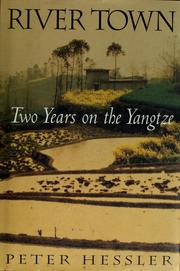
Two years teaching English in Fuling, a Yangtze town about to be half-drowned by the Three Gorges Dam. The obvious and correct first book: he arrives knowing nothing, so you learn with him, and every later book refers back to these students.
The Rest of the China Trilogy
BeginnerFollow China's boom outward from one town to the whole country — archaeology and censorship in one book, migration and the factory economy in the next.
▸ Study plan for this stage
Pace: 4–5 weeks for Oracle Bones (528 pages) and Country Driving (438). Oracle Bones is the harder read because it braids several unrelated storylines — allow 25 pages a day and do not fight the interleaving. Country Driving is in three clearly separated sections and can go faster.
- Oracle Bones braids archaeology of the Shang oracle bones, the scholar Chen Mengjia's persecution and suicide, and the present-day lives of Hessler's former students migrating for work
- The braid is an argument: the Chinese present is being written over a past that is itself contested and partly destroyed
- It is also the book where censorship, the Uyghur character Polat, and the American embassy bombing protests put Hessler closest to the state
- Country Driving has three parts — driving the Great Wall route, one village in Sancha over several years, and the factory economy of Zhejiang
- The Sancha section is the best single piece of long-residence reporting he has done: one family, watched as a road arrives and money follows
- The factory section shows the boom's mechanics — bra-ring machines, migrant labour, entrepreneurs improvising — with no moral verdict imposed
- Read as a trilogy, the three books move from one town to one country while keeping the same unit of evidence: an actual person he knows well
- What holds the three strands of Oracle Bones together? Is it a structure or an atmosphere?
- What does the Chen Mengjia story contribute that a straight history of the period could not?
- In Country Driving, what changes in Sancha when the road arrives, and who benefits?
- How does Hessler handle the fact that his subjects are being enriched and damaged by the same process?
- Where does he decline to draw a conclusion that the material seems to support, and why might that be a choice rather than a failure?
- Chart the timeline of Oracle Bones' three strands side by side. The braid stops feeling arbitrary once the dates are aligned.
- In the Sancha section, list the family's income sources year by year. It is a household economy told in miniature.
- Compare his portrait of a migrant worker in Oracle Bones with one in Country Driving — the same person type, several years apart.
- Write down three claims about China you held before this stage and check each against something specific in these books.
Next up: The magazine collection next shows the same reporting at essay length, including the American pieces that prove the eye is not China-specific.
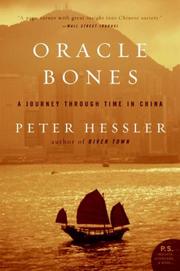
Oracle-bone archaeology, a persecuted scholar, and his former students entering the workforce, braided together. More ambitious and more fragmented than River Town, which is why it works better once you know those students.
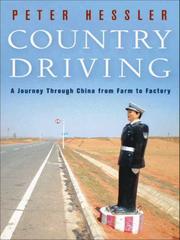
Driving the Great Wall, renting a village house, and following a bra-ring factory in Zhejiang. The best single portrait of the boom's mechanics and the strongest book of the three; place it third so the factory sections land against Fuling.
The Magazine Work
IntermediateSee the reporting at essay length, including the American pieces that show his eye is not China-specific.
▸ Study plan for this stage
Pace: 1–2 weeks. Strange Stones is 354 pages of self-contained dispatches; two or three per sitting. Order does not matter here, but reading the American pieces in a block against the Chinese ones is a useful experiment.
- The collection mixes Chinese reporting with American pieces — a Colorado uranium town, small-town pharmacy, competitive eating — which is the point of including it
- At essay length he cannot rely on years of residence, so the pieces reveal how quickly he can build the same kind of relationship
- Several pieces are offcuts or extensions of the books, and reading them shows what did not fit and why
- The American material tests his method against a place he already understands, which exposes how much of the technique is about being an outsider
- The dispatches are more comic than the books, because a short piece can end on an oddity where a book cannot
- Together they mark the hinge in his career, between the China trilogy and the move to Egypt
- Do the American pieces work as well as the Chinese ones? If not, what is missing?
- How does he establish trust with a subject in ten pages rather than two years?
- Which pieces are clearly material that a book could not hold, and what made them unusable there?
- What is the difference in tone between his Chinese and American reporting, and is it about the subject or the audience?
- Does his method require foreignness to work?
- Sort the pieces into China and America and read each block in one sitting. The comparison is the exercise.
- Pick one dispatch and identify the moment the subject decided to trust him.
- Write a 200-word dispatch about somewhere you have lived for years, using his rule of no thesis stated in advance.
Next up: The final stage takes the method somewhere he has no language and no history, then brings it back to China two decades on to measure what actually changed.
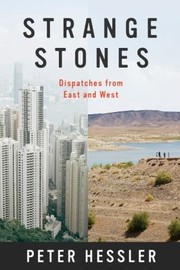
Collected New Yorker dispatches from China and the United States, including rat restaurants, uranium prospectors and a Colorado town. A good interval read and the clearest evidence that the method travels.
Egypt, and the Return
IntermediateWatch the method tested somewhere he does not already know the language or the history, then brought back to China after twenty years to measure what changed.
▸ Study plan for this stage
Pace: 4 weeks. The Buried is 480 pages and Other Rivers is a full-length book, both dense with recent political history. Read The Buried first — the chronology matters, and Other Rivers is written as a deliberate return to the ground of River Town. About 30 pages a day, with time to look up the Egyptian p
- The Buried covers Cairo from 2011, through the Morsi presidency, the coup and Sisi's consolidation, alongside Egyptian archaeology and Hessler's Arabic lessons
- The relationships that carry it — his Arabic teacher, a garbage collector, a Chinese lingerie trader in Upper Egypt — are the same unit of evidence as in the China books
- The Chinese traders in Egypt are the book's most original thread: a comparison between two revolutionary societies made through people who live in both
- Learning Arabic in public, badly, reprises the River Town position deliberately — he chose a country where he would again be the least informed person present
- Other Rivers returns to China two decades after River Town, teaching a new generation and tracking down former Fuling students, now middle-aged parents
- The comparison across twenty years is the payoff of the whole path: the same method applied twice to the same place, with the country transformed and the author no longer young
- Six books in total, and this is the end of the shelf — the arc from arriving with no Chinese to returning as the person who has watched longest
- What does archaeology contribute to The Buried, beyond atmosphere?
- How does the Chinese-trader thread change what The Buried is able to say about Egypt?
- In Other Rivers, what has changed most in his former students' lives, and what has not changed at all?
- How does teaching a new generation of Chinese students compare with the classroom of River Town? What is he measuring?
- Does the method travel? Compare his authority in Egypt with his authority in China after twenty years.
- Read the last chapter of River Town immediately before starting Other Rivers. The path is designed to make that juxtaposition available.
- Build a two-column list of Fuling students' 1997 hopes and their present situations as reported in Other Rivers.
- Note every point in The Buried where he explicitly says he does not understand something. The frequency is much higher than in the China books, and that is the honest signal.
- Write one paragraph on what a Hessler book about your own country would have to do to be worth reading.
Next up: That completes the six books; readers who want the same long-residence patience aimed elsewhere should go to Oliver Sacks for the clinical version or Patrick Radden Keefe for the investigative one.

Cairo through the coup years, told through an Arabic teacher, a garbage collector and an archaeological dig. Read after the China books so you can feel him rebuilding his access from zero in a language he is still learning.

Teaching again in Sichuan two decades on, with the Fuling students now parents of his new students. The closing of the loop, and unreadable at full strength unless River Town came first.
Discussion
Keep reading
Paths that share books, cover the same subject, or open a related topic.