Personal essay writing: an ordered path through memoir and the essay form
This curriculum builds from the ground up — starting with the essential spirit and permission to write personally, then developing craft skills in voice, structure, and truth, before tackling the deeper challenges of memory, ethics, and revision that define truly moving nonfiction. Each stage assumes the vocabulary and confidence built in the one before it, so reading in order matters.
Permission & First Principles
BeginnerUnderstand what the personal essay is, why it matters, and feel empowered to begin writing honestly from your own life.
▸ Study plan for this stage
Pace: 4–5 weeks, ~25–30 pages/day. Start with "Bird by Bird" (2–3 weeks), then move to "The Art of the Personal Essay" (2–3 weeks). Allow time for reflection and writing between books.
- Shitty first drafts and permission to write badly (Lamott): the liberation of accepting imperfection as part of the creative process
- The personal essay as a form of truth-telling: using your own life and voice as the primary material and authority
- Close observation and attention to detail as the foundation of personal essay writing (Lamott's 'station wagon' approach)
- The essay's intimacy and conversational tone: how personal essays speak directly to the reader through authentic voice
- The historical evolution and diversity of the personal essay form (Lopate): understanding what makes an essay 'personal' across different traditions and styles
- Vulnerability and specificity as strengths: how particular, honest details create universal resonance
- The relationship between the writer's self and the reader: building trust through candor and reflection
- What does Lamott mean by 'shitty first drafts' and how does this concept remove barriers to beginning your own writing?
- According to Lopate's introduction and selections, what distinguishes a personal essay from other forms of writing (memoir, journalism, fiction)?
- How do Lamott and Lopate both emphasize the importance of the writer's authentic voice and perspective?
- What role does close observation and specific detail play in both authors' approaches to personal essay writing?
- How does vulnerability or self-disclosure function in the personal essays Lopate includes, and why does Lamott encourage writers to embrace imperfection?
- What is the relationship between writing about your own life and creating something that resonates with readers beyond yourself?
- Write three 'shitty first drafts' (Lamott-style) on different topics from your own life without editing—aim for 500 words each, prioritizing speed and honesty over polish
- Practice Lamott's 'station wagon' exercise: spend 15 minutes observing a single location or moment in vivid detail, then write a page capturing what you notice
- Read 3–4 essays from Lopate's anthology and annotate them, marking moments where the writer's voice feels most personal, vulnerable, or distinctive
- Write a personal essay (500–800 words) on a small, specific moment from your life—a conversation, a failure, a discovery—focusing on sensory detail and honest reflection
- Identify one essay from Lopate's collection that resonates with you and write a 1–2 page response exploring what makes it feel 'personal' and how the writer earned your trust
- Rewrite one of your earlier drafts (from the shitty first draft exercise) with attention to voice and specificity, without worrying about length or structure
Next up: This stage establishes the permission, foundational principles, and authentic voice needed for personal essay writing; the next stage will focus on craft—structure, form, and revision techniques to shape raw honesty into compelling, well-constructed essays.
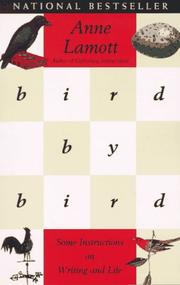
The perfect first book: warm, funny, and deeply practical, it dismantles the fear of the blank page and introduces the concept of the 'shitty first draft' — essential permission for any beginner to just start writing.
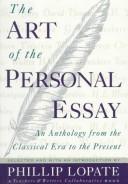
Lopate's landmark anthology, with its magisterial introduction, defines the personal essay as a form and traces its lineage from Montaigne forward — giving the new writer a rich sense of what the genre is and what it can do.
Finding Your Voice
BeginnerDevelop a distinctive, honest narrative voice and learn how to mine personal experience for universal meaning.
▸ Study plan for this stage
Pace: 4–5 weeks, ~20–25 pages/day. Week 1–2: "Tell It Slant" (approximately 180 pages); Week 3–5: "The Situation and the Story" (approximately 150 pages), with overlap for reflection and practice.
- The power of indirection and slant in personal narrative—how approaching truth sideways can reveal more than direct confession
- Mining sensory detail and specific memory to uncover universal human experience
- The distinction between the situation (what happened) and the story (what it means)—the interpretive layer that transforms raw experience into essay
- Developing an authentic, recognizable narrative voice through honest observation and deliberate craft choices
- The role of vulnerability and emotional truth in connecting with readers across difference
- How to find the 'aha moment' or insight that elevates personal experience beyond mere memoir into meaningful reflection
- Using constraint, form, and structure as tools to deepen rather than limit personal expression
- What does Brenda Miller mean by 'telling it slant,' and how does indirection serve the personal essay better than straightforward confession?
- How do you distinguish between the situation and the story in your own experience, and why does Gornick argue this distinction is essential?
- What role does sensory detail and specific memory play in making a personal essay feel universal rather than self-indulgent?
- How can you develop a distinctive narrative voice that feels both honest and crafted?
- What is the 'aha moment' or insight in a personal essay, and how do you identify it in your own writing?
- How do constraint and formal choices (like structure, point of view, or perspective) strengthen rather than weaken personal narrative?
- Read and annotate one chapter from 'Tell It Slant' per session, marking examples of slant technique, sensory language, and voice. Write a one-paragraph reflection on how Miller achieves indirection in each piece.
- Select a personal memory and write two versions: one told 'straight' (chronological, direct), and one told 'slant' (using digression, metaphor, or fragmentation). Compare what each version reveals and conceals.
- Identify the situation and story in three essays from 'Tell It Slant.' Write a one-page analysis of how each author moves from what happened to what it means.
- Write a personal essay (500–750 words) focused on a small, specific moment (a conversation, an object, a sensory experience). Revise it twice, each time deepening the sensory detail and the underlying insight.
- After reading Gornick, choose one of your own draft essays and identify: (1) the situation, (2) the story/interpretation, and (3) the emotional truth. Rewrite the essay to strengthen the interpretive layer.
- Collect 3–5 short personal essays by published authors (not in the assigned books). Analyze the voice in each: word choice, sentence rhythm, tone, perspective. Write a voice inventory identifying techniques you want to adopt in your own writing.
Next up: This stage equips you with the foundational tools to transform raw experience into crafted narrative; the next stage will focus on deepening structural sophistication and learning how to sustain longer, more complex personal essays across multiple scenes and time periods.
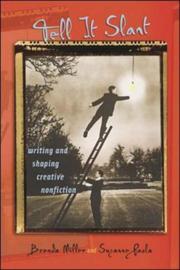
A widely used craft textbook that walks beginners through the core moves of creative nonfiction — braiding, lyric essays, flash — with clear exercises that build voice and structural intuition simultaneously.
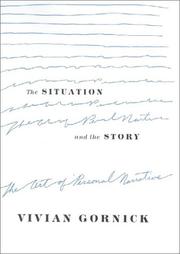
Gornick's slim, essential book introduces the crucial distinction between the 'situation' (what happened) and the 'story' (what it means) — the single most clarifying concept for writers struggling to shape personal material.
Truth, Memory & the Ethics of the Real
IntermediateGrapple with the complex relationship between memory, fact, and narrative truth, and understand the ethical responsibilities of writing about real people and real events.
▸ Study plan for this stage
Pace: 6–7 weeks, ~40–50 pages/day. Start with "The Liars' Club" (weeks 1–3), move to "The Art of Memoir" (weeks 3–4), and finish with "Inventing the Truth" (weeks 5–7) to build from memoir practice to theoretical reflection.
- Memory is reconstructive, not reproductive—what we remember is shaped by emotion, time, and narrative need, not objective fact
- The distinction between factual accuracy and emotional/narrative truth: both matter in memoir, but they are not the same
- The ethical obligation to real people: how to write honestly about others without exploiting, betraying, or misrepresenting them
- The unreliable narrator as a tool: acknowledging your own biases, gaps, and limitations as a memoirist strengthens rather than weakens your work
- Sensory detail and specificity as the gateway to universal truth—the particular story becomes meaningful through vivid, honest rendering
- The writer's responsibility to the reader: creating a contract of honesty while acknowledging that all memoir is interpretation
- Revision and reflection as ethical acts: returning to your material with distance allows you to see what you got wrong or incomplete
- How does Karr use sensory detail and specific memory in 'The Liars' Club' to convey emotional truth, even when the facts may be uncertain or fragmented?
- What does Karr mean by 'emotional truth' versus factual accuracy, and why does she argue that both matter in memoir?
- What are the key ethical obligations Karr and Zinsser identify toward people you write about, and how do they suggest navigating conflicts between honesty and loyalty?
- How does acknowledging your own unreliability as a narrator—your gaps, biases, and reconstructions—actually increase reader trust rather than diminish it?
- What role does revision play in the ethical practice of memoir, according to these authors?
- How do the specific techniques discussed in 'The Art of Memoir' and 'Inventing the Truth' help you distinguish between what you remember, what you've been told, and what you've imagined?
- Write a 2–3 page scene from your own life in vivid sensory detail, then annotate it to mark: what you remember directly, what you've reconstructed from emotion/theme, and what you're uncertain about. Reflect on how this uncertainty shapes the truth of the scene.
- Read a passage from 'The Liars' Club' (e.g., a key family scene) and identify the emotional truth Karr is reaching for. Then write a brief analysis of how she achieves it through language, structure, and detail rather than exposition.
- Interview someone from your past about a shared memory, then write two versions: one based on their account, one based on your memory. Compare them. What's different? What does each version reveal? How would you ethically combine them in a memoir?
- Using Karr's framework from 'The Art of Memoir,' take a difficult memory involving another person and write it three ways: (1) as you remember it, (2) as they might remember it, (3) as a more honest third version that acknowledges both perspectives. Reflect on what you learned.
- Select a passage from 'Inventing the Truth' where one of the essayists discusses their ethical dilemma, and write a 1–2 page response exploring how you would handle a similar situation in your own writing.
- Revise a piece of personal writing you've done before, focusing specifically on: Are there moments where I'm claiming certainty I don't have? Where am I avoiding complexity? Where could I be more honest about my own unreliability? Rewrite with these questions in mind.
Next up: This stage equips you with both the emotional and ethical toolkit to write truthfully about real experience, preparing you to move into more advanced work on craft—such as structure, voice, and the deliberate shaping of narrative—with a solid foundation in honesty and accountability.
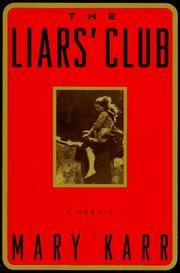
Read first as a masterwork of memoir craft — its voice, scene-building, and emotional honesty set the standard — before turning to Karr's own craft book for the lessons behind it.
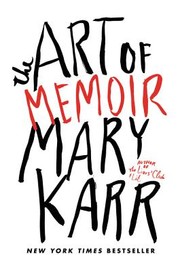
Karr unpacks exactly how she and other great memoirists handle memory, truth, and the ethical minefield of writing about family — a perfect companion to having just read her memoir.
This essay collection, featuring multiple memoirists discussing their process, broadens the conversation about truth and invention in memoir and exposes the reader to a range of working methods.
Structure, Compression & the Essay as Art
IntermediateMaster the architectural decisions — structure, compression, braiding, and the lyric turn — that elevate a personal essay from a story about you to an experience for the reader.
▸ Study plan for this stage
Pace: 6–7 weeks, ~40–50 pages/day, with 2–3 days per week dedicated to writing exercises and reflection
- The balance between showing and telling: when direct statement serves the essay better than pure narrative
- Compression as an art form: how to distill experience into precise, resonant language without losing emotional depth
- Braiding multiple threads: weaving together personal narrative, observation, research, and reflection into a unified whole
- The lyric turn: moments where the essay shifts from narrative or argument into heightened, poetic language to create intensity
- Empathy as structural principle: how the essay's architecture can invite the reader into the writer's consciousness and emotional logic
- The essay as a thinking process: using structure to enact discovery rather than simply report conclusions
- Specificity and universality: how concrete, compressed details paradoxically reach a wider emotional truth
- How does Lopate argue for the necessity of 'telling' in personal essays, and what are the risks of relying solely on 'showing'?
- What does Jamison mean by empathy as a structural choice, and how does she embed it in the architecture of her essays?
- How can compression—saying more with fewer words—actually deepen rather than diminish emotional impact?
- What is a 'lyric turn' and how does it function differently from narrative or argumentative movement in an essay?
- How can you braid multiple narrative or thematic threads without losing coherence or confusing the reader?
- What is the relationship between the essay's structure and the reader's experience of discovery or understanding?
- Close-read one essay from each book, annotating moments where the author shifts between showing and telling—mark where you think the telling is essential and why
- Take a personal narrative you've written and compress it by 30%: cut sentences, combine ideas, eliminate redundancy while preserving emotional truth; compare the original and compressed versions
- Write a short essay (500–750 words) that deliberately braids three distinct threads: a personal memory, an observation about the world, and a reflection or question; map the braiding pattern visually before you write
- Identify a 'lyric turn' in one essay from each book; rewrite that passage in plain narrative language, then compare—what does the lyric language accomplish that narrative cannot?
- Outline the structural architecture of one Jamison essay: identify the major sections, the emotional or thematic progression, and the moments where empathy is embedded in form rather than just content
- Write a personal essay (1000–1500 words) that uses compression and at least one deliberate lyric turn; workshop it with focus on whether the structure invites reader empathy
Next up: This stage equips you with the architectural and stylistic tools to transform raw experience into art; the next stage will likely focus on voice, revision, and the final polish that makes an essay unforgettable.

Lopate's own craft essays go deep on structure, digression, and the essayist's relationship to the reader — ideal at this stage when the writer is ready to think architecturally rather than just expressively.

Read as a model text: Jamison's essays demonstrate radical structural experimentation, intellectual braiding, and unflinching self-examination — showing what the form looks like at its most ambitious contemporary edge.
Revision, Depth & the Long Game
ExpertDevelop a rigorous revision practice and understand how to sustain personal writing at book length, transforming raw drafts into polished, resonant nonfiction.

A lyrical, demanding craft book focused on revision and the deeper layers of memoir — best read once you have drafts in hand, as it teaches you to interrogate and deepen what you've already written.

Smith's rigorous, no-nonsense guide to shaping memoir at the structural and sentence level provides the final toolkit for revision and completion — a practical capstone to the entire curriculum.
Discussion
Keep reading
Paths that share books, cover the same subject, or open a related topic.