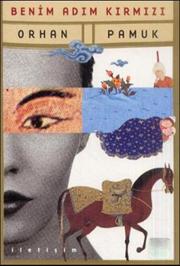
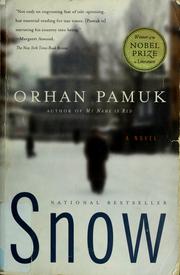
Start with My Name Is Red, then read Snow. My Name Is Red is a genuine murder mystery once it gets going, and it teaches you the doubling and the rotating voices that everything else in the career is built from. The obvious alternative is Istanbul, the memoir, which is the best single companion to the fiction — but it explains a body of work you have not read yet, and it works far better in the middle of the sequence than at the front.
One warning is worth more than any other on this path. My Name Is Red rotates first-person narrators, and the roster includes a corpse, a dog, a coin, a tree and the colour red itself, each chapter headed by the speaker announcing who it is. Readers routinely stall in the first hundred pages waiting for a normal novel to begin. It does not begin. The device clicks instead, usually around the third or fourth cycle of narrators, and after that the book pulls hard. Read those hundred pages in as few sittings as you can — this novel is defeated by twenty-page phone-sized instalments, which is how almost everyone who abandons it does so.
Snow is the closed system: a poet returns from exile to a snowbound city, the roads shut, and a theatre performance becomes a coup with the audience unable to leave. It gives the headscarf argument to characters on every side and resolves it through none of them. One fact belongs here rather than in the reading: Pamuk was prosecuted in Turkey in 2005 under Article 301, insulting Turkishness, over statements about the killing of Armenians and Kurds; the charges were dropped in 2006, and he received death threats and lived under police protection for a period. That is the reception rather than the book, and the novel is not a position paper. Check the edition before ordering, though — our record for Snow resolves to a Turkish-published edition rather than the standard English one.
The early experiments
Castillo Blanco / the White Castle is 184 pages and is the germ of everything later: a Venetian slave and his Ottoman master are physically identical and slowly trade lives, so East and West are one body rather than two subjects. Read it in one or two sittings. Our listing shows a Spanish-language edition under a dual title, so order carefully; the English is The White Castle.
The Black Book is 503 dense pages and will take a month. Galip searches Istanbul for his missing wife while a newspaper columnist's pieces run alongside as a second, older city. Readers stall at the columns, which feel like interruptions until you accept that they are the plot. This is also the one book on the path where the translation question really bites: an earlier English version and a 2006 retranslation are both in circulation, and the two Englishes are far apart. The retranslation is the one in print and the one people mean.
The Istanbul books
Istanbul is not a novel. It is a memoir of a childhood in a declining Ottoman family, illustrated with photographs that are argument rather than decoration, and it is where huzun — a melancholy belonging to a whole city rather than to individuals — gets defined. Our listing resolves to a Spanish edition; check.
Then The Museum of Innocence, roughly 730 pages, in which Kemal accumulates the objects a woman touched, thousands of cigarette butts among them, and obsession becomes legible as inventory. Find the ticket in your copy before you start. Printed editions carry a ticket to a real museum in the Cukurcuma district of Istanbul that Pamuk built and filled with the objects the novel describes, and the museum will stamp it. The building and the book were made together.
The late panoramas
Strangeness in My Mind follows forty years of Istanbul from the pavement upward through a street vendor selling boza. Our listing records 352 pages, which understates it badly — the Faber edition runs close to 600, so plan a month. It gives away its central event early and then spends the book explaining it, and other characters interrupt to contradict the narration mid-chapter. That is the design.
Nights of Plague is around 700 pages, his most conventional historical novel and the slowest starter of the late work: an imagined Ottoman island in 1901 where a quarantine becomes the founding of a nation. Do not begin it while still tired from the previous book.
Where to stop
Stop after Nights of Plague and you have read every major novel. The last stage is for the committed: Silent House, his second novel, untranslated into English until 2012, worth reading as an apprentice work with real flashes rather than as a major one, and The naive and the sentimental novelist, his Harvard lectures — short, plain and unusually generous about method, which is exactly why they belong last. Our record for the lectures is another Spanish edition. Three books are not in our catalogue at all: The New Life, The Red-Haired Woman and the essays in Other Colors. More routes on Discover.
Follow the full ordered path here: Orhan Pamuk Reading Order: Where to Start.