The Best Books on Model Rocketry
This curriculum takes a beginner from their very first model rocket kit all the way through high-power certification and advanced flight theory. Each stage builds on the last — starting with safe, hands-on fundamentals, then deepening into rocketry science, construction techniques, and finally the engineering and regulatory knowledge needed for high-power flight.
Foundations: First Launch
BeginnerUnderstand the basics of how model rockets work, learn the safety code, and successfully build and fly your first Estes-style kit with confidence.
▸ Study plan for this stage
Pace: 4–5 weeks, ~20–25 pages/day, with 2–3 days per week dedicated to hands-on building and testing
- The physics of rocket flight: thrust, drag, weight, and stability (center of pressure vs. center of gravity)
- Model rocket components: body tube, fins, nose cone, engine, recovery system, and their functions
- The National Association of Rocketry (NAR) Safety Code and legal/safety requirements for launching
- Engine classification system: letter designations (A–H), thrust curves, and burn characteristics
- Stability principles: how to calculate and ensure your rocket will fly straight, not tumble
- Recovery systems: parachute deployment, ejection charges, and safe descent techniques
- Building techniques: gluing, finishing, and assembly best practices from Stine's detailed instructions
- Pre-flight checklist and launch procedures: inspection, setup, and troubleshooting
- Explain the relationship between center of gravity and center of pressure, and why a rocket must be stable (CG forward of CP)
- What are the key components of a model rocket, and what is the function of each?
- Describe the NAR Safety Code and identify at least three critical safety rules you must follow before launching
- How does the engine letter classification system work, and what does a thrust curve tell you about an engine's performance?
- What are the main types of recovery systems, and how does each one work to bring your rocket back safely?
- Walk through the complete assembly process for an Estes-style kit, including gluing, finishing, and final checks
- Read and annotate Chapters 1–3 of the Handbook, focusing on rocket physics and component functions; create a labeled diagram of a model rocket with all major parts
- Build a simple paper rocket or balsa rocket from an Estes starter kit, following Stine's assembly instructions step-by-step and documenting each stage with photos
- Calculate the stability margin (distance between CG and CP) for your kit rocket using the formulas in the Handbook; verify with a physical balance test (hanging method)
- Research and summarize the NAR Safety Code; create a one-page checklist of the top 10 safety rules and post it near your launch area
- Conduct a pre-flight inspection of your assembled rocket using Stine's checklist; identify and correct any potential issues (loose fins, damaged body, etc.)
- Attend or simulate a model rocket launch: prep your rocket, load the engine, arm the recovery system, and execute a safe launch following Stine's procedures
Next up: Mastering the fundamentals of stability, safety, and basic flight mechanics positions you to explore more advanced topics like multi-stage rockets, high-power rocketry, and custom designs in the next stage.
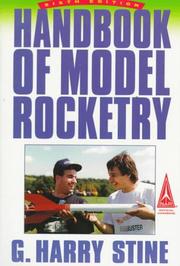
The definitive beginner's bible for model rocketry, covering safety, NAR rules, motors, recovery systems, and first flights. Read this first to build a solid vocabulary and safe habits before touching any hardware.
Building Skills: Construction & Design
BeginnerLearn to scratch-build rockets, finish them professionally, and understand how design choices affect stability and performance.
▸ Study plan for this stage
Pace: 6–8 weeks, ~20–25 pages/day (alternating between technical sections and narrative chapters)
- Rocket anatomy: body tubes, fins, nose cones, engines, and recovery systems—and how each component contributes to flight stability
- Center of gravity vs. center of pressure: the critical relationship that determines whether a rocket flies straight or tumbles
- Scratch-building techniques: selecting materials, cutting, gluing, and assembly methods that produce reliable, airworthy rockets
- Finishing and aesthetics: sanding, painting, and weatherproofing to protect structural integrity and improve durability
- Engine selection and thrust curves: understanding how different motor classes affect acceleration, altitude, and flight characteristics
- Stability calculations and testing: using the rule of thumb (center of pressure should be 1–2 body diameters behind center of gravity) and empirical validation
- Design iteration: how small changes to fin size, shape, and placement alter performance, and the importance of test flights for refinement
- Real-world problem-solving: learning from failures and setbacks, as modeled in Hickam's narrative of trial-and-error rocketry
- What is the relationship between center of gravity and center of pressure, and why does this relationship determine whether a rocket will fly stably?
- Describe the main components of a model rocket and explain the function of each (body tube, fins, nose cone, engine, recovery system).
- What are the key differences between scratch-building and kit-building, and what additional skills or considerations does scratch-building require?
- How do you select an appropriate motor for a given rocket design, and what information does a thrust curve provide?
- Walk through the steps for finishing a rocket (sanding, painting, decals) and explain why each step matters for durability and flight performance.
- If a rocket design is unstable, what design changes could you make to improve stability, and why would each change work?
- Build your first scratch-built rocket from 'Make: Rockets' (e.g., a simple 2–3 fin design using the book's templates and materials list), documenting each construction step with photos.
- Calculate the center of gravity and center of pressure for your rocket using the formulas and rule of thumb from Westerfield; verify with a balance test (hanging the rocket from a string).
- Sand, prime, and paint your rocket using the finishing techniques described in 'Make: Rockets'; experiment with at least two different paint schemes or decal applications.
- Conduct a static test of your rocket's stability by performing a 'swing test' (hanging it from a string and gently spinning it to observe balance) and a 'tumble test' (dropping it from shoulder height to observe how it falls).
- Launch your completed rocket at least twice with different motor classes (e.g., A8 vs. B6) and record observations about thrust, acceleration, altitude, and recovery—comparing actual performance to predictions.
- Design and build a second rocket incorporating lessons from your first flight; make at least one intentional design change (fin size, shape, or placement) and predict how it will affect stability or performance before launching.
Next up: This stage equips you with the hands-on skills and design intuition needed to move into advanced topics like multi-stage rockets, altitude optimization, and competition-level performance tuning.

A modern, project-based guide that walks through building rockets from scratch, introducing stability calculations and OpenRocket simulation software — essential skills before moving to mid-power.

While a memoir rather than a technical manual, this classic story of self-taught rocketry instills the problem-solving mindset and passion that sustains learners through the harder technical stages ahead.
Going Deeper: Mid-Power & Rocketry Science
IntermediateUnderstand the physics of flight, motor classifications, and safely step up to mid-power (E–F–G) rockets with more complex recovery systems.
▸ Study plan for this stage
Pace: 4–5 weeks, ~40–50 pages/day (focusing on Chapters 1–8, 12–14, and selected sections on propellant chemistry and nozzle theory)
- Rocket equation fundamentals: thrust, specific impulse (Isp), mass flow rate, and how they govern acceleration and flight performance
- Chemical propellant types (solid, liquid, hybrid) and their thermodynamic properties, burn rates, and practical implications for motor classification
- Nozzle design and expansion theory: how throat diameter and expansion ratio affect thrust, efficiency, and exhaust velocity
- Motor classification systems (E, F, G impulse ranges) and how to select appropriate motors for different rocket weights and mission profiles
- Combustion chamber pressure, temperature, and stability: factors that influence motor performance and safety margins
- Recovery system physics: drag coefficients, terminal velocity, and parachute sizing for mid-power rockets
- Safety considerations in motor selection and testing: pressure limits, structural loads, and failure modes
- Explain the rocket equation and derive how a change in exhaust velocity or propellant mass fraction affects final velocity.
- What are the key differences between solid, liquid, and hybrid propellants in terms of specific impulse, burn characteristics, and practical use in mid-power rockets?
- How does nozzle throat diameter and expansion ratio influence thrust and exhaust velocity? Why is this critical for motor design?
- Given a rocket's dry mass and desired acceleration, how would you select an appropriate E, F, or G motor using thrust and Isp data?
- What is terminal velocity, and how do you size a parachute for a mid-power rocket to ensure safe recovery?
- Describe the relationship between combustion chamber pressure, propellant burn rate, and motor stability. What happens if pressure becomes too high?
- Work through the rocket equation numerically: calculate final velocity for a sample rocket using different propellant masses and exhaust velocities; compare results to real mid-power flight data.
- Create a propellant comparison table (solid vs. liquid vs. hybrid) listing Isp, burn rate, density, and cost; use this to justify why solid motors dominate mid-power rocketry.
- Design a simple nozzle: calculate throat diameter and expansion ratio for a hypothetical E-class motor; predict thrust and exhaust velocity using Sutton's equations.
- Motor selection exercise: given three rockets (1 kg, 2 kg, 3 kg dry mass) and a target acceleration of 10–15 m/s², select appropriate E, F, or G motors and justify your choices with thrust curves.
- Parachute sizing calculation: determine the required parachute area for a 2 kg mid-power rocket to achieve a safe descent rate (~5 m/s); verify using drag coefficient and terminal velocity formulas.
- Analyze a real motor failure case study (e.g., casing rupture, nozzle erosion, or pressure spike); identify root causes using Sutton's principles of combustion stability and structural limits.
Next up: This stage equips you with the theoretical foundation and quantitative tools to predict motor performance and design safe recovery systems, preparing you to move into advanced topics like multi-stage rockets, active guidance systems, and optimization of complex flight profiles.

The foundational engineering text on propulsion — introduces the physics of thrust, specific impulse, and nozzle design. Read selectively at this stage to build intuition for why motors behave as they do.
Discussion
Keep reading
Paths that share books, cover the same subject, or open a related topic.