Card counting is one of the few casino skills that actually gives a disciplined player an edge, but it is unforgiving of shortcuts. Players who skip basic strategy, misjudge bankroll, or ignore how casinos respond either lose money or get shown the door. The edge is thin, and it only survives if you build it methodically.
A proper reading order layers the discipline: first a complete grounding in strategy and counting, then the harder skills of bankroll and risk, and finally the human game of avoiding heat and understanding the rules. Read in sequence and theory turns into a durable practice.
Build the foundation
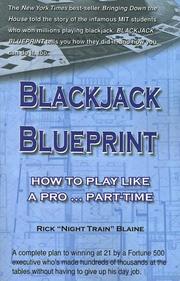
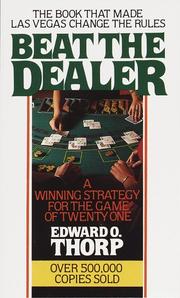
Start with Blackjack Blueprint by Rick Blaine, a modern, well-structured introduction that takes you from basic strategy through a working count. Then read the book that started it all, Beat the dealer by Edward O. Thorp, the mathematical proof that blackjack can be beaten and still the clearest statement of why. Together they give you both the how and the underlying logic.
Master strategy and money
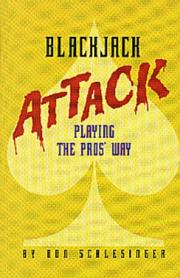
Now sharpen the edge. Blackjack attack by Don Schlesinger is the analytical bible of risk, betting, and camouflage, the book serious players return to for years. Professional blackjack by Stanford Wong refines counting systems and true-count conversion, and Burning the tables in Las Vegas by Ian Andersen teaches the psychological craft of playing without drawing attention. Round out the money side with Comp City by Max Rubin, which shows how to extract value from casino comps.
Learn the field and the law
Finally, understand the ecosystem. Bringing Down the House by Ben Mezrich is the gripping team-play narrative that shows the strategy under pressure, and Blackjack Life by Nathaniel Tilton offers an honest modern account of the grind. For the deep math, The theory of blackjack by Peter A. Griffin is the definitive analytical text, and Blackjack and the law by I. Nelson Rose keeps you on the right side of the rules.
Work these in order and counting becomes a disciplined edge rather than a fantasy. Follow the full path from basic strategy to advantage play that can withstand real conditions.
Follow the full reading path →
Ready to learn something deeply?
Build a reading path — free