Aerospace engineering reading path: from aerodynamics to flight and space
This curriculum takes a beginner from the physical intuition behind flight all the way to spacecraft design and orbital mechanics, building knowledge in four tightly sequenced stages. Each stage introduces new sub-disciplines — aerodynamics, propulsion, structures, and spaceflight — while reinforcing the engineering mindset developed in earlier books. By the end, the reader will have a solid conceptual and analytical foundation across all major branches of aerospace engineering.
Foundations: How and Why Things Fly
BeginnerBuild physical intuition about flight, the atmosphere, and the forces acting on aircraft and spacecraft before touching heavy mathematics.
▸ Study plan for this stage
Pace: 8–10 weeks, ~25–30 pages/day. Start with "Stick and Rudder" (4–5 weeks, ~20 pages/day for narrative flow), then "Introduction to Flight" (4–5 weeks, ~30 pages/day for denser technical content).
- How lift is generated: pressure differences, airfoil shape, and angle of attack—not just Bernoulli's principle
- The four forces of flight: lift, weight, thrust, and drag, and how they balance in different flight regimes
- Stalls, spins, and other aerodynamic phenomena from a pilot's perspective and their physical causes
- The atmosphere: density, pressure, temperature, and how they change with altitude and affect aircraft performance
- Control surfaces and aircraft control: how ailerons, elevators, and rudders actually work to change aircraft motion
- The difference between indicated airspeed, true airspeed, and ground speed, and why it matters
- Basic aircraft stability: static and dynamic stability, and the center of pressure vs. center of gravity
- Energy and efficiency in flight: why some aircraft designs are more efficient than others
- Explain in your own words why an airplane wing generates lift. What role does the shape of the airfoil play, and what happens at the stall?
- Draw and label the four forces acting on an aircraft in level flight. How do these forces change during a climb, descent, and turn?
- What is a stall, and why is it dangerous? How does angle of attack relate to stalling?
- How does air density affect aircraft performance? Why do aircraft need longer runways at high-altitude airports?
- Describe how ailerons, elevators, and rudders control an aircraft. Which control surface is responsible for which type of motion?
- What is the difference between indicated airspeed and true airspeed? Why does a pilot care about both?
- What is the relationship between the center of gravity and the center of pressure? How does this affect aircraft stability?
- Build a simple paper airplane and test how changing the angle of attack affects lift and stall behavior. Observe and document the transition from stable flight to stall.
- Using a smartphone inclinometer app, measure the pitch angle of a real aircraft during takeoff, climb, cruise, and descent. Correlate these angles to the forces acting on the aircraft.
- Create a force diagram for an aircraft in level flight, a climb, a descent, and a coordinated turn. Label all four forces and show their relative magnitudes.
- Research and plot how air density changes with altitude using real atmospheric data. Calculate how this affects the true airspeed needed for a given indicated airspeed.
- Visit a local airport or aviation museum and observe real aircraft control surfaces (ailerons, elevators, rudders). Manually move them (if permitted) to feel the resistance and understand their range of motion.
- Perform a thought experiment or simple simulation: given an aircraft's weight, wing area, and drag coefficient, estimate the thrust needed for level flight at different altitudes.
- Watch a video of a stall demonstration in a real aircraft or flight simulator, then explain the physical sequence of events that leads to the stall and recovery.
Next up: This stage builds the intuitive, qualitative foundation—understanding *why* things fly and *how* pilots think about flight—that makes the mathematical rigor of aerodynamics, propulsion, and aircraft performance in later stages meaningful and grounded in physical reality.
A timeless, non-mathematical explanation of how airplanes actually fly, written from a pilot's perspective. It builds the visceral intuition about lift, drag, and control that makes every later technical concept click.
A beautifully illustrated, accessible primer on how gas turbine engines work. Reading it here gives the learner a concrete mental model of propulsion before the thermodynamics gets rigorous.
The canonical first-year aerospace textbook — it surveys aerodynamics, propulsion, structures, and space flight in one volume at an introductory level, tying together everything seen so far and setting the vocabulary for all subsequent stages.
Core Aerodynamics and Atmospheric Flight
IntermediateDevelop a rigorous, quantitative understanding of subsonic and supersonic aerodynamics and how it drives aircraft performance and design.
▸ Study plan for this stage
Pace: 12–14 weeks, ~40–50 pages/day. Allocate 4–5 weeks to Bertin (fundamentals and aerodynamic theory), 4–5 weeks to Anderson (performance analysis and design integration), and 3–4 weeks to Roskam (detailed performance calculations and optimization). Include 1–2 weeks for review, problem sets, and integr
- Fundamental aerodynamic principles: lift, drag, pressure coefficient, and the relationship between flow physics and force generation in subsonic and supersonic regimes
- Boundary layer theory, viscous effects, and separation: how skin friction and flow separation drive real-world drag and performance limits
- Airfoil and wing aerodynamics: pressure distribution, stall behavior, and how geometric parameters (aspect ratio, sweep, thickness) affect performance across speed ranges
- Compressibility effects and transonic/supersonic aerodynamics: Mach number effects, shock waves, and critical speed phenomena that fundamentally change design constraints
- Aircraft performance metrics: thrust-to-weight, wing loading, and how aerodynamic coefficients (CL, CD) translate into climb, cruise, and takeoff/landing performance
- Design integration: how aerodynamic analysis informs practical aircraft sizing, propulsion selection, and trade-offs between competing performance objectives
- Quantitative problem-solving: deriving and applying aerodynamic equations, reading and interpreting pressure distributions and performance charts, and conducting sensitivity analyses
- Experimental and empirical methods: understanding wind tunnel data, correction factors, and how to bridge theory with real-world measurements
- How do pressure coefficient and dynamic pressure relate to lift and drag forces, and why does this relationship change in compressible flow?
- Explain the physical mechanisms of boundary layer separation and its impact on airfoil stall. How do geometric and flow parameters affect the stall angle?
- What is the critical Mach number, and how do shock waves and compressibility corrections alter aerodynamic coefficients in transonic and supersonic flight?
- Given an airfoil geometry and flight condition, how would you estimate the lift and drag coefficients, and what sources of error or uncertainty should you account for?
- How do wing planform parameters (aspect ratio, taper ratio, sweep angle) influence induced drag and lateral-directional stability, and what are the design trade-offs?
- Starting from aerodynamic coefficients, walk through the calculation of aircraft climb rate, range, and takeoff distance. What are the critical performance constraints?
- How would you use Roskam's methods to size an aircraft (wing area, engine thrust) to meet specified performance requirements (e.g., takeoff distance, cruise speed, payload)?
- Describe the differences in aerodynamic behavior and design approach between subsonic, transonic, and supersonic aircraft, citing specific examples from the texts.
- Using Bertin's airfoil data and pressure coefficient plots, calculate lift and drag coefficients for a given airfoil at multiple angles of attack and Mach numbers. Compare theoretical predictions with tabulated values and explain discrepancies.
- Construct a boundary layer analysis for a flat plate or airfoil surface: calculate displacement thickness, momentum thickness, and skin friction coefficient using Bertin's methods, and verify against experimental data.
- Perform a compressibility correction (Laitert-Kaert, Prandtl-Kaert, or Karman-Tsien) on subsonic airfoil data and compare the corrected results to actual transonic wind tunnel measurements provided in the texts.
- Analyze a complete airfoil stall sequence: plot CL and CD vs. angle of attack using Bertin's data, identify the stall angle, and explain the physical flow changes using boundary layer and separation concepts.
- Given an aircraft geometry (wing area, aspect ratio, weight, engine thrust), use Anderson's methods to calculate and plot the aircraft's performance envelope: cruise speed, climb rate, and service ceiling as functions of altitude and weight.
- Conduct a takeoff and landing analysis using Roskam's detailed methods: calculate ground roll, obstacle clearance distance, and landing distance for a specified aircraft under various atmospheric and runway conditions.
- Perform a wing design trade-off study: vary aspect ratio, taper ratio, and sweep angle, recalculate induced drag and aerodynamic efficiency, and assess the impact on aircraft range and fuel consumption using Anderson's framework.
- Develop a simple aircraft sizing spreadsheet: input performance requirements (payload, range, cruise speed, takeoff distance), use Roskam's iterative methods to estimate wing area and thrust, and validate the solution against the original constraints.
Next up: This stage equips you with the quantitative aerodynamic and performance tools needed to move into advanced topics such as stability and control, propulsion system integration, and detailed structural design—where aerodynamic loads and performance constraints directly drive structural requirements and control law development.
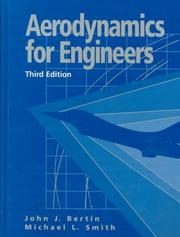
Bridges the gap between introductory physics and full aerodynamic analysis, covering boundary layers, lift, drag, and compressibility with worked examples that build problem-solving skill.
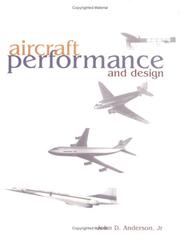
Applies aerodynamic principles directly to real design decisions — range, endurance, takeoff, and climb — showing how the numbers from the previous book translate into an actual aircraft.
Deepens performance analysis and introduces preliminary sizing methods, preparing the reader to think like a design engineer rather than just an analyst.
Propulsion and Structures
IntermediateGain a working understanding of aerospace propulsion thermodynamics and the structural mechanics that keep aircraft and rockets from failing under load.
▸ Study plan for this stage
Pace: 12–14 weeks, ~40–50 pages/day. Mattingly (4–5 weeks), Beer (4–5 weeks), Bruhn (4–5 weeks). Allocate extra time for Bruhn due to its density and design-focused content.
- Thermodynamic cycles and performance metrics in gas turbines (compressor work, turbine work, thermal efficiency, specific thrust from Mattingly)
- Stress, strain, and material behavior under static and dynamic loading (elastic vs. plastic deformation, Hooke's law, failure criteria from Beer)
- Torsion, bending, and combined loading in aerospace structural members (shear and moment diagrams from Beer)
- Fatigue and fracture mechanics as they apply to aircraft structures (crack growth, stress concentration from Bruhn)
- Structural analysis methods: method of sections, virtual work, and energy methods for aerospace frames (Bruhn)
- Pressure vessel and thin-walled structure analysis relevant to fuselages and fuel tanks (Beer and Bruhn)
- Compressor and turbine blade aerothermodynamics and mechanical design constraints (Mattingly)
- Practical design trade-offs between propulsion efficiency, structural weight, and thermal limits in integrated aerospace systems
- How do compressor pressure ratio, turbine inlet temperature, and bypass ratio affect overall thermal efficiency and specific thrust in a gas turbine engine (Mattingly)?
- Given a loaded beam or structural member, how do you construct shear and bending moment diagrams, and what do maximum stresses tell you about failure risk (Beer)?
- What is the difference between elastic and plastic deformation, and how do yield criteria (von Mises, Tresca) predict failure under combined loading (Beer)?
- How do stress concentration factors and fatigue notch factors modify the safe design of aircraft structural details, and what role does material selection play (Bruhn)?
- For a thin-walled fuselage under internal pressure and bending loads, how do you calculate hoop stress, longitudinal stress, and combined stress states (Beer and Bruhn)?
- What are the key steps in the semi-empirical design process for aircraft structures, and how do you use Bruhn's charts and methods to size structural components?
- Work through Mattingly's thermodynamic cycle problems: calculate compressor and turbine work, overall efficiency, and specific thrust for a given pressure ratio and turbine inlet temperature.
- Solve 5–8 beam bending problems from Beer (cantilever, simply supported, overhanging beams) including shear and moment diagrams, deflection, and maximum stress location.
- Analyze a thin-walled pressure vessel (e.g., fuel tank) using Beer's formulas; calculate hoop and longitudinal stresses, then check against yield criteria under combined loading.
- Use Bruhn's semi-empirical methods to size a simple fuselage panel or stiffened skin under combined bending and shear; apply stress concentration factors and fatigue knockdown factors.
- Conduct a hand-calculation structural analysis of a simple truss or frame (e.g., landing gear strut) using method of sections and virtual work; compare results to a simple FEA model if available.
- Design a small structural component (e.g., a wing root attachment or engine mount bracket) by iterating material, cross-section, and geometry using Bruhn's design philosophy and charts.
Next up: This stage equips you with the thermodynamic and structural fundamentals needed to understand how propulsion systems and airframes interact—setting the stage for systems-level design, aeroelasticity, and performance optimization in the next phase.
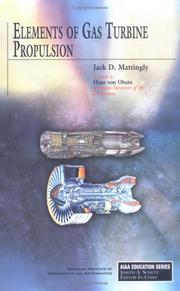
The definitive intermediate-level propulsion textbook, covering thermodynamic cycles, component analysis, and engine design in a rigorous but teachable way — the natural next step after the Rolls-Royce primer.
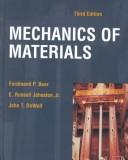
Provides the essential stress, strain, and failure analysis foundation that aerospace structures courses build on; reading it here ensures the learner can follow structural arguments in later design texts.
The industry-standard reference for aircraft structural analysis, covering thin-walled beams, shear flow, and fatigue — it shows how materials mechanics is applied to real airframes.
Spaceflight: Orbital Mechanics and Spacecraft Design
ExpertUnderstand orbital mechanics, rocket propulsion, and the end-to-end process of designing and flying a spacecraft mission.
▸ Study plan for this stage
Pace: 8–10 weeks, ~40–50 pages/day. Start with "Rocket Propulsion Elements" (weeks 1–5, ~350 pages), then transition to "Fundamentals of Astrodynamics" (weeks 6–10, ~400 pages). Allocate 2–3 days per major chapter for review and problem-solving.
- Rocket equation and thrust: how chemical energy converts to vehicle acceleration via mass flow rate and exhaust velocity
- Engine performance metrics: specific impulse (Isp), chamber pressure, nozzle design, and their effects on mission capability
- Staging and propellant selection: trade-offs between solid, liquid, and hybrid propulsion systems for different mission profiles
- Orbital mechanics fundamentals: two-body problem, Kepler's laws, and energy-based orbital descriptions
- Conic sections and orbital trajectories: elliptical, parabolic, and hyperbolic orbits and their mission applications
- Orbital maneuvers: Hohmann transfers, plane changes, and rendezvous mechanics for mission design
- Spacecraft design integration: how propulsion performance constraints drive vehicle architecture, mass budgets, and mission feasibility
- Derive and explain the Tsiolkovsky rocket equation; how does it relate mission ΔV requirements to propellant mass and engine Isp?
- What is specific impulse and why is it the primary figure of merit for comparing rocket engines? How does it differ from exhaust velocity?
- Explain the two-body problem and Kepler's laws; why are they sufficient for preliminary mission design?
- Describe a Hohmann transfer orbit: what are its ΔV requirements, transfer time, and when is it optimal versus other maneuvers?
- How do nozzle design parameters (throat area, expansion ratio, chamber pressure) affect engine thrust and specific impulse?
- Given a spacecraft mass, target orbit, and engine Isp, how would you estimate the propellant mass needed and assess mission feasibility?
- Calculate the ΔV budget for a lunar mission: LEO insertion, trans-lunar injection, lunar orbit insertion, and descent. Use realistic Isp values from Sutton's tables.
- Design a simple two-stage launch vehicle: select propellant types (RP-1/LOX, H2/LOX, solid), estimate stage masses using the rocket equation, and verify payload to orbit.
- Solve orbital mechanics problems from Bate: compute orbital elements from position/velocity vectors, predict spacecraft location at future times, and verify using Kepler's laws.
- Perform a Hohmann transfer analysis: calculate ΔV for Earth-to-Mars transfer, estimate flight time, and compare to alternative trajectories (e.g., fast transfers with higher ΔV).
- Analyze nozzle performance: use Sutton's thermochemical data to estimate chamber conditions, compute isentropic flow through a converging-diverging nozzle, and predict thrust.
- Conduct a trade study: compare three engine options (e.g., RL-10, RS-25, SSME) for an upper stage; evaluate Isp, mass, cost, and mission impact on payload delivery.
Next up: This stage equips you with the quantitative tools to size vehicles, predict orbital trajectories, and evaluate propulsion trades—foundational skills for the next stage, which will likely address mission design complexity, guidance and control systems, or detailed spacecraft subsystem engineering.

The definitive reference on chemical rocket propulsion — nozzle theory, propellants, and engine design — bridging the gap between gas turbine knowledge and space launch systems.
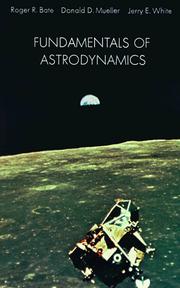
The classic, accessible introduction to orbital mechanics used at the US Air Force Academy; its worked examples and clear derivations make Kepler's laws and orbital maneuvers genuinely learnable.
Caps the curriculum by showing how all prior knowledge — propulsion, structures, orbits — integrates into a complete spacecraft mission design, from concept through operations.
Discussion
Keep reading
Paths that share books, cover the same subject, or open a related topic.