Best Books on Minerals and Gemology, in Order
This curriculum takes a beginner from zero knowledge of minerals and gems all the way to advanced field identification, crystal chemistry, and professional gemological assessment. Each stage builds on the last: first establishing visual and conceptual foundations, then deepening scientific understanding of crystal structure and rock-forming minerals, and finally mastering gemstone identification and field collecting practice.
Foundations: Rocks, Minerals & First Identification
BeginnerBuild core vocabulary — mineral vs. rock, physical properties (hardness, luster, cleavage, streak), and the ability to identify the most common minerals by sight and simple tests.
▸ Study plan for this stage
Pace: 4–5 weeks, ~25–30 pages/day. Start with Pellant's handbook (foundational vocabulary and systematic approach), then move to Mottana's guide (deeper identification practice and visual reference). Allocate 2–3 days per section to absorb and practice before advancing.
- Distinction between minerals and rocks: minerals are naturally occurring, inorganic solids with ordered atomic structure and a defined chemical composition; rocks are aggregates of minerals
- The six main crystal systems and how crystal form relates to mineral identity
- Physical properties as identification tools: hardness (Mohs scale), luster (metallic, vitreous, pearly, etc.), cleavage vs. fracture, streak, specific gravity, and transparency
- The role of color in mineral identification and why it can be unreliable without supporting properties
- Common minerals in each major group (silicates, oxides, carbonates, sulfides, halides) and their typical occurrences
- Systematic identification workflow: observe crystal form → test hardness → assess luster and transparency → perform streak test → check cleavage → compare with guide illustrations
- How mineral composition and atomic structure determine physical properties
- The relationship between mineral properties and their practical uses (gemstones, industrial minerals, ores)
- What is the fundamental difference between a mineral and a rock, and why does atomic structure matter?
- How would you use the Mohs hardness scale to identify an unknown mineral in the field?
- Describe the difference between cleavage and fracture, and why this distinction is crucial for identification.
- Why is color alone an unreliable identifier for minerals, and what properties should you test instead?
- Walk through a complete identification workflow for an unknown specimen using Pellant's and Mottana's methods.
- Name at least five common minerals from different groups (silicates, carbonates, oxides) and describe one key property of each.
- Build a personal Mohs hardness reference kit: collect or purchase samples of minerals representing each hardness level (1–10), label them, and practice scratching tests on unknown specimens weekly.
- Create a visual property chart for 20–25 common minerals from Pellant's handbook, recording hardness, luster, cleavage, streak color, and crystal system; cross-reference with Mottana's illustrations.
- Perform streak tests on 10–15 mineral samples using a ceramic tile; record results and compare with Mottana's guide to verify accuracy.
- Collect 5–10 local rock and mineral specimens (from geology shops, field sites, or educational kits); attempt to identify each using Pellant's systematic approach, then verify against Mottana's detailed descriptions and photographs.
- Practice crystal form observation: sketch the crystal shapes of 8–10 minerals from Pellant's illustrations, label the crystal system, and explain how form relates to atomic structure.
- Conduct a 'blind identification challenge': have a partner present 5–8 unlabeled specimens; use only physical property tests (hardness, luster, cleavage, streak) to identify them, then check against Mottana's guide.
Next up: Mastery of these foundational properties and systematic identification methods equips you to move into the next stage—deeper mineral classification by chemical groups, understanding how mineral formation conditions shape their properties, and exploring gemstone evaluation and value.
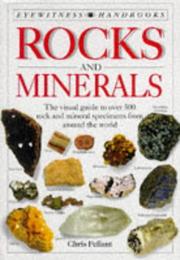
A beautifully illustrated DK Smithsonian field guide that introduces mineral properties and rock types with clear photos — the perfect first book for a complete beginner to build visual recognition.
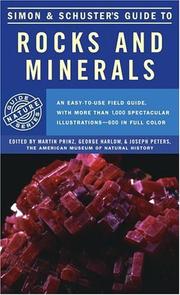
A classic, affordable reference covering over 300 minerals and rocks with systematic descriptions; reading it after Pellant reinforces identification vocabulary with greater breadth and scientific detail.
Crystal Structure & Systematic Mineralogy
IntermediateUnderstand why minerals look and behave the way they do — crystal systems, symmetry, chemical bonding, and the systematic classification of mineral groups — laying the scientific backbone for everything that follows.
▸ Study plan for this stage
Pace: 8–10 weeks, ~40–50 pages/day (mix of text and diagrams; allow extra time for crystal system visualization and mineral identification practice)
- The seven crystal systems and their defining symmetry elements (axes, planes, centers) and how they relate to mineral external form
- Atomic structure, chemical bonding types (ionic, covalent, metallic, van der Waals), and how bonding strength determines hardness, cleavage, and other physical properties
- Mineral classification by chemical composition and structure: native elements, silicates, oxides, sulfides, carbonates, sulfates, halides, and phosphates
- Polymorphism and isomorphism — why different minerals can have the same composition but different structures, and why similar elements can substitute in crystal lattices
- Systematic mineral nomenclature and the relationship between chemical formula, crystal structure, and mineral family groupings
- How to read and interpret crystallographic notation (Miller indices, space groups) and understand what symmetry tells you about a mineral's properties
- The connection between crystal structure and physical properties: cleavage planes, optical properties, density, and thermal/electrical behavior
- Solid solution series and mineral solid solutions — understanding compositional variation within mineral groups
- Explain the relationship between a mineral's crystal system and its symmetry elements. Why does a cubic mineral behave differently optically than a monoclinic one?
- How does ionic bonding strength relate to hardness and cleavage? Why do halides like halite cleave perfectly along {100} planes?
- Compare and contrast polymorphism and isomorphism with specific mineral examples from the texts. What is the difference between diamond and graphite versus olivine solid solutions?
- Given a chemical formula and a description of physical properties (hardness, cleavage, luster), how would you determine which mineral group it belongs to and predict its crystal system?
- What is the significance of Miller indices and space groups? How do they help classify minerals systematically?
- Describe how crystal structure directly explains why some minerals are piezoelectric or have perfect cleavage in specific directions.
- Work through Perkins' crystal system chapters: sketch and label the unit cells and symmetry elements of cubic, tetragonal, orthorhombic, monoclinic, triclinic, hexagonal, and trigonal systems. Practice identifying which system a mineral belongs to based on its symmetry description.
- Using Klein's mineral descriptions, select 15–20 minerals across different groups (e.g., halite, quartz, feldspar, olivine, calcite) and for each one: write the chemical formula, identify the crystal system, list the bonding types present, and explain how bonding relates to its cleavage and hardness.
- Create a visual classification chart mapping mineral groups (silicates, oxides, sulfides, carbonates, etc.) to their crystal systems and dominant bonding types. Use examples from both texts.
- Practice reading and interpreting Miller indices: given a set of planes described in Miller notation, sketch them on a crystal and explain what symmetry operations relate them.
- Examine solid solution series (e.g., olivine Mg₂SiO₄–Fe₂SiO₄, plagioclase feldspars) from Klein: plot composition vs. a physical property (density, refractive index) and explain why properties change continuously.
- Hands-on: obtain or examine mineral specimens (or high-quality photographs) of polymorphs (e.g., calcite vs. aragonite, diamond vs. graphite) and compare their crystal forms, cleavage, and hardness. Relate observations back to their different crystal structures.
Next up: Mastering crystal structure and systematic classification equips you to understand mineral genesis and stability — why certain minerals form under specific pressure, temperature, and chemical conditions, which is the foundation for the next stage on mineral formation and phase diagrams.

A widely adopted university textbook that explains crystal chemistry, symmetry, and mineral groups in an accessible, well-illustrated way — the ideal bridge from field identification to true scientific understanding.
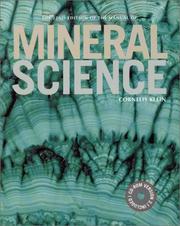
The canonical intermediate-to-advanced mineralogy text (originally by Dana), covering crystal systems, physical and optical properties, and all major mineral groups systematically; best read after Perkins to consolidate and deepen knowledge.
Gemology: Gemstones Identified & Assessed
IntermediateMaster the science of gemstones — optical properties, refractive index, specific gravity, treatments, and professional identification of precious and semi-precious stones.
▸ Study plan for this stage
Pace: 8–10 weeks, ~40–50 pages/day with 2–3 days per week for hands-on lab work
- Optical properties of gemstones: refraction, dispersion, birefringence, pleochroism, and color theory
- Refractive index (RI) measurement and interpretation using refractometers and immersion methods
- Specific gravity and density determination via hydrostatic weighing and heavy liquids
- Crystal systems and their relationship to optical behavior and gemstone identification
- Gemstone treatments and enhancements: heating, irradiation, coating, and fracture-filling detection
- Professional identification techniques: microscopy, spectroscopy, and UV/fluorescence testing
- Precious vs. semi-precious stone classification and market value factors
- Systematic identification workflows for unknown gemstones using Schumann's descriptions and Webster's diagnostic tables
- How do refractive index and birefringence help distinguish between similar-looking gemstones, and what instruments are used to measure them?
- What is the relationship between crystal system and optical properties, and how does this aid in gemstone identification?
- Describe the main treatments applied to gemstones (heating, irradiation, coating, fracture-filling) and how to detect each using standard gemological tools.
- Given an unknown gemstone, walk through a systematic identification process using color, RI, specific gravity, and optical properties.
- How do precious stones differ from semi-precious stones in terms of rarity, durability, and market value, and what role does treatment play in this distinction?
- What is pleochroism and dispersion, and why are these properties important for identifying gemstones like rubies, sapphires, and diamonds?
- Measure refractive indices of 10–15 gemstone samples using a refractometer; record RI values and compare against Schumann's reference tables to identify unknowns.
- Determine specific gravity of gemstones using hydrostatic weighing and heavy liquid methods; correlate results with Webster's density data for confirmation.
- Examine gemstones under magnification (10x–40x) and UV light; document inclusions, fractures, and fluorescence patterns to assess treatment history.
- Create a personal identification flowchart using Schumann's color categories and Webster's diagnostic tables; test it on 5–8 unknown samples.
- Conduct a treatment detection exercise: compare untreated and treated samples (heated rubies, irradiated diamonds, fracture-filled emeralds) using microscopy and UV exposure.
- Write detailed gemological reports for 3–5 gemstones, including RI, SG, crystal system, optical properties, treatment assessment, and market classification.
Next up: Mastery of gemstone identification and assessment techniques positions you to advance to professional grading standards, laboratory certification protocols, and market valuation—the business and regulatory side of gemology.
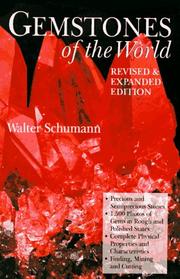
The world's best-selling gemstone reference, covering over 1,400 gems with stunning photography and clear property tables — the essential first gemology book, building directly on the mineralogy already learned.

The definitive professional gemology reference used by GIA and FGA students worldwide; its depth on optical properties, spectroscopy, and treatments is unmatched and rewards the reader who has Schumann's visual foundation.
Discussion
Keep reading
Paths that share books, cover the same subject, or open a related topic.