Mineralogy and gemology look like one subject and behave like two. Mineralogy is a physical science built on crystal chemistry and optics; gemology is an identification discipline concerned with a narrow set of species, their treatments, and their imitations. A gemologist needs to distinguish a natural sapphire from a synthetic one; a mineralogist needs to know why corundum is corundum. The books reflect that split, and reading them in the wrong order means hitting space groups before you can reliably tell quartz from calcite.
Start in the hand sample. Hardness, streak, cleavage, habit, lustre, and specific gravity will identify a large fraction of common minerals with no equipment beyond a knife, a streak plate, and patience. Only once those are automatic does the crystallography earn its keep.
Learn to identify in the field
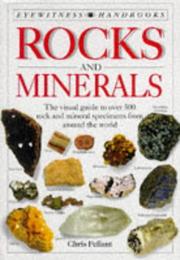
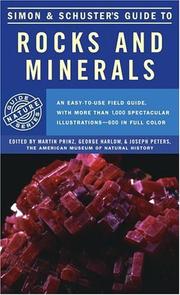
Rocks and Minerals in the Smithsonian handbook series is the best starting point: photographic, systematically organised, and structured around the diagnostic properties you can actually test. Carry it. Then add Simon and Schuster's Guide to rocks and minerals, which covers a wider range of specimens and is a useful second opinion when the first guide's photograph does not match what is in your hand — an extremely common experience early on.
Working through both guides on real specimens for a season will do more for you than any amount of reading ahead. Local rock and mineral clubs and university teaching collections are the usual way to get hands on material you cannot legally or practically collect yourself.
Move to the science
Mineralogy by Dexter Perkins is the bridge textbook: crystal chemistry, systematic descriptions, and optical properties presented at a level that assumes some general chemistry but not a degree in it. This is where you learn why the field-guide properties exist — why cleavage follows planes of weak bonding, why colour is often the least reliable clue.
Then Manual of Mineral Science, the long-running Klein and Dana lineage that has been the standard university text for generations. It goes further into crystallography, X-ray methods, and the full systematic descriptive mineralogy. It is a reference you will keep, not a book you finish in a fortnight.
Specialise into gems
With the mineralogy in place, Gemstones of the World is the standard visual reference: hundreds of species and varieties, with the physical constants and the cutting styles. Schumann's book is comprehensive enough that most amateur gemologists never outgrow it.
Finish with Gems: their sources, descriptions, and identifications, Webster's monumental work and the professional's reference. It is where the serious material lives on synthetics, treatments, and instrumental identification, and it is far more than a beginner needs — which is why it sits last.
An honest limit: identifying cut gemstones reliably requires instruments — a refractometer, a polariscope, a spectroscope, and often more — and the diagnostic work in Webster assumes them. Books teach you what the readings mean; they cannot substitute for the equipment or for the supervised bench time that professional gemological certification requires. If your interest is commercial, the trade credential matters and the reading is preparation for it, not a replacement.
Follow the full path to keep the sequence from field guide to bench.
Follow the full ordered path here: Learn Mineralogy and Gemology From Books, in Order.