Mikhail Bulgakov Reading Order: Where to Start
This curriculum guides an intermediate reader through Bulgakov's major works in a carefully sequenced order — starting with his shorter, more accessible prose to build familiarity with his dark humor, Soviet satire, and fantastical style, before tackling The Master and Margarita with full confidence. A final stage addresses the translation question directly, giving the reader the critical tools to choose and re-read the masterpiece with deeper understanding.
Bulgakov's Satirical Voice: The Short Novels
IntermediateGrasp Bulgakov's core satirical mode, his targets (Soviet bureaucracy, human greed, scientific hubris), and his blend of the grotesque and the comic — the essential vocabulary for everything that follows.
▸ Study plan for this stage
Pace: 1–2 weeks, ~20–25 pages/day (the novella runs roughly 120 pages in most translations); allow extra days for re-reading key scenes and completing exercises
- Satirical allegory: how Bulgakov uses the dog-to-human transformation as a sustained metaphor for the Soviet 'New Man' project and forced social engineering
- The grotesque: the blending of the comic and the horrifying (a speaking, drinking, swearing dog-man) to defamiliarize Soviet reality and expose its absurdity
- Class warfare and the intelligentsia: the clash between Professor Preobrazhensky's bourgeois refinement and Sharikov's proletarian coarseness as a critique of revolutionary leveling
- Scientific hubris: Preobrazhensky's experiment as a Faustian overreach — the scientist who believes he can improve on nature and society, only to create a monster
- Soviet bureaucracy and the 'document': the role of housing committees, identity papers, and Shvonder's interference as a portrait of petty officialdom weaponized against private life
- Narrative voice and irony: Bulgakov's use of free indirect discourse, the dog's naïve point-of-view in the opening section, and the deadpan narrator to generate satirical distance
- The transformation arc as social commentary: Sharikov's rapid adoption of Soviet ideology (denouncing, informing, acquiring a job title) as a parody of ideological indoctrination
- Censorship and the suppressed text: understanding why the novella circulated only in samizdat until 1987 and what that reception history reveals about its targets
- What specific aspects of Soviet society does the Sharik-to-Sharikov transformation satirize, and how does Bulgakov signal these targets through character detail and dialogue?
- How does Bulgakov use the dog's perspective in the opening chapters to establish an ironic, estranged view of Moscow street life and class hierarchy?
- In what ways is Professor Preobrazhensky both a sympathetic figure and a legitimate target of satire — and how does Bulgakov balance those two readings?
- How does Shvonder and the housing committee function as a satirical portrait of Soviet bureaucracy, and what specific comic or grotesque techniques does Bulgakov deploy in those scenes?
- What is the significance of Sharikov's reading list (Engels vs. Kautsky) and his job as head of the city's cat-purging department — what do these details add to the satirical argument?
- How does the novella's ending (the reversal of the experiment) resolve — or deliberately refuse to resolve — the satirical critique Bulgakov has built?
- Close-reading log: Select three scenes that shift between comic and grotesque (e.g., Sharikov's first dinner, the cat-chase, the denunciation letter) and write a paragraph on each explaining exactly which techniques — irony, hyperbole, bathos, free indirect discourse — produce the tonal shift.
- Character contrast chart: Draw up a two-column comparison of Preobrazhensky and Sharikov across five dimensions (speech register, relationship to 'documents', attitude to food, political allegiance, treatment of animals). Use direct quotations. Then write a short reflection on what the contrast argues about class and ideology.
- Allegory mapping exercise: List every detail about Sharikov that could be read as a satirical stand-in for a specific Soviet type or policy (e.g., his informing = the culture of denunciation; his job title = bureaucratic proliferation). Assess which mappings feel precise and which feel over-determined.
- Rewrite a scene from a different point of view: Take the housing-committee confrontation and rewrite it from Shvonder's perspective, played completely straight and earnestly. Then analyze how the change of perspective reveals what Bulgakov's ironic original is doing.
- Reception history research note: Write a one-page note on why Heart of a Dog was banned and not published in the USSR until 1987. Connect at least two specific passages in the text to the likely reasons for suppression.
- Comparative vocabulary list: Begin a running 'Bulgakov Satirical Toolkit' — a personal glossary of the techniques and recurring targets you identify in Heart of a Dog. You will expand this list in every subsequent stage of the curriculum.
Next up: Mastering the satirical mechanics, grotesque imagery, and anti-Soviet targets in Heart of a Dog gives the reader the essential interpretive vocabulary — allegory, ironic voice, the monstrous made comic — needed to recognize and analyze how Bulgakov scales and deepens these same techniques in his longer, more structurally complex works.

Bulgakov's most celebrated novella and the perfect next step — a dog is surgically transformed into a Soviet 'new man,' skewering both scientific utopianism and Bolshevik social engineering. Its themes of creation, identity, and power feed directly into The Master and Margarita.
Bulgakov's Autobiographical & Theatrical World
IntermediateUnderstand the personal and professional pressures that shaped Bulgakov — his relationship with Stalin, the theater, censorship, and artistic survival — which are the emotional engine of The Master and Margarita.
▸ Study plan for this stage
Pace: 5–6 weeks total: Weeks 1–2 read "A Country Doctor's Notebook" (~20–25 pages/day, short story by short story); Weeks 3–5 read "Black Snow" (~15–20 pages/day, pausing after each chapter to journal); Week 6 reserved for review, cross-book comparison, and completing exercises.
- Autobiographical displacement: how Bulgakov transforms lived experience (his years as a rural doctor in the Caucasus) into fiction, using irony and dark humor as emotional armor against professional isolation and helplessness
- The outsider intellectual: the recurring Bulgakov protagonist — educated, idealistic, thrust into a hostile or absurd environment — as a self-portrait of the artist under Soviet pressure
- Censorship as creative constraint: how the impossibility of direct self-expression forced Bulgakov into allegory, satire, and layered narrative — a technique visible even in the early 'Notebook' stories
- The theater as a totalitarian microcosm: 'Black Snow' portrays the Moscow Arts Theatre as a bureaucratic, ego-driven institution that mirrors the Soviet state — arbitrary power, enforced loyalty, and the crushing of individual vision
- Stalin's shadow and the 'protected' artist: Bulgakov's paradoxical relationship with Stalin (who both banned his works and personally intervened to keep him employed) is dramatized in 'Black Snow' through the figure of the all-powerful, unseen Director
- Artistic survival vs. artistic integrity: both books dramatize the impossible bargain an artist must strike — compromise enough to survive, but not so much that the work loses its soul
- Dark comedy and the grotesque as resistance: Bulgakov's use of absurdist humor in both texts is not mere style but a political act — laughter as the only honest response to an irrational system
- The unfinished/suppressed work as theme: 'Black Snow' is itself an unfinished novel, and its subject is a play that cannot be staged — making the form and content mirror each other in a meditation on creative futility
- In 'A Country Doctor's Notebook,' how does Bulgakov use the young doctor's professional inexperience and physical isolation to explore the broader condition of the intellectual who is simultaneously needed by and alienated from the society he serves?
- Both books feature protagonists who are writers or artists at the mercy of powerful institutions. What specific tactics — psychological, social, and creative — do these protagonists use to preserve their sense of self, and where do those tactics fail?
- 'Black Snow' depicts the theater director (the 'Independent Theatre') as an almost supernatural force of arbitrary authority. How does this portrait function as a coded commentary on Bulgakov's real relationship with Stalin and Soviet cultural bureaucracy?
- How does Bulgakov's use of dark humor and the grotesque differ between the early autobiographical stories in 'A Country Doctor's Notebook' and the more bitter, satirical tone of 'Black Snow,' and what does that shift tell us about his evolving relationship with power and censorship?
- The novel within the novel is a central device in 'Black Snow' — a playwright watches his own work being destroyed by institutional interference. How does this meta-fictional structure prefigure the layered narrative architecture of The Master and Margarita?
- 'Black Snow' was left unfinished and unpublished in Bulgakov's lifetime. How does knowing this biographical fact change your reading of the novel's themes of creative futility, suppression, and the artist's legacy?
- Story-by-story character map: As you read each story in 'A Country Doctor's Notebook,' maintain a running journal entry written in the first person as the young doctor — then annotate it with a second voice asking: 'Where is Bulgakov the author peeking through the narrator?' This trains you to distinguish autobiographical raw material from artistic shaping.
- Power-structure diagram for 'Black Snow': Draw a hierarchy of every character and institution in the novel (the playwright, the director, the actors, the committee, the unseen patrons). Then draw arrows showing who controls whom. Annotate each arrow with the word Bulgakov uses to describe that relationship. Compare your diagram to what you know of the Soviet cultural apparatus.
- Parallel passage analysis: Find one scene in 'A Country Doctor's Notebook' where the protagonist feels professionally humiliated or powerless, and one scene in 'Black Snow' with the same emotional register. Write a 400-word comparison: same author, same wound — how has the literary strategy changed between the two works?
- Censorship simulation exercise: Choose one scene from 'Black Snow' that you think a Soviet cultural committee would have found objectionable. Write a one-page 'censor's report' explaining why it is ideologically dangerous, then write Bulgakov's imagined one-page rebuttal. This forces you to inhabit both sides of the censorship dynamic.
- Unfinished work reflection: 'Black Snow' was never completed. Write a one-to-two page speculative ending for the novel, staying true to Bulgakov's tone and the thematic logic of the book. Afterward, write a short paragraph explaining what your chosen ending reveals about what you believe the novel's central argument to be.
- Biographical timeline overlay: Create a two-column timeline. On the left, list the key real events of Bulgakov's life from 1916–1940 (his medical years, his plays being banned, his letter to Stalin, his work at the Moscow Arts Theatre). On the right, map specific scenes or moments from both books onto those events. This grounds the fiction in history and prepares you for reading The Master and Mar
Next up: By internalizing the personal and institutional pressures documented in these two books — professional humiliation, censorship, the paradox of Stalin's patronage, and the theater as a totalitarian stage — the reader is now equipped to recognize The Master and Margarita not as a fantasy novel but as Bulgakov's ultimate, coded act of artistic reckoning with everything these books describe directly.

These linked stories from Bulgakov's early career as a rural doctor are darkly funny and deeply human — they show the autobiographical, confessional side of his writing and establish the 'isolated idealist vs. chaotic world' dynamic he returns to throughout his life.

This roman à clef about a playwright's nightmarish experience at the Moscow Art Theatre (a thinly veiled portrait of Stanislavski) is essential context: it dramatizes the artistic compromise and institutional absurdity that haunts the Master's story in his great novel.
The Master and Margarita — First Reading
IntermediateRead and fully experience The Master and Margarita as a complete novel, following the recommended translation for a first-time reader.
▸ Study plan for this stage
Pace: 3–4 weeks, ~25–30 pages/day — read Part One (Chapters 1–18) in the first 10 days, then Part Two (Chapters 19–32) plus the Epilogue in the following 10 days, leaving 4–5 days at the end for re-reading favourite passages, reviewing notes, and completing exercises. Aim for uninterrupted reading session
- Dual narrative structure — the interweaving of 1930s Soviet Moscow and Pontius Pilate's Jerusalem creates a moral and historical mirror that is central to the novel's meaning
- Woland and the nature of evil — Woland is not a simple devil figure but a complex agent of justice and truth; understanding his ambiguity is essential to reading the novel correctly
- Satire of Soviet society — Bulgakov uses the chaos unleashed by Woland's troupe (MASSOLIT, the Variety Theatre, the housing committees) as a precise, biting critique of Soviet bureaucracy, censorship, and moral cowardice
- The Master as the artist-under-pressure archetype — his fate dramatises the destruction of creative integrity by a totalitarian cultural apparatus
- Margarita as an active moral agent — her unconditional love and willingness to sacrifice distinguish her from passive characters; she earns her role rather than simply receiving it
- Light, shadow, and the 'third realm' — the novel's famous closing philosophy ('cowardice is the greatest sin') and the concept of peace vs. light as distinct rewards
- Intertextuality with Goethe's Faust — the epigraph and Woland's identity invite comparison; recognising these echoes deepens the reading without requiring prior knowledge of Faust
- The role of the manuscript — 'manuscripts don't burn' is both a plot device and Bulgakov's personal artistic credo, written while his own works were suppressed
- What is the significance of the novel's opening scene on Patriarch's Ponds, and how does Berlioz's death immediately establish Woland's thematic role?
- How do the Jerusalem chapters function in relation to the Moscow chapters — are they a novel-within-a-novel, a vision, or something else, and what does that ambiguity suggest?
- In what specific ways does Bulgakov satirise Soviet institutions through the behaviour of characters like Styopa Likhodeev, the members of MASSOLIT, and the residents of Apartment 50?
- What does Margarita's transformation into a witch and her role as hostess of Satan's Grand Ball reveal about her character and the novel's treatment of love and agency?
- How does the novel define the relationship between cowardice, truth, and punishment through the parallel fates of Pontius Pilate and the Master?
- What do you understand by the distinction between 'light' and 'peace' at the novel's end, and why does the Master receive one rather than the other?
- Dual-timeline journal: Keep a two-column reading journal — one column for Moscow events, one for Jerusalem events. After finishing the novel, write a short paragraph connecting a specific scene from each timeline that you feel are in direct moral dialogue with each other.
- Character motivation map: Draw a simple diagram placing Woland at the centre and connecting him to at least six other characters. For each connection, write one sentence describing what Woland reveals or exposes about that character's true nature.
- Satirical targets list: As you read the Moscow chapters, keep a running list of every Soviet institution, profession, or social behaviour that Bulgakov mocks. After finishing, choose the three sharpest satirical moments and explain in 2–3 sentences why each one still feels relevant today.
- Close-reading passage: Select the scene of Margarita's flight over Moscow (Chapter 21) and re-read it slowly. Write 200–300 words on how Bulgakov uses imagery, pace, and Margarita's emotional state to make this the novel's most exhilarating sequence.
- Epigraph reflection: Look up the full passage from Goethe's Faust from which the epigraph is drawn. Write a paragraph explaining how the epigraph reframes your understanding of Woland after having finished the novel.
- Personal verdict on the ending: Write a one-page informal essay answering: 'Does the Master deserve his fate?' Use at least three specific scenes from the novel as evidence, and take a clear position rather than sitting on the fence.
Next up: Completing this immersive first reading gives you an intuitive feel for the novel's world, characters, and emotional register — the essential foundation for the next stage, where secondary sources, historical context, and Bulgakov's biography will allow you to return to the text with analytical depth and answer the questions this first reading inevitably leaves open.
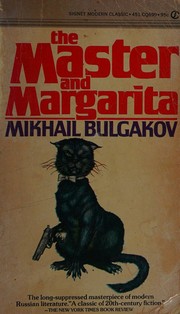
Now primed by the short novels and the biographical context, read the Pevear & Volokhonsky translation (2016, Penguin) for your first encounter: it is widely praised for its fidelity to Bulgakov's Russian rhythms, its retention of his comic energy, and its extensive notes — ideal for a reader who wants accuracy and scholarly support alongside the story.
Discussion
Keep reading
Paths that share books, cover the same subject, or open a related topic.