Write songs people remember
This curriculum takes a beginner songwriter from the absolute basics of song craft all the way through professional-level technique in melody, lyrics, and structure. Each stage builds directly on the last — first establishing a creative mindset and foundational vocabulary, then developing lyrical and melodic craft, and finally studying the masters and refining a personal artistic voice.
Foundations: The Songwriter's Mindset
BeginnerUnderstand what songwriting is, overcome creative blocks, and begin generating raw material with confidence.
▸ Study plan for this stage
Pace: 6–8 weeks total: Weeks 1–4 cover "Writing Better Lyrics" (~20–25 pages/day, reading actively with a notebook nearby); Weeks 5–8 cover "The Artist's Way" (one chapter per week, following Cameron's own weekly structure with all embedded tasks).
- Object writing (sensory, detail-driven freewriting) as the core muscle-building exercise in Pattison's method — engaging all seven senses to move from abstract to concrete language
- The distinction between 'prosody' and 'rhyme scheme' in Pattison: how the sounds, stresses, and structure of lyrics must serve the emotional meaning of the song
- Rhyme types and their emotional weight (perfect, family, additive/subtractive, mosaic) — understanding that rhyme is a tool for emphasis, not just decoration
- Line length, line breaks, and the concept of 'end-words' as structural decisions that shape a listener's experience before melody is even added
- Cameron's 'Morning Pages' as a daily creative detox — three longhand stream-of-consciousness pages that silence the inner critic and surface raw lyrical material
- The 'Artist Date' as intentional creative input — solo experiences that replenish the imaginative well a songwriter draws from
- Cameron's concept of 'Blocked Creatives' and the underlying fears (perfectionism, comparison, fear of judgment) that prevent songwriters from finishing or even starting
- The integration of both books: Pattison gives the craft container; Cameron fills it with uninhibited raw material — together they form the complete beginner's foundation
- After reading Pattison, can you explain what object writing is and demonstrate it with a 10-minute timed write on a concrete object (e.g., a rusted key or a diner booth)?
- What is the difference between a perfect rhyme and a family rhyme in Pattison's framework, and when might you deliberately choose the 'weaker' option for emotional effect?
- How does Pattison argue that line length and line breaks influence a listener's emotional experience — even before a melody is attached?
- After completing Cameron's Week 1–4 Morning Pages, what recurring images, words, or themes have surfaced in your writing that could become song seeds?
- In Cameron's framework, what is a 'creative block' actually rooted in, and what are the two core weekly tools she prescribes to dismantle it?
- How do the philosophies of Pattison and Cameron complement each other — where does one book's approach end and the other's begin?
- Object Writing Daily Sprint (from Pattison): Every morning for 4 weeks, set a timer for 10 minutes and object-write on one specific, tangible thing (a cracked sidewalk, a voicemail, a worn-out jacket). Focus on all seven senses. Do NOT try to write a song — just generate raw sensory material.
- Rhyme Ladder Exercise (from Pattison): Pick one emotionally loaded word central to a feeling you want to write about. Build a ladder of rhymes — perfect, family, additive, subtractive — and note how the emotional 'distance' from the original word changes. Practice substituting weaker rhymes intentionally to see how it shifts meaning.
- Morning Pages Commitment (from Cameron): For the full 8 weeks, write three longhand pages every morning before consuming any media. Treat these as non-negotiable. At the end of each week, highlight any phrase, image, or line that feels alive — these are your song seeds.
- Weekly Artist Date (from Cameron): Once per week, take yourself on a solo 1–2 hour outing designed purely to fill your creative well (a record shop, a botanical garden, a diner at midnight). Afterward, freewrite for 5 minutes on one image or moment from the outing using Pattison's object-writing technique — bridging both books.
- Line Break Rewrite Drill (from Pattison): Take 3–4 lines of prose you wrote during Morning Pages and reformat them as song lines. Experiment with where you break each line — try at least three different versions. Read each version aloud and note how the emphasis and emotion shift with each structural choice.
- Song Seed Inventory: At the end of Week 8, gather your highlighted Morning Pages phrases and your object-writing sessions. Select 5–7 'seeds' (images, lines, or emotional moments) and write a one-sentence 'song premise' for each — what the song is really about underneath the image. This becomes your raw material bank for the next stage.
Next up: By completing this stage, the reader has both a daily creative practice (Morning Pages, object writing) and a foundational grasp of lyric craft (rhyme, line structure, sensory language), meaning the next stage can move confidently into song structure, melody relationship, and more advanced lyrical techniques without first having to overcome fear or blank-page paralysis.
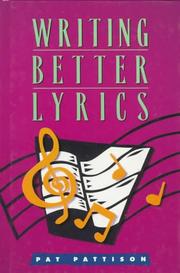
The single most recommended starting point for songwriters — Pattison teaches the fundamentals of lyric writing (prosody, rhyme, imagery) in a clear, exercise-driven way that gives beginners an immediate practical framework.

Read second to unlock creative flow and defeat self-censorship; the morning pages and artist date practices are essential habits for any beginner songwriter before diving deeper into craft.
Craft: Melody, Structure & the Song
BeginnerLearn how songs are architecturally built — verse, chorus, bridge — and how melody and lyrics work together as a unified whole.
▸ Study plan for this stage
Pace: 8–10 weeks total: Weeks 1–4 cover "Songwriting Without Boundaries" by Pat Pattison (~20–25 pages/day, including time to complete the in-book writing prompts); Weeks 5–10 cover "The Craft of Lyric Writing" by Sheila Davis (~15–20 pages/day, as the denser theory warrants slower, more deliberate readin
- Object Writing (sensory, detail-rich freewriting as a daily discipline) — the engine Pattison uses to fuel authentic lyric imagery
- Sense-bound vs. abstract language: Pattison's core argument that concrete, embodied detail creates emotional resonance where vague abstractions fall flat
- Prosody — the marriage of lyrical stress and melodic rhythm so that natural speech emphasis aligns with musical beats, preventing 'forced' or 'sing-song' phrasing
- Song architecture: the functional roles of Verse (story/context), Pre-Chorus (tension builder), Chorus (emotional payoff/title hook), and Bridge (contrast/new perspective) as mapped out by Sheila Davis
- The title as the song's contract with the listener — Davis's principle that the title sets a promise the lyric must keep throughout every section
- Rhyme schemes and their emotional weight: Davis's taxonomy of perfect rhyme, family rhyme, additive/subtractive rhyme, and how each choice affects credibility and tone
- Unity and contrast: how Davis frames the relationship between sections — each section must sound and feel different yet serve the same central idea
- The 'payoff' principle: structuring a lyric so that the chorus or final verse line delivers the emotional or narrative climax the listener has been set up to expect
- After completing Pattison's object-writing exercises, can you explain in your own words why sensory specificity creates stronger emotional connection than abstract statements — and demonstrate it with a before/after lyric rewrite?
- How does prosody, as Pattison defines it, differ from simply making words rhyme? Can you identify a prosody mismatch in a lyric you've written and correct it?
- Using Davis's structural framework, can you label every section of a favorite song (verse, pre-chorus, chorus, bridge) and articulate the distinct job each section performs?
- What is the 'title contract' according to Davis, and how would you audit a set of your own lyrics to check whether every section honors that contract?
- How do Pattison's object-writing techniques feed directly into Davis's demand for concrete, image-driven chorus hooks? Can you trace the pipeline from a raw object-writing session to a finished chorus line?
- What are at least three rhyme categories Davis identifies, and how would you consciously choose between them to match the emotional tone of a specific song section?
- Daily 10-minute Object Writing (Pattison's core drill): pick one word each morning and write purely sensory, embodied detail — sight, sound, taste, touch, smell, motion, body — stopping at exactly 10 minutes. Do this every day for the entire stage.
- Prosody mapping exercise (Pattison): take 8 lines of lyrics you've already written, mark the natural spoken stress of every syllable, then map them against the melody. Identify every mismatch and rewrite until speech rhythm and melodic rhythm lock together.
- Section dissection (Davis): choose three songs from different genres, print out the lyrics, and physically label each section by function. Write one sentence per section explaining what narrative or emotional job it performs and how it differs from the section before it.
- Title-contract audit (Davis): write a chorus built around a strong title, then write two verses and a bridge. Read each section back asking: 'Does every line serve the promise made in the title?' Cut or rewrite any line that wanders off-contract.
- Rhyme-scheme laboratory (Davis): write the same four-line verse three times using three different rhyme schemes Davis describes (e.g., AABB, ABAB, ABCB). Read each aloud and journal about how the scheme changes the emotional feel and momentum of the section.
- Full song draft integrating both books: use a 10-minute object-writing session (Pattison) to generate raw material, extract your strongest sensory images, build a title and chorus hook from them, then use Davis's structural blueprint to draft a complete verse–chorus–verse–chorus–bridge–chorus song. Annotate the draft noting which technique from each book informed each decision.
Next up: Mastering how songs are architecturally built and how melody and lyrics fuse at the line level gives the reader the structural literacy needed to study more advanced topics — such as genre-specific conventions, co-writing dynamics, and commercial song production — because they can now evaluate and discuss any song with precise, craft-based vocabulary.

A natural follow-up to Pattison's first book, this one uses sensory-based writing exercises to deepen lyrical instinct and teaches how to bind melody and words through rhythm and sound.
Davis provides a rigorous, structural breakdown of song forms (AABA, verse-chorus, through-composed) and lyric principles, giving the learner a clear map of how professional songs are assembled.
Going Deeper: Storytelling & Emotional Truth
IntermediateMove beyond technique to write songs with genuine emotional resonance, compelling narrative, and a distinctive point of view.
▸ Study plan for this stage
Pace: 6–8 weeks total: Weeks 1–4 on "Story" by Robert McKee (~40–50 pages/day, focusing on Parts 1–3 and selected later chapters); Weeks 5–8 on "Making Music" by Dennis DeSantis (~2–3 strategies per sitting, journaling responses to each prompt before moving on).
- The Story Triangle (Archplot, Miniplot, Antiplot) and how structural choices reflect emotional truth — from McKee's foundational framework
- Gap between Expectation and Result: McKee's concept that true story energy lives in the gap between what a character expects and what actually happens — directly applicable to a song's verse-to-chorus emotional turn
- The Controlling Idea / Theme: McKee's insistence that every story argues a single, irreducible idea, teaching songwriters to identify the one emotional truth their song must deliver
- Scene Design and Turning Points: how a single scene (or a single verse/chorus unit) must change the value charge of the story — translating to the moment a song 'turns' and reveals its emotional core
- Character as Revealed by Pressure: McKee's principle that character is not stated but revealed under pressure, pushing songwriters to show rather than tell emotional states in lyrics
- Constraint as Creative Catalyst: DeSantis's recurring argument throughout Making Music that arbitrary limitations (tempo, key, instrumentation, word count) force originality rather than block it
- Finishing vs. Perfecting: DeSantis's strategies around the danger of endless revision and the creative value of completing imperfect work — essential for building an honest, prolific songwriting practice
- Point of View and Distinctive Voice: synthesizing McKee's 'premise must be personal' with DeSantis's strategies on authenticity and creative identity to develop a singular songwriting perspective
- According to McKee, what is a 'gap' in storytelling, and how can you deliberately engineer one between a song's verse and its chorus to create emotional momentum?
- What is McKee's Controlling Idea, and how would you articulate the controlling idea of one of your own songs in a single sentence that names both a value and a cause?
- How does McKee's principle of 'character revealed under pressure' change the way you write a protagonist or narrator in a lyric — what does it mean to stop describing emotion and start dramatizing it?
- Which specific strategies in DeSantis's Making Music address creative blocks or the fear of the blank page, and how do they apply to the moment before you begin writing a new song?
- How does DeSantis's argument for embracing constraints complement McKee's structural discipline — and how can you use both together to write a song that feels both free and inevitable?
- After working through both books, how would you define 'emotional truth' in a song, and what is one concrete craft technique from each book that helps you achieve it?
- GAP MAPPING: Choose three songs you love. For each, identify the exact moment (line, chord, dynamic shift) where the 'gap' between expectation and reality opens up. Write a paragraph on how that gap creates emotional impact, then engineer a deliberate gap into a song you are currently writing.
- CONTROLLING IDEA AUDIT: Write the controlling idea of five of your existing songs in one sentence each (value + cause, McKee-style). If you cannot, rewrite the song's chorus until you can. This forces thematic clarity.
- PRESSURE TEST YOUR NARRATOR: Take a finished lyric and rewrite the entire second verse so that the narrator is under greater emotional or situational pressure than in your original draft. Compare both versions and note where the rewrite feels more honest.
- DESANTIS CONSTRAINT SPRINTS: Pick any five strategies from Making Music at random. For each, set a 20-minute timer and write a complete rough song (or at minimum a verse + chorus) that obeys only that strategy's constraint. Do not edit during the sprint — only after all five are done.
- THE ONE-TRUTH REWRITE: Select a song you feel is emotionally vague or 'trying to say too much.' Using McKee's Controlling Idea as your filter, cut every line that does not serve the single emotional truth. Perform or record both versions and listen back.
- VOICE JOURNAL: After finishing Making Music, spend one week writing one page per day answering this question: 'What can only I say, and how can only I say it?' At the end of the week, extract three recurring images, phrases, or preoccupations — these become the seeds of your next three songs.
Next up: Mastering emotional truth and narrative structure through McKee and DeSantis equips the songwriter with a strong internal compass, setting the stage for the next level of study — where that personal voice meets the external demands of collaboration, production, and audience, requiring the songwriter to communicate their vision clearly to others.
Though written for screenwriters, McKee's principles of conflict, character, and narrative arc are directly transferable to song — reading this transforms how a songwriter thinks about the emotional journey inside a lyric.

Bridges the gap between pure lyric craft and the musical/production side of songwriting, helping intermediate learners understand how musical decisions shape a song's emotional impact.
Master Class: Learning from the Greats
IntermediateStudy how legendary songwriters think, work, and solve creative problems — absorbing professional wisdom through first-person accounts.
▸ Study plan for this stage
Pace: 8–10 weeks total: Spend weeks 1–5 on "Tunesmith" (~25–30 pages/day, reading slowly and reflectively given its depth), then weeks 6–10 on "How to Write Songs on Guitar" (~20–25 pages/day, pausing frequently to pick up the guitar and apply each technique as it's introduced).
- The architecture of a great melody: Jimmy Webb's detailed breakdown of melodic construction, contour, and the relationship between notes and emotional impact
- Prosody — the marriage of words and music: how syllable stress, vowel sounds, and lyric rhythm must align with the melodic and harmonic rhythm of a song
- Harmonic sophistication: Webb's treatment of chord substitution, borrowed chords, and how unexpected harmony creates emotional surprise and depth
- The craft of the hook: understanding what makes a hook inevitable, memorable, and structurally load-bearing within a song's architecture
- Song structure as storytelling: how verse, pre-chorus, chorus, bridge, and turnaround serve distinct narrative and emotional functions — explored through Webb's own hit catalog
- Guitar as a compositional tool: Rooksby's systematic approach to using chord voicings, progressions, and fingerpicking patterns as generative starting points for songs
- Reharmonization and chord color: Rooksby's practical techniques for substituting and extending chords on guitar to move beyond basic I–IV–V writing
- The revision mindset: both authors' insistence that great songs are built through deliberate rewriting, not first-draft inspiration
- According to Jimmy Webb in 'Tunesmith,' what is prosody and why does a failure of prosody undermine an otherwise strong song? Can you identify an example of good and poor prosody in songs you know?
- Webb dedicates significant attention to melody as a craft. What specific techniques does he describe for shaping a melody's contour, and how does he relate melodic movement to lyrical meaning?
- How does Webb distinguish between a song's 'title,' its 'hook,' and its 'concept' — and why does he argue that the strongest songs unify all three?
- In 'How to Write Songs on Guitar,' how does Rooksby propose using chord sequences as compositional seeds? What is his process for moving from a chord progression to a finished song?
- Rooksby covers a range of structural forms. How does he explain the function of the bridge or 'middle eight,' and what problem does it solve in a song's emotional arc?
- Both Webb and Rooksby address the challenge of finishing songs. What strategies do each author offer for pushing through incompletion, and where do their philosophies overlap or diverge?
- Webb Prosody Audit: Take three of your existing song drafts (or songs you admire) and mark every syllable stress. Identify any spots where the natural speech stress of a word fights against the melodic beat it lands on — then rewrite those lines until speech and melody align naturally.
- Melodic Contour Mapping (Tunesmith method): Choose one of Webb's own songs (e.g., 'Wichita Lineman' or 'Galveston') and draw a simple graph of the melody's pitch contour over the lyric. Then compose an original 8-bar melody and graph it the same way — deliberately shaping it to rise toward the emotional peak of the lyric.
- Hook Isolation Drill: Write five different potential hooks for the same song concept — varying the rhythm, the vowel sounds, and the placement of the title word. Evaluate each against Webb's criteria for memorability and structural necessity, then select and develop the strongest one.
- Rooksby Chord-First Composition: Using Rooksby's method, generate a new song by starting entirely from a chord sequence on guitar. Choose a progression you've never used, record yourself playing it on loop, and free-sing over it for 10 minutes without stopping — then transcribe the best melodic and lyric fragments that emerged.
- Reharmonization Exercise (Rooksby): Take a simple 4-chord song you've written or know well. Using Rooksby's chord substitution techniques, rewrite the progression three different ways — once darker/more minor, once jazzier with added extensions, once with a surprise borrowed chord. Play and record all three versions and note how the emotional character shifts.
- Master Class Synthesis Journal: After finishing both books, write a 1–2 page personal 'creative manifesto' that distills the most important lesson you took from each author. Then write one complete new song applying at least three specific techniques drawn from Webb and two from Rooksby — annotating your draft to show where each technique was applied.
Next up: Internalizing the professional craft principles and compositional discipline of Webb and Rooksby equips the reader to move beyond imitation into developing a fully personal artistic voice — the natural focus of a stage dedicated to style, identity, and original creative vision.
Written by the composer of 'Wichita Lineman' and 'MacArthur Park,' this is the most musically sophisticated songwriter memoir-meets-textbook available, covering melody construction in rare depth.

Grounds melodic and harmonic theory in practical songwriting contexts, showing how chord choices and progressions generate emotional color — essential for intermediate learners ready to connect theory to craft.
Advanced: Voice, Vision & the Professional Path
ExpertDevelop a singular artistic voice, understand the music industry's creative demands, and write with the intentionality of a working professional.
▸ Study plan for this stage
Pace: 10–12 weeks total: Weeks 1–5 cover "All You Need to Know About the Music Business" (~40–50 pages/day, focusing on chapters most relevant to songwriters — publishing, royalties, deals, and licensing); Weeks 6–12 cover "The Songwriter's Workshop" (~20–25 pages/day with deliberate slowdowns for every w
- Artistic voice and intentionality: writing songs that are unmistakably 'yours' in melody, lyric, and structure, as developed through the systematic craft exercises in Kachulis's workshop approach
- Music publishing fundamentals: understanding how songs earn money through mechanical royalties, performance royalties, sync licensing, and print rights, as laid out in Passman's breakdown of the publishing ecosystem
- The songwriter-publisher relationship: what a publishing deal actually assigns (copyright, administration, creative control), what co-publishing and administration deals look like, and how to evaluate them per Passman
- Copyright ownership and work-for-hire: knowing exactly what you own, when you own it, and how collaboration agreements affect ownership — a core legal literacy thread in Passman
- Melodic and harmonic sophistication: Kachulis's workshop methods for developing non-obvious melodic choices, unexpected harmonic movement, and how these elevate a song above the competent-but-generic
- Lyric depth and subtext: moving beyond surface narrative into emotional layering, point-of-view mastery, and the use of specificity to create universal resonance, as drilled in Kachulis's structured rewrites
- Professional song construction: understanding how intro, verse, pre-chorus, chorus, bridge, and outro decisions serve both artistic and commercial functions — a tension Kachulis addresses directly for the working songwriter
- Navigating the music industry as a creative: record deals vs. publishing deals, the role of A&R, pitching songs, and how Passman's industry map helps a songwriter position their catalog strategically
- After reading Passman, can you explain the difference between a co-publishing deal and a full publishing deal, and articulate which scenario would be more advantageous for a songwriter who retains strong industry leverage?
- What are the four main royalty streams a song can generate, and how does each one get triggered — can you trace a single song's earnings from a streaming play, a radio broadcast, a TV sync, and a physical CD sale?
- Having worked through Kachulis's workshop, can you identify the specific melodic and lyrical techniques you used in your own songs that you did NOT use before this stage — and name the exercises that unlocked them?
- How does Passman define 'controlled composition,' and why does it matter to a songwriter who is also a recording artist signing to a major label?
- Using Kachulis's framework, can you diagnose a weak song of your own — pinpointing whether the problem lives in the melodic contour, the harmonic rhythm, the lyric's point of view, or the structural pacing — and prescribe a specific revision strategy?
- How would you pitch a song from your catalog to a music supervisor for a film or TV placement, drawing on Passman's sync licensing chapter to frame the business conversation and Kachulis's craft principles to articulate the song's emotional utility?
- Business audit of your catalog: List every song you've written and, using Passman's royalty framework, map out which royalty streams each song is currently eligible for and which it is not — then identify one actionable step (e.g., registering with a PRO, filing a copyright, pitching for sync) to activate a dormant stream.
- Voice fingerprinting: Write a one-page 'artistic voice statement' before starting Kachulis, then rewrite it after finishing the book. Compare the two drafts to measure how your self-understanding of your voice evolved — use specific song examples from your own work as evidence.
- Kachulis prompt gauntlet: Complete every single embedded writing exercise in The Songwriter's Workshop without skipping — treat each one as a timed session (30–45 min max). Compile all outputs into a 'workshop portfolio' that shows your range across melody, lyric, and structure.
- Deal scenario role-play: Using Passman's publishing chapter, draft a mock negotiation memo in which you (the songwriter) respond to a hypothetical full publishing deal offer. Identify three clauses you would push back on and explain why, citing Passman's guidance.
- Song surgery session: Take one song you wrote before this stage and subject it to a full Kachulis-style revision — rewrite the melody, rewrite the lyric from a different point of view, and restructure the form. Record both versions and write a 200-word producer's note explaining every change.
- Sync pitch package: Select your strongest song and build a professional sync pitch document: a one-paragraph 'music supervisor brief' describing the scene it fits, a lyric sheet, a tempo/key/mood metadata sheet, and a rights clearance summary drawn from Passman's sync licensing section.
Next up: By internalizing both the business architecture of the music industry (Passman) and the advanced craft mechanics of professional songwriting (Kachulis), the reader is now equipped to move from studying songwriting to actively practicing it as a career — making any subsequent stage focused on real-world output, collaboration, or genre specialization a natural and well-grounded next step.
Once craft is solid, understanding how songs function as intellectual property and commercial products is essential — Passman's authoritative guide ensures the advanced songwriter can protect and place their work.
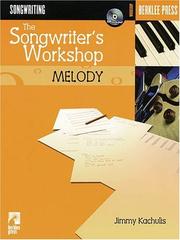
A Berklee Press deep-dive into melodic construction — motifs, contour, rhythm, and phrasing — giving advanced songwriters the precise vocabulary and exercises to consciously craft memorable melodies.
Discussion
Keep reading
Paths that share books, cover the same subject, or open a related topic.