Medical coding and billing: the best books to break into the career
This curriculum takes a complete beginner from zero knowledge of medical terminology and coding systems all the way through CPC certification prep and real-world billing practice. Each stage builds directly on the last — you must understand the language of medicine before you can code it, and you must code accurately before you can navigate the business side of billing and compliance.
The Language of Medicine
BeginnerBuild a solid foundation in medical terminology, anatomy, and physiology — the essential vocabulary that every coding decision depends on.
▸ Study plan for this stage
Pace: 8–10 weeks, ~40–50 pages/day (alternating between both texts; 3–4 hours/day including note-taking and terminology drills)
- Medical word building: prefixes, suffixes, and root words as the foundation for decoding unfamiliar medical terms
- Anatomical position, directional terms, and body planes as the reference framework for all medical descriptions
- Major body systems (integumentary, skeletal, muscular, nervous, endocrine, cardiovascular, respiratory, digestive, urinary, reproductive) and their primary functions
- Homeostasis and how body systems work together to maintain internal balance
- Normal physiology of each system: how cells, tissues, and organs function in health
- Pathophysiology basics: how disease disrupts normal function and why it matters for coding
- Anatomical terminology and abbreviations used in medical records and billing documentation
- The relationship between anatomy, physiology, and the clinical conditions that coders must recognize and classify
- How do you break down an unfamiliar medical term using prefixes, suffixes, and root words, and what does each component mean?
- What are the anatomical planes and directional terms, and how would you use them to describe the location of a structure or pathology?
- For each major body system, what are its primary organs, their key functions, and how does it interact with other systems?
- What is homeostasis, and how do regulatory mechanisms (nervous, endocrine, cardiovascular) help maintain it?
- How does understanding normal physiology help you recognize when a medical record describes a disease or abnormal condition?
- What are the most common abbreviations and medical terms you will encounter in real medical records, and what do they mean?
- Medical Terminology drills: Use flashcards or spaced-repetition software (Anki, Quizlet) to memorize 20–30 new terms per week from Ehrlich's text; focus on prefixes, suffixes, and root words first, then full terms.
- Anatomy labeling exercises: Complete the diagrams and labeling activities in Thibodeau's Study Guide for each body system; label bones, organs, blood vessels, and nerves to reinforce spatial understanding.
- Case study decoding: Take 5–10 real (de-identified) medical record snippets and identify and define all medical terms using only your terminology knowledge and the texts—do not use external references initially.
- System function mapping: Create one-page visual summaries (flowcharts or concept maps) for each body system showing: organs involved → functions → how it connects to other systems → common pathologies.
- Abbreviation mastery: Compile a personal glossary of 100+ medical abbreviations from both texts; quiz yourself weekly and add abbreviations encountered in practice scenarios.
- Physiology-to-pathology bridge: For each system studied, write 3–5 short paragraphs explaining how a specific disease disrupts normal physiology (e.g., how diabetes disrupts glucose homeostasis).
Next up: This stage equips you with the medical vocabulary and anatomical/physiological knowledge needed to understand disease processes and clinical documentation, preparing you to move into the next stage where you'll learn how to recognize, classify, and code specific diagnoses and procedures based on this foundational language.
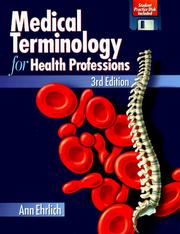
A widely used, beginner-friendly introduction to medical word roots, prefixes, and suffixes organized by body system. Reading this first ensures you can decode any clinical term you encounter in a coding manual.

Pairs anatomy and physiology with clear illustrations so you understand what is actually happening in the body — context that makes disease and procedure codes far more intuitive when you reach them.
Coding Foundations — ICD & CPT Basics
BeginnerUnderstand the structure and logic of the ICD-10-CM and CPT code sets and practice applying guidelines to straightforward cases.
▸ Study plan for this stage
Pace: 4–5 weeks, ~40–50 pages/day (including workbook exercises and code lookups)
- ICD-10-CM structure: chapters, sections, categories, subcategories, and the role of the Alphabetic Index and Tabular List
- The Official ICD-10-CM Coding Guidelines and how to apply the 'Excludes1' and 'Excludes2' notes to avoid coding errors
- CPT code organization: Evaluation & Management (E/M), Procedures, and Modifiers; understanding when to use each category
- The concept of 'principal diagnosis' and 'primary procedure' and how to sequence codes correctly in clinical scenarios
- Common coding pitfalls: unbundling, upcoding, and missing secondary diagnoses; how to code to the highest level of specificity
- Hands-on application of the Alphabetic Index lookup method and verification in the Tabular List for both ICD-10-CM and CPT
- How to interpret and apply code modifiers (e.g., -25, -59, -91) to accurately reflect the services rendered
- Documentation requirements and how to identify missing information that affects code selection
- What is the difference between an Excludes1 and Excludes2 note in ICD-10-CM, and how does each affect your coding decision?
- Walk through the process of coding a diagnosis: how do you use the Alphabetic Index and then verify in the Tabular List?
- What are the three main sections of CPT codes, and when would you use each one in a typical outpatient encounter?
- How do you determine the principal diagnosis in a case with multiple conditions, and why does sequencing matter?
- Explain the difference between bundled and unbundled codes, and give an example of when unbundling would constitute fraud.
- What information from the medical record is essential to assign the correct ICD-10-CM code to the highest level of specificity?
- Complete all end-of-chapter review questions and coding cases in 'Step-By-Step Medical Coding' (Chapters 1–6 on ICD-10-CM fundamentals and CPT basics)
- Work through 15–20 straightforward case scenarios from the 'ICD-10-CM and ICD-10-PCS coding handbook': code the primary diagnosis, secondary diagnoses, and procedures; verify each code in the Tabular List
- Create a personal 'quick-reference guide' with 10 common ICD-10-CM and CPT codes you encounter, including the Alphabetic Index entry, Tabular List location, and any relevant notes or modifiers
- Practice the Alphabetic Index lookup method: given a diagnosis (e.g., 'Type 2 diabetes with neuropathy'), locate it in the index, follow cross-references, and verify the final code in the Tabular List
- Identify and correct 10 intentionally miscoded scenarios: explain why each original code was wrong and what the correct code should be (focus on sequencing, specificity, and Excludes notes)
- Code 5 multi-diagnosis case studies from the handbook, paying attention to principal diagnosis selection, secondary diagnoses, and proper sequencing according to Official Guidelines
Next up: Mastery of ICD-10-CM and CPT fundamentals prepares you to tackle more complex scenarios—multiple comorbidities, surgical procedures, and compliance auditing—in the next stage, where you'll learn to code real-world medical records and apply compliance and reimbursement principles.
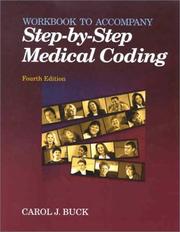
The most widely adopted introductory coding textbook in the field; it walks through ICD-10-CM, CPT, and HCPCS Level II in a logical, step-by-step format with abundant exercises — the ideal first coding textbook.

Published by the American Hospital Association, this handbook deepens your understanding of ICD-10 guidelines and conventions after Buck gives you the overview, bridging beginner practice to real-world accuracy.
Specialty Coding & the Billing Cycle
IntermediateApply coding knowledge across common medical specialties and understand the full revenue cycle — from patient registration through claim submission and payment posting.
▸ Study plan for this stage
Pace: 8–10 weeks, ~40–50 pages/day (mix of reading and workbook exercises)
- The complete revenue cycle workflow: patient registration, insurance verification, coding, claim submission, payment posting, and denial management
- Specialty-specific coding patterns and documentation requirements across common medical specialties (e.g., orthopedics, cardiology, general surgery)
- CPT code structure, modifiers, and guidelines for accurate code selection and bundling rules
- ICD-10 diagnosis coding principles and how they link to medical necessity and claim justification
- Claim submission standards, including CMS-1500 form completion and electronic submission requirements
- Payment posting, explanation of benefits (EOB) interpretation, and reconciliation of patient accounts
- Common coding errors, compliance risks, and how to identify and correct claim denials
- The relationship between clinical documentation quality and successful claim reimbursement
- Walk through the complete revenue cycle from patient registration to payment posting—what happens at each stage and why accuracy at each step matters?
- How do CPT modifiers affect code selection and reimbursement, and when must they be applied in specialty coding scenarios?
- Given a specialty-specific clinical scenario (e.g., orthopedic surgery with complications), how would you select the appropriate ICD-10 and CPT codes and justify medical necessity?
- What are the most common reasons claims are denied in specialty billing, and how would you identify and correct them?
- How do you interpret an explanation of benefits (EOB) and reconcile it with patient account records and contractual allowances?
- What documentation elements must be present in the medical record to support specialty coding decisions and withstand compliance audits?
- Complete all workbook exercises in the Valerius text, focusing on revenue cycle case studies and specialty-specific scenarios; document your answers and review against answer keys
- Using the AMA's Principles of CPT Coding, code 10–15 specialty-specific clinical vignettes (e.g., cardiology procedures, orthopedic surgeries) and justify modifier usage
- Build a personal CPT code reference sheet for 2–3 common specialties, including code ranges, common modifiers, bundling rules, and documentation triggers
- Simulate claim submission: take a completed patient encounter from the workbook, code it end-to-end, complete a mock CMS-1500 form, and identify compliance checkpoints
- Practice EOB interpretation: obtain sample EOBs (from textbook examples or online resources) and reconcile them against submitted claims, identifying payment discrepancies and contractual adjustments
- Conduct a mock compliance audit on 5 coded claims from the workbook, checking for documentation adequacy, code accuracy, and denial risk factors; document findings and corrections
Next up: This stage equips you with the practical, end-to-end revenue cycle skills and specialty coding expertise needed to move into advanced topics such as compliance auditing, payer contract negotiation, and revenue optimization strategies.

Covers the entire billing and revenue cycle in depth, connecting coding decisions to claim forms, payer rules, and reimbursement — essential for understanding how coding translates into payment.
The AMA's own authoritative guide to CPT logic and guidelines; reading this after Buck solidifies your understanding of evaluation & management, surgery, and modifier use across specialties.
A practical, jargon-light companion that ties together billing workflows, payer negotiations, and common pitfalls — great for reinforcing the business side of the career at this stage.
Discussion
Keep reading
Paths that share books, cover the same subject, or open a related topic.