Joe Sacco Reading Order: Where to Start With Comics Journalism
Joe Sacco invented a form: long-form reported journalism drawn as comics, with the reporter visible in his own frames. This path follows the method as it hardened — the loose early Palestine dispatches, the two Bosnian books where he learned to structure a long investigation, then the deeply sourced later work built on archives and dozens of interviews. Read in this order you watch a cartoonist turn into a reporter.
Where the method starts
BeginnerUnderstand what Sacco's comics journalism actually is, and how he puts himself in the frame without making the story about him.
▸ Study plan for this stage
Pace: 2–3 weeks. Palestine (285 pages) breaks cleanly into about ten sittings, because it was serialised as nine comic books and still carries those seams; Notes from a Defeatist (216 pages) takes a week of shorter sessions. Do not budget these like ordinary comics — Sacco's pages are small-panelled, hand
- Comics journalism as actual reporting: Sacco does the interviews and then draws them, so every rendered face and room is a claim about what was there, not decoration on someone else's prose
- The reporter inside the frame — Sacco draws himself with opaque glasses as a bored, hungry, occasionally craven character, which lets the reader see who is selecting the story
- How a drawn page marks the difference between what Sacco witnessed and what he was told: flashback framing, panel shape, and who is speaking in the caption
- Serial improvisation — Palestine was made and published in instalments, so the method visibly changes from the front of the book to the back
- Notes from a Defeatist as the before picture: autobiographical strips, rock-tour comics and satire, plus war strips built from his mother's Malta recollections and secondhand history rather than his own interviews
- Density as argument — crowded panels, hand lettering filling every gap, and the refusal to give a testimony more space than the speaker gave it
- Sacco's declared rejection of American-style objectivity in favour of a stated position the reader can discount for
- What does Palestine do that a print reporter filing from the same two-month trip could not, and what does the comics form cost him in exchange?
- On any given Palestine page, how do you know whether you are looking at something Sacco saw or something a source described to him?
- In Notes from a Defeatist, which strips are reporting, which are memoir and which are satire — and what makes the war material different in kind from the Palestine chapters?
- Why does Sacco draw himself into the story, and what would change about the book's authority if he did not?
- Where does Palestine show the limits of a short trip — which sequences feel reported and which feel gathered in a hurry?
- Read Palestine's opening chapter and its final chapter back to back, and write down what changed: panel borders, how large Sacco-the-character is drawn, and how many pages a single interview is allowed to run
- Take one detention or interrogation testimony in Palestine and list every visual device Sacco uses to signal remembered speech — caption placement, framing, the disappearance or persistence of the interview room
- Tally the Palestine pages spent on Sacco failing to get tea, being cold, or waiting for a fixer, then argue in writing whether the book would be stronger with them cut
- Put a Notes from a Defeatist war strip beside any Palestine chapter and note what a secondhand family source lets him draw that a live interview does not
- Start a running list of Sacco's recurring drawn tics — the blank glasses, the gaping mouths, the crosshatched rubble — and date the first appearance of each; you will use it in every later stage
Next up: Palestine shows Sacco inventing the form trip by trip, which is exactly the preparation for Bosnia, where he stops improvising and learns to hold one place and one set of sources across an entire book.
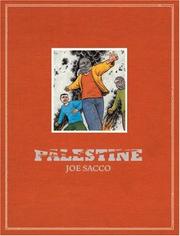
His breakthrough: two months in Gaza and the West Bank in 1991-92, first serialised as nine comic books. Start here because the reporting is still improvisational and you can see him working out the form on the page.
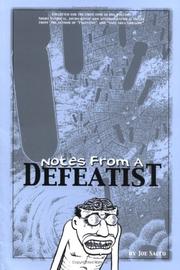
A collection of his early short work, including the autobiographical war strips that predate any reporting trip. Read second: it shows what he was doing before Palestine, so you can measure how far that book moved him.
Bosnia: the two long books
IntermediateSee how a single place and a sustained relationship with sources turn dispatches into structured narrative.
▸ Study plan for this stage
Pace: 3 weeks for roughly 400 pages. Safe Area Goražde (227 pages) is the sustained one — give it two weeks and read it in long sessions, because its power is cumulative. The Fixer (109 pages) and War's End (73 pages) are each a single evening, but read The Fixer only after Goražde. Goražde reconstructs t
- What repeat visits buy: Sacco went into Goražde four times, and the book's structure depends on sources who have already told him the easy version
- Edin as the spine — how a single central informant lets Sacco carry a three-year siege chronologically without a narrator explaining it
- The 'safe area' as a legal designation that did not correspond to safety, and how Sacco draws an institution failing rather than describing it
- The fixer as apparatus: Neven in The Fixer sells war stories to foreign journalists, which means the book interrogates the exact mechanism that made Goražde possible
- Printing a source you do not fully believe — Sacco lets Neven's self-mythologising stand and marks his own doubt instead of resolving it
- The comic relief that is not relief: the jeans, the Levi's requests, the 'silly girls', and how Sacco uses ordinary appetite to keep a siege from becoming abstract
- War's End as the residue — what Sacco writes when there is no investigation to carry and only the personal aftermath remains
- How does Sacco keep three years of siege legible without a voice-of-God narration, and where does he let the chronology break?
- The Fixer questions the reliability of a source; does it therefore undermine Goražde, which relied on the same journalistic economy?
- What is the effect of putting the road, the convoys and the jeans in a book about a massacre, and would a text reporter be able to do the same?
- Where in Goražde does Sacco decline to draw something, and what does that refusal tell you about his rules?
- War's End has no investigation in it. What, if anything, does it establish that the two reported books cannot?
- Map Goražde's chapter structure on one page: mark which chapters are present-tense trips and which are reconstructed history, then note the pattern in how Sacco alternates them
- Trace Edin across the whole of Goražde and record every point at which Sacco shows him hesitating, contradicting himself, or being corrected — this is the book's evidence handling in miniature
- Read The Fixer, then go back to Goražde and identify the moments where a Neven-type figure is silently doing work in the background; write down what Sacco chose not to show you the first time
- Compare the drawing of a Bosnian village in War's End with the same kind of scene in Goražde and describe what changes when the reporting pressure is removed
- Update the list of drawn tics from stage one and add the Bosnian additions — snow, mud, convoy trucks — noting which will still be there in Footnotes in Gaza
Next up: Goražde proves Sacco can build a book on interviews he returns to, which is the precondition for the next stage, where the sources are decades cold and the evidence has to come out of archives and court records instead.
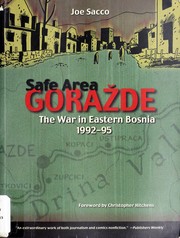
Four trips into a besieged UN-designated enclave in eastern Bosnia, and the book where Sacco first sustains one story for 200 pages. Catalogued under the accented spelling Goražde. This is his most-cited work and the natural next step after Palestine.

A short, sharp portrait of Neven, the Sarajevo fixer who sells war stories to foreign journalists. Read it after Goražde because it interrogates the very apparatus that made that book possible.
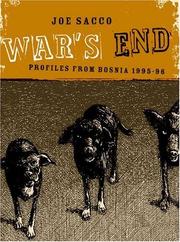
Two short Bosnia pieces, quieter and more personal than the reported books. It closes the Bosnian sequence and shows what he keeps when there is no investigation to carry.
The deeply sourced books
IntermediateFollow Sacco into work built on archives, court records and dozens of interviews rather than a single trip.
▸ Study plan for this stage
Pace: 5–6 weeks for about 700 pages, and this is the slowest reading on the path. Footnotes in Gaza (432 pages) took Sacco roughly seven years to make and should get three to four weeks — read it in chapter blocks and keep the appendix material to hand, because the argument is partly about documents. Payi
- Reconstructing an event nobody recorded: Sacco works from UN documents, Israeli archives and dozens of elderly witnesses, and the book is honest that the record is thin
- Memory as unreliable evidence rendered visually — Footnotes prints accounts that contradict each other and draws both, rather than picking one
- Why the framing device matters: the 1956 investigation keeps being interrupted by the 2003 present of demolitions in Rafah, which is the book's argument about continuity
- The 'footnote' as thesis — an incident large enough to fill a book was one line in the historical literature, and the title is a claim about what history records
- Paying the Land's structural subject: no siege, no front line, and a harm that arrives through treaties, royalties, roads and schooling over generations
- Sacco drawing consent and dissent inside one community — the Dene interviewees disagree with each other about extraction, and he does not resolve it
- How the method scales: the same interview-then-draw process applied to a story with no single dramatic event to anchor it
- What can a drawn reconstruction of 1956 legitimately claim, given that no photographs of the incidents exist?
- How does Sacco handle two witnesses who describe the same morning incompatibly, and is his solution journalism or something else?
- Why does Footnotes keep cutting back to 2003, and does that strengthen or compromise the historical investigation?
- Paying the Land has no atrocity at its centre. How does Sacco generate narrative pressure without one?
- Compare the elderly Khan Younis witnesses with the Goražde interviewees: what does a fifty-year gap do to testimony, and how does the drawing register that?
- Pick the Khan Younis school-yard sequence in Footnotes in Gaza and write out, in prose, exactly what the book establishes as fact, what it establishes as disputed, and what it leaves open — then check your list against Sacco's own hedging in the captions
- Find two contradictory testimonies in Footnotes and note how the panel layout signals that you are being handed a conflict rather than a correction
- In Paying the Land, list the interviewees who favour resource development and those who oppose it, and describe how Sacco's drawing differs, if at all, between the two groups
- Take a single page of Footnotes and identify every source category on it — witness, document, Sacco's own observation — to see how many kinds of evidence he stacks in one spread
- Set a Paying the Land residential-school sequence against a Goražde massacre sequence and describe the difference between drawing an event and drawing a policy
Next up: Having seen the method at maximum extension, you are now equipped to judge the short pieces, the collaboration and the formal experiment in the final stage against what the long books proved it could do.
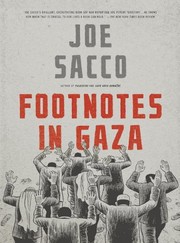
Seven years of work reconstructing two 1956 killings in Khan Younis and Rafah that had been reduced to footnotes. The most heavily sourced thing he has done, and it only lands once you have read Palestine.
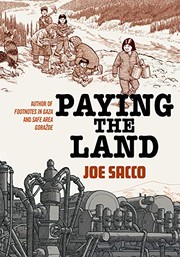
Reporting among the Dene of Canada's Northwest Territories on resource extraction, residential schools and self-determination. It is the same method turned on a slow structural story with no siege and no front line.
Range, collaboration and the experiment
IntermediateRead the work that sits outside the long reported books, and see what the form can and cannot carry.
▸ Study plan for this stage
Pace: 2–3 weeks. Journalism (191 pages) is a week of short assignments, each readable on its own — read the preface first, since it is Sacco's clearest statement of what he thinks objectivity is worth. Days of Destruction, Days of Revolt (320 pages) is the slowest of the three despite the drawings, becaus
- The short assignment as a different animal — Chechen refugees, the Hague tribunal, Iraq and African migrants in Malta, each without the space Sacco's long books use to earn trust
- Sacco's preface in Journalism: the explicit case against neutrality-as-method, which reframes everything you read in the first three stages
- Divided labour in Days of Destruction — Hedges reports and writes, Sacco draws, and the two do not always point the same way; it is co-authored advocacy, not Sacco's reportage
- What Sacco's drawing does when he is not also the writer, and how his authority changes when he is illustrating another reporter's conclusions
- The Great War as formal experiment rather than journalism: no words, no reporting trip, a single continuous image built from historical accounts of 1 July 1916
- Wordlessness as a limit case — the panorama can render scale and sequence but cannot quote anyone, which is the whole argument for the form Sacco usually uses
- The difference between a body of work and a career: what these three books tell you Sacco can and cannot carry
- After reading the Journalism preface, do you accept Sacco's account of why balance is the wrong goal — and does his own practice live up to it?
- Which pieces in Journalism succeed at short length, and what specifically is missing from the ones that do not?
- In Days of Destruction, where do Hedges's prose and Sacco's drawn sections make different arguments, and which do you find more persuasive?
- The Great War quotes nobody. What does the panorama convey that Footnotes in Gaza cannot, and what does it forfeit?
- Taking all four stages together: is comics journalism a form other reporters could adopt, or a form that only works because Sacco draws it?
- Read the Journalism preface, then reread one Palestine chapter and mark every place the preface's stated rules are visibly being followed or broken
- Pick the shortest piece in Journalism and the longest sequence in Footnotes in Gaza on comparable subject matter, and write a paragraph on what the extra hundred pages actually bought
- In Days of Destruction, cover the Hedges text on a spread and read only Sacco's panels; write down the argument you get, then uncover the prose and note the gap
- Unfold The Great War fully and read it once left to right without the booklet, then again with the booklet open, and record what the annotations added and what they flattened
- Return to the list of drawn tics you have been keeping since stage one and write its final entry: which of Sacco's visual habits survive into the wordless panorama, and which turn out to have belonged to the interview
Next up: This is the end of the path: you now have the whole arc from improvised dispatches to archive-built history to a wordless experiment, and enough of Sacco's own stated method to argue with him about it.

A collection of shorter assignments — Chechen refugees, the Hague tribunal, Iraq, African migrants in Malta — with a preface stating his position on objectivity. Best read late, once you can compare a short piece against the long books.
A collaboration: Hedges writes the prose, Sacco draws the reporting, across four American 'sacrifice zones'. Included to show how his drawing works when he is not also the writer.
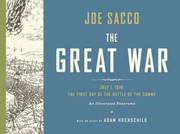
A wordless 24-foot fold-out panorama of the first day of the Somme, with a separate explanatory booklet. Catalogued under a very long descriptive title. Read last: it is a formal experiment, not journalism, and it makes most sense against everything above.
Discussion
Keep reading
Paths that share books, cover the same subject, or open a related topic.