Margaret Atwood Reading Order: Where to Start
This curriculum moves from Atwood's most accessible and celebrated novel into her landmark speculative trilogies, then deepens into her poetry and finally her essays and criticism — the form in which she reflects on her own craft and the literary tradition she inhabits. Each stage builds the thematic and stylistic vocabulary needed to fully appreciate the next, so that by the end the reader experiences Atwood as novelist, poet, and thinker simultaneously.
The Best Entry Point
BeginnerGet hooked on Atwood's voice, her feminist dystopian imagination, and her precise, unsettling prose — with the single novel that best represents everything she does.
▸ Study plan for this stage
Pace: 3–4 weeks, ~20–25 pages/day — a comfortable pace that lets the novel's slow-burn dread accumulate rather than rushing past it
- Dystopian world-building: how Atwood constructs Gilead through omission, ritual, and controlled language rather than explicit exposition
- Feminist speculative fiction: the novel as a warning extrapolated from real historical practices of patriarchal control over women's bodies and autonomy
- Unreliable narration and memory: Offred's first-person voice is fragmented, self-doubting, and deliberately incomplete — truth is always provisional
- The politics of language and naming: how stripping women of their names (Offred = 'Of Fred') is an act of erasure and domination
- Resistance and complicity: the spectrum between outright rebellion and quiet survival, and how the novel refuses to judge women who comply
- Atwood's prose style: precise, image-driven sentences that make the mundane feel menacing; her use of present tense to create claustrophobic immediacy
- The Historical Notes epilogue: its function as meta-fictional frame, and what it says about how history is recorded, interpreted, and who gets to tell it
- Theocracy and the weaponization of religion: how Gilead co-opts Biblical text to legitimize oppression
- How does Atwood use Offred's restricted point of view to mirror the reader's experience of living under an information-controlled regime?
- What does the novel suggest about the difference between active resistance and passive survival — and does it present one as morally superior to the other?
- Why does Atwood end the novel with the 'Historical Notes' academic symposium, and how does that epilogue change your reading of everything that came before it?
- Choose one recurring image or object (the red dress, the Wall, the Eye, tulips) and trace how Atwood uses it throughout the novel to build meaning.
- In what ways does Gilead's ideology draw on real historical and contemporary practices? What is Atwood's argument about how dystopia is built?
- How does the act of naming — and un-naming — function as a tool of power in the novel?
- **The Redacted Journal:** Write a one-page diary entry from Offred's perspective on a day not shown in the novel, deliberately omitting anything that would be dangerous to record — practice her voice of careful, coded self-expression.
- **Trace the Language Map:** Go back through the novel and collect every piece of Gilead's invented vocabulary (Handmaid, Wife, Martha, Salvaging, Prayvaganza, etc.). For each term, write one sentence explaining what real-world concept it replaces and why the new word is ideologically loaded.
- **Annotate the Epilogue:** Re-read the 'Historical Notes' section slowly and annotate it: mark every moment where Professor Pieixoto's academic detachment feels callous, comic, or chilling. Write a short paragraph on what Atwood is satirizing.
- **Real-World Roots Research:** Atwood famously said she only included things that had actually happened somewhere. Choose three elements of Gilead (e.g., forced reproduction, dress codes, public executions) and spend 30 minutes researching their real historical parallels. Jot down your findings and your reaction.
- **First-Line Imitation:** Pick any paragraph of Atwood's prose you find particularly striking and write an imitation of it — same sentence rhythm and structure, but applied to a completely different scene or setting. This trains your ear to her style.
- **Resistance Spectrum Chart:** Draw a simple spectrum from 'Full Complicity' to 'Full Resistance.' Place at least six characters from the novel on it (Offred, Serena Joy, Moira, the Commander, Nick, Ofglen) and write two sentences justifying each placement. Discuss where the novel places its sympathy.
Next up: Mastering Gilead's rules and Atwood's dystopian method here gives you the interpretive toolkit — unreliable narration, speculative extrapolation, feminist critique — needed to recognize and deepen those same techniques across her broader and more varied body of work.
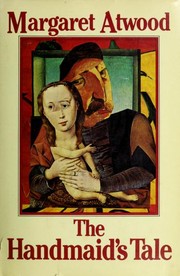
The ideal entry novel: compulsively readable, thematically rich, and the book that introduced Atwood to the world. It establishes her core preoccupations — power, gender, language, and survival — that echo through everything else she writes.
The Speculative Trilogies
BeginnerExperience Atwood's two major speculative fiction cycles in full, understanding how she builds complex world-systems and returns obsessively to questions of ecology, biotechnology, and what it means to be human.
▸ Study plan for this stage
Pace: 10–12 weeks total. Weeks 1–3: Oryx and Crake (~30 pages/day, including re-reading the opening Snowman chapters at the end to appreciate dramatic irony). Weeks 4–6: The Year of the Flood (~25 pages/day; slower pace to map overlapping timelines). Weeks 7–9: MaddAddam Trilogy Box — focus on MaddAddam,
- Speculative vs. science fiction: Atwood's insistence that everything in her worlds is extrapolated from real-world science and corporate practice, not pure invention
- World-building through fragmentation: non-linear timelines, unreliable narrators (Snowman/Jimmy, Toby, Ren, the three Testaments voices), and how withheld information creates suspense and meaning
- Corporate dystopia and the CorpSeCorps state: how Compounds vs. Pleeblands in the MaddAddam trilogy map class, power, and surveillance onto near-future capitalism
- Biotechnology and the ethics of creation: the Crakers as a designed species, gene-spliced animals (pigoons, rakunks, wolvogs), and the question of who has the right to re-engineer life
- Ecological collapse and the 'Waterless Flood': Atwood's vision of pandemic as both punishment and reset, and the God's Gardeners as an ecoreligious survival community
- Patriarchy, theocracy, and female resistance: Gilead's architecture of control in The Testaments, and how Aunt Lydia, Agnes, and Nicole each negotiate agency within a totalitarian gender regime
- Intertextuality and embedded texts: the use of journals, testimonies, oral histories, and corporate documents as narrative frames — and what these forms say about who gets to tell history
- The posthuman question: what separates humans from Crakers, from spliced animals, from the 'improved' species — and whether that boundary is worth defending
- In Oryx and Crake, how does Atwood use Jimmy/Snowman's unreliable, grief-saturated memory to reveal the catastrophe gradually — and what does this technique suggest about guilt and complicity?
- The Year of the Flood covers the same apocalyptic timeline as Oryx and Crake but from the Pleeblands perspective. What does the shift in social class and the God's Gardeners' worldview add to your understanding of the disaster that Crake engineered?
- Across the full MaddAddam trilogy, how does Atwood develop the Crakers — are they innocent, dangerous, or something more ambiguous? How does their relationship with storytelling in MaddAddam signal Atwood's views on myth-making and humanity?
- The Testaments is set roughly fifteen years after The Handmaid's Tale (not in this stage) but can be read as a standalone. How does Atwood construct three radically different female voices — Aunt Lydia, Agnes, and Nicole — to dismantle Gilead from within, and what does each voice represent about complicity vs. resistance?
- Both trilogies depict the collapse of a recognizable world and the survival of small communities. What are the key differences in how ecological catastrophe (MaddAddam) and theocratic totalitarianism (The Testaments/Gilead) are portrayed as threats to human freedom?
- Atwood repeatedly embeds fictional documents — corporate memos, hymns, oral legends, sworn testimonies — inside her narratives. Choose two examples across these books and analyze how the form of the document shapes what can and cannot be said within it.
- Timeline mapping: Create a single master timeline that reconciles the events of Oryx and Crake and The Year of the Flood (they overlap significantly). Mark where Jimmy's story and Toby/Ren's stories intersect, then annotate with MaddAddam's additions. This visual exercise makes the world-system tangible.
- Corporate bestiary: As you read the MaddAddam trilogy, keep a running log of every gene-spliced creature (pigoons, wolvogs, rakunks, liobams, etc.). For each, note its corporate origin, its intended purpose, and its actual behavior in the post-collapse world. Write a one-paragraph reflection on what the gap between intention and outcome reveals about Atwood's critique of biotechnology.
- Narrative voice comparison: Choose one event that is described (or implied) in both Oryx and Crake and The Year of the Flood. Write a 400-word close-reading comparing how each narrator's perspective, vocabulary, and emotional investment changes the meaning of that event.
- God's Gardeners hymn analysis: The Year of the Flood includes full hymn lyrics for the Gardeners' ecoreligion. Select two hymns and analyze them as poems: What biblical or ecological imagery do they use? How do they function as both survival manual and propaganda within the community?
- The Testaments debate: After finishing The Testaments, stage a written 'debate' (500–600 words) between Aunt Lydia and Agnes on the question: 'Is working within an unjust system ever justified if it leads to its eventual destruction?' Use direct textual evidence from each character's testimony.
- Cross-trilogy synthesis essay: Write a 600–800 word comparative essay answering: 'Both the MaddAddam world and Gilead are built on the exploitation of women's bodies and reproductive capacity. How does Atwood use speculative world-building differently in each trilogy to expose this exploitation?' This prepares you for the analytical work ahead.
Next up: Mastering Atwood's speculative world-building and her recurring preoccupations — power, the body, ecological fragility, and the politics of storytelling — gives you the critical vocabulary and thematic lens needed to trace these same obsessions back through her earlier realist and poetic work in the next stage.
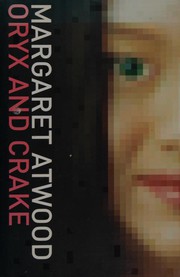
The first book of the MaddAddam trilogy introduces a near-future corporate dystopia through a single survivor's memory — a structural puzzle that rewards the close reading skills built by The Handmaid's Tale.
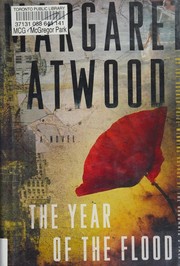
The second MaddAddam book retells the same catastrophe from two women's perspectives, deepening the world and showing Atwood's mastery of interlocking narratives; read it before MaddAddam to feel the full payoff.

The trilogy's conclusion brings all threads together and is most powerful when the reader already knows every character; it also introduces Atwood's darkly comic hymns, a bridge toward her poetry.

The long-awaited sequel to The Handmaid's Tale closes the Gilead cycle with three competing voices; reading it after the MaddAddam trilogy means you arrive with a fully trained eye for Atwood's multi-narrator architecture.
The Poet Underneath
IntermediateDiscover that Atwood began as a poet and that her novels are saturated with poetic compression; reading her verse reveals the emotional and linguistic engine behind the fiction.
▸ Study plan for this stage
Pace: 2–3 weeks, ~8–12 pages/day (the collection is ~120 pages); read each section in one sitting to preserve tonal unity, then revisit individual poems slowly for close reading
- Atwood as a poet first: understanding that her literary identity was forged in verse before fiction, and that poetic habits of mind — compression, image-as-argument, tonal ambiguity — carry into all her prose
- Elegy and grief as structural engines: 'Morning in the Burned House' is organized around loss (of parents, of the body, of the past self), and the reader should trace how grief shapes not just subject matter but syntax and line breaks
- The domestic uncanny: Atwood repeatedly makes the ordinary (a kitchen, a morning routine, a childhood home) strange and threatening — a technique that directly powers novels like 'The Handmaid's Tale' and 'Alias Grace'
- Compression and the unsaid: poetic economy means that what is left out of a line carries as much weight as what is included; readers should practice sitting with ambiguity rather than resolving it
- The body as contested territory: poems in this collection treat the aging, grieving, and gendered body as a site of political and philosophical tension, anticipating Atwood's feminist prose themes
- Voice and persona: Atwood shifts between first-person confession, second-person address, and mythological persona (e.g., Orpheus/Eurydice poems), demonstrating the same narrative instability found in her unreliable fiction narrators
- Mythology rewritten from the margins: Atwood retells classical myths (particularly Orpheus and Eurydice) from the perspective of the silenced or overlooked figure — a core strategy in her fiction as well
- Image clusters and recurring motifs: fire, water, mirrors, and thresholds recur throughout the collection; tracking these trains the reader to spot the same symbolic architecture in her novels
- How does Atwood use the image of the 'burned house' as both a literal and metaphorical space, and what does it reveal about her treatment of memory and loss?
- Select one of the Orpheus/Eurydice poems: whose perspective does Atwood privilege, what is gained by that choice, and how does this compare to her strategy of giving voice to marginalized narrators in her fiction?
- Identify three moments in the collection where a domestic or mundane image is made uncanny — what poetic techniques (diction, line break, juxtaposition) produce that effect?
- How does Atwood's handling of the aging and grieving body in these poems compare to the way female bodies are controlled or surveilled in her fictional worlds?
- Choose a single poem and analyze how the line breaks create or withhold meaning — what would be lost if the poem were rewritten as prose?
- In what ways does the collection's movement from section to section mirror a narrative arc? What 'story' is the book telling, and how does that blur the boundary between poetry and fiction?
- Close-reading journal: After each reading session, choose one poem and write a 200-word annotation focusing exclusively on a single technique — one day on line breaks, the next on diction, the next on imagery — to build a toolkit of poetic analysis
- Prose translation experiment: Take one short poem from the collection and rewrite it as a paragraph of literary prose. Then write a reflection on what was gained and — crucially — what was irretrievably lost. This makes Atwood's compression viscerally tangible
- Motif map: Create a running list (a simple notebook page or spreadsheet) of recurring images across the whole collection — fire, water, mirrors, thresholds, the body. At the end, look for patterns: which images cluster around grief? Around gender? Around myth? This is the same skill needed to analyze her novels' symbolic systems
- Myth comparison: Read the original Orpheus and Eurydice myth (Ovid's 'Metamorphoses' Book X is freely available online) and then re-read Atwood's retelling poems side by side. Write a one-page comparison focusing on whose silence is broken and whose is enforced
- Voice-shift exercise: Choose a poem written in first person and rewrite it in second person, or vice versa. Reflect on how the shift changes the reader's relationship to the speaker — this directly prepares you to analyze Atwood's use of 'you' narration in her fiction
- Read aloud sessions: Read at least five poems aloud, recording yourself if possible. Listen back for where your voice naturally pauses, speeds up, or drops. Write a brief note on how the sound of the poem reinforces or complicates its meaning — Atwood's prose rhythms reward the same auditory attention
Next up: Internalizing Atwood's poetic compression, mythological revisionism, and uncanny domestic imagery in this collection gives the reader a precise analytical lens to recognize those same techniques operating at novel-length scale in her fiction.
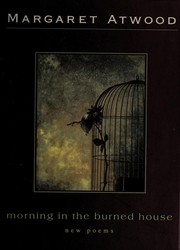
Her most celebrated later collection, written after her father's death, is more personal and elegiac than the early work; it demonstrates the full emotional range that the fiction sometimes keeps at arm's length.
Atwood on Literature and the World
ExpertUnderstand Atwood as a literary critic and public intellectual — how she theorizes the imagination, Canadian identity, and the social contract of storytelling — completing the picture of her as a total writer.
▸ Study plan for this stage
Pace: 6–8 weeks total: Weeks 1–3 on "Survival" (~20–25 pages/day, including re-reading dense argumentative passages); Weeks 4–7 on "Negotiating with the Dead" (~15–20 pages/day, pausing after each lecture-chapter to journal); Week 8 reserved for synthesis, comparative reflection, and completing exercises.
- The 'Survival' thesis: Canadian literature's central symbol as survival (vs. the American Frontier or the British Island), and the 'Basic Victim Positions' framework Atwood uses to map Canadian literary consciousness
- Canadian identity as defined through literature: how Atwood argues that a nation's stories are diagnostic of its collective psyche, and what it means for a culture to lack — or reclaim — its own mythology
- The 'victim/survivor' spectrum: the four positions (denying victimhood, acknowledging but accepting it, acknowledging and refusing it, creative non-victim) as a critical and ethical tool applicable to characters, authors, and societies
- The writer as negotiator with the dead: Atwood's central metaphor in 'Negotiating with the Dead' — that all writing is a transaction between the living writer and the accumulated dead (literary tradition, mortality, the unconscious)
- The double nature of the writer: Atwood's argument that every author is split between a public self and a 'other' who actually does the writing — and the ethical and psychological consequences of that split
- The social contract of storytelling: the obligations writers owe to readers, to truth, and to the communities their work enters — Atwood's theory of literature as a moral and civic act
- Imagination and survival: how both books converge on the idea that the literary imagination is not ornamental but essential — a survival mechanism for individuals and cultures alike
- Canadian literature as postcolonial literature: the colonial 'garrison mentality,' the 'bush garden,' and how Atwood situates Canadian writing within — and against — British and American literary dominance
- According to 'Survival,' what is Canada's central symbol and how does it differ structurally from the central symbols Atwood assigns to American and British literature? What evidence from Canadian texts does she marshal to support this claim?
- Explain Atwood's four 'Basic Victim Positions' from 'Survival.' How are they meant to function as a critical framework? Can you apply them to at least one character or narrative situation from a Canadian text Atwood discusses?
- In 'Negotiating with the Dead,' what does Atwood mean by the claim that writing is a negotiation with the dead? Who are 'the dead,' and what is being exchanged in this negotiation?
- How does Atwood theorize the split identity of the writer in 'Negotiating with the Dead'? What are the psychological, ethical, and creative stakes of this doubleness she describes?
- Both 'Survival' and 'Negotiating with the Dead' treat literature as performing a vital social function. How does each book define that function, and where do their arguments overlap or diverge?
- How does Atwood's position as a Canadian writer shape the arguments in both books? In what ways is her criticism itself an act of 'survival' or 'negotiation' as she defines those terms?
- Victim Position audit: Choose any three characters from a novel or story Atwood discusses in 'Survival' and plot each one on her four-position spectrum. Write a one-paragraph justification for each placement, using her framework's own language.
- Survival symbol-mapping: Following Atwood's method in 'Survival,' choose a national literature you know well (American, British, French, etc.) and write a 500-word essay identifying its 'central symbol' and testing whether Atwood's comparative framework holds, breaks down, or needs revision.
- Negotiation letter: After finishing 'Negotiating with the Dead,' write a 400–600 word letter in the voice of a writer you admire, addressed to one of their literary 'dead' — a predecessor, a lost tradition, or mortality itself — enacting Atwood's metaphor rather than just describing it.
- Dialectical reading journal: For each chapter of 'Negotiating with the Dead,' write two entries — first, a faithful summary of Atwood's argument; second, a critical response in which you push back, extend, or find a counterexample. This trains you to engage her as a peer, not just a subject.
- Synthesis essay: Write a 750–1,000 word comparative essay arguing whether 'Survival' and 'Negotiating with the Dead' form a coherent intellectual project or represent two distinct — even contradictory — theories of what literature is for. Use specific passages from both books as evidence.
- Public intellectual profile: Research one review, interview, or public essay Atwood wrote around the time of each book's publication. Write a one-page note on how the book's arguments show up (or are complicated) in her public-facing voice — connecting her criticism to her role as a public intellectual.
Next up: Having internalized Atwood's own theoretical frameworks for survival, identity, and the writer's moral contract, the reader is now equipped to return to her fiction and poetry with a fully authorial lens — reading her creative work not just as literature but as the living enactment of the very ideas she has argued in criticism.

Her landmark 1972 study of Canadian literature argues that 'survival' is the central Canadian theme; reading it now shows exactly which anxieties and archetypes she has been working through in her fiction all along.
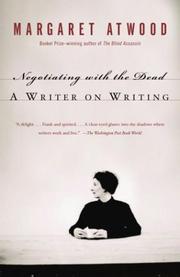
Based on her Cambridge lectures, this is Atwood's most sustained meditation on why writers write and what literature owes the living and the dead — the ideal capstone for a reader who now knows her work intimately.
Discussion
Keep reading
Paths that share books, cover the same subject, or open a related topic.