Best Books on Managing Up, in Reading Order
Managing up is a learnable skill that starts with self-awareness and relationship-reading, then builds toward strategic communication, influence without authority, and finally the high-stakes moves — delivering bad news, disagreeing with power, and advocating for your team. This four-stage curriculum moves from foundational workplace dynamics to advanced political and persuasive fluency, with each book building the vocabulary and confidence needed for the next.
Foundations: How Work Relationships Really Work
BeginnerUnderstand the unwritten rules of workplace dynamics, how bosses think, and what managing up actually means before trying to do it.
▸ Study plan for this stage
Pace: 4–5 weeks, ~25–30 pages/day (approximately 10–12 hours total reading time across both books)
- The critical importance of the first 90 days in a new role—establishing credibility, learning the culture, and building relationships before making major changes
- How to diagnose organizational dynamics: understanding the business model, stakeholders, power structures, and unwritten rules that govern workplace behavior
- The boss's perspective: recognizing what your manager cares about, their pressures, constraints, and success metrics—and how these shape what they need from you
- Managing up as a proactive partnership: shifting from a passive 'waiting for direction' mindset to actively influencing, communicating, and aligning with your boss
- The five key conversations with your boss: expectations, style, feedback, resources, and career development—and how to initiate them early
- Building trust through consistency, reliability, and understanding: demonstrating competence while learning how your boss prefers to work
- Identifying and navigating organizational culture, politics, and informal networks that determine how work actually gets done
- Self-awareness in managing up: recognizing your own communication style, triggers, and blind spots that affect your relationship with authority
- What are the five key conversations you should have with your boss in your first 90 days, and why is timing critical for each one?
- How do you diagnose what your boss actually cares about, and what are the main categories of pressure or constraints they face?
- What is the difference between managing up and managing down, and why is managing up often overlooked or misunderstood?
- Describe three specific ways you can establish credibility and build trust with your boss before attempting to influence decisions
- What are the unwritten rules or cultural norms in your current (or a hypothetical) workplace, and how would you discover them?
- How should your approach to managing up differ depending on your boss's communication style, priorities, and management philosophy?
- Map your boss's world: Create a one-page document listing your boss's top 3–5 priorities, key metrics they're measured on, their biggest constraints, and their known communication preferences. Interview a peer or mentor if needed to fill gaps.
- Conduct the five key conversations: Schedule or hold conversations with your boss covering expectations, work style, feedback preferences, resource needs, and career development. Document what you learn and any commitments made.
- Diagnose your organizational culture: Spend one week observing and documenting 5–10 unwritten rules or norms in your workplace (e.g., how decisions are really made, who has influence, what's valued). Interview 2–3 colleagues to validate your observations.
- Create a 90-day plan: Using Watkins' framework, write a realistic plan for your first 90 days that includes learning goals, relationship-building targets, and early wins that align with your boss's priorities.
- Analyze your communication style: Take a communication or personality assessment (e.g., DiSC, Myers-Briggs) and compare your style to your boss's. Identify one specific adjustment you'll make to improve how you communicate with them.
- Role-play a difficult conversation: With a peer or mentor, practice having a conversation where you need to push back respectfully, ask for resources, or raise a concern with your boss. Record feedback on your tone, clarity, and approach.
Next up: This foundation in understanding workplace dynamics and your boss's perspective equips you with the diagnostic tools and relationship-building skills needed to move into the next stage, where you'll learn specific strategies for influencing decisions, navigating conflicts, and advancing your agenda while maintaining trust.

Establishes the foundational mindset of diagnosing your boss, your organization, and your situation before acting — essential vocabulary for everything that follows.
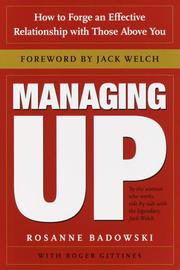
A practical, story-driven primer on reading a boss's priorities and style, written from the perspective of a longtime executive assistant to Jack Welch — concrete and immediately applicable.
Reading Your Boss and Communicating Priorities
BeginnerLearn to decode your manager's goals and pressures, align your work to what they care about most, and communicate your own priorities clearly and credibly.
▸ Study plan for this stage
Pace: 4–5 weeks, ~25–30 pages/day. Start with "What Got You Here Won't Get You There" (320 pages, ~2 weeks), then move to "The Effective Executive" (156 pages, ~1.5 weeks), with 1 week for review and integration exercises.
- Goldsmith's 20 habits that hold leaders back (especially those that damage upward relationships like excessive self-focus, not listening, and claiming credit)
- The concept of 'transactional feedback' and how to solicit honest input from your boss about your blind spots
- Drucker's principle that effectiveness is about doing the right things, not just doing things right—and how your boss defines 'right'
- The discipline of setting clear priorities and eliminating low-impact activities to align with your manager's goals
- How to read your boss's pressures and constraints to understand what they actually care about versus what they say
- The practice of regular, structured communication to clarify priorities and prevent misalignment
- Goldsmith's emphasis on behavioral change through awareness and deliberate practice, not just insight
- Drucker's time audit concept: understanding where your boss's attention and resources actually go reveals their true priorities
- Which of Goldsmith's 20 habits are you most likely to exhibit, and how might they damage your relationship with your boss or misalign you with their priorities?
- How can you use 'transactional feedback' (Goldsmith's term) to get your boss to tell you honestly what they think you should stop, start, or change?
- According to Drucker, what is the difference between efficiency and effectiveness, and why does your boss care more about the latter?
- What are your boss's top 3 actual priorities (not stated ones), and how did you determine them by observing their time and resource allocation?
- How would you structure a conversation with your boss to clarify priorities and ensure your work aligns with what they care about most?
- What low-impact activities are you currently doing that Drucker would say you should eliminate to focus on what matters to your manager?
- Complete Goldsmith's self-assessment: identify 3 of his 20 habits you exhibit, then ask your boss and 2 colleagues if they see these habits in you. Document their feedback.
- Conduct a 'time audit' (Drucker's method) on your boss for 2 weeks: track where they spend their time, what meetings they prioritize, what they ask about in 1-on-1s. Synthesize into their top 3 actual priorities.
- Schedule a structured conversation with your boss using this frame: 'I want to make sure I'm focused on what matters most to you. What are your top 3 priorities for me this quarter, and how will you measure success?'
- Create a 'stop/start/continue' list for your own work based on Drucker's effectiveness principle: identify 2 activities to stop (low-impact), 2 to start (high-impact for your boss), and 2 to continue.
- Practice Goldsmith's behavioral change method: pick one habit you want to change, set a specific trigger (e.g., 'In meetings, I will listen for 2 minutes before speaking'), and track it daily for 2 weeks.
- Write a 1-page summary of your boss's likely pressures and constraints (based on what you've observed), then validate it in your next 1-on-1: 'I've noticed you seem focused on X and constrained by Y—is that accurate?'
Next up: This stage equips you to understand your boss's world and communicate clearly about priorities; the next stage will teach you how to influence upward and negotiate for resources or support once you've built this foundation of alignment and credibility.

Reveals the behavioral blind spots that damage upward relationships, helping you see yourself as your boss sees you — a prerequisite for effective communication.
Teaches how executives think about time, priorities, and contribution — reading this lets you speak your boss's language and frame your work in terms they value.
Influence, Disagreement, and Delivering Hard Truths
IntermediateDevelop the skills to push back on decisions, deliver bad news without losing trust, and disagree with authority in ways that strengthen rather than damage the relationship.
▸ Study plan for this stage
Pace: 8–10 weeks, ~40–50 pages/day (accounting for dense material and reflection time). Suggested pacing: Crucial Conversations (3 weeks), Radical Candor (2–3 weeks), Thanks for the Feedback (2–3 weeks), plus 1 week for integration and practice.
- The path to dialogue: moving from silence or violence to honest conversation by creating psychological safety and shared purpose
- Crucial Conversations framework: how to prepare, manage emotions, and stay in dialogue when stakes are high and opinions differ
- Radical Candor: the balance between caring personally and challenging directly as the foundation for trust and influence
- The role of intent and humility: approaching disagreement with genuine curiosity about the other person's perspective, not certainty about your own rightness
- Receiving feedback without defensiveness: understanding that feedback (even poorly delivered) contains useful information and strengthens relationships when received well
- The neuroscience of threat and safety: how to recognize when conversations trigger defensive reactions and how to restore psychological safety
- Distinguishing between the story you tell yourself and the facts: separating assumptions from reality to avoid escalating conflict
- Building credibility through consistency: aligning your words, tone, and follow-through to maintain trust when delivering hard truths
- What are the conditions that move a conversation from silence or violence into genuine dialogue, and how do you establish them before disagreeing with authority?
- How does Radical Candor's framework of caring personally + challenging directly differ from other approaches to feedback, and why does this combination preserve trust?
- Describe a situation where you told yourself a story about someone's motives. How might that story have prevented you from having a crucial conversation, and how would you reset it?
- What are the key steps in preparing for a high-stakes conversation where you need to push back, and why does preparation matter more than eloquence?
- How should you respond when someone reacts defensively to your feedback or disagreement, and what does it mean to 'stay in dialogue' in that moment?
- What is the relationship between receiving feedback well and being able to deliver it effectively? Why does Thanks for the Feedback belong in a stage about managing up?
- Prepare and conduct one crucial conversation using the Crucial Conversations framework: identify the stakes, clarify your purpose, manage your emotions, and document what you learned about the other person's perspective.
- Map a recent disagreement or conflict at work onto the Crucial Conversations model: Where did you go silent or violent? Where could you have stayed in dialogue? Rewrite the conversation as it could have gone.
- Practice the Radical Candor self-assessment: identify one person you manage or influence and honestly rate yourself on 'caring personally' and 'challenging directly.' Plan one specific action to move toward Radical Candor with them.
- Role-play receiving critical feedback from a peer or authority figure: practice staying curious, asking clarifying questions, and finding the kernel of truth without becoming defensive. Debrief what made it hard and what helped.
- Identify your default under stress: Do you tend toward silence (withholding truth to avoid conflict) or violence (bluntness without care)? Write three scenarios where you'd typically default, then script how you'd move toward dialogue instead.
- Conduct a 'story vs. fact' audit: write down a story you're telling yourself about why someone disagreed with you or rejected your idea. List only the facts. What changes when you separate them?
Next up: This stage equips you with the conversational and emotional skills to influence upward; the next stage will focus on strategic influence—how to build coalitions, frame proposals, and navigate organizational politics while maintaining the trust and credibility you've developed here.
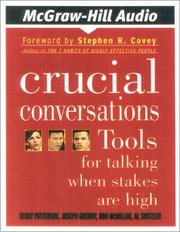
Provides a repeatable framework for high-stakes dialogue — exactly what you need when disagreeing with a boss or surfacing a problem they don't want to hear.

Builds on Crucial Conversations by framing honest, caring feedback as a two-way street — teaches you to challenge upward directly while showing you genuinely care about shared outcomes.

Flips the script: instead of focusing on giving feedback, it teaches you to receive and use feedback from bosses skillfully, which is the other half of disagreeing well.
Advanced Influence: Getting What Your Team Needs
ExpertMaster organizational influence, navigate power and politics ethically, and become a strategic advocate who secures resources, visibility, and support for your team.
▸ Study plan for this stage
Pace: 4–5 weeks, ~40 pages/day (with reflection breaks). "Influence" is dense with research and examples; allow time to absorb each principle before moving forward.
- The Six Principles of Influence (Reciprocity, Commitment & Consistency, Social Proof, Authority, Liking, Scarcity) and how they operate in organizational contexts
- How to ethically apply influence principles to advocate for your team's needs without manipulation
- The distinction between genuine authority and perceived authority, and how to build credibility as a strategic advocate
- How social proof and consensus operate in organizational decision-making, and how to leverage them responsibly
- The role of reciprocity in building alliances and securing resources across departments
- How scarcity and urgency shape organizational priorities, and how to frame team needs strategically
- The psychological foundations of persuasion and how to recognize when others are using these principles on you
- Ethical guardrails for influence: maintaining integrity while navigating organizational politics
- What are the six principles of influence, and how does each one operate in a workplace setting?
- How can you apply the principle of reciprocity to build alliances with peers and leaders who can support your team's goals?
- What is the difference between using influence ethically versus manipulatively, and how do you maintain that boundary?
- How can you leverage social proof and authority to increase the credibility of your team's proposals and requests?
- In what ways can scarcity and commitment principles be used to secure resources and visibility for your team?
- How do you recognize when organizational leaders are using influence principles on you, and how should you respond?
- Map the six principles: For each principle, identify 2–3 real situations in your organization where you've seen it operate. Write down how you could ethically apply it to advocate for your team.
- Reciprocity audit: Identify three leaders or peers whose support you need. What can you offer them first (information, support, visibility) to establish reciprocity before making your ask?
- Authority-building plan: Document the expertise and credibility you've built in your domain. Create a 90-day plan to increase your visible authority (speaking opportunities, published insights, mentoring).
- Social proof inventory: Collect evidence of your team's impact (metrics, testimonials, case studies, peer endorsements). Organize this into a persuasive portfolio you can reference when advocating for resources.
- Scarcity framing exercise: Take a current team need (budget, headcount, timeline). Reframe it using scarcity and urgency principles in a 1-page proposal. Have a peer review it for ethical clarity.
- Influence resistance check: Identify a recent decision where you felt pressured by a leader or peer. Analyze which influence principle(s) were at play. Reflect on how you could have responded more strategically.
Next up: This stage grounds you in the universal psychology of influence, providing the foundational principles and ethical framework you'll need to navigate organizational politics strategically in the next stage, where you'll learn to apply these principles through specific political and relational dynamics.

The canonical text on how persuasion works — understanding these principles lets you frame requests to leadership in ways that are far more likely to succeed.
Discussion
Keep reading
Paths that share books, cover the same subject, or open a related topic.