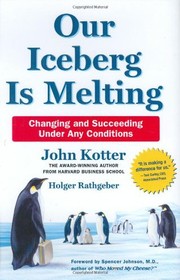
Becoming a first-time manager: books for your first team and role
This curriculum takes a first-time manager from the personal mindset shift of leaving individual contributor work, through the core mechanics of managing people (delegation, feedback, one-on-ones), and finally into the deeper craft of building high-trust, high-performing teams. Each stage builds the vocabulary and mental models needed to get the most out of the next, so the books should be read in order both within and across stages.
The Mindset Shift: From Doer to Leader
BeginnerUnderstand why the transition to management is a fundamental identity change, not just a promotion, and develop the right mental framework before picking up any tactical tools.
▸ Study plan for this stage
Pace: 4–5 weeks, ~40–50 pages/day (approximately 2 weeks per book, with overlap for reflection and exercises)
- Management is fundamentally different from individual contribution—it requires shifting from doing the work yourself to enabling others to do it
- The first 90 days are critical for establishing credibility, understanding organizational context, and setting the tone for your leadership
- Imposter syndrome and self-doubt are normal in the transition to management; reframing these feelings as growth signals rather than warnings is essential
- Your role as a manager is to amplify the output of your team, not to be the smartest person in the room or the primary executor
- Building trust, psychological safety, and clear communication are the foundational pillars of effective management
- Intentional reflection and self-awareness are prerequisites for managing others effectively—you must understand your own values, triggers, and blind spots
- The transition requires letting go of the identity that made you successful as an individual contributor and embracing a new one
- Why is becoming a manager a fundamental identity shift rather than just a career progression, and what makes this transition psychologically challenging?
- What are the key priorities and milestones Watkins recommends for the first 90 days, and why does this timeframe matter for establishing credibility?
- How does Julie Zhuo describe the difference between being a great individual contributor and being a great manager, and what skills don't transfer directly?
- What does it mean to 'amplify' your team's output rather than contribute directly, and how does this reframe your role as a manager?
- What are the early warning signs that you're slipping back into 'doer mode' rather than operating as a leader, and how do you course-correct?
- How can you build psychological safety and trust with your team from day one, and why are these prerequisites for everything else?
- Write a personal 90-day plan for your first weeks as a manager, following Watkins' framework: identify the key stakeholders you need to meet, the organizational context you need to understand, and the early wins you want to establish
- Conduct a 'skills audit': list the top 5 skills that made you successful as an individual contributor, then honestly assess which ones will help vs. hinder you as a manager (e.g., being the fastest coder might undermine delegation)
- Create a 'transition journal': spend 10–15 minutes daily reflecting on moments when you felt the pull to do the work yourself rather than delegate or coach, and write down what triggered that impulse
- Interview 2–3 managers you respect (ideally those who made the transition from individual contributor to manager) and ask them: What surprised you most about management? What identity did you have to let go of? What do you miss about being an IC?
- Draft your team's charter or operating principles: what does great look like for your team? What values will you model? What psychological safety commitments will you make? (This grounds Zhuo's concepts in your specific context)
- Role-play a difficult delegation conversation with a peer or mentor: practice explaining why you're stepping back from doing the work and how you'll support your team member instead
Next up: With the mindset shift established and a clear understanding of your new identity as a leader, you'll be ready to move into the next stage—learning the specific tactical tools and frameworks for managing people effectively (such as one-on-ones, feedback, hiring, and performance management).
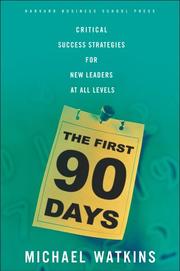
Gives new managers a structured framework for navigating a leadership transition without making costly early mistakes — the perfect starting point before anything else.
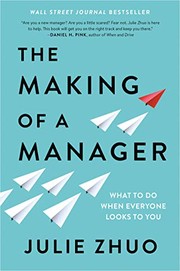
Written by a first-time manager reflecting on her own stumbles at Facebook, it normalizes the confusion of the role and introduces core concepts (meetings, feedback, hiring) in plain, honest language.
Core Mechanics: One-on-Ones, Feedback & Delegation
BeginnerMaster the fundamental repeatable practices — structured one-on-ones, delivering and receiving feedback, and delegating effectively — that form the daily engine of good management.
▸ Study plan for this stage
Pace: 8–10 weeks, ~25–30 pages/day (approximately 2–3 weeks per book with review and practice time)
- One-on-one meetings as the fundamental management lever: structured cadence, clear agenda, and psychological safety (Grove's output management framework)
- Radical Candor as the operating system for feedback: the balance between caring personally and challenging directly (Scott's 2x2 matrix)
- Feedback delivery mechanics: specific, timely, behavioral, and actionable (Horstman's model for both praise and correction)
- Delegation as leverage: matching task complexity to capability, clear ownership, and monitoring without micromanaging (Grove's delegation framework)
- The feedback loop in one-on-ones: creating space for upward feedback, coaching questions, and mutual accountability
- Building trust through consistency: how regular one-on-ones, honest feedback, and clear delegation compound psychological safety over time
- Handling difficult conversations: when feedback lands poorly, how to recover, and when to escalate vs. coach through
- Measuring your effectiveness as a manager: output metrics for one-on-ones, feedback quality, and delegation success
- What is the purpose of a one-on-one meeting, and why is a consistent cadence (e.g., weekly) essential to Grove's output management model?
- How does Radical Candor's 2x2 matrix (caring personally vs. challenging directly) help you diagnose your feedback blind spots, and what does each quadrant look like in practice?
- What are the key components of effective feedback according to Horstman, and how do you deliver praise and correction using the same structural framework?
- How do you delegate a task in a way that builds capability in your team member while ensuring accountability and reducing your own bottleneck?
- What does psychological safety have to do with one-on-ones and feedback, and how do you know if you've created it?
- When feedback doesn't land or creates defensiveness, what are your options for recovery, and when should you involve HR or your own manager?
- Schedule and conduct 4 weekly one-on-one meetings with a direct report using Grove's framework: 15 min on their priorities, 15 min on your priorities, 15 min on feedback/coaching. Document what you learned and what changed.
- Map yourself on Scott's Radical Candor 2x2 matrix: identify one person you care about but don't challenge enough, and one you challenge but don't care for enough. Plan a conversation to move toward the top-right quadrant.
- Deliver one piece of praise and one piece of corrective feedback using Horstman's model (situation, behavior, impact, expectation for future). Record or write down what you said and ask your direct report for honest feedback on how it landed.
- Delegate a complete task to a team member using Grove's framework: define the task, assess their capability, set clear ownership and milestones, and schedule a check-in. Reflect on where you were tempted to take it back and why.
- Conduct a feedback-focused one-on-one where you ask your direct report for upward feedback on your management. Use Scott's framework to receive it without defensiveness and commit to one change.
- Review a difficult feedback conversation you've had (or role-play one with a peer). Identify where you fell into Obnoxious Aggression, Ruinous Empathy, or Manipulative Insincerity, and rewrite it using Radical Candor principles.
Next up: This stage equips you with the daily practices and communication patterns that build trust and clarity; the next stage will expand into how to scale these practices across teams, handle complex organizational dynamics, and develop your team's capabilities over time.
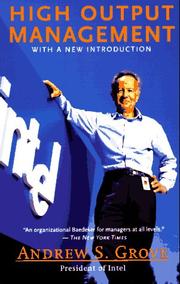
Intel's legendary CEO introduces the manager-as-multiplier model and the mechanics of one-on-ones and delegation; reading it after Zhuo gives the tactical depth her book intentionally keeps light.

The definitive modern framework for giving honest, caring feedback — the single skill new managers most often avoid; builds directly on Grove's output-focused mindset.
![The Effective Manager [Paperback] Horstman,Mark](https://covers.openlibrary.org/b/id/10207226-M.jpg)
A practical, no-nonsense playbook for one-on-ones, feedback, coaching, and delegation — reinforces and operationalizes what Grove and Scott introduced with concrete scripts and cadences.
Building Trust & Psychological Safety
IntermediateUnderstand how trust is built at the team level, what psychological safety is and why it predicts performance, and how to shape team culture intentionally as a new leader.
▸ Study plan for this stage
Pace: 4–5 weeks, ~25–30 pages/day. Week 1–2: "The Five Dysfunctions of a Team" (est. 229 pages); Week 3–5: "The Fearless Organization" (est. 280 pages), with overlap for reflection and integration.
- The five dysfunctions model: absence of trust as the foundation, and how it cascades into inattention to results, avoidance of accountability, lack of commitment, and fear of conflict
- Trust as a prerequisite for healthy team dynamics—specifically, vulnerability-based trust where team members believe others have good intentions and will not exploit their weaknesses
- Psychological safety as a shared belief that the team is safe for interpersonal risk-taking, and its direct correlation with team learning, innovation, and performance outcomes
- The distinction between interpersonal trust (Lencioni) and psychological safety (Edmondson), and how they work together to create high-performing teams
- How new leaders intentionally shape team culture by modeling vulnerability, establishing norms around speaking up, and responding non-defensively to bad news or mistakes
- The role of leader behavior in establishing psychological safety—including how leaders signal that failure is acceptable and that diverse perspectives are valued
- Practical mechanisms for building psychological safety: framing work as a learning problem, acknowledging uncertainty, inviting input, and responding productively to voice
- What are the five dysfunctions of a team according to Lencioni, and why does the absence of trust sit at the foundation of all other dysfunctions?
- How does Lencioni define vulnerability-based trust, and what specific behaviors can a new manager model to build it with their team?
- What is psychological safety as defined by Edmondson, and what evidence does she present linking it to team performance and innovation?
- How do the concepts of trust in Lencioni and psychological safety in Edmondson relate to and reinforce each other in a team setting?
- What are the three key leader actions Edmondson identifies for establishing psychological safety, and how would you apply each one in your first 30 days as a manager?
- Describe a specific scenario where low psychological safety would prevent a team member from speaking up, and explain how a manager could reshape that dynamic.
- Complete the Five Dysfunctions Team Assessment (included in Lencioni's book) for your current or target team; identify which dysfunction is most acute and write a one-page analysis of how it manifests in daily interactions.
- Conduct a 'vulnerability audit' of your own leadership: list three areas where you could model appropriate vulnerability with your team (e.g., admitting a mistake, asking for help, sharing a learning edge), and commit to demonstrating one per week over the next month.
- Design a 'team charter' session agenda that explicitly addresses psychological safety—include ice-breakers, a discussion of team norms around speaking up and dissent, and a commitment statement. Run this with your team or a peer group.
- Record yourself (audio or video) in a mock one-on-one or team meeting where a team member raises a concern or admits a mistake; review the recording and assess whether your response invited or shut down further voice. Iterate and re-record.
- Interview 3–5 team members (or peers if you don't yet have a team) using Edmondson's framework: ask them how safe they feel speaking up, giving bad news, asking for help, and admitting mistakes. Synthesize findings and identify one concrete norm or ritual to introduce.
- Create a 'failure log' for yourself: document one mistake or learning edge per week, reflect on it, and share a brief version with your team in a team meeting or one-on-one to normalize vulnerability and learning.
Next up: Mastering trust and psychological safety establishes the relational foundation that enables the next stage—effective delegation, feedback, and performance management—because team members will only accept accountability and growth feedback in an environment where they believe their leader has their best interests in mind.
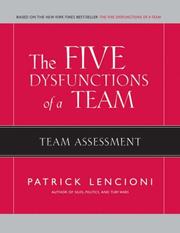
A fable-format book that makes the trust-first model of team health viscerally clear; reading it after mastering individual management mechanics shows how those mechanics serve the whole team.

Provides the research-backed science behind psychological safety, giving managers the 'why' to complement Lencioni's 'what' and equipping them to actively cultivate safety on their team.
Coaching, Growth & the Long Game
ExpertMove beyond managing tasks and team health to actively developing people, having career conversations, and thinking like a long-term leader who grows others.
▸ Study plan for this stage
Pace: 8–10 weeks, ~25–30 pages/day. Read "Trillion Dollar Coach" (first 3–4 weeks), then "An Elegant Puzzle" (next 4–5 weeks), with 1–2 weeks for reflection and integration exercises.
- Coaching as a leadership multiplier: how asking powerful questions and listening deeply unlocks people's potential far more than giving answers (Schmidt's core thesis)
- The coaching conversation framework: building trust, asking open-ended questions, listening without judgment, and helping people discover their own solutions
- Career conversations and sponsorship: moving from managing performance to actively investing in people's growth trajectories and advocating for their advancement
- Systems thinking for leaders: understanding how team dynamics, organizational structure, and individual growth interconnect (Larson's systems lens)
- The long-term leader's mindset: prioritizing sustainable team development and organizational health over short-term wins
- Navigating complexity and ambiguity: using frameworks to make sense of competing priorities and communicate clearly when the path forward is unclear
- Building a culture of continuous learning: creating psychological safety and feedback loops that enable people to grow and take intelligent risks
- Delegation as development: using task assignment as a vehicle for growing people, not just getting work done
- What is the core difference between managing tasks and coaching people? How does Schmidt illustrate this distinction through his relationship with Steve Jobs and other leaders?
- Describe a coaching conversation framework you could use with a direct report. What questions would you ask, and why is listening more important than advice-giving?
- How do you conduct a career conversation that goes beyond annual reviews? What should you learn about a person's aspirations, and how do you help them chart a path forward?
- What does Larson mean by 'systems thinking' for managers, and how does it change how you approach team problems versus individual performance issues?
- How do you balance short-term delivery with long-term people development? What trade-offs does a first-time manager face, and how do you navigate them?
- What are the key principles for building psychological safety on your team, and why does it matter for both growth and performance?
- Conduct three coaching conversations with direct reports using the open-question framework from Schmidt: ask what they want to achieve, listen without interrupting, ask clarifying questions, and let them propose solutions. Debrief afterward: what did you learn about them? What surprised you?
- Schedule and run one formal career conversation with each direct report. Prepare by asking: Where do they want to be in 2–3 years? What skills do they need? What experiences would help? Document their goals and your commitments to support them.
- Map your team's growth using Larson's systems thinking: identify skill gaps, bottlenecks in knowledge transfer, and dependencies. Design one experiment to improve how knowledge flows or how someone develops a critical skill.
- Identify one person on your team with high potential and create a 6-month sponsorship plan: what visibility will you give them? What stretch assignments? How will you advocate for them in leadership conversations?
- Practice asking powerful questions: for one week, in every 1-on-1, ask at least one open-ended question and count how many follow-up questions you ask before offering advice. Reflect on what you learned.
- Redesign one recurring task or project as a development opportunity: who could own it? What would they learn? How would you support them without micromanaging?
Next up: This stage equips you with the mindset and tools to develop people intentionally; the next stage will likely focus on scaling these practices across larger teams, navigating organizational politics, and sustaining your own growth as a leader.

Distills the coaching philosophy of Bill Campbell — Silicon Valley's most influential manager-coach — showing what elite people development looks like in practice.

A deeply practical guide to the systems, processes, and career-growth conversations that sustain a team over time; the ideal capstone for a manager ready to think structurally about their organization.
Discussion
Keep reading
Paths that share books, cover the same subject, or open a related topic.