Malaria: The Best Books on the Mosquito and the Disease It Carries, in Order
Malaria is the disease that has probably killed more human beings than any other, and the literature about it splits into three genres that answer different questions: popular science about the parasite and its vector, sweeping historical argument about what the disease did to empires and armies, and sceptical academic scholarship about why a century of eradication campaigns keeps failing. This path reads them in that order, because the big historical claims are much easier to weigh once you know the biology, and the scholarship is largely a corrective to the popular books. Each entry says what kind of book it is and what it assumes you already know.
The Parasite and Its Vector
BeginnerUnderstand what malaria actually is — a protozoan with a two-host life cycle — and why the mosquito is the part of the problem that has proved impossible to solve.
▸ Study plan for this stage
Pace: Three weeks at roughly 40 pages a day. Sonia Shah's The fever is 307 pages of popular science journalism and assumes no biology at all — read it first and read it properly, because every later book on this path argues with something in it. Spielman and D'Antonio's Mosquito is 247 pages, written by a
- The Plasmodium life cycle across two hosts, and why a parasite that must pass through a mosquito is so hard to interrupt
- The four (now five) human-infecting Plasmodium species and why falciparum and vivax behave so differently
- Anopheles biology as the actual control problem: which species bite, when, where they rest, and how that dictates every intervention
- Insecticide and drug resistance as evolutionary consequences of control rather than accidents of it
- Why the economics of antimalarial drug development produce the outcomes Shah and Desowitz both describe
- The difference between a journalist's synthesis (Shah), an expert trade book (Spielman) and a practitioner's polemic (Desowitz)
- Can you draw the Plasmodium life cycle from memory, naming what happens in the mosquito and what happens in the human?
- Why has every scheme to eliminate Anopheles failed? Give Spielman's reasons, not general ones.
- What is Desowitz actually angry about, and is his target the science, the funding or the institutions?
- Where do Shah and Desowitz disagree about why campaigns fail, and which of them is arguing from evidence rather than experience?
- What does Shah's 500,000-year framing buy her argument, and what does it let her skip?
- Draw the two-host life cycle from Shah's account on one sheet of paper, then check it against Spielman's chapters on the insect and mark everything Shah left out.
- Take Spielman's account of one control programme and list the specific mosquito behaviours that defeated it. Keep the list; McNeill and Packard will both assume you have it.
- Write a one-paragraph summary of Desowitz's thesis in his own terms, then mark each sentence as reported evidence or professional opinion.
- Note every claim Shah makes about the economics of drug development and flag which ones she sources and which she asserts.
Next up: With the parasite, the vector and the failure modes in hand, you can assess the large historical claims of the next stage on their evidence rather than on their confidence.
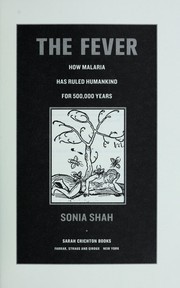
Popular science journalism, no background assumed, and the best single starting point: Shah covers the parasite's life cycle, the history of failed campaigns and the economics of drug development in one readable arc. Read it first so that every later book has something to argue with.
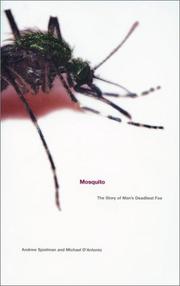
Written by a Harvard entomologist with a co-author, and the book to read for the insect rather than the disease — how mosquitoes live, why they bite, and why every scheme to eliminate them has failed. Short, and it fills the gap Shah leaves.
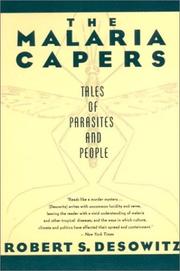
A parasitologist's essays from 1991, half field reporting and half polemic about how tropical medicine is funded. Older than everything else here and openly opinionated, which is why it belongs early: it sets up the scepticism the scholarly stage develops properly.
The Historical Argument
BeginnerWeigh the claim that mosquito-borne disease shaped the outcome of wars, the geography of empire and the pattern of the slave trade — and see how far the evidence carries it.
▸ Study plan for this stage
Pace: Four to five weeks. Winegard's The Mosquito is 491 pages of popular narrative history making the maximal version of the claim; McNeill's Mosquito Empires is 390 pages of academic history from Cambridge, confined to the Greater Caribbean between 1620 and 1914 — it assumes no specialist knowledge but
- Differential immunity as a military asset — the mechanism McNeill uses to explain repeated colonial defeats in the Caribbean
- The distinction between a disease shaping an outcome and a disease being the cause of it, which is where Winegard and McNeill part company
- Quinine and cinchona bark as the enabling technology of tropical occupation, and the theft of the seed that ended the Andean monopoly
- How malaria's geography interacted with the Atlantic slave trade, and the limits of what the evidence supports
- Popular narrative history and academic monograph as different evidentiary contracts with the reader
- Why a strong causal claim about disease is easier to make than to demonstrate
- What is McNeill's mechanism, stated precisely, and which specific campaigns does he use to demonstrate it?
- Name three claims Winegard makes that McNeill would not, and say what evidence each would need.
- How did quinine change what European powers could do, and when precisely did the constraint lift?
- Where does the argument about malaria and the slave trade rest on inference rather than on record?
- After reading both, is 'the mosquito is the deadliest actor in human history' a historical claim or a rhetorical one?
- Pick one campaign Winegard treats in a few pages and read McNeill's chapter on the same episode; write down every point where the two accounts differ in emphasis, evidence or certainty.
- Read one of McNeill's chapters with the footnotes open and note what kind of source each central claim rests on — muster roll, letter, later reconstruction.
- Choose Rocco or Honigsbaum, read it, and then check the other's index for the same three expedition names to confirm you are not missing material rather than a retelling.
- Write two hundred words defending Winegard's book to a historian, using McNeill's own findings as the support.
Next up: You now hold the confident historical case; the next stage is the scholarship written specifically to qualify it.

The maximal version of the argument: popular history, briskly written, claiming the mosquito as the decisive actor in human affairs. Read it for the sweep, but read it after Shah, because it makes strong causal claims that historians have contested and it helps to know the biology before you assess them.

The disciplined academic version of the same case, confined to the Greater Caribbean between 1620 and 1914: McNeill shows how differential immunity to yellow fever and malaria repeatedly decided colonial wars. Assumes no specialist knowledge but reads like scholarship rather than journalism, and it is the book to trust where it and Winegard disagree.
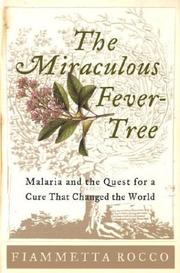
Narrative history of quinine — the cinchona bark that made European occupation of the tropics survivable — told partly through the author's own family in East Africa. The story of the drug, where the previous two books tell the story of the disease.
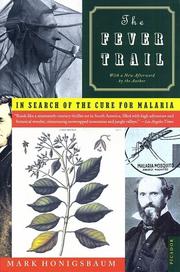
Covers much the same quinine-hunting expeditions as Rocco, published the same year, with more emphasis on the Victorian plant hunters themselves. Listed as an alternative rather than a sequel: read one of the two unless the subject grips you.
The Sceptical Scholarship
IntermediateLearn why malaria control is a political and economic problem rather than a technical one, and why the confident histories in the previous stage need qualifying.
▸ Study plan for this stage
Pace: Three to four weeks, about 824 pages. Packard's The Making of a Tropical Disease is 320 pages from Johns Hopkins — academic but not technical, and it assumes you already know the basic epidemiology, which is why it sits after stage one. Snowden's The conquest of malaria is 296 pages of close nationa
- Malaria's distribution as a product of poverty, land use and labour patterns rather than climate and biology alone — Packard's central claim
- Why technical fixes keep failing when the political and economic conditions producing transmission are untouched
- The Italian case as the strongest available counter-evidence that elimination is possible, and what it cost politically to achieve
- The American South's endemic malaria and its disappearance, and what actually did it
- Reading a historian against a journalist: Packard is answering Winegard's kind of book directly
- Elimination, eradication and control as three different targets with three different price tags
- State Packard's thesis in one sentence, then say what would falsify it.
- What did Italy actually do between 1900 and 1962, and which parts of the programme were medical rather than political?
- Why did malaria vanish from the United States, and how much credit does deliberate public health deserve?
- Where do Snowden and Packard genuinely disagree, and where are they answering different questions?
- Does the Italian case refute Packard, or does it confirm him by showing the political price?
- Set the Italian chapters of Snowden beside Packard's chapter on the same period and mark every point where one treats a cause as primary that the other treats as secondary.
- Reconstruct Humphreys' explanation of the American decline as a numbered list of causes in her order of importance, then compare that ordering to Packard's.
- Take one claim from Winegard or Shah that Packard directly contradicts and write out both cases in full with their evidence.
- Write down the conditions Packard says must hold for control to work, and keep the list for the final stage.
Next up: Holding Packard's conditions, the modern eradication campaign in the final stage becomes a testable proposition rather than a hope.
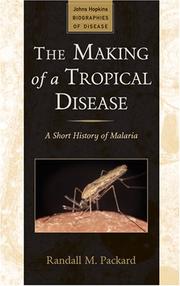
The key corrective on this path, and the one book here written against the others: Packard argues that malaria's distribution is made by poverty, land use and labour patterns rather than by climate or biology alone. Academic but not technical; it assumes you already know the basic epidemiology, which is why it sits after stage one.
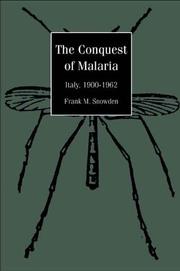
A close study of one country — Italy from 1900 to 1962 — and the strongest available case that malaria can be eliminated, along with an account of exactly what it cost politically. The specific counterweight to Packard's pessimism, so read them together.

Scholarly history of malaria in the United States, where the disease was endemic well into the twentieth century and then vanished. Published under the bare title here; the full subtitle is about poverty, race and public health, which is the argument.
Eradication, and Whether It Can Work
IntermediateFollow the modern campaigns — wartime drug research, the WHO programme, and the current philanthropically funded push — and form a view on the eradication target.
▸ Study plan for this stage
Pace: Four weeks. Masterson's The malaria project is 406 pages of heavily archival investigative journalism on the American wartime antimalarial drug programme, and it documents in detail the deliberate infection of prisoners and psychiatric patients with malaria in experiments that produced chloroquine.
- The wartime drug programme as the origin of chloroquine, and the human experimentation that produced it
- The WHO's mid-century eradication programme: what it achieved, where it stopped, and why it was abandoned
- The modern philanthropically funded push — bed nets, artemisinin combinations, funding politics and the personalities driving them
- Artemisinin resistance and the reason the current strategy has a clock on it
- Snowden's comparative frame: what makes malaria unusual among epidemic diseases and what makes it typical
- Reading an advocate: Perry is reporting from inside a campaign he broadly supports, which shapes what he counts as progress
- How was chloroquine developed, and on whom?
- Why did the WHO eradication programme fail, and does Packard's explanation or Perry's fit the record better?
- What is the current eradication target, what does it assume, and which of Packard's conditions does it satisfy?
- Where in Lifeblood is Perry reporting and where is he advocating? Point to specific passages.
- Having read the whole path, do you think malaria can be eradicated? State the strongest case against your own answer.
- Reconstruct the chloroquine development timeline from Masterson, marking at each step who was experimented on and under what consent, if any.
- Check Perry's account of the modern campaign against the conditions you listed from Packard and mark which are met, which are unmet and which he does not address.
- Find Snowden's malaria chapter in Epidemics and society and set it against his own book-length Italian study; note what he simplifies when writing comparatively.
- Write a 500-word answer to 'can malaria be eradicated', citing at least four of the twelve books on this path by name and by position.
- Go back to the life cycle you drew in stage one and mark every point where a current intervention acts on it.
Next up: This closes the path — you have the biology, the maximal historical claim, the scholarship that qualifies it and the record of every attempt to end the disease, which is enough to read new malaria journalism critically.

Investigative history of the American wartime antimalarial drug programme, including the human experiments on prisoners and psychiatric patients that produced chloroquine. Journalism, heavily archival, and the darkest chapter of the story.

Reporting from inside the modern eradication campaign — bed nets, funding politics and the personalities driving it. A foreign correspondent's book rather than a scholar's, and deliberately more optimistic than Packard; read it last so you can judge the optimism yourself.

Snowden's survey of epidemic disease from plague to HIV, with malaria set beside the others. The right closing book because it puts everything above into a comparative frame — what makes malaria unusual, and what makes it typical.
Discussion
Keep reading
Paths that share books, cover the same subject, or open a related topic.