Best Books on Parasites and Parasitology, in Order
Parasitism is probably the most common way of making a living on Earth, and a parasite's life cycle is often stranger and more precisely engineered than anything a free-living animal manages. This path starts with the popular accounts that make the case, spends a stage on host manipulation because that is what pulls most readers in, then moves to the university textbooks, the evolutionary theory, and finally the diseases that make parasitology a medical field rather than a curiosity.
Why parasites run the world
BeginnerCome away convinced that parasitism is the rule rather than the exception, and able to name the major groups — protozoa, helminths, arthropods — and roughly what each does.
▸ Study plan for this stage
Pace: Two to three weeks for about 900 pages of straightforward popular science. Parasite Rex is 298 pages and reads in a week; Drisdelle's Parasites is the same order of length; Riddled with Life is 336 and slower because it is arguing rather than describing. Read them in the order given and do not skip
- Zimmer's central claim in Parasite Rex: a parasite is not a degenerate simplification of a free-living animal but among the most specialised organisms alive, with adaptations that only look like losses if you assume free living is the default.
- The three groups you will meet in every later book — protozoa (single-celled), helminths (flatworms, tapeworms, roundworms) and parasitic arthropods (ticks, lice, mites) — and the fact that they are unrelated lineages that converged on the same way of making a living.
- The direct versus indirect life cycle. A parasite with an indirect cycle needs an intermediate host, and that requirement is what makes so much of the biology strange: the parasite has to get eaten by the right animal at the right time.
- Definitive host, intermediate host, vector, reservoir. Get these four straight now; Schmidt and Roberts will use them in every chapter without redefining them.
- Drisdelle's contribution is the human case history: what these organisms actually do to a person, told clinically rather than as natural-history spectacle. It is the bridge from Zimmer's wonder to the medical stage at the end of this path.
- Zuk's reframing in Riddled with Life: disease is a permanent evolutionary partner rather than a failure state, and traits like fever and sickness behaviour may be defences rather than damage.
- The scale argument that justifies this path existing — parasitism has evolved independently many times and by most counts parasites outnumber free-living species. Get comfortable stating why that is a claim about lifestyle, not about a taxonomic group.
- State Zimmer's argument against the idea that parasites are 'simple'. What specific adaptations does he offer as counter-evidence?
- Pick any parasite Drisdelle describes and draw its life cycle from egg to egg, naming every host it needs. Which step is the bottleneck?
- Why does an indirect life cycle so often involve the parasite altering the intermediate host's behaviour or appearance? Answer at the level of what the parasite needs to happen next.
- Zuk argues that some symptoms of infection are host defences rather than parasite damage. What is her evidence, and how would you tell the two apart in a given case?
- Which of these three books would you hand to someone who thinks parasitology is a marginal subject, and why that one rather than the others?
- Start a life-cycle notebook on page one and keep it for the whole path. One page per parasite: hosts in order, mode of transmission between each, where in the host it lives, how it exits. By stage three you will be adding to it from Schmidt and Roberts rather than starting it.
- Build a three-column table as you read — protozoan, helminth, arthropod — and file every organism the three books name. When you cannot decide which column something belongs in, that is the note to carry into the textbook stage.
- Take one parasite Zimmer treats as a marvel and Drisdelle treats as a clinical problem, and write a paragraph on each framing. The gap between them is the gap between the two halves of this field.
- Write down, before starting stage two, the single manipulation story you found most surprising. You will test it against the evidence in the next stage, and some of what you read here will not survive that.
Next up: You now have the organisms and the vocabulary of the life cycle, which is exactly what you need to judge the manipulation claims in the next stage rather than simply enjoy them.
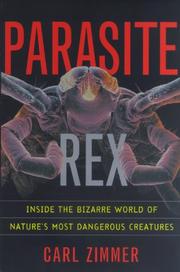
The book that made parasitology popular reading, and still the best single entry point. Zimmer's argument is that parasites are not degenerate simplifications of free-living animals but among the most specialised organisms alive.
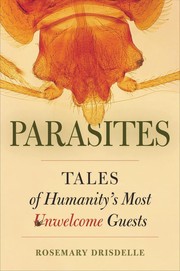
Catalogued under the bare title 'Parasites'. Drisdelle is a clinical parasitologist, and this is the human-facing companion to Zimmer — case by case, what these things actually do to people.
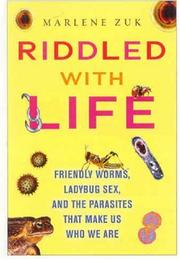
Zuk works on parasites and sexual selection, and this reframes disease as a permanent evolutionary partner rather than an accident. Read it third because it starts moving you from natural history toward theory.
Manipulation of the host
BeginnerUnderstand what it means for a parasite to alter host behaviour, and be able to separate the well-evidenced cases from the ones the press has run ahead of.
▸ Study plan for this stage
Pace: Two weeks for two short books — McAuliffe is 272 pages, Simon 237 — but read them slowly and with a pen, because this stage is about calibration rather than coverage. Read McAuliffe first for the human material and Simon second for the invertebrate cases where the mechanisms are actually worked out.
- The distinction between a parasite changing host behaviour and a parasite benefiting from that change. Only the second is manipulation in the technical sense, and demonstrating it requires showing the change improves transmission.
- Toxoplasma gondii as the central case: the rodent-to-cat cycle is well evidenced, the reduced aversion to cat odour in infected rodents is real, and the human-personality literature is far weaker than the headlines. McAuliffe models the right level of caution here.
- The invertebrate cases Simon covers — parasitoid wasps, hairworms driving crickets to water, the zombie-ant fungus — are where mechanism is best understood, precisely because the manipulation is dramatic and the systems are tractable.
- Extended phenotype thinking: the manipulated host's behaviour can be treated as a trait of the parasite's genes rather than the host's, which is the conceptual move that makes the whole field coherent.
- Correlation and causation in infection studies. Infected and uninfected hosts differ in many ways besides infection, and the strong studies are the ones with experimental infection rather than observed association.
- Why the human evidence is hardest: no experimental infection, confounded exposure, small effects, and a publication environment that rewards the striking result. Learn to ask what the control group was.
- Manipulation is not universal. A great many parasites do nothing interesting to host behaviour at all, and a reading list weighted toward the spectacular cases will mislead you about the base rate.
- What would you need to observe to demonstrate that a behavioural change in an infected host is manipulation by the parasite rather than a side effect of being ill?
- Lay out the Toxoplasma evidence in three tiers: what is well established in rodents, what is plausible in humans, and what is press extrapolation. Where exactly does McAuliffe place the line?
- Take one of Simon's invertebrate cases and describe the proposed mechanism. How much of it is understood at the level of molecules, and how much is inference from behaviour?
- Why do the best-evidenced manipulation cases cluster in invertebrate hosts? Give at least two reasons that are about research practicality rather than biology.
- After both books, which specific claim that you found convincing in stage one do you now think is overstated?
- For five manipulation cases across the two books, write a one-line summary of the evidence type: experimental infection, natural comparison, field observation, or anecdote. Rank them, and keep the ranking — the evolution stage will give you the theory that predicts which should be strongest.
- Take the Toxoplasma human-behaviour literature as McAuliffe presents it and write the strongest sceptical case against it in a paragraph. Then write the strongest case for. Decide which you believe and why.
- Add every manipulating parasite from both books to the life-cycle notebook, marking specifically which transmission step the manipulation serves. If you cannot identify the step, the manipulation claim is weaker than it looked.
- Find one claim in either book stated more strongly than its evidence supports, and rewrite the sentence at the confidence level you think the evidence justifies.
Next up: You have the field's most attention-grabbing phenomenon and a working sense of what counts as evidence for it; now you need the systematic organism-by-organism grounding that turns interesting stories into a discipline.

The accessible treatment of behavioural manipulation, including Toxoplasma gondii and the human-behaviour claims around it. McAuliffe is more careful with the human evidence than the subtitle suggests; read it with the caution she models.

The invertebrate cases, told species by species — parasitoid wasps, hairworms, zombie-ant fungus. Funnier and more specific than McAuliffe, and it gives you the non-human examples where the mechanisms are actually understood.
The discipline, properly
IntermediateWork through the standard texts until you can trace a protozoan and a helminth life cycle from memory and place any named parasite in its group.
▸ Study plan for this stage
Pace: Three to four months, and this is the stage where the path stops being reading and becomes study. Schmidt and Roberts is 702 pages, Bogitsh 448, Bush 550 and Combes 280 — around 1,980 pages of textbook, which at a genuine working pace is one chapter every two or three days. Do not read Schmidt and R
- The taxonomic architecture from Schmidt and Roberts: protozoan groups, then Trematoda, Cestoda, Nematoda, Acanthocephala, then parasitic arthropods. You should be able to place any named parasite in this scheme without looking it up.
- The trematode life cycle in full — egg, miracidium, sporocyst, redia, cercaria, metacercaria, adult — with a snail as first intermediate host. This is the single most examinable sequence in the subject and the one most people get wrong.
- The cestode body plan: scolex, neck, proglottids in a maturation gradient, and the fact that a tapeworm has no gut at all. Contrast with the nematode plan, which is a complete tube with a cuticle.
- Bogitsh's medical organisation versus Schmidt and Roberts's zoological one. The same organism looks like a different object depending on whether you index by taxonomy or by the disease it causes, and you need both indexes in your head.
- From Bush's Parasitism: the population and community view. Prevalence, intensity, aggregation — parasites are almost always overdispersed, meaning a few hosts carry most of the worms, and that fact drives both transmission dynamics and control strategy.
- Basic reproductive number as it applies to macroparasites, and why transmission dynamics for a worm with an indirect cycle look nothing like an epidemic curve for a virus.
- Combes's framing of parasitism as four engineering problems in sequence: encounter, compatibility, exploitation, and transmission out. His encounter and compatibility filters are the most useful single idea in this stage.
- The difference between a catalogue of organisms and a science of interactions. Bush and Combes are what turn the first into the second, which is why they sit in the same stage as the taxonomy rather than after it.
- Draw a trematode life cycle and a cestode life cycle from memory, name every stage, and mark which host each stage occupies. Then do the same for a nematode with a direct cycle.
- Given an unfamiliar parasite name, what features would you use to place it in a group? Work through the decision you would actually make, in order.
- What does it mean for a parasite population to be aggregated across hosts, and what are the practical consequences for mass drug administration as a control strategy?
- State Combes's encounter and compatibility filters. Take one parasite from your notebook and describe what each filter consists of for that species.
- Where do Bogitsh and Schmidt and Roberts disagree in emphasis on a parasite they both cover, and what does that disagreement tell you about the two audiences?
- Why does Bush's ecological framing change what counts as a research question in this field, compared with the taxonomic framing?
- Work every worked example and end-of-chapter question in the Schmidt and Roberts chapters covering trematodes, cestodes and nematodes. Reading these chapters without doing that is the standard way to feel you have learned them and discover otherwise.
- Extend your life-cycle notebook to cover at least twenty organisms across all the major groups, drawn from memory first and corrected against the text second. The correction pass is the part that teaches.
- Take one human parasitic infection and write it up twice: once as Schmidt and Roberts would file it and once as Bogitsh would. Note what each version omits.
- Using Bush, sketch how you would measure prevalence and mean intensity in a real host population, and what sampling problem would most threaten your estimate.
- Read Combes last and, as you go, apply his four-problem framework to three parasites you already know well from earlier stages. Where the framework does not fit cleanly, write down why — that is your entry into the evolutionary stage.
Next up: Combes has just given you parasitism as a set of design problems, which is exactly the framing the evolutionary literature assumes when it starts modelling how those problems get solved.
The Schmidt and Roberts textbook, the one most undergraduate courses are built on. Broad taxonomic coverage of protozoa, trematodes, cestodes, nematodes and arthropods; work through it rather than reading it straight.
Narrower than Schmidt and Roberts and organised around the parasites that infect people, so it is the better text if your interest is medical rather than zoological. Read alongside, not after.
Catalogued as 'Parasitism'. This is the ecological text — populations, communities, transmission dynamics — and it is where parasitology stops being a catalogue of organisms and becomes a science of interactions.
Combes writes about parasitism as a set of engineering problems: finding a host, getting in, staying, getting out. The most conceptually satisfying book on this list and the bridge into the evolutionary stage.
Evolution and coevolution
IntermediateBe able to argue about virulence evolution and host-parasite arms races using the actual models, not the popular summaries.
▸ Study plan for this stage
Pace: Two to three months for 825 dense pages, and the most demanding stage on the path. Schmid-Hempel's Evolutionary Parasitology is 516 pages of graduate synthesis with real quantitative content — budget six to eight weeks and expect to reread chapters. Ewald's Evolution of Infectious Disease is 309 pag
- Virulence as an evolved trait rather than an accident of maladaptation. The naive expectation that parasites evolve toward harmlessness is wrong, and knowing precisely why it is wrong is the core of this stage.
- The transmission-virulence trade-off: harming the host reduces the time available for transmission but may increase the rate, so the optimum is intermediate and depends on the transmission mode.
- Ewald's central hypothesis — that vector-borne, waterborne and attendant-borne transmission select for higher virulence because they do not require a mobile host — together with the specific evidence he marshals for it and the places where the pattern is weakest.
- Coevolutionary dynamics: Red Queen processes, negative frequency-dependent selection on host resistance genes, and why parasite pressure is one of the leading explanations for the maintenance of sexual reproduction.
- Local adaptation and the geographic mosaic. Parasites are often better adapted to sympatric than to allopatric host populations, and the exceptions to that are informative rather than noise.
- The immunology in Schmid-Hempel is doing evolutionary work, not clinical work: costs of immune defence, tolerance versus resistance as distinct strategies, and the resulting trade-offs in host life history.
- Multiple infection and within-host competition. Once more than one parasite genotype occupies a host, selection on virulence changes direction, which is one of the strongest theoretical results in the field.
- How to read a contested hypothesis. Ewald's argument has changed public-health thinking and is also disputed in parts; the skill to take from this stage is holding both of those at once without collapsing into either deference or dismissal.
- Explain, using the trade-off model rather than a verbal summary, why a parasite is not expected to evolve toward benign coexistence with its host.
- State Ewald's transmission-mode hypothesis precisely enough that someone could test it. What data would count against it, and does he present any?
- How does within-host competition between parasite genotypes change the predicted level of virulence, and what does that imply for the effect of a partially effective vaccine?
- Distinguish tolerance from resistance as host strategies. Why do they have different evolutionary consequences for the parasite population?
- What is the Red Queen argument for the maintenance of sex, and what is the strongest empirical evidence Schmid-Hempel offers for or against it?
- Take one manipulation case from stage two and reanalyse it with the theory from this stage. Does the manipulation look adaptive for the parasite once you model it properly?
- Work through the trade-off model on paper until you can derive the intermediate virulence optimum yourself and say what each term represents biologically. A verbal account of this model is not the same as understanding it.
- Build a table of five diseases against Ewald's predictors — transmission mode, host mobility requirement, vector involvement — and record whether his prediction matches observed virulence. Note the mismatches; they are more instructive than the fits.
- Choose one chapter of Schmid-Hempel that you found hardest and reconstruct its argument as a numbered chain from assumptions to conclusion. Identify the step you are least sure of.
- Write a one-page critical assessment of Ewald's thesis at the confidence level you think the evidence supports, citing specific cases from the book rather than the general claim.
- Return to your life-cycle notebook and annotate five entries with the selective pressure you now think shapes that parasite's virulence, and why.
Next up: The theory tells you what should shape virulence and transmission; the final stage puts that against the diseases that actually kill people and asks why control programmes so often fail anyway.

The graduate-level synthesis of parasite ecology, immunology and evolution. Dense, current, and the single most demanding book on this path; take it after Combes has given you the framing.
Ewald's argument that transmission mode selects for virulence is the one idea from this field that has changed public-health thinking. Contested in places — read it as a strong hypothesis with an unusual amount of evidence behind it.
Parasitic disease in the world
IntermediateConnect the biology to the burden — who gets these diseases, why, and what has and has not worked against them.
▸ Study plan for this stage
Pace: Six to eight weeks. Despommier's Parasitic Diseases is 345 pages and is a reference organised by organism — use it as a lookup and as a systematic sweep of the human parasites, not as a continuous read. Shah's The Fever is 307 pages and Winegard's The Mosquito is 491, both of them narrative and both
- The structure of a clinical reference entry as Despommier organises it — organism, life cycle, clinical presentation, diagnosis, treatment — and the skill of navigating to a specific parasite quickly rather than reading through.
- Diagnosis is the practical bottleneck in most parasitic disease. Microscopy, serology and molecular methods each have characteristic failure modes, and which one is available is usually a function of where the patient is rather than what they have.
- Why malaria has resisted a century of eradication effort, in Shah's account: parasite and vector both evolve resistance, the biology permits relapse and asymptomatic reservoirs, and the campaigns have repeatedly been political and financial rather than biological failures.
- The vector as the point of leverage. Winegard's useful contribution is the insistence that transmission, not the parasite, is where most control gains have historically come from — bed nets, larval control, insecticide.
- Neglected tropical diseases as a category: high burden, low mortality, poor commercial incentive, and mass drug administration as the dominant control tool with the resistance risk that implies.
- The connection back to stage four: aggregation of worms across hosts, and the evolutionary consequences of mass treatment, are why control programmes behave the way they do rather than the way a simple model predicts.
- Reading a sweeping historical thesis critically. Winegard's grand claims about the mosquito shaping human history run well ahead of what the evidence supports in places; the vector biology is sound and the world-historical narrative is not the same kind of claim.
- Take three human parasitic infections and, for each, name the diagnostic method that would actually be used and the circumstance in which it would fail.
- Why is malaria eradication harder than smallpox eradication was? Give at least three reasons that are biological and one that is not.
- Where does Winegard's argument outrun his evidence? Name a specific claim and say what would be required to support it properly.
- Which of the diseases in Despommier would be most affected by climate-driven change in vector range, and what is the mechanism?
- Using the theory from the previous stage, predict what mass drug administration should do to parasite populations over time. Does Shah's malaria history fit that prediction?
- This path began with Zimmer arguing that parasites are remarkable and ends with the burden they impose. Are those two framings in tension, and if so how do you hold both?
- Take ten parasites from your life-cycle notebook and complete each entry with the Despommier clinical picture — presentation, diagnosis, control approach. That completed notebook is the deliverable of the whole path.
- Practise using Despommier as a reference: give yourself five specific questions and time how long it takes to answer each from the book. The target skill is retrieval speed, not recall.
- Trace one malaria control campaign from Shah in a timeline, marking at each failure point whether the cause was biological, financial or political. The pattern across campaigns is the argument.
- Fact-check three of Winegard's historical claims against another source and record what you find. This is the last exercise on the path and it is deliberately a scepticism exercise.
- Write a 500-word summary of what parasitology is, aimed at the version of you who started stage one. If it reads like the popular books rather than the textbooks, work out which stage you skimmed.
Next up: This is the end of the path: you have the organisms, the evidence standards, the textbook grounding, the evolutionary theory and the disease burden, which together is a genuine working foundation in the subject.
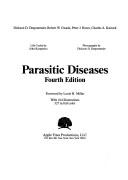
The clinical reference for human parasitic infection, organised by organism with the diagnostic and treatment picture. Freely distributed in later editions and the natural next step after Bogitsh.
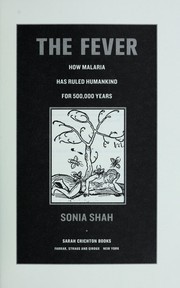
Malaria specifically, and the best account of why the single most studied parasitic disease has resisted a century of eradication campaigns. Catalogued with its full subtitle about 500,000 years of human history.

The vector rather than the parasite, and a reminder that transmission is where most of the leverage sits. Winegard's historical claims are sweeping and sometimes overreach; read it for the vector biology and treat the grand narrative with the same skepticism this path has been teaching throughout.
Discussion
Keep reading
Paths that share books, cover the same subject, or open a related topic.