Meditate without getting bored
This curriculum is built for people who struggle to sit still — it starts with the simplest, most accessible entry points into meditation as a lived, everyday activity, then gradually introduces richer technique, neuroscience-backed motivation, and finally a deeper contemplative understanding. Each stage assumes the reader has absorbed the previous one, so vocabulary, confidence, and curiosity grow naturally across the path.
First Steps: Meditation Without the Cushion
BeginnerUnderstand that meditation is not about perfect stillness — and begin weaving tiny, informal practices into daily life with zero pressure.
▸ Study plan for this stage
Pace: 4–5 weeks total: Week 1–2 — "Wherever You Go, There You Are" (~20–25 pages/day, reading slowly and reflectively); Week 3–4 — "10% Happier" (~30–35 pages/day, reading it like a story); Week 5 — review, journaling, and consolidating exercises from both books.
- Mindfulness as 'paying attention on purpose, in the present moment, non-judgmentally' (Kabat-Zinn's foundational definition) — meditation is awareness, not a performance
- The ordinariness of mindfulness: Kabat-Zinn's insistence that any moment — washing dishes, walking, waiting — is a valid meditation moment, no cushion required
- Being vs. Doing: Kabat-Zinn's distinction between the 'doing mode' that dominates daily life and the 'being mode' that meditation cultivates
- Non-striving and non-judging as core attitudes: the paradox that trying hard to meditate is itself an obstacle, and that noticing without labeling 'good' or 'bad' is the practice
- The skeptic's entry point: Harris's journalist framing in '10% Happier' normalizes doubt, distraction, and imperfection as part of the process, not signs of failure
- The 'price of security' insight from Harris — the restless, self-critical mind is not a bug to fix but a habit to observe, and that small shifts in awareness compound over time
- Informal vs. formal practice: understanding that brief, consistent moments of noticing (a breath, a sensation, a pause) build the same mental muscle as longer sits
- Beginner's Mind: approaching each moment — and each page of these books — without assuming you already know what meditation is or should feel like
- In your own words, how does Kabat-Zinn define mindfulness, and why does his definition make meditation accessible to someone who has never sat on a cushion?
- Kabat-Zinn describes 'non-striving' as a core attitude of meditation — what does this mean in practice, and can you give one example from your own day where striving got in the way of simply noticing?
- How does Dan Harris's on-air panic attack and subsequent journey reframe meditation for people who are skeptical, high-achieving, or 'too busy'? What resistance did he have to overcome, and which of those resistances do you share?
- What is the difference between formal and informal meditation practice as presented across both books, and why does this stage emphasize the informal?
- Both authors suggest that the goal is not to empty the mind or achieve calm — so what IS the goal, according to each of them? Where do their answers overlap and where do they differ?
- After reading both books, how would you explain 'beginner's mind' to a friend, and what is one concrete situation in your daily life where you could apply it this week?
- The 'One Breath' anchor (from Kabat-Zinn's spirit of informal practice): Three times a day — morning, midday, and evening — stop whatever you are doing and take one fully conscious breath. Notice the inhale, the exhale, and the tiny pause between them. No app, no timer. Just one breath. Log how it felt in two sentences.
- Mindful Mundane Moment (Kabat-Zinn's 'doing ordinary things mindfully'): Choose one unavoidable daily task — brushing teeth, making coffee, walking to the car — and commit to doing it with full attention for the entire week. When the mind wanders (it will), gently return. After 7 days, write a short paragraph: what did you notice that you had never noticed before?
- The Harris Skeptic's Journal: After finishing '10% Happier', write down your top 3 personal objections to meditation (e.g., 'I don't have time,' 'I can't stop thinking,' 'It feels self-indulgent'). Then, using Harris's own journey as a mirror, write one honest counter-argument to each objection — in your own voice, not his.
- Two-Minute Informal Sit (bridging both books): Set a timer for just 2 minutes. Sit anywhere — a chair, a park bench, your car before you go inside. Close your eyes or soften your gaze. Notice sounds, sensations, and the breath. When the timer goes off, write one word that describes what arose. Do this 5 times across the week and notice if the one word changes.
- The 'Wherever You Are' Snapshot: Once a day, pause and ask yourself Kabat-Zinn's implicit question: 'Where am I right now — physically, mentally, emotionally?' Write the answer in one sentence. After two weeks, re-read your entries. Look for patterns in when you feel most present and when you feel most on autopilot.
- Reading as Practice: While reading both books, underline or note any passage that makes you feel resistance, skepticism, or unexpected recognition. At the end of each book, review your marks and write a short reflection: 'What did I resist, and what does that resistance tell me about my current relationship with the present moment?'
Next up: By dismantling the myth that meditation requires perfection or special conditions, this stage builds just enough curiosity and self-compassion to make the reader ready to explore a more structured, seated practice — the natural next step toward developing a consistent formal routine.

The gold-standard entry point: short chapters, zero jargon, and a radical message that mindfulness is available in any moment of ordinary life. It reframes meditation away from rigid sitting and toward everyday awareness.

A skeptic's honest, funny account of discovering meditation works — ideal for reluctant beginners. It normalizes resistance and shows that a restless, distracted mind is exactly the right starting point.
Building a Real Practice: Simple Techniques That Stick
BeginnerLearn a small toolkit of concrete, flexible techniques — breathing, body awareness, informal mindfulness — and establish a sustainable daily rhythm even in short bursts.
▸ Study plan for this stage
Pace: 6–8 weeks total: Weeks 1–4 cover "Mindfulness in Plain English" (~20–25 pages/day, 4–5 days/week); Weeks 5–8 cover "Real Happiness" (~15–20 pages/day, 4–5 days/week, with its structured 28-day program running concurrently as a daily practice log).
- Mindfulness as bare attention — observing experience (breath, body, thoughts) without judgment or reaction, as introduced in Mindfulness in Plain English
- The three characteristics of existence (impermanence, unsatisfactoriness, no-self) as the perceptual lens that meditation gradually reveals, per Gunaratana
- Working with hindrances (restlessness, doubt, sleepiness, desire, aversion) as normal, expected obstacles rather than signs of failure — a core reassurance in Mindfulness in Plain English
- The breath as a primary anchor: using the full arc of the in-breath and out-breath as a concrete, always-available object of attention
- Body-scan and physical sensation awareness as a gateway to present-moment grounding, emphasized in both books
- Informal mindfulness — bringing moment-to-moment awareness to everyday activities (eating, walking, washing dishes) as taught in Real Happiness
- Loving-kindness (metta) as a foundational complement to breath practice: extending goodwill to self and others, a central technique in Real Happiness
- Consistency over duration — Salzberg's 28-day framework demonstrating that 5–20 minute daily sits build more momentum than occasional long sessions
- According to Gunaratana, what does it mean to observe the breath with 'bare attention,' and why is labeling thoughts ('thinking, thinking') a useful tool rather than a distraction?
- Mindfulness in Plain English describes five classic hindrances to meditation. Can you name at least three and describe the recommended approach for handling each one during a sit?
- How does Salzberg's 28-day program in Real Happiness structure the progression from breath awareness to body scan to loving-kindness — and what is the rationale for that sequence?
- What is the difference between formal and informal mindfulness practice as described in Real Happiness, and how can informal practice fill gaps when a formal sit isn't possible?
- Both books address the common beginner frustration of a 'wandering mind.' How do Gunaratana and Salzberg each frame this experience, and what do they say it reveals about the nature of practice?
- After completing this stage, how would you design a personal daily rhythm — specifying time of day, duration, technique, and one informal practice — drawing on the tools from both books?
- Daily anchor sit (Weeks 1–4): After each reading session in Mindfulness in Plain English, immediately sit for 10 minutes using only the breath as your object. Use Gunaratana's instruction to note the physical sensation of air at the nostrils or the rise-and-fall of the belly. Keep a one-line log: date, duration, and one observation (e.g., 'noticed restlessness around minute 4').
- Hindrance journal: Each time you encounter one of the five hindrances during a sit, write two sentences — what the hindrance felt like in the body, and how you responded. After finishing Mindfulness in Plain English, review your notes to spot patterns.
- Run Salzberg's 28-day program live: Starting on Day 1 of Real Happiness, follow the book's weekly structure exactly — Week 1 (breath), Week 2 (body scan), Week 3 (emotions/thoughts), Week 4 (loving-kindness). Use the guided audio meditations referenced in the book if available, or self-guide using the printed instructions.
- Informal mindfulness micro-practice: Choose one routine daily activity (morning coffee, commute, hand-washing) and commit to doing it with full sensory attention for the entire duration of this stage. At the end of each week, write three sentences on what you noticed that you normally miss.
- Loving-kindness (metta) starter: During Week 7–8, spend the last 3 minutes of each formal sit on the basic metta phrases from Real Happiness ('May I be happy. May I be safe. May I be healthy. May I live with ease.'). Gradually extend to one other person — first someone easy (a close friend), then a neutral person.
- End-of-stage self-assessment: After finishing Real Happiness, write a one-page 'practice blueprint' — your chosen technique(s), ideal session length, time of day, one informal practice, and your personal strategy for resuming after a missed day. This document becomes your reference going into the next stage.
Next up: Completing this stage gives the reader a stable, personalized daily rhythm and a small but reliable toolkit — the exact foundation needed to explore deeper concentration, insight practices, or extended retreat-style study without feeling overwhelmed by technique.
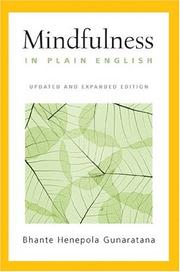
After the motivational warm-up, this classic gives clear, honest instruction on how meditation actually works. Its plain language and practical troubleshooting make it the best first 'how-to' guide.
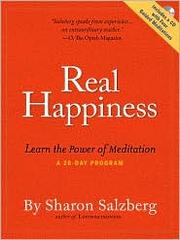
Structured as a 28-day program with very short daily practices, it is perfectly suited for people who find sitting hard. It builds consistency through variety and gentleness rather than discipline.
Going Deeper: Mind, Body, and Informal Practice
IntermediateExpand practice beyond formal sitting into movement, eating, walking, and stress — understanding how the body is a primary doorway into present-moment awareness.
▸ Study plan for this stage
Pace: 6–8 weeks total: Weeks 1–5 on "Full Catastrophe Living" (~25–30 pages/day, given its length ~600 pages), then Weeks 6–8 on "Zen Mind, Beginner's Mind" (~15–20 pages/day, a shorter but dense text best read slowly and re-read in sections).
- The body as a primary doorway to present-moment awareness — Kabat-Zinn's body scan as a systematic method of inhabiting the body from the inside out
- The seven attitudinal foundations of mindfulness (non-judging, patience, beginner's mind, trust, non-striving, acceptance, letting go) introduced in Full Catastrophe Living and echoed throughout Suzuki's teachings
- Informal practice: extending mindfulness into eating, walking, standing, driving, and stress-reactive moments — Kabat-Zinn's core argument that every waking moment is an opportunity to practice
- The stress-response cycle and how mindfulness interrupts automatic reactivity — Kabat-Zinn's integration of mind-body medicine with meditation
- Beginner's Mind (Shoshin) as taught by Suzuki: approaching each breath, each sit, each moment as if for the first time, free of expert assumptions
- Posture as practice — Suzuki's detailed teaching that how you sit IS the practice, not a preparation for it; the body's form expresses and cultivates the mind's state
- 'In the beginner's mind there are many possibilities; in the expert's mind there are few' — holding openness and not-knowing as a lifelong orientation, not a beginner's phase to outgrow
- The integration of formal and informal practice: both books converge on the idea that meditation is not separate from daily life but is a way of meeting life directly
- According to Kabat-Zinn, what is the purpose of the body scan, and how does it differ from relaxation techniques? What does it train that sitting breath-awareness alone does not?
- Kabat-Zinn identifies seven attitudinal foundations of mindfulness. Can you name and briefly explain each one, and give a real-life example of where you personally struggle with one of them?
- How does Kabat-Zinn propose bringing mindfulness into high-stress or pain-filled moments? What is the difference between reacting and responding, and what role does the body play in that gap?
- Suzuki teaches that posture is not separate from meditation — it IS meditation. What does he mean by this, and how does it challenge the common idea that meditation is primarily a mental activity?
- What is 'beginner's mind' as Suzuki defines it, and why does he suggest that experts and long-term practitioners are most at risk of losing it? How does this concept connect to Kabat-Zinn's attitude of 'non-striving'?
- Both books address informal, everyday practice. How do Kabat-Zinn's and Suzuki's approaches to bringing practice off the cushion compare — where do they agree, and where does their emphasis differ?
- Body Scan Daily for Two Weeks: Follow Kabat-Zinn's body scan protocol (45 minutes if possible, or a 20-minute version) every morning for 14 consecutive days. Keep a brief journal after each session noting where you felt resistance, numbness, or unexpected ease — tracking how your relationship to body sensation changes over time.
- Informal Practice Labeling: Choose three routine daily activities (e.g., eating lunch, washing dishes, commuting). For one full week, practice each one with full sensory attention as Kabat-Zinn describes. After each activity, write one sentence: 'I noticed ___.' Review at week's end for patterns.
- Stress-Pause Practice: Identify your personal stress triggers this week. Each time you notice the stress response arising (tight chest, shallow breath, clenched jaw), pause for three conscious breaths before responding. Use Kabat-Zinn's STOP technique (Stop, Take a breath, Observe, Proceed). Log three instances and what shifted, if anything.
- Beginner's Mind Sitting: After reading Suzuki's sections on posture and beginner's mind, sit for 20 minutes with this single instruction: treat it as the very first time you have ever meditated. Notice every assumption you bring — about how long it will take, how it will feel, whether you are 'doing it right.' Write a half-page reflection on what assumptions surfaced.
- Posture Inquiry (Suzuki-inspired): Spend one week paying deliberate attention to your physical posture throughout the day — not just in formal sitting, but at your desk, while eating, while waiting. Each evening, reflect: 'When did my posture reflect a scattered or contracted mind? When did adjusting my posture shift my mental state?' Share or journal three specific observations.
- Cross-Book Synthesis Journal Entry: After finishing both books, write a 1–2 page personal essay answering: 'What does it mean to practice meditation in everyday life?' Draw explicitly on at least one idea from Kabat-Zinn and one from Suzuki, and describe one concrete change you have made or will make to your daily routine as a result.
Next up: By grounding practice in the body and daily life through Kabat-Zinn, and cultivating the open, non-expert orientation of Suzuki's beginner's mind, the reader is now prepared to explore the deeper psychological and philosophical dimensions of meditation — including how the mind constructs suffering, the nature of thought and self, and more sustained or structured contemplative paths.

The definitive MBSR manual: it validates body-based and informal practices as fully legitimate, and shows how mindfulness applies to pain, stress, and illness — making it essential for practice-first learners.
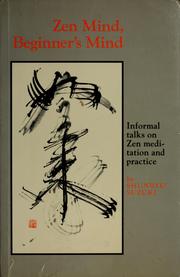
A short, poetic counterpoint to the clinical approach — it deepens intuition about the quality of attention rather than technique, and is best read after the reader has some lived experience to reflect on.
The Science of Why It Works
IntermediateUnderstand the neuroscience and psychology behind meditation so that motivation becomes self-sustaining — and learn to work skillfully with the wandering mind rather than fighting it.
▸ Study plan for this stage
Pace: 8–10 weeks total: Weeks 1–5 on "Why Buddhism Is True" (~25–30 pages/day, 4–5 days/week), then Weeks 6–10 on "Altered Traits" (~20–25 pages/day, 4–5 days/week) — the denser research content of Altered Traits warrants a slower pace with note-taking sessions built in.
- Evolutionary mismatch & the 'not built for happiness' thesis (Wright): the human brain was shaped by natural selection for survival and reproduction, not well-being, which is why the untrained mind defaults to craving, aversion, and distraction
- The modular mind (Wright): the brain is not a unified self but a collection of competing modules, each bidding for control — meditation trains the capacity to observe rather than be hijacked by whichever module is loudest
- Emptiness and constructed reality (Wright): perceptions and emotions are not objective readouts of the world but constructions; mindfulness lets us see that gap between stimulus and felt meaning
- Default Mode Network (DMN) deactivation (Goleman & Wright): the wandering, self-referential mind is anchored in the DMN; meditation consistently quiets this network, reducing rumination and the sense of a fixed 'self'
- The difference between state effects and trait effects (Goleman): a meditation session produces temporary state changes; only sustained, consistent practice rewires stable psychological traits — the core argument of Altered Traits
- Dose-response relationship (Goleman): research shows that benefits scale with cumulative hours of practice, and different depths of practice (beginner, long-term, Olympic-level) produce qualitatively different neural and psychological outcomes
- Working skillfully with mind-wandering: both books converge on the insight that noticing the wandered mind — without self-criticism — IS the practice, not a failure of it
- Critical reading of meditation research (Goleman): understanding methodological weaknesses (lack of active controls, publication bias, small samples) makes you a more discerning practitioner and prevents hype-driven disappointment
- According to Wright, why did natural selection produce a mind prone to dissatisfaction, and how does this evolutionary framing reframe the purpose of meditation?
- What does Wright mean by the 'modular' model of the mind, and how does recognizing modules in action change how you relate to strong emotions or urges during a sit?
- What is the distinction Goleman draws between a 'state' effect and a 'trait' effect, and why does this distinction matter for how you structure your daily practice?
- What does the research summarized in Altered Traits say about the minimum effective dose of practice, and at what point do qualitatively deeper trait changes begin to appear?
- How do both books treat the wandering mind — is it an enemy to be defeated or something else, and what practical instruction follows from their answer?
- What methodological red flags does Goleman identify in popular meditation research, and how should these cautions influence the claims you make (or believe) about what meditation can do?
- 'Module spotting' journal (during Why Buddhism Is True): After each meditation session, write 2–3 sentences naming which 'module' seemed loudest — e.g., the planning mind, the craving mind, the threat-detection mind — and note whether labeling it changed its grip on you.
- Evolutionary reframe practice: When you notice a recurring mental habit (scrolling, snacking, ruminating), pause and write one sentence explaining it in Wright's evolutionary terms, then one sentence on what a mindful response would look like instead.
- State vs. trait tracking log (start during Altered Traits): Keep a simple weekly log rating three trait markers — baseline irritability, quality of sleep, and ease of returning attention after distraction — on a 1–5 scale. Review after 6 weeks to look for trend lines, not session-by-session noise.
- Research claim audit: Find three popular articles or app descriptions that make claims about meditation's benefits. Using Goleman's methodological criteria (active controls, sample size, replication), evaluate each claim and write a one-paragraph verdict.
- Deliberate mind-wandering debrief: For one week, immediately after each sit, record (a) how many times you noticed the mind had wandered, (b) the emotional tone of where it went, and (c) how quickly you returned — without judging the number, only observing the pattern.
- Synthesis essay (end of stage): Write a one-page personal 'why I meditate' statement grounded exclusively in evidence and arguments from Wright and Goleman — no appeals to tradition or vague wellness language. This forces integration of both books and becomes a motivational anchor for future practice.
Next up: Having established *why* the mind behaves as it does and *what* practice actually changes at the neural and psychological level, the reader is now primed to move into the practical architecture of a sustainable daily practice — asking not "should I meditate?" but "how do I build a form that fits my life and deepens over time?"

Bridges evolutionary psychology and meditation in an engaging, evidence-based way. It explains why the untrained mind causes suffering and why practice is the rational response — great for analytically minded readers.

A rigorous review of the actual science of meditation, separating hype from proven benefit. Reading it here consolidates the learner's commitment with honest, research-backed expectations.
A Mature Practice: Integration and Depth
ExpertIntegrate meditation as an ongoing, self-correcting way of life — understanding the deeper contemplative territory that opens up after years of informal and formal practice.
▸ Study plan for this stage
Pace: 10–12 weeks total: ~6–7 weeks on "The Mind Illuminated" (~20–25 pages/day, given its technical density and meditation instructions) and ~3–4 weeks on "Waking Up" (~15–20 pages/day, pausing frequently to reflect on Harris's philosophical arguments).
- The ten-stage model of meditative development (TMI): understanding where you are on the path and what obstacles — dullness, distraction, mind-wandering — characterize each stage
- Attention vs. awareness: Culadasa's foundational distinction between the narrow spotlight of directed attention and the broad, peripheral field of awareness, and how training both simultaneously is the engine of progress
- Conscious experience as a product of 'mind-moments' and sub-minds: TMI's cognitive-science framing of how the unified sense of self is actually a committee of semi-autonomous mental processes
- Effortless practice and the shift from 'doing' to 'being': how advanced stages in TMI move from effortful stabilization toward spontaneous, self-sustaining samatha and vipassanā
- Awakening as a naturalistic, brain-based phenomenon: Harris's secular reframing — consciousness and selflessness are empirical facts investigable without religious doctrine
- The illusion of the self as a direct meditative insight: Harris's core claim that the sense of a fixed, bounded 'I' is not found upon careful introspection, and how this maps onto TMI's later stages
- Non-dual awareness and the 'headless' perspective: recognizing awareness itself as the ground rather than an object within experience, as Harris draws from Dzogchen and Advaita alongside secular mindfulness
- Integration as a way of life: synthesizing both books' conclusions — formal sits, daily-life mindfulness, and philosophical clarity must reinforce each other for practice to mature into genuine transformation
- According to Culadasa, what is the precise functional difference between attention and awareness, and why does training them together — rather than attention alone — accelerate progress through the ten stages?
- TMI describes 'the mind' as a collection of competing sub-minds rather than a unified agent. How does this model explain common meditation obstacles like distraction and forgetting, and how does it change how you respond to them on the cushion?
- Sam Harris argues that the self is an illusion that can be seen through directly in meditation. What specific practices or 'pointing-out' methods does he recommend, and how do they differ from the stage-based approach in TMI?
- Both books address the relationship between concentration (samatha) and insight (vipassanā). How does each author prioritize or integrate these two dimensions, and where do their approaches converge or diverge?
- Harris is critical of much of the religious and cultural packaging around meditation. What does he retain from traditional contemplative frameworks, what does he discard, and do you find his secular case persuasive?
- After completing both books, how would you describe 'integration' in your own words — what does it look like in daily life beyond the formal sit, and what internal signs would tell you that your practice has genuinely matured?
- Stage-mapping journal: After each TMI chapter covering a new stage, sit for 30–45 minutes and write a one-page honest assessment of which stage best describes your current practice, naming the specific obstacles Culadasa identifies that you actually encounter.
- Dual-quality sits: Dedicate one week of daily sessions (20–45 min each) to explicitly practicing the attention/awareness split — use a soft peripheral gaze or open-ear awareness as the background field while keeping the breath as the foreground object. Log any qualitative shifts.
- Self-inquiry experiment (Harris method): Following Harris's pointing-out instructions, spend 10 minutes per day for two weeks looking directly for the 'self' that seems to be meditating. Each session, write one sentence describing what you did or did not find.
- Cross-book synthesis essay: Write 500–800 words comparing how TMI's Stage 7–10 territory (effortless attention, joy, equanimity) relates to Harris's description of non-dual awareness. Identify at least one point of genuine tension and one point of deep agreement.
- Informal integration challenge: Choose one recurring daily activity (commuting, washing dishes, eating lunch) and commit for three weeks to treating it as a formal practice opportunity — applying TMI's introspective awareness check-ins and Harris's 'look for the looker' inquiry interchangeably.
- Discussion or accountability session: Find a practice partner or group and present your stage-mapping journal and synthesis essay. Articulate, out loud, your current understanding of what 'awakening' means to you after both books — then invite pushback.
Next up: By grounding the reader in both a rigorous stage-based map (TMI) and a philosophically clear, secular account of selflessness (Waking Up), this stage builds the discernment and conceptual vocabulary needed to engage with more advanced or specialized contemplative literature — whether that means deepening into non-dual traditions, exploring the neuroscience of consciousness, or refining a personal

The most detailed and systematic map of the meditation path available in English. By this stage the learner has enough lived experience to use it as a reference guide rather than a prescription.

A secular, philosophically rigorous exploration of what deeper contemplative practice is actually pointing at — consciousness, self, and the nature of experience. It provides a satisfying intellectual and experiential horizon to aim for.
Discussion
Keep reading
Paths that share books, cover the same subject, or open a related topic.