Sleep better, naturally
This curriculum moves from accessible science storytelling through evidence-based behavioral practice and into advanced chronobiology and performance optimization. Each stage builds the vocabulary and mental models needed for the next, so that by the end the reader can both explain the neuroscience of sleep and design a personalized, drug-free improvement plan.
Foundations: Why Sleep Matters
BeginnerUnderstand what sleep is, why it is biologically non-negotiable, and what goes wrong when we skimp on it — building the core vocabulary (sleep stages, circadian rhythm, sleep pressure) needed for every later stage.
▸ Study plan for this stage
Pace: 6–8 weeks total. Week 1–4: "Why We Sleep" (~25–30 pages/day, reading all 4 parts across ~340 pages). Week 5–7: "The Sleep Revolution" (~20–25 pages/day across ~400 pages). Week 8: Review, reflection, and exercise consolidation.
- The two-process model of sleep regulation: Process C (circadian rhythm) and Process S (sleep pressure/adenosine buildup), as introduced in Walker's 'Why We Sleep'
- The architecture of a full sleep cycle: NREM stages (N1, N2, N3/slow-wave) and REM sleep, their distinct functions, and why the 90-minute cycle must repeat across a full night
- The biological non-negotiability of sleep: Walker's evidence that no amount of willpower, caffeine, or adaptation can substitute for lost sleep — and that sleep debt is not fully repayable
- The wide-ranging consequences of sleep deprivation: Walker's data linking short sleep to cardiovascular disease, immune suppression, cognitive impairment, metabolic dysfunction, and mental illness
- The circadian rhythm as an internal ~24-hour biological clock governed by light exposure and the suprachiasmatic nucleus (SCN), and why individual chronotypes (morning larks vs. night owls) are genetically real
- The cultural and societal forces that normalize sleep deprivation: Huffington's historical and anthropological lens on how industrialization, hustle culture, and technology eroded sleep as a cultural value
- Sleep as a performance and creativity enhancer, not merely a recovery tool: both Walker (neuroscience of memory consolidation and emotional processing in REM) and Huffington (productivity, leadership, and well-being) converge on this reframe
- Core vocabulary checkpoint: sleep stages, circadian rhythm, adenosine, sleep pressure, REM, NREM, sleep debt, chronotype, sleep hygiene — every term needed for later stages
- According to Walker in 'Why We Sleep,' what are the two independent systems that together determine when and how deeply you sleep, and how do they interact?
- What specific cognitive, emotional, and physical functions does Walker attribute to REM sleep versus slow-wave (N3) NREM sleep — and what is lost when either is cut short?
- Walker presents a striking claim about sleep deprivation and life expectancy. What is the core epidemiological argument he makes, and what kinds of evidence does he cite to support it?
- How does Huffington in 'The Sleep Revolution' explain the historical and cultural shift that turned sleep deprivation into a status symbol, and which industries or ideologies does she hold most responsible?
- Both Walker and Huffington argue that sleep is foundational to high performance. How do their arguments differ in emphasis — one rooted in neuroscience, the other in lived experience and culture — and where do they reinforce each other?
- After reading both books, how would you explain 'sleep pressure' and 'circadian rhythm' to someone who has never heard these terms, using only plain language and one concrete analogy for each?
- **Sleep diary (ongoing, all 8 weeks):** Each morning, log your estimated bedtime, wake time, number of awakenings, and a 1–10 subjective quality score. After finishing each book, re-read your diary and annotate entries with concepts you've just learned (e.g., 'stayed up past midnight — circadian misalignment'; 'woke at 5 a.m. — adenosine likely cleared').
- **Concept map after 'Why We Sleep':** Draw a single diagram connecting all core vocabulary terms (circadian rhythm, adenosine, sleep pressure, NREM, REM, SCN, chronotype, sleep debt). Add a one-sentence definition and a real-life example to each node. Pin it somewhere visible for the rest of the curriculum.
- **Chronotype self-assessment:** Use Walker's description of chronotype in 'Why We Sleep' to honestly classify yourself (morning type, evening type, or intermediate). Then audit one week of your actual schedule — do your sleep/wake times align with your chronotype? Write a one-page reflection on the friction or fit you find.
- **'Cost of deprivation' personal audit:** Walker catalogs the health consequences of sleeping under 7 hours. Create a two-column table: on the left, list every consequence Walker names; on the right, note whether you have personally experienced or observed that consequence. Use this as a motivational baseline document to revisit at the end of the curriculum.
- **Cultural myth-busting list inspired by Huffington:** After reading 'The Sleep Revolution,' write down 5 beliefs about sleep you held before this stage (e.g., 'I can function on 6 hours,' 'napping is lazy,' 'I'll sleep when I'm dead'). For each, write one sentence from Walker and one from Huffington that directly challenges it.
- **End-of-stage synthesis essay (500 words):** Without re-reading the books, write a response to this prompt: 'A colleague tells you they pride themselves on sleeping only 5 hours a night. Using what you learned from Walker and Huffington, what would you tell them — and why?' This forces integration of the neuroscience (Walker) and the cultural argument (Huffington) before moving forward.
Next up: By internalizing the biological mechanics and cultural context of sleep from Walker and Huffington, the reader now has the vocabulary and motivation to move from *why* sleep matters to *how* to actively optimize it — making the practical strategies and interventions of the next stage immediately meaningful rather than arbitrary rules.
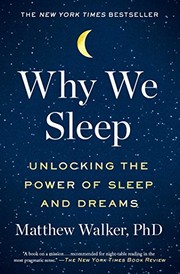
The ideal entry point: Walker translates decades of sleep research into vivid, alarming, and motivating prose. Reading it first gives the learner a complete 'why bother' foundation and introduces every major concept — REM, NREM, adenosine, circadian rhythm — that later books build on.
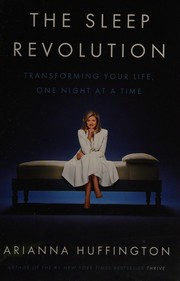
A culturally-focused companion that reinforces Walker's science with real-world consequences of sleep deprivation in modern life. Reading it second cements motivation and introduces the societal and workplace dimensions of the problem before the reader dives into solutions.
Practical Toolkit: Drug-Free Improvement
BeginnerTranslate the science into a concrete, actionable set of behavioral and environmental interventions — sleep hygiene, stimulus control, relaxation techniques — that the reader can start applying immediately.
▸ Study plan for this stage
Pace: 5–6 weeks total: Weeks 1–3 cover "Say Good Night to Insomnia" (~20–25 pages/day, including journaling time); Weeks 4–6 cover "The Sleep Solution" (~20 pages/day). Reserve 15–20 minutes after each reading session to log observations in a sleep diary.
- Stimulus Control Therapy (SCT): retraining the brain to associate the bed exclusively with sleep and sex, not wakefulness or anxiety — the cornerstone of Jacobs' program
- Sleep Restriction Therapy: deliberately compressing time in bed to build homeostatic sleep pressure and consolidate fragmented sleep, as detailed by Jacobs
- Cognitive restructuring for sleep: identifying and dismantling catastrophic thoughts about sleep loss (e.g., 'I'll be useless tomorrow') using the thought-challenging techniques in Jacobs' program
- Sleep hygiene fundamentals: the non-negotiable environmental and behavioral basics — light exposure, temperature, caffeine/alcohol timing, and consistent wake times — reinforced across both books
- The two-process model of sleep (Process S & Process C): understanding sleep pressure (adenosine build-up) and the circadian clock as the biological levers behind every practical intervention, as Winter explains it
- Reframing insomnia: Winter's concept of shifting from 'I can't sleep' to 'I am a good sleeper who is currently sleeping poorly' — changing identity and reducing performance anxiety around sleep
- Relaxation and arousal reduction techniques: progressive muscle relaxation, diaphragmatic breathing, and imagery distraction as tools to lower pre-sleep physiological and cognitive arousal (Jacobs)
- Sleep efficiency as a metric: calculating and tracking sleep efficiency (time asleep ÷ time in bed × 100%) as the primary feedback tool for gauging progress
- After completing Jacobs' 6-week program framework, what are the five core behavioral components he prescribes, and why does he argue they outperform sleep medication long-term?
- What is stimulus control, and what specific rules does Jacobs give for implementing it — including what to do when you cannot fall asleep after ~20 minutes in bed?
- How does Winter distinguish between 'sleepiness' and 'fatigue,' and why does this distinction matter when deciding whether to go to bed?
- According to Winter, what role does a consistent wake time play relative to a consistent bedtime, and which does he prioritize and why?
- What cognitive distortions about sleep does Jacobs identify as most common among insomniacs, and what is his step-by-step method for challenging them?
- How would you calculate your current sleep efficiency, interpret the result, and use it to decide whether to adjust your time-in-bed window?
- Run a 2-week sleep diary (before starting the books): log bedtime, wake time, estimated time asleep, number of awakenings, and morning mood — then calculate your baseline sleep efficiency to make the interventions in both books immediately concrete.
- Apply Jacobs' stimulus control rules for a full 7-day trial: get out of bed if awake for ~20 minutes, use the bed only for sleep/sex, set a fixed wake time every day including weekends — journal what feels hardest and why.
- Complete a cognitive restructuring worksheet inspired by Jacobs: write down three recurring anxious sleep thoughts, identify the cognitive distortion in each (catastrophizing, all-or-nothing thinking, etc.), and write a realistic counter-thought for each.
- Practice one relaxation technique from Jacobs' toolkit (progressive muscle relaxation or diaphragmatic breathing) every night for two weeks — note in your sleep diary whether pre-sleep arousal (rated 1–10) decreases over time.
- Design your 'sleep environment audit' using the hygiene criteria from both books: assess your bedroom for light (blackout?), temperature (target ~65–68°F/18–20°C), noise, and device use, then make at least two concrete changes and track the effect over one week.
- After finishing both books, write a one-page personal sleep prescription: your fixed wake time, your calculated time-in-bed window, your top two cognitive distortions to watch for, your chosen relaxation technique, and the three sleep hygiene changes you are committing to — treat it as a living document to revise as you progress.
Next up: By building a personal toolkit of proven behavioral interventions and learning to track sleep efficiency objectively, the reader has the practical foundation needed to engage critically with the deeper neuroscience and clinical research that explains *why* these interventions work at a biological level.
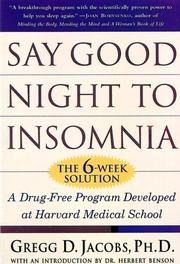
Written by a Harvard researcher, this is the definitive self-help guide to Cognitive Behavioral Therapy for Insomnia (CBT-I), the gold-standard drug-free treatment. It comes here first because it provides a structured, step-by-step program grounded in the science already learned.

A sleep neurologist's practical and often humorous guide that complements CBT-I with broader lifestyle levers — light, temperature, timing, and mindset. Reading it after Jacobs adds nuance and fills gaps, especially for readers who don't identify as 'insomniacs' but still sleep poorly.
The Body Clock: Circadian Science
IntermediateDevelop a deep understanding of the circadian system — how light, timing, meal schedules, and social cues set the internal clock — so the reader can fine-tune their sleep schedule with precision.
▸ Study plan for this stage
Pace: 6–8 weeks total: Weeks 1–4 for "The Circadian Code" (~25–30 pages/day, 4–5 days/week), then Weeks 5–8 for "Internal Time" (~20–25 pages/day, 4–5 days/week) — Roenneberg's denser scientific prose warrants a slower pace.
- The master clock (SCN) and peripheral clocks: how nearly every organ runs its own circadian oscillator, and how they are coordinated by the suprachiasmatic nucleus (Panda, Ch. 1–3)
- Zeitgebers — light as the primary time-giver, but also food timing, temperature, and social schedules as secondary synchronizers (both books)
- Time-Restricted Eating (TRE): Panda's core thesis that confining food intake to an 8–12 hour window realigns peripheral clocks in the liver, gut, and metabolism even without changing calories
- Chronotype as a biological trait: Roenneberg's large-scale data showing that chronotype (early bird vs. night owl) is genetically influenced, shifts across the lifespan, and is not a matter of willpower
- Social jetlag: Roenneberg's concept of the chronic misalignment between biological sleep timing and socially imposed schedules (work, school), and its measurable health consequences
- Light exposure timing: how morning bright light advances the clock, evening blue light delays it, and why the timing of light matters as much as its intensity (Panda)
- The Munich Chronotype Questionnaire (MCTQ): Roenneberg's tool for objectively measuring an individual's biological mid-sleep point on free days as the gold-standard chronotype metric
- Clock gene feedback loops (CLOCK, BMAL1, PER, CRY): the molecular mechanism underlying ~24-hour rhythms, providing the 'why' behind behavioral recommendations in both books
- According to Panda, why is *when* you eat potentially as important as *what* you eat for circadian health, and what organ systems are most affected by mistimed eating?
- How does Roenneberg define 'social jetlag,' how is it measured, and what does his population data reveal about its prevalence and health risks?
- What distinguishes the SCN master clock from peripheral clocks, and what happens to health when these clocks become desynchronized from each other?
- Using Roenneberg's framework, how does chronotype change from childhood through adolescence into old age, and what are the implications for school and work start times?
- What specific light-exposure strategies does Panda recommend for advancing or stabilizing the circadian phase, and what is the biological mechanism behind each?
- How would you use the MCTQ (from Roenneberg) alongside Panda's TRE tracking method together to build a personalized, data-driven sleep-optimization plan?
- **Chronotype self-assessment:** Complete the Munich Chronotype Questionnaire (freely available online, developed by Roenneberg's lab). Calculate your mid-sleep point on free days (MSF) and compare it to your mid-sleep on work days to quantify your personal social jetlag in hours.
- **Two-week TRE experiment:** Following Panda's protocol, log every calorie and drink (except water) for 7 days first to establish your baseline eating window. Then deliberately compress it to 10 hours for the following 7 days. Journal energy, hunger, and sleep-onset time each night.
- **Light audit:** For one full week, track your light exposure at three key moments — within 30 minutes of waking, at sunset, and in the 2 hours before bed — using a free lux-meter app. Cross-reference your log with Panda's light-timing guidelines and identify your biggest misalignment.
- **Social jetlag calculator:** Record your actual sleep and wake times every day for 14 days (including weekends). Plot them on a simple chart, calculate the difference in mid-sleep between work/school days and free days, and write a one-paragraph interpretation using Roenneberg's social jetlag framework.
- **Annotated concept map:** After finishing both books, draw a single diagram linking: SCN → peripheral clocks → zeitgebers (light, food, social cues) → chronotype → social jetlag → health outcomes. Annotate each arrow with the specific mechanism or finding from the relevant book.
- **'Fix one zeitgeber' micro-experiment:** Choose one secondary zeitgeber Panda discusses (e.g., first meal timing, evening temperature, or exercise timing), change only that variable for 10 days, and track sleep-onset latency and morning alertness on a 1–10 scale to observe a real circadian response in yourself.
Next up: Mastering the circadian system's inputs and timing logic here creates the essential biological foundation for the next stage, where you will learn how sleep pressure (adenosine), sleep architecture (NREM/REM cycles), and sleep disorders represent the downstream consequences of a well- or poorly-tuned body clock.

Panda is one of the world's leading circadian biologists; this book translates his lab's landmark research on time-restricted eating and light exposure into practical protocols. It deepens the circadian vocabulary introduced by Walker and shows how diet and meal timing interact with sleep.
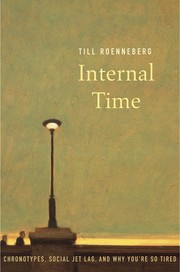
Roenneberg coined the term 'social jetlag' and this book offers the most rigorous scientific treatment of chronotypes — why some people are genuine night owls and what that means for health. Reading it after Panda adds the genetic and population-level dimension to the circadian picture.
Mind & Body: Stress, Nervous System, and Sleep
IntermediateUnderstand the two-way relationship between psychological stress, the autonomic nervous system, and sleep quality — and acquire mind-body tools (breathwork, mindfulness, nervous-system regulation) to address the root causes of poor sleep.
▸ Study plan for this stage
Pace: 6–8 weeks total: Weeks 1–3 for "Breath" (~25–30 pages/day, including time to pause and practice techniques described); Weeks 4–7 for "Why Zebras Don't Get Ulcers" (~20–25 pages/day, which is denser — budget extra time for the neuroscience-heavy chapters); Week 8 as an integration week to revisit hig
- The mechanics and lost art of nasal breathing — how mouth breathing chronically activates a low-grade stress response and degrades sleep quality (Nestor, 'Breath')
- The role of CO₂ tolerance and slow, reduced breathing (e.g., the 5.5-second inhale/exhale rhythm Nestor identifies) in shifting the autonomic nervous system toward parasympathetic dominance
- Breathwork as a direct, real-time lever on the nervous system: techniques like box breathing, Buteyko, and extended exhales as tools to down-regulate arousal before and during sleep
- The HPA (hypothalamic-pituitary-adrenal) axis and the fight-or-flight cascade: how psychological stress triggers cortisol and adrenaline release that are fundamentally incompatible with sleep onset (Sapolsky, 'Why Zebras Don't Get Ulcers')
- The critical distinction Sapolsky draws between acute stress (adaptive, short-lived, like a zebra fleeing a lion) and chronic psychological stress (uniquely human, self-generated, and chronically sleep-disruptive)
- Allostatic load: the cumulative physiological 'wear and tear' from sustained stress hormones — and how poor sleep both results from and contributes to this load, creating a vicious cycle
- The two-way street: sleep deprivation amplifies stress reactivity (raising baseline cortisol and sensitizing the amygdala), while chronic stress suppresses slow-wave and REM sleep — both books converge on this feedback loop
- Mind-body regulation as root-cause intervention: breathing practices (Nestor) and understanding stress biology (Sapolsky) together form a toolkit for breaking the stress-poor sleep cycle rather than just managing symptoms
- According to Nestor, what specific physiological changes occur during mouth breathing versus nasal breathing, and why do those changes matter for the quality of nighttime sleep?
- Sapolsky argues that humans are uniquely vulnerable to stress-related illness compared to other animals — what is the core reason for this, and how does it directly apply to sleep disruption?
- How does the HPA axis, as described by Sapolsky, create a hormonal environment that is antagonistic to sleep onset and maintenance — and what does the cortisol awakening response tell us about this relationship?
- Nestor describes a target breathing rate and ratio that maximizes heart rate variability and parasympathetic tone. What is it, and what is the physiological mechanism by which it promotes relaxation?
- How do the concepts of 'allostatic load' (Sapolsky) and 'dysfunctional breathing patterns' (Nestor) reinforce each other to explain why chronically stressed people are chronically poor sleepers?
- Having read both books, what would a science-grounded, pre-sleep wind-down routine look like — drawing on at least one specific insight from each author?
- **The Tape Test (Nestor):** For one week, apply a small piece of medical tape over your lips each night to encourage nasal breathing during sleep. Keep a simple morning log rating sleep quality, grogginess, and any noticed differences — then compare week-over-week.
- **5.5 Practice (Nestor):** Every evening for the duration of this stage, spend 5 minutes practicing the resonance breathing pattern Nestor highlights: inhale for 5.5 seconds, exhale for 5.5 seconds. Use a free app (e.g., Paced Breathing) to pace yourself and note your subjective calm level before and after on a 1–10 scale.
- **Stress Audit Journal (Sapolsky):** After finishing Part I of 'Why Zebras Don't Get Ulcers,' write a one-page personal inventory: list your top 5 recurring psychological stressors, classify each as acute vs. chronic, and note whether each one is disrupting your sleep. Revisit and revise this after finishing the book.
- **Extended-Exhale Wind-Down (both books):** Design and test a 10-minute pre-sleep breathing sequence using the principle — supported by both Nestor's mechanics and Sapolsky's stress-hormone biology — that exhales longer than inhales activate the parasympathetic nervous system. Try a 4-count inhale / 8-count exhale pattern for two weeks and track sleep onset time.
- **Concept-Mapping Exercise:** On a single sheet of paper (or digital canvas), draw a diagram connecting at least 6 terms across both books — e.g., CO₂ tolerance → vagal tone → HPA axis → cortisol → slow-wave sleep → nasal breathing. Draw arrows showing causal or bidirectional relationships and annotate each arrow with one sentence of explanation.
- **Weekly Synthesis Reading Log:** After each reading session, write 2–3 sentences answering: 'What did I read today, how does it connect to something from the other book in this stage, and what is one thing I will try tonight?' This keeps both books in active dialogue throughout the 8 weeks.
Next up: By establishing the physiological and psychological roots of poor sleep — stress hormones, dysregulated breathing, and nervous-system imbalance — this stage creates the essential 'why it breaks' foundation that makes the next stage's focus on sleep architecture, circadian biology, and evidence-based sleep hygiene feel not like arbitrary rules, but like precise solutions to understood problems.

Nestor's investigation into breathing science reveals how nasal breathing, slow exhales, and specific techniques directly calm the nervous system and improve sleep architecture. It bridges the gap between the body-clock stage and the psychological tools that follow.
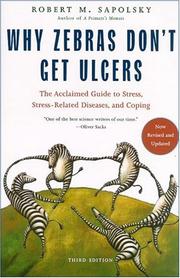
The definitive accessible text on the stress-response system; understanding how chronic cortisol elevation destroys sleep is essential context for any drug-free improvement plan. Sapolsky's wit makes dense neuroendocrinology genuinely enjoyable.
Advanced Integration: Performance and Longevity
ExpertSynthesize everything into a systems-level view of sleep as a pillar of long-term health, cognitive performance, and longevity — and evaluate cutting-edge interventions with a critical scientific eye.
▸ Study plan for this stage
Pace: 3–4 weeks, ~25–35 pages/day; Outlive is dense with data and frameworks, so budget extra time for chapters on sleep, metabolic health, and the "four horsemen" — plan 2–3 re-read sessions for the sleep-specific sections
- The 'Four Horsemen' of chronic disease (cardiovascular disease, cancer, neurodegenerative disease, type 2 diabetes/metabolic dysfunction) and sleep's causal role in accelerating or decelerating each
- Medicine 3.0 vs. Medicine 2.0: shifting from reactive sick-care to proactive, personalized longevity medicine — and where sleep fits as a primary lever
- Attia's framework of the 'five tactical domains' (exercise, nutrition, sleep, emotional health, exogenous molecules) and sleep's non-negotiable status among them
- Sleep as a metabolic and hormonal regulator: how chronic sleep debt disrupts insulin sensitivity, cortisol rhythms, testosterone, growth hormone, and appetite-regulating hormones (leptin/ghrelin)
- Glymphatic system and Alzheimer's risk: the mechanistic link between sleep quality/quantity and amyloid-beta and tau clearance — understanding this as a longevity variable, not just a comfort variable
- Cognitive performance and sleep: the compounding, often unperceived deficit of chronic partial sleep deprivation on executive function, reaction time, and emotional regulation
- Critical evaluation of sleep interventions: Attia's evidence-based hierarchy for pharmacological aids (trazodone, ashwagandha, magnesium L-threonate, etc.) versus behavioral/environmental approaches — and how to read the evidence critically
- Personalization and biomarker-driven optimization: using wearables, CGM data, HRV, and VO2 max trends to create a feedback loop that includes sleep as a central input
- According to Attia's framework in Outlive, how does poor sleep act as a force-multiplier for each of the 'Four Horsemen,' and which disease pathway does he consider most directly accelerated by sleep deprivation?
- How does Attia distinguish between Medicine 2.0 and Medicine 3.0 approaches to sleep — what does a proactive, personalized sleep strategy look like versus simply treating insomnia after it becomes a clinical problem?
- What is the glymphatic system, why does Attia treat its sleep-dependent function as a central pillar of Alzheimer's prevention, and what sleep architecture features (stage, duration, position) are most relevant to its efficiency?
- How does Attia rank and evaluate exogenous sleep aids — what is his evidence-based reasoning for preferring certain molecules over others, and what are the red flags he raises about common over-the-counter or prescription options?
- In Outlive, sleep is positioned within a system of five tactical domains. How do the other four domains (exercise, nutrition, emotional health, exogenous molecules) interact bidirectionally with sleep quality, and what does Attia suggest about sequencing improvements?
- How would you use the biomarkers and tracking methods Attia discusses (HRV, wearables, blood panels) to build a personal feedback loop that treats sleep as a quantifiable, optimizable variable rather than a subjective feeling?
- **Systems Map Exercise:** Draw a one-page diagram connecting sleep to each of Attia's Four Horsemen. For each disease pathway, annotate at least two specific mechanisms (e.g., amyloid clearance → Alzheimer's; insulin resistance → T2D) drawn directly from Outlive. Pin it somewhere visible during the reading period.
- **Personal Sleep Audit:** Using Attia's tactical framework, score your own current sleep practices across five dimensions: duration, consistency, environment, pre-sleep routine, and pharmacological/supplement use. Identify your single highest-leverage gap and write a one-paragraph intervention plan grounded in Outlive's evidence hierarchy.
- **Intervention Evidence Review:** Select two sleep interventions Attia discusses (one behavioral, one exogenous molecule). Go beyond the book and find one primary research paper supporting each. Write a half-page critical appraisal: does the evidence Attia cites hold up? What are the study limitations?
- **Biomarker Tracking Sprint:** For two consecutive weeks, log a daily 'sleep dashboard': subjective sleep quality (1–10), resting heart rate, HRV (if wearable available), next-day cognitive performance (self-rated), and one dietary/exercise variable. At the end, analyze correlations and write three hypotheses about your personal sleep drivers — framed in Attia's Medicine 3.0 language.
- **Longevity Scenario Planning:** Write a 1–2 page 'sleep protocol for your 80-year-old self.' Using Outlive's longevity framework, specify what sleep habits, environmental conditions, and monitoring practices you would need to maintain from now to preserve cognitive function and metabolic health — and what the cost of inaction looks like across each decade.
- **Critical Synthesis Essay:** Write a 500-word essay answering: 'Is sleep the highest-leverage longevity intervention available to a non-elite individual?' Use only evidence and frameworks from Outlive, but argue both sides before reaching a defended conclusion. This forces integration of the entire book through the lens of sleep.
Next up: By mastering Attia's systems-level view of sleep as a quantifiable, multi-domain longevity lever, the reader is now equipped to move beyond individual habit changes and engage with clinical, research, or coaching contexts — evaluating new sleep science with a critical, evidence-based framework rather than accepting popular claims at face value.

Attia's longevity framework dedicates substantial attention to sleep as the single highest-leverage health behavior, integrating it with exercise, nutrition, and metabolic health. Reading it last lets the learner place everything they've learned into a coherent lifelong health strategy.
Discussion
Keep reading
Paths that share books, cover the same subject, or open a related topic.