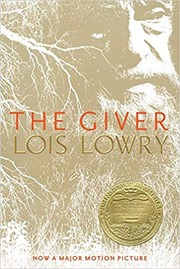
Start with The Giver. It is the first of the quartet, it works completely on its own, and it is the book everyone means when they say they have read Lois Lowry.
Then decide, honestly, whether you want the other three at all. The quartet is only loosely connected, and the three sequels disappoint a great many readers who came for the first book. Gathering Blue is not a sequel in any ordinary sense: different community, different characters, and for most of its length no acknowledgement that The Giver happened. Readers expecting Jonas get a lame orphan girl in a village that discards its weak, and that is where most people quit. The strands do converge, in Messenger and then Son — but the convergence is the reward for finishing, not a reason to promise anyone a trilogy.
The quartet in order
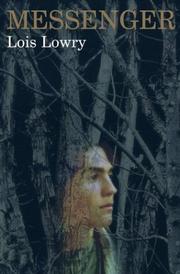
The Giver (1993), Gathering Blue (2000), Messenger (The Giver #3) (2004), Son (2012). Nineteen years from end to end, which explains why the four read so differently from one another.
The Giver is a community that has eliminated pain, weather, colour and choice, and a twelve-year-old assigned to carry the memories on everyone else's behalf. Gathering Blue is a cruder, poorer society where the thread is art rather than memory. Messenger is the shortest and, most readers find, the slightest — its trade-based magic is the weakest invention in the four. Son is the longest, follows Claire, the birthmother of the infant in The Giver, and moves through all three settings.
The warning about Son
The Giver ends ambiguously, on purpose, and Lowry has said for decades that she is content for readers to decide what happens. Son takes that away. It gives a definite answer. Some readers waited twenty years for exactly that; others regard it as the quartet undoing its own best decision. You can stop after the first book and lose nothing. You cannot read Son and then go back to not knowing.
Her other books, which have nothing to do with the quartet
None of what follows connects to The Giver in any way — no shared world, no shared characters, and in most cases no shared genre. Number the Stars is 1943 Copenhagen and the Danish rescue, seen by a ten-year-old whose family hides a Jewish friend. It won the Newbery and it is the book most often assigned beside The Giver. A summer to die was her first novel, about a thirteen-year-old and her sister's illness. Autumn Street is wartime Pennsylvania through the eyes of a six-year-old. Rabble Starkey and The Silent Boy are quieter realist and historical novels.
Then the other half of her career, which is why a Lois Lowry reading order confuses people: Anastasia Krupnik opens a long run of comic novels about a sharp, exasperating ten-year-old, written across the same decades as the sombre books. Gooney Bird Greene is for newly independent readers and is much easier than anything else here. The Willoughbys is a deliberately arch parody of orphan stories. On the Horizon is free verse — short portraits of individual people at Pearl Harbor and Hiroshima.
Looking back is a memoir assembled from photographs and fragments. Read it last; it is a companion to the novels rather than a way into them.
For the adult choosing these
Stated as plain fact. The Giver includes the killing of an infant, described clinically and shown on the page. It is one of the most frequently challenged books in American schools and has been for thirty years, and the grounds given are specific: the community's practice of euthanising infants and the elderly, which the book calls release, and its chemical suppression of adolescent sexual feeling, which the book calls the Stirrings. Both are central to the novel rather than incidental to it, so an adult who objects to either will object to the book itself.
Number the Stars is the Holocaust at the edge of a child's understanding. A summer to die is a sibling's death. Autumn Street ends in the murder of a child and is much harsher than its early chapters suggest.
Reading difficulty and subject matter do not move together in Lowry. Number the Stars is written in plainer sentences than Anastasia Krupnik and is about something immeasurably heavier. Check the book rather than the reading level. The Lois Lowry hub collects the rest.
Follow the full ordered path here: The Giver quartet books in order: where to start with Lois Lowry.