The Best Books to Learn Urdu
This curriculum builds Urdu from absolute zero to confident reading and conversational literacy in four progressive stages. It begins with the Nastaliq script and basic spoken phrases, moves through structured grammar and vocabulary, and culminates in authentic Urdu prose and poetry — giving the learner both the technical foundation and the cultural depth the language demands.
The Script & First Words
BeginnerRead and write the Urdu Nastaliq script fluently and produce basic greetings, numbers, and everyday phrases without relying on transliteration.
▸ Study plan for this stage
Pace: 4–5 weeks, ~25–30 pages/day (alternating between script mastery and colloquial phrases)
- Nastaliq script fundamentals: letter forms, diacritical marks (aeraab), and connecting rules in initial, medial, and final positions
- Urdu phonetics and pronunciation: sounds unique to Urdu (retroflex consonants, nasal vowels) and how they map to Nastaliq characters
- Basic greetings and social formulas: السلام علیکم (Assalamu alaikum), خدا حافظ (Khuda hafiz), شکریہ (Shukriya), and context-appropriate responses
- Numbers 0–100 in written and spoken form, with recognition of both Hindu-Arabic and Perso-Arabic numeral systems
- Everyday vocabulary clusters: family terms, common objects, daily actions, and polite expressions rooted in authentic conversational contexts
- Script-to-sound correspondence: reading Nastaliq text aloud with correct pronunciation, including proper nasalization and stress patterns
- Writing practice: forming letters and words in Nastaliq by hand, maintaining proper letter spacing and ligature connections
- Can you read and write all 36 Urdu letters in their isolated, initial, medial, and final forms without reference materials?
- How do you pronounce Urdu retroflex consonants (ٹ, ڈ, ڑ) and nasal vowels (ں, ے), and how do they differ from English equivalents?
- What are the appropriate greetings for different times of day and social contexts, and how do you write them in Nastaliq script?
- Can you count from 0 to 100 in Urdu, recognize both numeral systems, and write numbers as words in Nastaliq?
- What are 30–40 everyday words (family, food, objects, actions) that you can read, write, and use in simple sentences?
- How do diacritical marks (aeraab) change the pronunciation and meaning of Urdu words, and when are they typically used?
- Daily script drills: Write each of the 36 Urdu letters in all four positions (isolated, initial, medial, final) 5 times each, focusing on proper proportions and connections.
- Phonetic transcription practice: Take 10–15 Nastaliq words from Delacy's book, write them in Roman transliteration, then read them aloud to verify pronunciation accuracy.
- Greeting dialogues: Memorize and write out 5–6 common greeting exchanges (morning, evening, formal, informal) in Nastaliq, then practice speaking them with a language partner or recording.
- Number writing and recognition: Write numbers 0–100 as Urdu words in Nastaliq script; then reverse-engineer: given a written number word, identify its numeral value.
- Vocabulary flashcard creation: Make 40–50 handwritten Nastaliq flashcards of everyday words from Bhatia's opening chapters (family, food, clothing, actions), with pronunciation guides and English translations on the reverse.
- Diacritical mark application: Take 15–20 base words from Delacy and Bhatia, add different aeraab marks, and explain how each changes pronunciation and meaning.
- Timed reading passages: Select 3–4 short authentic Urdu texts (greetings, simple dialogues, number lists) and read them aloud fluently within 2–3 minutes, recording yourself to assess clarity.
- Handwriting refinement: Copy a full page of Nastaliq text from Delacy's script section weekly, comparing your output to the original and identifying ligature or spacing errors.
Next up: Mastery of Nastaliq script and foundational vocabulary equips you to move into the next stage—building sentence structure and grammar—where you'll use these letters and words to construct simple statements, questions, and past-tense narratives.
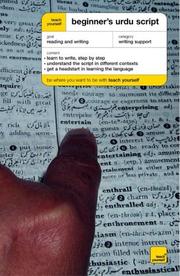
A dedicated, step-by-step workbook for learning the Nastaliq alphabet — letters, joining rules, and diacritics — before tackling any grammar. Starting here prevents the bad habit of depending on romanisation.
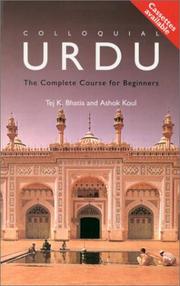
A widely used beginner course with audio that introduces spoken Urdu alongside the script. It builds the first 500–700 words and core sentence patterns needed for Stage 2.
Core Grammar & Structure
BeginnerUnderstand and apply Urdu grammar systematically — verb conjugation, postpositions, tense, gender agreement, and sentence structure — so that further reading and listening make structural sense.
▸ Study plan for this stage
Pace: 8–10 weeks, ~20–25 pages/day (alternating between Schmidt's grammar reference and Matthews' practical lessons)
- Urdu verb conjugation across tenses (present, past, future) and aspects (perfective, imperfective) using Schmidt's systematic tables
- Postpositions (نے, کو, سے, میں, پر) and their role in marking grammatical relationships instead of case endings
- Gender and number agreement in nouns, adjectives, and verbs—particularly how past participles agree with objects
- Sentence structure: SOV word order and how postpositions determine argument relationships
- Imperative and subjunctive forms for commands and conditional statements
- Compound and complex sentences using conjunctions and relative clauses
- Practical application of grammar rules through Matthews' dialogues and narrative passages
- How do you conjugate a regular verb in the present tense, and what changes occur with different persons and genders?
- Explain the difference between perfective and imperfective aspects in Urdu past tense, and give examples using both forms.
- What is the function of postpositions like نے and کو, and how do they differ from case endings in Indo-European languages?
- How do gender and number agreement work in Urdu sentences, particularly between verbs and their objects?
- Construct a complex sentence using a relative clause and identify the postpositions that mark grammatical relationships.
- What are the key differences between imperative, subjunctive, and conditional verb forms, and when would you use each?
- Complete conjugation tables from Schmidt for 5–10 high-frequency verbs (جانا, کرنا, دیکھنا, سننا, لکھنا) across all tenses and persons
- Translate 15–20 English sentences into Urdu, focusing on correct postposition use and verb agreement with Matthews' vocabulary
- Identify and label the postpositions, verbs, and agreement patterns in 20 sentences extracted from Matthews' dialogues
- Write 10 short narratives (3–4 sentences each) in different tenses, ensuring consistent gender/number agreement throughout
- Convert 10 present-tense sentences to past perfective and imperfective forms, explaining the semantic difference
- Create 5 complex sentences using relative clauses (جو...وہ constructions) with correct postposition and verb agreement
Next up: Mastering these structural foundations enables you to recognize grammatical patterns in authentic Urdu texts and understand how meaning shifts with tense, aspect, and agreement—essential skills for moving into reading comprehension and literary analysis.
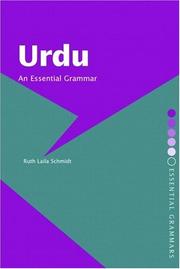
The most authoritative and clearly written reference grammar for learners, covering every major structure with Urdu-script examples. Read it chapter by chapter as a course, not just as a reference.
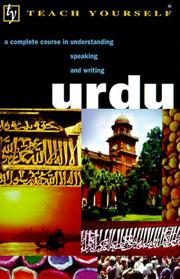
A full teach-yourself course that reinforces Schmidt's grammar with dialogues, exercises, and vocabulary lists, bridging the gap between grammar study and real usage.
Literature, Poetry & Cultural Depth
ExpertEngage with canonical Urdu literature and poetry, understand classical vocabulary and metaphor, and reach a level of cultural literacy that makes the language feel alive.
▸ Study plan for this stage
Pace: 8–10 weeks, ~40–50 pages/day (alternating between historical context and literary engagement)
- The evolution of Urdu literature from Persian/Arabic influences through medieval courts to modern expression
- Classical poetic forms (ghazal, nazm, rubaiyat) and their structural conventions, meter, and rhyme schemes
- Metaphor and imagery in Urdu poetry: how classical tropes (nightingale, rose, beloved, separation) function symbolically
- The role of Urdu literature in cultural and political identity, particularly during colonial and post-colonial periods
- Sajjād Ẓahīr's modernist rebellion: how 'Angaaray' challenged literary conventions and social norms through provocative themes
- The tension between classical tradition and modernist innovation in early 20th-century Urdu literature
- Vocabulary registers: courtly/classical Urdu versus colloquial and contemporary usage in modern texts
- How did Urdu literature develop from its Persian and Arabic foundations, and what role did the Mughal courts play in its refinement?
- What are the defining characteristics of the ghazal form, and how do classical poets use repetition, rhyme, and the radif-qafia structure?
- How does Sajjād Ẓahīr use modernist techniques and provocative subject matter in 'Angaaray' to challenge both literary tradition and social conventions?
- What are the major metaphorical systems in classical Urdu poetry (e.g., the beloved, separation, nature imagery), and how do they carry cultural meaning?
- How did Urdu literature function as a vehicle for cultural and political identity during the colonial period and after?
- What is the relationship between classical vocabulary and modern colloquial Urdu, and how does this tension appear in 'Angaaray'?
- Read 2–3 representative poems from 'A History of Urdu Literature' (e.g., works by Mir, Ghalib, or Iqbal); annotate the ghazal structure, identify the radif-qafia, and trace how the poet develops the central emotional theme across couplets
- Create a glossary of 50–75 classical Urdu poetic terms and metaphors (e.g., 'gul' for rose, 'bulbul' for nightingale, 'hijr' for separation) with their symbolic meanings and examples from the texts
- Write a 2–3 page analytical essay comparing one classical poem discussed in Sādiq's history with a passage from 'Angaaray', focusing on how modernism disrupts or reinterprets traditional imagery
- Memorize and recite 2–3 complete ghazals or significant poetic passages; practice correct pronunciation and rhythm to internalize the musicality of classical Urdu verse
- Analyze 3–4 key passages from 'Angaaray' for modernist techniques (fragmentation, stream of consciousness, taboo subject matter); write brief notes on how each passage breaks from or dialogues with classical conventions
- Create a timeline mapping major literary movements, key poets, and historical events from Urdu literature's origins through the publication of 'Angaaray' (1932); annotate how political and social upheaval influenced literary innovation
Next up: This stage establishes deep cultural literacy and fluency with both classical and modernist Urdu expression, preparing you to engage with contemporary Urdu literature, film, and journalism as a culturally informed reader who understands the historical and aesthetic foundations underlying modern usage.

The definitive scholarly survey of Urdu literary tradition — reading this alongside primary texts gives essential context for the poets and prose writers you will encounter.

This landmark collection of progressive Urdu short stories from 1932 exposes the learner to authentic literary prose style and introduces the tradition of the Urdu afsana (short story), cementing advanced reading stamina.
Discussion
Keep reading
Paths that share books, cover the same subject, or open a related topic.