The Best Books to Learn Bengali
This curriculum takes a complete beginner from zero Bengali to confident reading, writing, and conversational ability across four progressive stages. It begins with script and survival phrases, builds through structured grammar and vocabulary, then advances into authentic literary and spoken Bengali — mirroring how a serious language learner would study in an academic or immersive setting.
Script & First Steps
BeginnerMaster the Bengali (Bangla) script — vowels, consonants, conjuncts, and pronunciation — and produce basic spoken phrases with confidence.
▸ Study plan for this stage
Pace: 4–5 weeks, ~15–20 pages/day (with script practice sessions of 20–30 minutes daily)
- Bengali script structure: 11 vowel signs (কার) and 29 consonants, and how they combine
- Consonant conjuncts (যুক্তবর্ণ): recognizing and pronouncing doubled and complex consonant clusters
- Vowel pronunciation and diacritical marks: short vs. long vowels and their written forms
- Transliteration systems and romanization: understanding how Bengali maps to Latin characters
- Basic phonetic rules: aspiration, nasalization, and regional pronunciation variations
- Syllable formation and word stress in Bengali
- First survival phrases: greetings, polite expressions, and everyday courtesies with correct pronunciation
- Can you identify and correctly pronounce all 11 Bengali vowel signs and 29 consonants in isolation and within words?
- What are consonant conjuncts, and can you recognize and pronounce at least 15 common conjuncts (e.g., ক্ষ, ঞ্জ, ন্ত)?
- How do short and long vowels differ in Bengali, and how are they represented in writing?
- Can you transliterate a simple Bengali word into Roman characters and vice versa using a consistent system?
- What are the key phonetic features of Bengali (aspiration, nasalization) and how do they affect pronunciation?
- Can you produce 10–15 basic Bengali phrases (greetings, polite forms, simple questions) with correct pronunciation and stress?
- Daily script drills: Write out all 11 vowel signs and 29 consonants by hand 5 times each, focusing on proper letter formation and spacing
- Conjunct recognition practice: Using Radice's conjunct chart, identify and pronounce 20 new conjuncts daily; write 5 of them in context within simple words
- Vowel discrimination: Listen to audio (from Radice or Thompson) and repeat short vowel vs. long vowel pairs (e.g., কত vs. কাত) until you hear and produce the distinction consistently
- Transliteration exercises: Take 10 Bengali words from the textbooks, transliterate them into Roman characters, then reverse-transliterate back to Bengali script to verify accuracy
- Phrase repetition drills: Record yourself saying 5 basic phrases daily (greetings, polite expressions) and compare your pronunciation to the textbook audio; refine stress and intonation
- Script-to-sound mapping: Create flashcards with Bengali words on one side and their pronunciation/meaning on the other; drill 20 cards daily until you can read and pronounce without hesitation
- Handwriting practice: Copy out 1–2 short sentences from Thompson or Radice daily, paying attention to letter connections and proper script flow
- Listening and repetition: Complete all listening exercises in both books' introductory chapters; pause and repeat each word/phrase 3 times before moving on
Next up: This stage equips you with the foundational literacy and phonetic confidence needed to move into the next stage (likely basic vocabulary and grammar), where you'll apply these script and pronunciation skills to construct simple sentences and understand fundamental grammatical structures.

The single most widely recommended self-study course for English speakers; it introduces the script systematically alongside pronunciation and basic conversation, making it the ideal starting point before any other resource.

Part of the Routledge Comprehensive Grammars series, this volume opens with a thorough script and phonology chapter that reinforces what Radice introduces, giving the learner a second, more detailed look at the writing system before grammar study begins.
Vocabulary Building & Graded Reading
IntermediateExpand active vocabulary, internalize common idioms, and begin reading simple authentic Bengali prose with the help of glossed texts.
▸ Study plan for this stage
Pace: 6–8 weeks, ~25–30 pages/day (accounting for glossed text and vocabulary review)
- Systematic expansion of active vocabulary through thematic word families and contextual usage in Dimock's graded passages
- Recognition and internalization of common Bengali idioms and colloquial expressions embedded in authentic prose
- Morphological patterns in Bengali (verb conjugations, noun declensions, adjective agreement) as they appear in running text
- Strategies for reading glossed texts: using footnotes and vocabulary aids without over-reliance, building inference skills
- Distinction between formal (sadhu bhasha) and colloquial (cholti bhasha) Bengali in written prose
- Comprehension of simple narrative and descriptive Bengali prose at the sentence and paragraph level
- Building reading fluency: recognizing word boundaries, common conjunctions, and discourse markers in connected text
- What are the key differences between sadhu bhasha and cholti bhasha as demonstrated in Dimock's prose passages, and how do they affect meaning?
- Can you identify and explain 8–10 common Bengali idioms encountered in the text, and use them in original sentences?
- How do verb conjugations and noun declensions change across the passages in Dimock, and what patterns can you extract?
- When reading a glossed passage from Dimock, what strategies help you understand new words without immediately consulting the glossary?
- Can you read aloud and comprehend a 150–200 word passage from Dimock with minimal pauses, identifying the main idea and supporting details?
- What thematic vocabulary clusters (e.g., family, daily life, emotions) have you internalized, and how do they recur across different passages?
- Daily vocabulary journal: extract 10–15 new words from each day's reading in Dimock, note their morphological forms (root + suffix), and create 2–3 example sentences using each
- Idiom collection: maintain a running list of Bengali idioms from Dimock's prose, translate them, and practice using them in conversational contexts or written responses
- Glossed text close reading: select 3–4 passages from Dimock (100–150 words each), read without consulting glosses first, then compare your interpretation with the provided glosses and refine understanding
- Morphological analysis: chart verb conjugations and noun declensions as they appear in Dimock's passages; create paradigm tables for high-frequency verbs and nouns
- Oral fluency practice: read aloud passages from Dimock daily (5–10 minutes), focusing on natural pacing, intonation, and comprehension; record yourself weekly to track improvement
- Comprehension summaries: after each major section of Dimock, write a 50–75 word summary in Bengali (or English, depending on proficiency) of the main ideas, using vocabulary from the passage
Next up: Mastery of vocabulary, idioms, and fluent reading of glossed Bengali prose in Dimock prepares you to tackle longer, less-glossed authentic texts and begin engaging with contemporary Bengali literature, journalism, and digital media at the upper-intermediate level.
A respected university-level reader developed at the University of Chicago; its annotated lessons in both colloquial and literary Bengali make it essential for learners who want to handle both registers.
Authentic Literature & Advanced Fluency
ExpertRead original Bengali literary prose and poetry, appreciate stylistic register differences, and develop near-independent reading ability in written standard Bengali.
▸ Study plan for this stage
Pace: 8–10 weeks, ~20–25 pages/day (with time for re-reading poems and reflection)
- Tagore's use of spiritual and philosophical imagery in Bengali verse to express abstract concepts of love, devotion, and transcendence
- Stylistic register in Gitanjali: the balance between lyrical simplicity and metaphorical depth, and how it differs from conversational Bengali
- The structure and rhythm of Tagore's poems (meter, repetition, parallelism) and their effect on meaning and emotional resonance
- Contextual understanding of Gitanjali as a response to colonial-era Bengal and its role in Bengali literary modernism
- Vocabulary and grammar patterns specific to poetic Bengali: archaic forms, inversions, and compressed syntax
- Thematic coherence across the collection: the progression from earthly love to divine union and self-transcendence
- Tagore's use of nature imagery and personification as vehicles for exploring human emotion and spiritual truth
- Translation awareness: recognizing how Tagore's own English translations shape interpretation of the original Bengali text
- How does Tagore use nature imagery (rivers, birds, seasons) to convey spiritual or emotional states in Gitanjali, and what effect does this have on the reader?
- What are the key differences in vocabulary, syntax, and tone between the poetic Bengali of Gitanjali and the conversational Bengali you have learned so far?
- How does the structure of individual poems in Gitanjali (line length, repetition, stanza breaks) contribute to their meaning and emotional impact?
- What is the thematic arc of Gitanjali as a whole, and how do individual poems relate to this larger spiritual or philosophical journey?
- How does Tagore's use of the 'I' speaker and direct address ('you,' 'thou') create intimacy and immediacy in the poems?
- What historical and cultural context of early 20th-century Bengal is reflected in Gitanjali, and how does this shape its themes and language?
- Read 3–4 poems per session aloud in Bengali, paying attention to rhythm, stress, and musicality; note how sound reinforces meaning
- Select 5 poems and create a visual or conceptual map showing how their themes interconnect and build toward the collection's spiritual arc
- Identify and analyze 10–15 key metaphors or images across Gitanjali (e.g., the river, the bird, the beloved); track how they recur and evolve
- Compare Tagore's own English translations (in the published Gitanjali) with the original Bengali text for 3–4 poems; discuss what is gained or lost
- Write a short analytical essay (500–750 words) on one poem, examining its use of poetic devices (meter, imagery, syntax) and relating it to the collection's larger themes
- Create a glossary of 30–40 poetic or archaic Bengali words and phrases from Gitanjali, noting their modern equivalents and their effect in context
- Memorize and recite 2–3 poems in Bengali to internalize their rhythm, phrasing, and emotional resonance
- Discuss or write reflections on how Gitanjali's spiritual themes relate to Bengali cultural and philosophical traditions (e.g., Bhakti, Advaita Vedanta)
Next up: Mastery of Gitanjali's poetic register, thematic depth, and stylistic sophistication prepares you to engage with other advanced Bengali literary texts—whether other works by Tagore, his contemporaries, or later modernist and postcolonial Bengali authors—with confidence in navigating complex prose, varied registers, and culturally embedded literary references.
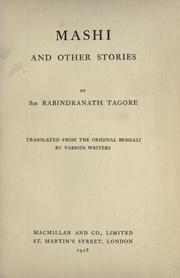
Reading Tagore's celebrated verse collection in the original Bengali is the classic benchmark of literary fluency; the elevated but accessible diction rewards the grammar and vocabulary built in earlier stages.
Discussion
Keep reading
Paths that share books, cover the same subject, or open a related topic.