Afrikaans is genuinely one of the easier languages for an English speaker to reach reading fluency in, and the reason is grammatical. Verbs do not conjugate for person or number — ek is, jy is, ons is. There is one past tense formed with het plus a participle, and it covers everything English splits across several tenses. Grammatical gender is gone. What remains difficult is the double negative (nie … nie), word order in subordinate clauses, and a pronunciation system with vowels English does not have.
Because the grammar collapses so quickly, the bottleneck in Afrikaans is not the textbook — it is vocabulary and exposure. That makes the reading order unusually simple: finish one solid course, then move to real books much earlier than you would in a harder language, and let the novels do the rest of the work.
One course, done properly
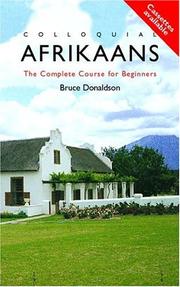
Colloquial Afrikaans by Bruce Donaldson is the course to use. Donaldson is a serious scholar of the language — he wrote the standard reference grammar — and the course is dialogue-driven with clear grammar notes, exercises with a key, and accompanying audio, which matters because Afrikaans spelling maps to sounds that English speakers guess wrong. Work through it completely rather than skimming; the units on word order and on the nie … nie construction are the ones that separate learners who can produce the language from those who can only recognise it.
Then go straight to novels
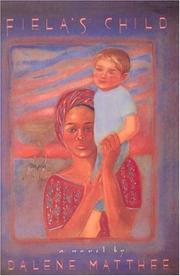
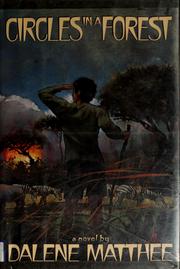
Dalene Matthee is the right first novelist for a learner, and this path gives you two of her books. Fiela se kind is the more approachable of the pair: a nineteenth-century Knysna forest story about a boy raised by a Coloured family who is taken from them by the authorities, told in clear, unornamented prose with a strong narrative pull that will carry you through the sentences you only half-understand. Kringe in 'n bos is set in the same forest world, follows a woodcutter and an elephant, and is a little denser — read it second and you will notice how much less you are reaching for the dictionary.
Both are widely available with study editions used in South African schools, which means glossaries and notes exist if you want them. Reading two books by the same author in sequence is a deliberately efficient move: you get the same vocabulary and the same stylistic habits twice, which is how vocabulary actually sticks.
One book for the context
Disgrace by J. M. Coetzee is on this path and it is in English — an honest point worth stating plainly, since it will not build your Afrikaans directly. It is here for context. Afrikaans is a language with a contested political history: it was the language of the National Party and apartheid administration, and also the first language of millions of Coloured South Africans who had no part in that politics, and the Soweto uprising of 1976 began over its imposition in schools. Coetzee's novel, set in post-apartheid South Africa, gives you the moral atmosphere in which the language now lives. Different South Africans describe that history very differently, and it is worth reading more than one account.
One course, two novels, one piece of context. Afrikaans rewards this order because the grammar gets out of the way early — the sooner you are reading Matthee, the faster everything else follows. The related language paths show what a comparable order looks like elsewhere.
Follow the full ordered path here: Best Books to Learn Afrikaans, in Reading Order.
Ready to learn something deeply?
Build a reading path — free