Arthurian legend: what to read and in what order
This curriculum moves from accessible modern retellings and introductions into the great medieval sources, then out into the richest literary and scholarly reinterpretations of the 20th and 21st centuries. Each stage builds the character knowledge, thematic vocabulary, and historical context needed to fully appreciate the next, turning a curious beginner into a deeply informed reader of the Arthurian tradition.
First Steps into Camelot
BeginnerMeet the core cast — Arthur, Guinevere, Lancelot, Merlin, Mordred — and absorb the essential story arc of Camelot's rise and fall through fluid, modern prose.
▸ Study plan for this stage
Pace: 8–10 weeks, ~40–50 pages/day (accounting for White's dense, digressive prose and Stewart's narrative complexity)
- Arthur's transformation from uncertain boy to reluctant king, and the tension between idealism and power
- The Round Table as both political solution and moral aspiration—how it shapes Camelot's identity
- Lancelot and Guinevere's love as the emotional and political fault line that destabilizes the kingdom
- Merlin as architect, mentor, and tragic figure—his role in Arthur's rise and his withdrawal from the world
- Mordred as the embodiment of Arthur's past sins and the inevitable doom that haunts Camelot
- The fall of Camelot: how internal betrayal and moral compromise undo even the noblest vision
- The contrast between White's satirical, philosophical tone and Stewart's psychological realism in portraying magic and destiny
- How does T. H. White use humor and anachronism to explore Arthur's education and his fitness to rule?
- What is the significance of the Round Table in White's vision, and how does it differ from traditional hierarchies of power?
- Why does Lancelot's arrival at Camelot mark a turning point, and what does his affair with Guinevere reveal about the kingdom's vulnerability?
- How does Mary Stewart portray Merlin's magic and his relationship with destiny in 'The Crystal Cave'?
- What role does Mordred play in both texts, and how is he positioned as the agent of Camelot's downfall?
- How do White and Stewart differ in their treatment of magic, prophecy, and the supernatural?
- Create a character map tracking Arthur, Guinevere, Lancelot, Merlin, and Mordred across both books—note how each character's motivations and relationships shift
- Write a 2–3 page character study of Merlin comparing his role as mentor in White's sections with his portrayal as a young visionary in Stewart's novel
- Outline the political and emotional crises that destabilize Camelot in White's narrative; identify which are rooted in individual flaws vs. structural inevitability
- Create a timeline of key events from both books, marking moments of hope and moments of foreshadowed doom
- Write a dialogue between two characters (e.g., Arthur and Merlin, or Lancelot and Guinevere) exploring a moral dilemma from the books
- Annotate 3–4 key passages from each book that reveal White's satirical voice vs. Stewart's psychological depth, and reflect on how tone shapes meaning
Next up: This stage establishes the mythic foundation and emotional core of Arthurian legend—the rise of an idealistic kingdom and the human flaws that doom it—preparing you to explore deeper, more specialized retellings that interrogate gender, magic, or historical authenticity in subsequent stages.
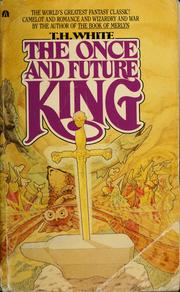
The ideal entry point: a warm, witty, and deeply humane retelling of the whole Arthurian cycle that makes every major character vivid and memorable before you encounter them in harder medieval texts.
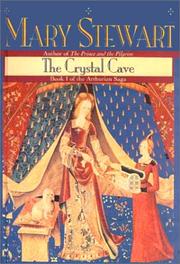
Tells the legend through Merlin's eyes in gripping novelistic prose, filling in the origins and magic that White treats lightly and giving the world a convincing historical texture.
The Medieval Sources
IntermediateRead the foundational medieval texts that invented the legend — understanding their conventions, their chivalric code, and the Grail quest — now that modern retellings have given you a map.
▸ Study plan for this stage
Pace: 12–14 weeks, ~40–50 pages/day (accounting for medieval prose density and annotation). Geoffrey (~200 pages): 4–5 weeks; Chrétien (~150 pages): 3–4 weeks; Malory (~650 pages): 5–6 weeks.
- Geoffrey of Monmouth's Historia as pseudo-historical foundation: how he established Arthur as a 'real' king and legitimized the legend through chronicle form
- The chivalric code in Chrétien de Troyes: courtesy, prowess, and the knight's dual obligation to martial excellence and moral virtue
- The Grail quest as spiritual journey: Perceval's progression from naive youth to worthy seeker, and the Grail's evolution from magical object to Christian relic
- Narrative structure across three genres: Geoffrey's chronicle, Chrétien's romance, and Malory's compilation—how form shapes meaning
- The Round Table as political ideal: how medieval authors used Arthur's court to explore feudal loyalty, honor, and the tragedy of internal conflict
- Character development across sources: how Arthur, Lancelot, and Perceval are reimagined and recontextualized in each text
- Medieval literary conventions: the use of magic, prophecy, courtly love, and divine intervention as narrative tools
- The tension between pagan and Christian elements: how medieval authors absorbed Arthurian material into Christian worldviews
- How does Geoffrey of Monmouth use the form of a chronicle to make the Arthurian legend seem historically credible, and what are the implications of this strategy?
- What is the chivalric code as presented in Chrétien de Troyes' Perceval, and how does Perceval's journey illustrate both his failures and growth within this code?
- How does the Grail function differently in Chrétien's Perceval compared to its treatment in Malory's Le Morte d'Arthur, and what do these differences reveal about each author's concerns?
- What role does the Round Table play in each of the three texts, and how does it embody the political and moral ideals of Arthurian kingship?
- How do the three texts handle the relationship between magic/the supernatural and Christian faith, and what does this reveal about medieval attitudes toward the pagan past?
- Compare Arthur's characterization across Geoffrey, Chrétien, and Malory: how does he evolve, and what does each author emphasize about his kingship?
- Create a timeline of Arthur's life as presented in Geoffrey's Historia, noting which events Geoffrey claims are historical and which feel legendary—then research what modern scholars say about Geoffrey's sources
- Track Perceval's emotional and spiritual state at key moments in Chrétien's text (his departure, his first tournament, his encounter with the Grail, his final realization); write a character analysis showing how his understanding of chivalry deepens
- Compile a 'chivalric code glossary' from Chrétien de Troyes: define terms like 'courtesy,' 'prowess,' 'honor,' and 'loyalty' as they appear in Perceval, with specific textual examples
- Create a comparative chart of the Grail across all three texts: its appearance, its power, who seeks it, what it represents spiritually, and how the quest concludes
- Write a scene from Le Morte d'Arthur from the perspective of a minor character (a squire, a lady-in-waiting, a knight not present at the action) to deepen your understanding of Malory's narrative choices and what he leaves unsaid
- Identify three moments in each text where magic or the supernatural appears; analyze whether the author treats it as real, symbolic, or ambiguous, and what this suggests about the text's worldview
Next up: This stage grounds you in the medieval texts that *created* the legend, so you're now equipped to understand how later authors—from the Romantics to modern novelists—selectively reinterpret, challenge, or revive elements from Geoffrey, Chrétien, and Malory.
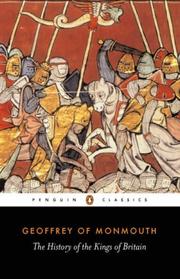
The 12th-century book that first assembled Arthur into a coherent legendary king; reading it reveals exactly which elements are ancient and which were invented by later writers.

The earliest Grail narrative, by the poet who also invented Lancelot and courtly love; it introduces the central questions of the quest tradition that all later works answer differently.

The great synthesis of the entire medieval tradition — the book that defined Arthurian legend in English for five centuries. Reading it now, after Geoffrey and Chrétien, lets you see exactly what Malory wove together.
Poetry, Romance & the Grail Deepened
IntermediateEncounter the legend in its poetic and allegorical dimensions — the Grail as spiritual crisis, the Round Table as moral ideal — through two towering works that reward close, reflective reading.
▸ Study plan for this stage
Pace: 8–10 weeks, ~40–50 pages/day (Tennyson: 3–4 weeks; Parzival: 4–5 weeks; overlap with reflection and comparative work in final 1–2 weeks)
- Tennyson's Idylls as a unified moral and spiritual tragedy: the decay of Camelot as a meditation on Victorian idealism and human fallibility
- The Round Table as an aspirational ethical order—its founding vision versus its inevitable corruption through passion, ambition, and moral compromise
- Lancelot and Guinevere's love as the catalyst for institutional collapse: desire versus duty in Arthurian society
- The Grail as spiritual absence and yearning in Tennyson: the quest for transcendence amid worldly failure
- Wolfram's Parzival as a bildungsroman of spiritual maturation: innocence, sin, doubt, and redemption through compassion and service
- The Grail in Parzival as an active, demanding force: the Fisher King's wound as a mirror of the quester's spiritual state
- Poetic technique and allegory: how meter, imagery, and symbolic language convey inner psychological and spiritual states in both works
- Comparative vision: Tennyson's pessimism about institutional ideals versus Wolfram's affirmation of individual spiritual growth
- How does Tennyson use the decline of Camelot to critique Victorian idealism, and what does this suggest about the relationship between personal desire and social order?
- Trace the moral deterioration of the Round Table in the Idylls: which characters embody its ideals, and which betray them? What is the turning point?
- Compare Tennyson's and Wolfram's treatment of the Grail: what does each poet suggest about the nature of spiritual seeking, and how do their visions differ?
- How does Parzival's journey from ignorance to compassion differ from the tragic arc of Arthur's knights? What does Wolfram suggest about redemption that Tennyson does not?
- Analyze the role of women (Guinevere, Vivien, Elaine in Tennyson; Condwiramurs, Sigune, Orgeluse in Parzival) in advancing or hindering the spiritual and moral quests of the male heroes.
- How do both poets use poetic form (Tennyson's blank verse and varied meters; Wolfram's Middle High German verse) to reinforce themes of order, chaos, and spiritual transformation?
- Close-read 2–3 key passages from the Idylls (e.g., 'Merlin and Vivien,' the death of Arthur) and annotate how Tennyson's language and imagery convey moral decay and spiritual loss.
- Create a timeline of the Round Table's decline in the Idylls, marking pivotal moments (Lancelot's affair, Mordred's rise, etc.) and noting which idylls correspond to each phase.
- Write a 500-word reflection comparing Arthur's vision of the Round Table at its founding with its state at the end of the Idylls—what has changed, and why?
- Read and analyze Parzival's three major encounters with the Grail (the castle, the hermit, the final revelation) and write notes on how his understanding and spiritual readiness evolve at each stage.
- Compose a comparative character study of Lancelot (Tennyson) and Parzival (Wolfram): trace how each responds to failure, guilt, and the possibility of redemption.
- Create a visual or written map of the Grail symbol in both works—what does it represent spiritually in each? How do the poets' metaphors and descriptions differ?
Next up: This stage deepens your encounter with the Grail legend's philosophical and spiritual dimensions, preparing you to explore how later writers (modernist, feminist, and contemporary) have deconstructed, reinterpreted, and challenged these foundational medieval and Victorian visions of Arthurian idealism and redemption.
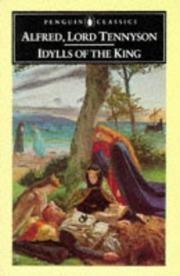
The Victorian reimagining that shaped how the English-speaking world pictured Camelot for a century; its moral seriousness and gorgeous verse are best appreciated after Malory, whose episodes it consciously reworks.

The richest and most philosophically ambitious medieval Grail romance, presenting the quest as a journey toward compassionate wisdom; it answers Chrétien's unfinished poem and rewards readers who now know the tradition well.
Modern Retellings & Feminist Voices
ExpertSee the legend refracted through 20th-century perspectives — feminist, psychological, and postcolonial — understanding how each retelling is also a critique of the tradition you have now mastered.
▸ Study plan for this stage
Pace: 10–12 weeks, ~40–50 pages/day. Allocate 3–4 weeks per novel to allow time for reflection on how each retelling reframes the legend. Slower pace than earlier stages to analyze authorial choices and ideological shifts.
- Feminist reclamation: How Bradley centers Morgaine and female agency, inverting the patriarchal Arthurian tradition and reframing 'villainy' as resistance
- Historical grounding vs. myth: Sutcliff's and Cornwell's use of Romano-British setting and archaeological plausibility to demystify Arthur and ground legend in material reality
- Unreliable narration and perspective: How each author's choice of narrator (Morgaine's first-person, Artos's third-person, Cornwell's fragmented viewpoint) shapes interpretation of events and morality
- Deconstruction of chivalric ideals: All three novels critique the Romantic notion of Camelot, exposing violence, political pragmatism, and moral ambiguity beneath the legend
- Postcolonial and cultural anxiety: Sutcliff and Cornwell's treatment of Saxon/Romano-British conflict as metaphor for cultural displacement and the fragility of civilization
- Psychological realism: Moving from archetypal characters to complex, flawed individuals with internal contradictions (Arthur's doubt, Morgaine's trauma, Bedwyr's loyalty)
- Intertextuality and revision: Understanding how each novel deliberately dialogues with and subverts earlier Arthurian texts (Malory, Tennyson, White) you've already studied
- How does Marion Zimmer Bradley's portrayal of Morgaine in *The Mists of Avalon* function as a feminist critique of traditional Arthurian legend, and what does her narrative perspective reveal about the politics of storytelling?
- Compare how Rosemary Sutcliff's *Sword at Sunset* and Bernard Cornwell's *The Winter King* use historical realism and archaeological detail to demystify Arthur. What is gained and lost in this approach compared to earlier mythic versions?
- Analyze the treatment of women across all three novels. How does each author's portrayal of female characters (Morgaine, Guinevere, Ceinwyn, Igraine) reflect their ideological position on gender and power?
- How does each novel handle the moral ambiguity of Arthur's rule? What does each author suggest about the relationship between political necessity and ethical compromise?
- In *The Winter King*, how does Cornwell's fragmented narrative structure and multiple perspectives (Derfel, Merlin, etc.) differ from Bradley's and Sutcliff's approaches, and what does this reveal about the instability of the Arthurian legend itself?
- What role does the Saxon/Romano-British conflict play in Sutcliff's and Cornwell's novels as a metaphor for cultural loss and historical inevitability? How does this compare to the spiritual/magical conflict in Bradley's work?
- Character comparison matrix: Create a detailed chart comparing how Morgaine, Guinevere, Lancelot, and Merlin are portrayed across all three novels. Note shifts in motivation, morality, and narrative sympathy. Write a 500-word analysis of what these shifts reveal about each author's ideological stance.
- Narrative perspective analysis: Rewrite a key scene (e.g., Arthur's conception, the sword in the stone, or a major battle) from the perspective of a different character or narrator than the novel provides. Reflect on how perspective shapes moral judgment.
- Feminist revision exercise: Select one scene from a pre-20th-century Arthurian text you studied earlier (Malory, Tennyson, etc.). Write a 2–3 page scene showing how Bradley, Sutcliff, or Cornwell might reframe it to foreground female agency or critique patriarchal assumptions.
- Historical vs. mythic debate: Research the actual Romano-British period (4th–6th centuries) and the historical evidence for an 'Arthur figure.' Write a 750-word essay arguing whether Sutcliff's and Cornwell's historical grounding makes their versions more or less 'true' to the legend than Bradley's magical approach.
- Ideological close reading: Choose one major theme (e.g., magic, Christianity, loyalty, or kingship) and trace how each novel treats it differently. Write analytical notes showing how each author's treatment reflects their critique of the tradition.
- Comparative review: Write three short reviews (300–400 words each) of the three novels, each written from the perspective of a different critical lens: feminist, historical, and postcolonial. How does each lens illuminate different aspects of the retellings?
Next up: This stage equips you to recognize how literary retellings are acts of interpretation and ideology—preparing you to either engage with even more recent Arthurian adaptations (contemporary YA, graphic novels, or speculative fiction) or to apply these critical frameworks to other legendary cycles and mythic traditions across cultures.
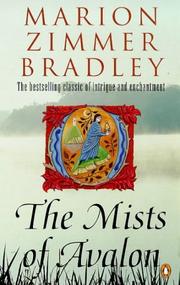
Retells the entire cycle from the women's point of view, especially Morgan le Fay; it fundamentally challenges the chivalric values of Malory and Tennyson and is most powerful when read in direct dialogue with them.
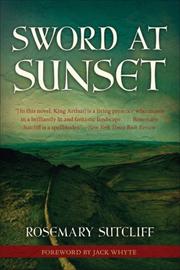
A rigorously historical novel that strips away the medieval trappings to imagine a real 5th-century warlord named Artos; it asks what the legend might preserve of genuine history, a question only meaningful after reading the mythic versions.
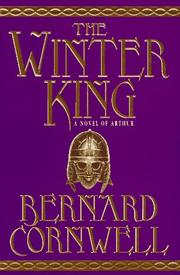
A gritty, politically astute historical retelling that deconstructs the romance tradition with unflinching realism, making a perfect capstone that tests everything the reader now knows about how the legend has been constructed and why it endures.
Discussion
Keep reading
Paths that share books, cover the same subject, or open a related topic.