Larry McMurtry Reading Order: Where to Start
McMurtry wrote more than thirty books and the reading order that works is not chronological — it starts with the one everybody comes for, Lonesome Dove, and then radiates outward. Take the Western quartet in publication order rather than story order, then the small-town Thalia novels that are the other half of his Texas, then the Houston books. His essays close things out, because they are where he says plainly what the novels only imply about the myth he spent a career both selling and puncturing.
Start Here: Lonesome Dove
BeginnerRead the novel that defines him, and see the trick at the centre of his work — an epic cattle drive that keeps quietly reporting how pointless it is.
▸ Study plan for this stage
Pace: 5–6 weeks for about 945 pages. It reads fast — short chapters, constant movement, dialogue-heavy — so 30 pages a day is comfortable and most readers speed up after the drive leaves Texas. Do not try to sample it; the book's effect is entirely cumulative.
- Augustus McCrae and Woodrow Call as a complete argument in two men — one talks and feels, one works and does not, and neither is right
- The anti-Western intention: McMurtry wrote the cattle drive as a demolition of the myth and readers took it as the myth's greatest monument
- The drive itself has no good reason — the novel keeps quietly reporting how pointless the enterprise is while making it magnificent
- Deaths arrive without warning or dramatic preparation, which is the book's most consistent moral position
- Lorena, Clara and Elmira as the women the Western usually has no room for, given interior lives the men do not notice
- Short chapters and rotating close third person, so the perspective moves constantly across a large cast
- The Pulitzer, the miniseries and the resulting problem: everything McMurtry wrote afterward is in conversation with this book's reception
- Where does the novel tell you the cattle drive is pointless, and why does it not feel pointless while you are reading?
- Call and Gus disagree about almost everything. Which one does the novel side with, and how can you tell?
- What does McMurtry do with death that a conventional Western would not?
- If this is an anti-Western, what exactly is it against — the frontier, the men, or the telling?
- Which character's chapters did you look forward to, and what does that reveal about how the book distributes sympathy?
- Note the point at which you stopped needing the chapter headings to know whose head you were in
- Mark the first major death and write down how many pages of warning you got; then check the next one
- Keep a short list of the women's chapters and read them consecutively at the end — a different novel emerges
- After finishing, write one sentence on what the drive was for. The difficulty of that sentence is McMurtry's argument
Next up: You now know how the cycle ends emotionally, which is the only condition under which the prequels can read as elegy rather than as setup.
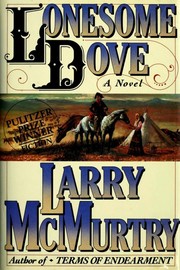
The Pulitzer winner and the only sane starting point: two retired Texas Rangers drive cattle to Montana. McMurtry intended it as an anti-Western and readers loved it as a Western instead, which is the argument every other book of his is having.
The Rest of the Quartet, in Publication Order
BeginnerFinish the Lonesome Dove cycle in the sequence that preserves its surprises, and decide for yourself whether the prequels earn their place.
▸ Study plan for this stage
Pace: 14–16 weeks, roughly 1,790 pages. Streets of Laredo (~545) takes 4 weeks and is the bleakest reading experience on this path. Dead Man's Walk (~490) is faster, 3 weeks. Comanche Moon (~750) is the longest and the weakest — 5 weeks, and it is entirely reasonable to stop before it.
- Publication order versus chronological order: written 1985, 1993, 1995, 1997 but set 1840s, 1850s, 1870s, 1890s
- Why publication order wins — the two prequels reveal deaths that Lonesome Dove and Streets of Laredo depend on withholding
- Streets of Laredo as the deliberate closing-down: an older Call, a mechanised Texas, and the West as a finished business
- Dead Man's Walk as origin story read backwards — knowing the ending turns young Gus and Call into elegy
- Comanche Moon as the bridge McMurtry wrote last and, by general agreement, cared about least
- Diminishing returns as a real feature of long series, and the reader's right to stop at the point of diminishing return
- The Comanche as antagonist across the cycle — worth reading with attention to how the portrayal shifts between books
- What specifically would Dead Man's Walk have spoiled if you had read it first? Name the events.
- Streets of Laredo is much darker than Lonesome Dove. Is that a change of subject, or is it what Lonesome Dove was always heading toward?
- Do the prequels add anything to Gus and Call that the first two books had not already established?
- Where does Comanche Moon stop justifying its length, and is that the point to stop?
- The cycle spans fifty years of fictional time and twelve of writing time. Which sequence is the novel actually organised around?
- Write down the four books with their publication dates and their setting dates before you start; keeping both orders visible prevents confusion
- After Streets of Laredo, decide explicitly whether you want the prequels, and record your reason
- In Dead Man's Walk, mark every moment that only lands because you already know these men at seventy
- If you finish Comanche Moon, write a paragraph on what it adds; if you abandon it, write a paragraph on what you were not getting
Next up: With the myth-in-period-costume finished, the contemporary Texas novels show you the same dying ranch country without the horses to make it romantic.
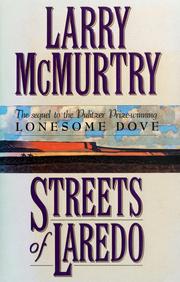
The direct sequel, written next and set last — an older, bleaker Texas closing the story down. Read it second even though it comes last chronologically, because the prequels spoil deaths this book depends on.
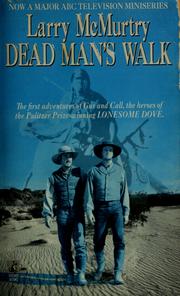
The first prequel: Call and McCrae as teenage Rangers on a doomed expedition. Now that the ending is known, going back to the beginning reads as elegy rather than setup, which is exactly how McMurtry wrote it.

The last written and the bridge between Dead Man's Walk and Lonesome Dove. The weakest of the four by general agreement, so it is the right place to stop if the cycle has run out for you.
The Thalia Novels
IntermediateMeet the other McMurtry — contemporary small-town Texas, no cattle, no myth — and follow one set of characters across forty years of real time.
▸ Study plan for this stage
Pace: 12–14 weeks. Horseman, Pass By is under 200 pages and takes a week. The Last Picture Show (~255) takes a fortnight. Texasville is 545 pages of comic sprawl — 4 weeks. Duane's Depressed (~430) needs 3 to 4 weeks and should not be rushed; it is the emotional payoff of the whole sequence.
- Thalia, the invented north Texas town, as McMurtry's other lifelong subject — contemporary, unromantic and shrinking
- Horseman, Pass By written at twenty-five: the dying ranch, the cattle disease, and the theme Lonesome Dove would later dress in period costume
- Hud as the film that came from it, and the gap between McMurtry's Hud and the one audiences remember
- The Last Picture Show and boredom as a subject — teenagers in a town with nothing to do, and what that does to them
- Real-time sequencing: the Thalia books track the same characters across roughly forty years of actual publishing time, not compressed fictional time
- Texasville's oil bust, and the fact that it is much funnier than its predecessor while the people are much worse off
- Duane's Depressed and the pickup truck: a man who stops driving, starts walking, and ends up in therapy in a town that has no vocabulary for it
- The continuity of place as the point — Thalia's decline is the plot underneath all four books
- What is the same ranch anxiety in Horseman, Pass By and in Lonesome Dove? What does period costume let McMurtry do with it?
- The Last Picture Show is about boredom without being boring. How?
- Texasville is funnier than The Last Picture Show while its characters are more damaged. What is that combination doing?
- Why does Duane parking the truck read as a serious act rather than a whim?
- Across forty years, does McMurtry's sympathy for these people increase, decrease, or just change key?
- Which of the four is the best novel, and which is the most necessary to the sequence? They may not be the same book.
- Read the four strictly in order with no gaps longer than a week; the effect depends on continuity
- Keep one list of recurring characters and their ages at each book — the arithmetic is part of the experience
- After Texasville, go back and reread the last ten pages of The Last Picture Show
- Write a paragraph comparing Thalia with the Lonesome Dove country — same state, same decline, opposite lighting
- Note where Duane's Depressed becomes a book about reading, and hold that thought for the essays
Next up: Having seen McMurtry's Texas from the ranch and the small town, the Houston books show him writing the city and the women — the part of the career his Western readers most often skip.
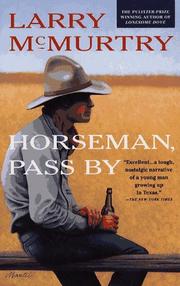
His first novel, written at twenty-five, and the source of the film Hud. Short and hard, and it establishes the dying-ranch theme that Lonesome Dove would later dress up in period costume.
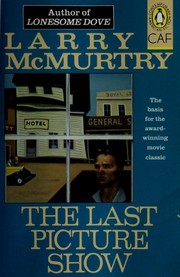
The best-known of the contemporary novels: teenagers in a north Texas town with nothing to do. Read after Horseman, Pass By and the continuity of the place becomes obvious.
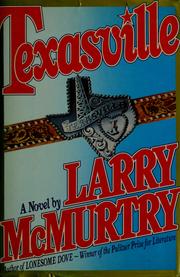
The same characters thirty years on during the oil bust, and much funnier than its predecessor. It only works in sequence, since the whole effect is watching who these people turned into.

Duane parks his pickup and starts walking. The most emotionally serious book in the sequence and a genuine late-career high point — save it for last in this stage.
The Houston Books
IntermediateSee McMurtry writing women and city life, which is where his sentimental streak runs strongest and his critics most often disagree with his admirers.
▸ Study plan for this stage
Pace: 8–9 weeks. Terms of Endearment is about 410 pages and takes 3 weeks. The Evening Star is 620 pages, slower and stranger, and needs 5 — it is a book to read only if Aurora has genuinely got hold of you.
- Aurora Greenway as McMurtry's largest comic creation and his most divisive one
- The mother-daughter relationship as the engine, with the suitors as a rotating chorus around it
- Houston as a setting with no myth attached — no frontier, no elegy, just money, weather and social manoeuvre
- The comic and the merciless running in the same paragraph, a register the Texas novels never attempt
- The sentimental streak: this is where McMurtry's critics and his admirers most reliably part company, and reading both books is how you decide for yourself
- The Evening Star follows Aurora into old age, and its slowness is deliberate rather than accidental
- The film adaptation's shadow over Terms of Endearment, and how differently the novel distributes its attention
- Is Aurora a great comic character or an indulged one? Point to a scene that decides it for you.
- Where does Terms of Endearment earn its emotional turn, and where does it ask for feeling it has not earned?
- The Evening Star is much longer and much less shapely. Is that a failing or a portrait of old age?
- How does McMurtry write women here differently from Lorena and Clara in Lonesome Dove?
- If you have seen the film of Terms of Endearment, what does the novel spend its time on instead?
- Track Aurora's suitors and what each is for structurally; the pattern is more deliberate than it looks
- Mark one page where the comedy and the cruelty are in the same paragraph and work out how the sentence manages it
- Read the first fifty pages of The Evening Star and decide honestly whether to continue; this is the one stage where stopping early is defensible
- Compare a mother-daughter scene here with a Call-and-Gus scene — the same refusal to say things directly, in a different accent
Next up: With the full range of the fiction behind you, the essays are McMurtry stating outright the ambivalence about Texas that the novels have been dramatising for forty years.

Aurora Greenway and her daughter, and the novel that made him famous outside the Western audience. Comic and merciless in a register the Texas books never use.
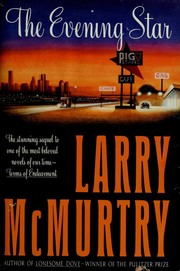
The sequel, following Aurora into old age. Slower and stranger than Terms of Endearment, and a book for readers already attached to her rather than a place to begin.
McMurtry on McMurtry
BeginnerRead the essays where he attacks the Texas myth directly, and understand the ambivalence running under all the fiction.
▸ Study plan for this stage
Pace: 4–5 weeks. In a Narrow Grave is about 175 pages and takes a fortnight — read it in short sittings, one essay at a time. Walter Benjamin at the Dairy Queen is around 200 pages and is best read in two or three long sittings, because it is one continuous meditation rather than discrete essays.
- In a Narrow Grave was written before Lonesome Dove — McMurtry attacking the Texas myth years before he became its chief supplier
- The contradiction is the point: the man who wrote the essays and the man who wrote the cattle drive are the same man, and he knew it
- The death of the frontier treated as an accomplished fact rather than a lament, which is a harder position than nostalgia
- Walter Benjamin at the Dairy Queen as the book of a bookman: McMurtry the antiquarian dealer, reading in a town with no books
- Reading as the actual subject of the late essays — what it does to a person from a nonliterary place, which is also Duane's subject
- The plains as landscape and as intellectual condition, written from sixty rather than from thirty
- Where the essays contradict the novels, and why that is more interesting than consistency would be
- In a Narrow Grave predates Lonesome Dove. Does the novel refute the essays, or fulfil them by accident?
- What does McMurtry actually think the Texas myth costs the people who live inside it?
- How does the bookman of Walter Benjamin at the Dairy Queen explain the novelist who wrote the other twelve books on this path?
- Is the ambivalence in the fiction visible once you know to look, or does the essay put it there retrospectively?
- Having read the whole path, would you still start a new reader on Lonesome Dove? What is the case against it?
- Read one essay from In a Narrow Grave and then a chapter of Lonesome Dove the same evening; the friction is the exercise
- List three claims in the essays that the fiction contradicts and decide which version McMurtry believed
- Connect the reading material in Walter Benjamin at the Dairy Queen with Duane's Depressed, which is the same argument in fiction
- Write your own two-paragraph reading order for McMurtry and defend the one place you would depart from this path
Next up: This closes the path: the essays name the ambivalence the novels ran on, so the Westerns and the small-town books read as one long quarrel with the same myth.

Early essays on Texas, ranching and the death of the frontier, written before Lonesome Dove made him the myth's chief supplier. The contradiction is the point.

Late reflections on reading, bookselling and the plains, written at sixty. The best closing book on this list because it is McMurtry the antiquarian bookman rather than the novelist, and that man wrote all the others.
Discussion
Keep reading
Paths that share books, cover the same subject, or open a related topic.