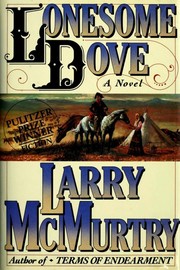
Start with Lonesome Dove. This is not a close call. It is the Pulitzer winner, it is the best book he wrote, and it is the one that makes a reader want the other thirty. Two retired Texas Rangers drive cattle from the Rio Grande to Montana, and across roughly nine hundred pages it manages to be an adventure story, a comedy, and a sustained demolition of the mythology it appears to celebrate.
The alternative you will see recommended is to begin with Dead Man's Walk, the earliest event in the sequence, and read forward chronologically. That advice is wrong, and the rest of this guide explains why.
The order question: publication or chronological
There are four Lonesome Dove novels. In publication order: Lonesome Dove in 1985, then Streets of Laredo, then Dead Man's Walk, then Comanche moon.
In chronological order: Dead Man's Walk covers the two Rangers as young men, Comanche moon covers their middle years, Lonesome Dove is the cattle drive, and Streets of Laredo is the aftermath.
Read them in publication order. Two reasons, both practical. First, Lonesome Dove is dramatically the strongest and the two prequels are the weakest — starting chronologically means beginning with the least good book by a wide margin and hoping you stay. Second, the prequels were written for readers who already knew these characters as old men. Their effects are recognitions, and a recognition requires prior knowledge. Read chronologically, Dead Man's Walk is simply a rough frontier novel; read fourth, it is an explanation.
A genuine warning about Streets of Laredo: it is markedly bleaker than Lonesome Dove, and it does things to the surviving characters that a number of readers actively resent. It is a good novel and it is not a comfortable one. Stopping after Lonesome Dove is a completely defensible choice, and plenty of devoted readers have made it.
The Thalia novels
The other major thread is a small north Texas town, followed across decades. Horseman, pass by was his first novel, published when he was twenty-five, and it is short, hard and excellent; it was filmed as Hud. The Last Picture Show is the famous one and the best of the group — teenagers in a dying town in the early 1950s, and the source of the film he later helped adapt.
The Last Picture Show, Texasville and Duane's Depressed follow the same character across roughly forty years, and they should be read in that order. Texasville is the oil-boom comedy, Duane's Depressed the late, quiet, surprisingly moving one. Together they are the closest thing in American fiction to watching a man age in real time. A fourth and fifth book continue the sequence and are not on this path.
Terms of Endearment and its sequel
Terms of Endearment is the mother-and-daughter novel that became the film. Evening Star, published as The Evening Star, is its sequel and follows the mother into old age. Read them in that order; the sequel assumes everything. Both belong to a larger loosely connected Houston sequence whose earlier volumes are not included here, but neither requires them.
The nonfiction
In a narrow grave is a 1968 essay collection about Texas, written while the cattle culture he later mythologised was visibly finishing, and it is the best short statement of what he actually thought about the West. Walter Benjamin at the Dairy Queen is a late memoir about reading, bookselling and rural life, and it is the book to read if you want the man rather than the novels.
Where to start if not with Lonesome Dove
If nine hundred pages is too much of a commitment, start with The Last Picture Show or Horseman, pass by. Both are under three hundred pages, both are first-rate, and both will tell you within a chapter whether the voice works for you. The full reading path sets out each group in order.