The Best Books on Kombucha and Fermented Drinks
This curriculum takes a complete beginner from understanding why fermentation works all the way to confidently brewing kombucha, kefir, and probiotic sodas at home. Each stage builds on the last — starting with the science and culture of fermentation, moving into hands-on kombucha mastery, then expanding into kefir and probiotic sodas, and finally deepening your craft with advanced flavor and troubleshooting knowledge.
Foundations of Fermentation
BeginnerUnderstand what fermentation is, why it's safe, and how beneficial bacteria and yeasts work — building the vocabulary and confidence to start brewing.
▸ Study plan for this stage
Pace: 4–5 weeks, ~25–30 pages/day. Start with Katz's foundational chapters (weeks 1–2), then move to Pike's practical guide (weeks 3–4), with overlap and review in week 5.
- Fermentation as a metabolic process: how microorganisms break down sugars and starches to produce acids, gases, and beneficial compounds
- The role of beneficial bacteria (especially Lactobacillus) and wild yeasts in creating safe, preserved foods through acidification and competition
- Why fermented foods are safe: how low pH, salt concentration, and anaerobic conditions prevent pathogenic growth
- The microbial ecosystem in fermentation: understanding starter cultures, wild fermentation, and how microbes communicate and compete
- Sensory and chemical indicators of successful fermentation: recognizing bubbling, sourness, aroma, and texture changes as signs of healthy fermentation
- Basic fermentation variables: temperature, salt ratios, vessel type, and time—and how each affects the fermentation process
- Common fermented foods and their unique microbial profiles: sourdough, yogurt, sauerkraut, kefir, and kimchi as case studies in applied fermentation
- What is fermentation at the cellular level, and what do microorganisms produce as byproducts?
- Why is fermented food safe to eat despite containing living microorganisms, and what role does pH play?
- How do Lactobacillus bacteria and wild yeasts prevent harmful pathogens from growing in fermented foods?
- What are the key environmental variables (temperature, salt, oxygen, time) that influence fermentation, and how would you adjust them for different foods?
- What sensory and visual signs indicate that a fermentation is progressing successfully versus going wrong?
- How do starter cultures differ from wild fermentation, and when would you use each approach?
- Conduct a simple sauerkraut fermentation (from Pike's guide) over 1–2 weeks, observing and documenting daily changes in aroma, texture, and appearance; correlate observations with Katz's explanations of microbial activity
- Taste a commercial fermented product (kombucha, yogurt, or kimchi) and identify the sour/tangy flavor profile; research the specific bacteria responsible using Katz's microbial ecology framework
- Create a fermentation journal tracking temperature, salt ratio, and timeline for one ferment; use it to predict how changing one variable (e.g., cooler temperature) would slow or speed fermentation
- Prepare a simple yogurt or kefir ferment (from Pike) and measure pH changes over time using pH strips or a meter; connect the pH drop to Katz's explanation of lactic acid production
- Compare two fermentation vessels (e.g., glass jar vs. plastic) side-by-side with identical ingredients; observe and explain any differences in fermentation speed or microbial activity based on Katz's principles
- Read and summarize one chapter from Katz on a specific fermented food (e.g., miso, tempeh) not covered in Pike, then sketch the microbial ecosystem and label key players
Next up: Mastering these foundations—understanding how microbes work, why fermentation is safe, and how to recognize a healthy ferment—equips you to troubleshoot problems, scale recipes, and explore advanced techniques like temperature control and flavor manipulation in the next stage.

The definitive cultural and scientific introduction to fermentation in all its forms. Reading this first gives you the 'why' behind every technique you'll learn later, and removes fear around working with live cultures.

A gentle, visually approachable beginner guide that bridges the gap between Katz's broad philosophy and hands-on kitchen practice, introducing kefir and cultured drinks in an accessible format.
Kombucha Core
BeginnerBrew your first successful batch of kombucha, understand the SCOBY, master first and second fermentation, and troubleshoot common problems safely.
▸ Study plan for this stage
Pace: 4–5 weeks, ~25–30 pages/day, with 2–3 brewing cycles running in parallel
- SCOBY composition, health markers, and how it ferments sweet tea into kombucha
- First fermentation: temperature control, timing (7–30 days), and how to recognize readiness by taste and pH
- Second fermentation: carbonation methods, flavor infusions, bottle types, and safety considerations
- Starter liquid (mother liquor) and its role in inoculating new batches and preventing contamination
- Common fermentation problems (mold, vinegar smell, weak fizz) and how to diagnose and prevent them safely
- Hygiene protocols and sanitation to avoid pathogenic contamination while respecting beneficial bacteria
- Scaling from single-jar brewing to multi-batch production rhythms
- What is a SCOBY, what organisms does it contain, and how do you know if yours is healthy?
- Walk through the complete first fermentation process: what temperature range is ideal, how long does it typically take, and what sensory cues tell you fermentation is complete?
- Explain the purpose and mechanics of second fermentation, including how carbonation develops and why bottle choice matters for safety.
- What is starter liquid, why is it essential for each new batch, and how much should you use?
- Describe three common kombucha problems (e.g., mold, vinegar taste, weak carbonation), their causes, and how to prevent or fix each.
- How do you balance sanitation with preserving the beneficial bacteria in your brewing environment?
- Brew your first 1-gallon batch following either Crum's or Lee's starter recipe; document temperature, smell, and taste daily for 10–14 days
- Examine your SCOBY under magnification or with the naked eye; sketch or photograph its layers and note any color changes or anomalies
- Conduct a pH test on your first fermentation at days 3, 7, 10, and 14 to correlate acidity with taste and fermentation stage
- Perform a second fermentation trial: split your first batch into 3 bottles with different flavor infusions (e.g., ginger, berries, plain); bottle and store for 3–5 days, then taste and measure carbonation
- Create a brewing log template (temperature, humidity, start/end dates, taste notes, pH, problems) and maintain it for at least two full cycles
- Taste-test a range of commercial kombucha brands and compare their flavor profiles, carbonation, and acidity to your own batches to calibrate your palate
- Deliberately introduce a minor contamination risk (e.g., expose a test jar to dust or temperature fluctuation) in a controlled way, observe what happens, and document how to recover or prevent it
Next up: This stage equips you with hands-on mastery of basic brewing and troubleshooting, preparing you to explore advanced fermentation science, scaling techniques, and creative flavor development in the next stage.

The most comprehensive and widely trusted kombucha reference available — covers brewing science, SCOBY health, safety, flavoring, and over 400 recipes. This is the essential kombucha bible and should anchor your practice.
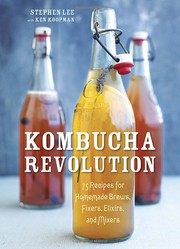
A focused, practical guide from one of kombucha's commercial pioneers. Read after Crum to reinforce core technique and pick up additional flavor and brewing insights from a different expert perspective.
Kefir and Probiotic Sodas
IntermediateConfidently brew milk kefir, water kefir, and naturally fermented probiotic sodas, understanding how each culture differs from kombucha.
▸ Study plan for this stage
Pace: 4–5 weeks, ~25–30 pages/day, with 2–3 days per week reserved for hands-on brewing and observation
- The biological differences between kefir grains (bacterial and yeast symbiosis) and kombucha SCOBY (bacterial cellulose matrix), and why each requires distinct care
- Milk kefir fermentation: grain activation, fermentation timing, temperature control, and troubleshooting common issues like over-fermentation or grain dormancy
- Water kefir as a dairy-free alternative: the role of minerals, sugar ratios, and secondary fermentation techniques for flavor development
- Naturally fermented probiotic sodas: wild fermentation using whey, ginger bugs, or starter cultures versus controlled fermentation, and managing carbonation safely
- How to identify and maintain healthy cultures through visual and sensory cues (taste, smell, texture) across all three fermentation types
- The nutritional and probiotic profiles of kefir and probiotic sodas compared to kombucha, and their therapeutic applications in gut health
- What are the key structural and microbial differences between kefir grains and a kombucha SCOBY, and why do these differences affect fermentation time and temperature requirements?
- Walk through the complete milk kefir fermentation process from grain activation to harvesting, including how to recognize when fermentation is complete and how to store grains long-term
- How does water kefir differ from milk kefir in terms of culture requirements, fermentation timeline, and flavor customization, and what role do minerals play in the process?
- Describe two methods for creating naturally fermented probiotic sodas (e.g., ginger bug vs. whey-based), including the risks and benefits of each approach and how to manage carbonation safely
- What visual, olfactory, and taste indicators tell you that a kefir or probiotic soda culture is healthy, stressed, or contaminated, and what corrective actions should you take?
- How do the probiotic strains and nutritional profiles of milk kefir, water kefir, and naturally fermented sodas compare to kombucha, and what health applications is each best suited for?
- Activate a batch of dormant milk kefir grains from scratch, document daily observations (appearance, smell, fermentation speed), and successfully produce your first batch of finished milk kefir over 2 weeks
- Brew and taste-test at least three different milk kefir fermentation times (12, 24, and 36 hours) side-by-side to understand how fermentation duration affects flavor, thickness, and probiotic content
- Start a water kefir culture from dehydrated grains, ferment a batch, and conduct a secondary fermentation with fruit juice or ginger to develop flavor profiles
- Create a ginger bug starter culture and use it to ferment a naturally carbonated probiotic soda; document the fermentation timeline and carbonation development
- Maintain a parallel fermentation station with milk kefir, water kefir, and a probiotic soda culture simultaneously for 3 weeks, keeping detailed notes on each culture's behavior, troubleshooting any issues that arise
- Conduct a blind taste comparison of your homemade milk kefir, water kefir, and probiotic soda against store-bought versions (if available), noting differences in flavor, texture, and perceived probiotic potency
Next up: This stage equips you with mastery of three distinct fermented cultures and the troubleshooting skills to maintain them, preparing you to explore advanced fermentation techniques, multi-stage fermentations, and how to combine or layer these cultures with other fermented foods in the next stage.

Focuses specifically on kombucha, kefir, and cultured vegetables as a trio — ideal for expanding beyond kombucha into kefir with clear, health-conscious guidance and practical recipes.

Introduces wild and foraged ingredients for probiotic sodas and fermented drinks, expanding your creative range and teaching you to think beyond store-bought starters toward truly artisan beverages.
Advanced Craft and Flavor Mastery
ExpertDevelop a brewer's intuition for flavor layering, continuous brew systems, seasonal ingredients, and the microbiology behind your ferments.
▸ Study plan for this stage
Pace: 8–10 weeks, ~40–50 pages/day with 2–3 days per week for hands-on fermentation experiments
- Wild fermentation principles: harnessing ambient microorganisms and understanding their ecological niches in fermentation vessels
- Flavor layering through microbial succession: how bacteria, yeasts, and molds interact over time to create complex taste profiles
- Continuous brew systems (kombucha, kvass, rejuvelac): maintaining stable microbial communities and managing pH, temperature, and nutrient cycles
- Seasonal ingredient selection and preservation: adapting ferments to local availability and understanding how ingredient chemistry affects fermentation outcomes
- Applied microbiology: identifying spoilage vs. beneficial growth, managing starter cultures (SCOBYs, mother cultures), and troubleshooting fermentation failures
- Noma's fermentation philosophy: balancing tradition with innovation, using fermentation as a flavor amplification tool, and ingredient-forward recipe development
- Sensory evaluation and flavor prediction: developing a brewer's palate to anticipate how fermentation will transform raw ingredients
- How do you establish and maintain a stable microbial ecosystem in a continuous brew system, and what role does pH play in preventing unwanted contamination?
- Describe the microbial succession that occurs during a typical kombucha or fermented drink fermentation—what organisms dominate at each stage and why?
- How would you adapt your fermentation approach for seasonal ingredients, and what chemical or microbial factors would you consider when switching from summer to winter fruits or herbs?
- What is the difference between wild fermentation and controlled fermentation, and when would you choose each approach based on flavor goals?
- How do you diagnose and correct common fermentation problems (mold, off-flavors, stalling) using microbiology principles rather than trial-and-error?
- Explain the concept of flavor layering through fermentation: how do you intentionally design a ferment to build complexity over time?
- Conduct a side-by-side fermentation experiment comparing wild fermentation (open vessel with ambient microbes) vs. controlled fermentation (with a known starter culture) using the same base ingredient; document pH, taste, and aroma changes daily for 2–3 weeks
- Establish and maintain a continuous brew system (kombucha or similar) for 6–8 weeks, tracking temperature, pH, and flavor profiles across at least 3 brew cycles; adjust one variable (temperature or ingredient) between cycles and document the impact
- Create a seasonal fermentation plan: select 3–4 ingredients available in different seasons and design ferments for each, predicting how seasonal variation in sugar content, acidity, and microbial load will affect fermentation speed and final flavor
- Develop a flavor-layering ferment by intentionally inoculating a base liquid with multiple starter cultures or ingredients at staggered intervals (e.g., day 0, day 3, day 7) and taste at each stage to understand how microbial succession builds complexity
- Troubleshoot a deliberately compromised ferment: introduce a minor contamination or stressor (temperature drop, reduced sugar, added salt) and use sensory evaluation and pH testing to diagnose the problem and propose a microbiology-based solution
- Taste and compare 4–5 fermented drinks (homemade or commercial) and reverse-engineer the likely microbial succession and ingredient choices based on flavor profile, aroma, and mouthfeel
Next up: This stage equips you with the scientific foundation and intuitive sensory skills to move into specialized applications—whether that's scaling production, creating proprietary flavor profiles, or exploring advanced techniques like multi-stage fermentation, koji integration, or barrel aging of fermented beverages.

Katz's earlier, more recipe-driven companion to The Art of Fermentation — at this stage you'll read it with new eyes, extracting advanced technique and creative inspiration for sodas, kvass, and experimental ferments.

A rigorous, professional-level deep dive into fermentation science and flavor development. Reading this last pushes your understanding of microbiology, pH, and taste to a genuinely expert level.
Discussion
Keep reading
Paths that share books, cover the same subject, or open a related topic.