Ferment anything: sauerkraut, kimchi & beyond
This curriculum takes a complete beginner from "what is fermentation?" to confident, creative, and safe home vegetable fermenter. Each stage builds on the last: first establishing safety intuition and core technique, then expanding the recipe repertoire, and finally deepening the science and culture behind the craft so the learner can troubleshoot, innovate, and ferment anything with confidence.
Foundations: Safety, Salt & Your First Jar
BeginnerUnderstand why lacto-fermentation is safe, master the basic brine-and-vessel method, and successfully complete a first batch of sauerkraut or pickles without fear.
▸ Study plan for this stage
Pace: 6–8 weeks total. Week 1–4: "Fermented Vegetables, 10th Anniversary Edition" — read the introductory chapters on safety, salt, and equipment first (~20–25 pages/day), then slow down to ~15 pages/day for the sauerkraut and basic pickle recipes, taking notes and flagging techniques. Week 5–8: "The Art
- Lacto-fermentation mechanics: how Lactobacillus bacteria produce lactic acid to create a self-preserving, anaerobic environment (foundational in both Shockey's intro and Katz Ch. 1–2)
- The role of salt: how salt concentration (typically 2–3% by weight) selects for beneficial bacteria, suppresses pathogens, and controls texture — Shockey's 'Salt' chapter is the primary reference
- Anaerobic vs. aerobic conditions: why keeping vegetables submerged below the brine is the single most critical safety rule, as emphasized throughout Shockey's vessel and troubleshooting sections
- Vessel and equipment selection: the pros and cons of mason jars, crocks, and airlock lids as laid out in Shockey's equipment chapter — no specialized gear is required to start
- Reading and trusting your senses: how to distinguish normal fermentation activity (bubbles, cloudiness, funky smell) from genuine spoilage — Katz's 'Troubleshooting' passages and Shockey's FAQ demystify this
- The cultural and historical context of fermentation: Katz's argument in 'The Art of Fermentation' that fermentation is a universal human practice, which builds confidence and removes mystique for the beginner
- Brine ratios vs. dry-salt methods: Shockey clearly distinguishes between pouring a pre-made brine over vegetables (pickles) and massaging dry salt into shredded vegetables to draw out their own liquid (sauerkraut)
- Patience and observation as core skills: both authors stress that fermentation is a living process requiring daily checking rather than a set-and-forget procedure
- According to Shockey, what salt percentage by weight is recommended for a basic vegetable brine, and why does the percentage matter for both safety and flavor?
- What is the biological mechanism that makes lacto-fermentation self-preserving — i.e., why don't harmful bacteria like Listeria or Salmonella survive the process, as explained by Katz?
- What are the visual and olfactory signs that a ferment is progressing normally versus one that should be discarded, based on the troubleshooting guidance in both books?
- What is the difference between the dry-salt (sauerkraut) method and the wet-brine (pickle) method described by Shockey, and when would you choose one over the other?
- How does Katz's broader cultural and historical framing of fermentation in 'The Art of Fermentation' change or reinforce the practical safety guidance given by Shockey?
- What role does vessel choice play in a successful ferment, and what are the minimum equipment requirements Shockey identifies for a beginner's first jar?
- Make your first sauerkraut using Shockey's basic recipe: weigh your cabbage, calculate 2% salt by weight, massage, pack, and submerge — journal every observation daily for 7–14 days (smell, bubble activity, brine level, taste progression)
- Make a simple wet-brine pickle (cucumbers or carrots) using Shockey's brine formula alongside your sauerkraut batch so you can directly compare the two methods in real time
- Conduct a salt ratio experiment: make two small jars of the same vegetable using 1.5% and 3% salt respectively; taste and compare texture, sourness, and saltiness after one week to internalize how salt concentration shapes the final product
- Keep a 'fermentation log' for both batches: photograph each jar daily, record the ambient room temperature, note any kahm yeast or surface activity, and write a one-paragraph sensory description every 2–3 days — this builds the observational habit both Shockey and Katz advocate
- After finishing Katz's relevant chapters, write a one-page personal 'fermentation philosophy statement' in your own words explaining why lacto-fermentation is safe — articulating this without referring to notes will reveal any gaps in your conceptual understanding
- Visit a local market or grocery store and identify 5 commercially fermented vegetable products (e.g., kimchi, sauerkraut, pickles); read their labels to check for live cultures vs. vinegar-acidified products, applying Katz's distinction between true fermentation and acidification
Next up: Completing a successful first batch and internalizing the safety logic of salt and anaerobic conditions gives the reader the confidence and sensory vocabulary to move beyond basic sauerkraut and pickles into more complex ferments — flavored krauts, kimchi, and fermented hot sauces — where ingredient ratios, spice chemistry, and longer timelines demand a more nuanced understanding of the fermentati

The single best beginner-to-intermediate vegetable fermentation manual — clear on safety, salt ratios, and equipment, with step-by-step instructions for dozens of vegetables. Read this first to build your foundational vocabulary and technique.

The definitive cultural and practical overview of fermentation worldwide. Reading it second grounds the beginner in the 'why' behind every technique learned in the first book, and builds lasting intuition about what fermentation actually is.
Building Repertoire: Kimchi, Krauts & Beyond
BeginnerExpand confidently beyond basic sauerkraut into kimchi, curtido, fermented hot sauces, and other classic vegetable ferments from world cuisines.
▸ Study plan for this stage
Pace: 6–8 weeks total: Weeks 1–4 on "The Kimchi Cookbook" (~20–25 pages/day, including re-reading recipe headnotes and technique sections); Weeks 5–8 on "Fiery Ferments" (~15–20 pages/day, pausing to attempt at least one recipe per chapter before moving on).
- Kimchi's foundational technique: salting and drawing out moisture from vegetables (dry-salt vs. brine methods) as taught in The Kimchi Cookbook
- The role of gochugaru (Korean red pepper flakes) and jeotgal (fermented seafood pastes) in building kimchi's layered umami, and how to substitute for vegan versions
- Pacing fermentation: understanding the difference between freshly made (geotjeori), short-ferment (bak kimchi), and long-ferment (kkakdugi, tongbaechu) styles from Lauryn Chun's recipes
- World-cuisine vegetable ferments beyond Korea: curtido (El Salvador), escabeche, and European-style krauts as presented in Fiery Ferments
- Hot sauce fermentation: lacto-fermented pepper mashes, the importance of pepper-to-salt ratios, and how fermentation time affects heat and flavor complexity in Fiery Ferments
- Flavor-building with aromatics: garlic, ginger, scallions, and spice blends as variables the fermenter can control across both books
- Troubleshooting common beginner problems: over-salting, under-salting, kahm yeast, off-odors, and texture failures across kimchi and hot ferments
- Adapting traditional recipes to local, seasonal, or dietary constraints — a theme running through both Chun's and Shockey's approaches
- After reading The Kimchi Cookbook, can you explain the difference between the dry-salt and brine-salt methods for preparing vegetables, and when Lauryn Chun recommends each?
- What function does the rice or sweet potato flour paste (풀, pul) serve in a kimchi paste, and what happens to texture and fermentation if you omit it?
- From Fiery Ferments, what is the general salt-to-pepper ratio for a lacto-fermented hot sauce mash, and how does extending fermentation time change the sauce's flavor profile?
- How do the fermentation goals of kimchi differ from those of curtido or a European-style kraut — in terms of target sourness, fermentation length, and serving temperature?
- Using principles from both books, how would you troubleshoot a batch of kimchi that smells unpleasantly sulfurous after one week at room temperature?
- What are three ways Kirsten K. Shockey suggests varying heat level in fermented hot sauces without changing the core lacto-fermentation process?
- Make Lauryn Chun's classic baechu (napa cabbage) kimchi from The Kimchi Cookbook twice in the same week — once with the dry-salt method and once with the brine method — then taste them side by side at 24 hours, 3 days, and 7 days to document texture and flavor differences.
- Choose one 'non-cabbage' kimchi from The Kimchi Cookbook (e.g., kkakdugi radish kimchi or oi sobagi stuffed cucumber) and ferment it alongside your baechu batch to compare how vegetable density and water content affect fermentation speed.
- Make a simple curtido from Fiery Ferments and serve it with tacos or pupusas; journal the flavor evolution every 2 days for 2 weeks to build intuition for short vs. long fermentation windows.
- Ferment a basic pepper mash hot sauce from Fiery Ferments using a single pepper variety, then make a second batch blending two pepper types; compare heat, aroma, and depth after 2 weeks to understand how pepper selection drives flavor.
- Create a personal 'fermentation log' template (date, recipe source, salt %, temperature, daily observations, final tasting notes) and use it for every batch in this stage — this habit will be essential for the more complex ferments ahead.
- Host a casual tasting with friends or family: set out your kimchi (at different ages), curtido, and hot sauce with simple foods, and practice articulating what you taste using sensory vocabulary (sour, funky, bright, umami-rich, etc.) drawn from the tasting notes in both books.
Next up: Mastering the salt ratios, paste-building, and flavor-layering techniques across kimchi and fermented hot sauces gives the reader a confident, repeatable framework that directly prepares them to tackle more complex or longer-aged vegetable ferments — such as fermented bean pastes, pickled whole vegetables, and multi-ingredient crocks — in the next stage.
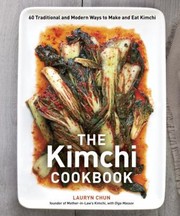
A focused, authoritative deep-dive into kimchi — the world's most celebrated vegetable ferment. Reading it here introduces the learner to paste-based fermentation and flavor-layering as a natural next step after mastering simple brined vegetables.

Covers fermented hot sauces, salsas, and spicy condiments — expanding the learner's palate and technique into paste and mash ferments, which require slightly different handling than whole or shredded vegetables.
Going Deeper: Troubleshooting & Flavor Mastery
IntermediateUnderstand the microbiology well enough to troubleshoot any batch, control flavor variables deliberately, and ferment with consistent, repeatable results.
▸ Study plan for this stage
Pace: 6–8 weeks total: Weeks 1–3 cover "Wild Fermentation" (~20–25 pages/day, reading closely and annotating troubleshooting passages); Weeks 4–8 cover "The Noma Guide to Fermentation" (~15–20 pages/day, slower pace to absorb the science-forward explanations, recipes, and flavor rationale).
- Lacto-fermentation microbiology: the succession of bacterial populations (Leuconostoc → Lactobacillus) and how salt concentration, temperature, and oxygen exclusion drive each phase, as explained throughout Wild Fermentation
- Salt as a control variable: how brine percentage selectively favors LAB over spoilage organisms, and how to adjust it deliberately for different flavor and texture targets (Wild Fermentation)
- Reading a ferment's sensory signals: using smell, taste, texture, and visual cues — not just timers — to judge ferment health and readiness, a core skill Katz emphasizes throughout Wild Fermentation
- Common failure modes and remedies: kahm yeast, soft texture, off-odors, mold on surface vegetables — causes, prevention, and when to discard vs. salvage (Wild Fermentation)
- pH and acidity as flavor architecture: understanding how lactic acid accumulation lowers pH, when fermentation stalls, and how acidity interacts with salt and sweetness to build complexity (The Noma Guide to Fermentation)
- Controlled environment fermentation: Noma's use of temperature chambers, precise salt ratios, and anaerobic vessels to achieve repeatable, restaurant-quality results (The Noma Guide to Fermentation)
- Flavor layering through vegetable selection and timing: how Noma uses fermentation stage (young vs. fully sour), vegetable water content, and post-ferment treatment (rinsing, pressing, aging) to dial in specific flavor profiles
- Cross-contamination and microbial terroir: how ambient microbes, vessel history, and starter cultures influence batch-to-batch variation — and how to harness or minimize that variation (both books)
- According to Wild Fermentation, what role does salt concentration play in shaping which microorganisms dominate a vegetable ferment, and what happens at both extremes — too little and too much salt?
- Katz describes fermentation as a living process guided by observation rather than strict recipes. What specific sensory indicators does he say should guide decisions about when a ferment is ready or has gone wrong?
- What are the most common surface problems (e.g., kahm yeast, pink discoloration, fuzzy mold) described in Wild Fermentation, and how does Katz distinguish between harmless and dangerous occurrences?
- The Noma Guide to Fermentation applies much more precise environmental controls than Katz advocates. What specific variables does Noma control, and what flavor or consistency outcomes does that precision produce that a looser approach might not?
- How does The Noma Guide to Fermentation explain the relationship between fermentation time, acidity level, and the resulting flavor profile of a vegetable ferment — and how can a fermenter use that relationship intentionally?
- Having read both books, how would you reconcile Katz's philosophy of trusting natural, ambient fermentation with Noma's highly controlled methodology? In what situations would you apply each approach?
- Parallel salt-ratio experiment: Ferment three identical jars of shredded cabbage at 1.5%, 2.5%, and 3.5% salt by weight. Taste and document texture, sourness, and aroma at days 5, 10, and 20 to directly observe the flavor-control principles from Wild Fermentation.
- Troubleshooting journal: Intentionally ferment one batch in a slightly too-warm environment (75–80°F / 24–27°C) and one at an ideal cool temperature. Log daily sensory observations (smell, brine clarity, bubble activity, surface appearance) and write a post-mortem diagnosis using Katz's troubleshooting framework.
- Noma-style precision batch: Choose one vegetable ferment from The Noma Guide to Fermentation and execute it exactly as written — precise salt percentage, controlled temperature, specified vessel. Compare the result side-by-side with a 'Katz-style' intuitive version of the same vegetable to internalize the difference in outcomes.
- Flavor-targeting exercise: Before starting a ferment, write a one-paragraph 'flavor brief' describing the target outcome (e.g., 'bright and crunchy with mild acidity for use in salads'). After fermentation, evaluate whether you hit the target and document which variables you would adjust next time.
- pH tracking: Use inexpensive pH strips or a digital pH meter to measure brine acidity at days 3, 7, 14, and 21 of a ferment. Plot the curve and annotate it with your sensory notes to build an intuitive map between measurable acidity and perceived flavor — a bridge between Katz's sensory approach and Noma's scientific one.
- Failure analysis case study: Source or recall a failed or suboptimal batch (mushy texture, off-flavor, excessive kahm yeast). Write a structured root-cause analysis citing specific passages from Wild Fermentation and The Noma Guide to Fermentation to explain what likely went wrong and prescribe a corrected protocol.
Next up: By mastering troubleshooting and deliberate flavor control across these two books, the reader has built the diagnostic confidence and scientific vocabulary needed to move into advanced fermentation territory — exploring less common vegetables, longer aging, and cross-technique applications such as combining fermentation with drying, smoking, or koji — without fear of unpredictable failure.
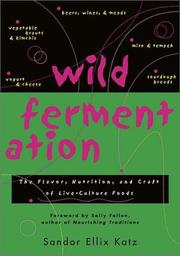
Katz's earlier, more concise book is an excellent intermediate re-read that reinforces core principles with a focus on wild, spontaneous cultures — helping the learner trust the process and diagnose problems with confidence.

Introduces a chef's precision mindset to fermentation: controlled environments, flavor documentation, and creative application. Reading it at this stage pushes the intermediate fermenter to think about fermentation as a craft with intentional, repeatable outcomes.
Mastery: Science, Culture & Creative Freedom
ExpertUnderstand the underlying microbiology and food science deeply enough to design original ferments safely, adapt any recipe, and teach others.
▸ Study plan for this stage
Pace: 6–8 weeks total: Weeks 1–3 cover "Fermentation As Metaphor" (~20–25 pages/day, including reflective pauses); Weeks 4–7 cover "The Science of Cooking" (~25–30 pages/day, focusing on microbiology, chemistry, and preservation chapters); Week 8 is reserved for synthesis, recipe design, and teaching prep
- Fermentation as a living philosophy — Katz's argument that fermentation mirrors broader ecological, social, and political systems, and how this worldview informs creative and ethical fermentation practice
- Microbial ecology and community dynamics — how wild microbial consortia self-organize, compete, and stabilize in a ferment, drawn from Katz's metaphorical and practical framing
- The chemistry of flavor development — Farrimond's breakdown of how acids, esters, alcohols, and Maillard/enzymatic reactions produce taste and aroma in fermented and cooked foods
- pH, salinity, temperature, and oxygen as control levers — understanding from Farrimond's food science how each variable selects for or suppresses specific microbial populations
- Food safety at the advanced level — distinguishing between genuinely dangerous conditions (botulism risk, pathogen survival) and benign surface activity, enabling confident improvisation
- Designing original ferments — synthesizing Katz's creative freedom ethos with Farrimond's scientific parameters to formulate novel vegetable ferments from first principles
- Teaching and communicating fermentation — using Katz's narrative and metaphorical tools alongside Farrimond's evidence-based explanations to make fermentation accessible to others
- Cross-cultural fermentation traditions — Katz's survey of global fermentation practices as a source of creative inspiration and cultural humility
- After reading Katz, how would you articulate the relationship between fermentation and concepts like transformation, interdependence, and resistance — and how does that philosophy change the way you approach recipe design?
- Using Farrimond's food science framework, explain what happens chemically and microbiologically during the first 72 hours of a lacto-fermented vegetable brine, and which variables you would adjust to shift the flavor profile.
- How do you determine a safe minimum salt percentage for a novel vegetable ferment, and what does Farrimond's science say about the interplay between salt concentration, water activity, and pathogen inhibition?
- Drawing on both books, how would you troubleshoot a ferment that has stalled (no visible activity, flat flavor) versus one that has gone wrong (off-odors, slime, discoloration)?
- How would you design a completely original fermented vegetable product — specifying substrate, salt level, temperature, vessel, and expected microbial succession — and justify each decision with science from Farrimond?
- How would you use Katz's metaphorical and storytelling approach alongside Farrimond's diagrams and data to teach a beginner workshop on vegetable fermentation?
- Original ferment design journal: Using Farrimond's variable framework (pH targets, salt %, temp ranges) as a template, design three completely novel vegetable ferments from scratch — unusual substrates, spice combinations, or hybrid techniques. Document your scientific rationale for every parameter choice before you start, then ferment all three and compare predictions to outcomes.
- Microbial succession mapping: While fermenting a standard lacto-ferment (e.g., sauerkraut or kimchi), taste and record pH (use strips or a meter), aroma, texture, and brine clarity every 24 hours for 10 days. Map your observations onto Farrimond's explanation of Leuconostoc → Lactobacillus succession and write a one-page scientific narrative of what happened.
- Controlled variable experiment: Make four identical brine ferments (e.g., sliced cucumber) varying only one parameter across batches — salt % (1%, 2%, 3%, 5%). After 7 days, conduct a blind tasting, measure pH, and write a structured analysis linking your sensory results to Farrimond's food science principles.
- Teach-back session: Prepare and deliver a 20-minute fermentation lesson to at least two people (friends, family, or a community group) using Katz's metaphor-driven storytelling for the 'why' and Farrimond's science for the 'how.' Record yourself or collect written feedback, then revise your lesson plan based on what confused people.
- Cultural adaptation project: Choose a fermentation tradition from a culture discussed by Katz that you have not tried before (e.g., kvass, curtido, gundruk). Research its microbiology using Farrimond's framework, then make an adapted version using locally available vegetables. Write a one-page essay connecting the cultural context Katz describes to the scientific process you executed.
- Safety stress-test: Deliberately create edge-case fermentation conditions (very low salt, higher temperature, anaerobic vs. aerobic exposure) in small test batches and document the results. Use Farrimond's food safety science to predict outcomes beforehand and evaluate whether your predictions matched — building confident, evidence-based intuition about the boundaries of safe improvisation.
Next up: Mastering the science and philosophy of fermentation here equips the reader to move confidently into any specialized or professional domain — whether that is advanced cheesemaking, fermented beverages, or teaching and writing — because they can now evaluate any new fermentation context from first principles rather than relying on recipes.

Katz's philosophical capstone on fermentation culture and creativity — ideal for the advanced practitioner who wants to internalize fermentation as a living practice, not just a set of recipes.

Provides the food-science foundation — pH, osmosis, microbial activity — that explains exactly what is happening in every fermentation vessel. Reading this last ties together all practical experience with rigorous scientific understanding.
Discussion
Keep reading
Paths that share books, cover the same subject, or open a related topic.