Joseph Roth Reading Order: Where to Start
Joseph Roth wrote fast, drank hard, and left a shelf of short novels that are far easier to enter than his reputation as the great elegist of the Habsburg Empire suggests. Start with one of the slim late books to learn the voice, then read The Radetzky March and its sequel as the centre of the work, then go back to the restless interwar novels of exiles and returning soldiers. The journalism comes last, not because it is minor but because it reads best once you can hear the same sentences doing reporting instead of fiction.
Start Small: The Short Books
BeginnerLearn Roth's voice — plain, fast, unbearably tender about failures — in under 200 pages, before committing to the big novel.
▸ Study plan for this stage
Pace: About a week. The Legend of the Holy Drinker runs roughly sixty pages and should be read in one sitting — note that the volume listed here pairs it with the full novel Right and Left, so read only the novella now and leave the rest of the book for later. Hotel Savoy is 172 pages in short chapters an
- The Roth sentence: short, declarative, almost reportorial, and unwilling to editorialise about the disaster it is describing — the emotion sits in the selection of facts, not in the adjectives
- The Roth protagonist is a man who cannot hold on to money, sobriety, rank or a place to live, and is watched with tenderness rather than judgement
- Grace arrives as a series of accidents in The Legend of the Holy Drinker: Andreas is handed money he sincerely intends to return to the church of Sainte Thérèse and never manages to, and the story treats each failure as a small miracle rather than a moral lapse
- Roth wrote the novella in Paris in the last months of his life while drinking himself to death, which is why the autobiography is not something to read into it — it is the surface
- Hotel Savoy builds a whole society vertically: the hotel's floors sort people by wealth, and the plot is the pressure of the people upstairs who cannot pay to leave
- The returning prisoner of war is Roth's founding figure — a man who comes back from the East and finds no country left to come back to, which is the same shape as everything in the later stages
- Roth's chapters are very short, and he begins new sections rather than transitions. Reading two or three chapters at a time is reading him at his intended pace
- In The Legend of the Holy Drinker, how many times is Andreas given money, and what does the pattern of what he does with it say about how Roth understands luck?
- What is the effect of Roth never once telling you what to think about Andreas's drinking?
- In Hotel Savoy, what does the arrangement of the building itself tell you about the town, and where in the novel does that arrangement start to break?
- Gabriel Dan arrives from a prisoner-of-war camp. What does he actually want, and how long does the novel take to admit that he does not know?
- Both books are set among people waiting for something. What are they waiting for, and does either book let it arrive?
- Read the closing paragraph of The Legend of the Holy Drinker twice, once silently and once aloud. Roth's endings are famous for arriving one sentence sooner than you expect, and this is the clearest case.
- Time yourself on Hotel Savoy's first ten chapters. Establishing how fast Roth actually reads matters, because The Radetzky March in the next stage is often abandoned by people who assumed he would be slow.
- Write down, in one line each, what Andreas and Gabriel Dan have lost before their books begin. You are building the list that every later Roth character joins.
- Note the moment in Hotel Savoy where a minor character is dropped and never returns. Roth does this constantly and on purpose, and expecting resolution is the main way readers misjudge him.
Next up: You now know the voice and the pace, so The Radetzky March can be read as a long book by a fast writer rather than as a monument, which is exactly the mistake that stalls most first attempts at it.
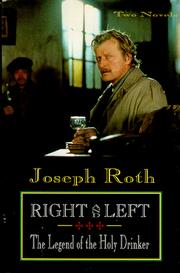
The last thing he finished, and the perfect first thing you read: a Paris drunk is handed money he keeps failing to return. Sixty pages, autobiographical to the bone, and it contains his whole attitude to grace and self-destruction.
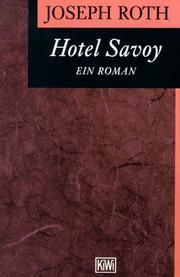
An early short novel about a returning prisoner of war stranded in a hotel full of the stranded. It shows the reportorial Roth before the imperial nostalgia set in, and it is the cheapest way to see how he builds a whole society out of one building.
The Central Work: Trotta and the Empire
IntermediateRead the two novels Roth is actually remembered for, in the order that makes the second one land.
▸ Study plan for this stage
Pace: Four to five weeks. The Radetzky March is the long one — around 350 pages depending on edition, at 25 pages a day it is a fortnight, and it is worth reading its three generations in three deliberate blocks rather than nightly nibbles. Take a few days off, then read The Emperor's Tomb (183 pages) in
- The founding accident: an infantry lieutenant knocks the young Emperor down at Solferino and takes the bullet meant for him. Everything the Trottas become for three generations is inherited from an act that lasted two seconds
- The Hero of Solferino's fury at finding himself falsified in a school textbook is the novel's thesis in miniature — the empire survives by telling stories about itself that its own subjects can no longer recognise
- Roth's structural joke: each Trotta generation is less capable than the last, while the honours accumulate. Ennoblement is the beginning of decline, not a reward for rising
- Franz Joseph appears as a character, and the novel gives him the same treatment as everyone else — an old man performing a role he has outlived. The famous scene where he and a Trotta effectively mirror each other is the emotional centre
- The garrison on the eastern border as the real subject: gambling debts, duels, boredom, borrowed money, and an army whose officers have nothing to do until suddenly they do
- Roth was not nostalgic in a simple way. He was a Galician Jew who understood that the Habsburg empire's incompetent multinational muddle was safer for people like him than any of the nation states that replaced it — that is the argument the elegy is making
- The Emperor's Tomb picks up a cousin branch and carries it from 1913 to March 1938, which is why it feels loose and broken-backed: the history it covers was still happening when Roth wrote it
- The chestnut roaster and the Jewish cabman in The Emperor's Tomb are the empire the first novel only gestured at — the periphery finally given faces
- What exactly does the Hero of Solferino object to in the textbook account, and why does Roth make that, rather than a battle, the origin of the whole book?
- Trace what each of the three Trottas is afraid of. How does the fear change as the family rises?
- Where does the novel first tell you the empire is going to end, and how many hundreds of pages before 1914 does it do it?
- What is Carl Joseph actually good at, and what does the novel do with the fact that none of it is soldiering?
- Reading The Emperor's Tomb immediately after: what does the sequel gain from being messier, and what does it lose?
- The last scene of The Emperor's Tomb is set on a specific night in Vienna in 1938. What does Roth do with that date, and what could he not yet know when he wrote it?
- Keep a one-line note per chapter of The Radetzky March recording only the year. The novel's chronology is smoother than it looks, and seeing the decades laid out reveals how carefully the pacing accelerates toward 1914.
- Read the Solferino chapter and the final chapter back to back once you have finished. They are built as a pair and the second is unreadable as intended without the first fresh in mind.
- Mark every scene involving a debt. Money is the mechanism by which the empire actually operates in this novel, and following it is more revealing than following the politics.
- Before starting The Emperor's Tomb, write down the family tree as you understand it. The cousin relation is easy to lose, and losing it flattens the sequel into an unrelated novel.
- After both books, reread the Hotel Savoy chapters from the last stage. The same border world is there, written seven years earlier by a man who had not yet found the elegiac register.
Next up: With the imperial novels behind you, the interwar books stop looking like minor works and start looking like the same story told from the position of people who were never inside the empire's protection in the first place.
The masterpiece, and the book everything else in Roth points toward: three generations of the Trotta family carried along by the slow collapse of Austria-Hungary. Read it second, once the voice is familiar, so you can hear the irony under the elegy.

The direct sequel, following a cousin branch of the Trottas from 1913 into the wreckage of the 1930s. It is looser and sadder than The Radetzky March and only fully works if you have just read it.
The Vienna and Exile Novels
IntermediateSee the range beyond the Habsburg elegy — Jewish eastern Europe, returning soldiers, the drift of the interwar years.
▸ Study plan for this stage
Pace: Two to three weeks. Job is short — around 200 pages — and reads like a folk tale, so it moves fast, but the second half in America is worth slowing down for. Flight Without End is shorter still and can be done in three or four sittings. Neither book needs a companion, and neither should be read in t
- Job rewrites the biblical story with a shtetl teacher in Russian Galicia, and does it straight — Roth borrows the structure of accumulating affliction rather than parodying it
- Menuchim, the disabled child left behind when the family emigrates, is the engine of the entire book, and the plot's turn depends on whether you find its ending consoling or manipulative. Both readings are defensible and the book knows it
- Roth's Jewish material is the counterweight to the Habsburg material: the empire in these books is not a lost home but the thing you emigrate away from
- Emigration to America as a downward move — Roth is one of very few European novelists of the period who writes New York as a diminishment rather than an escape
- Flight Without End is subtitled a report, and it means it: the narrator claims to be transcribing rather than inventing, which is Roth importing his journalism's authority into fiction
- Franz Tunda's problem is not that he cannot get home but that arriving changes nothing — the novel's famous closing position is a man standing in a city with nowhere in particular to be
- The interwar drift as a subject in its own right: hotels, borrowed identities, Soviet Russia, Vienna, Paris, and a hero who is plausible in each and belongs to none
- In what order do Mendel Singer's afflictions arrive, and at what point does the novel stop pretending to be realist?
- What does the novel gain by leaving Menuchim behind for so long, and how does that decision govern the ending?
- How does Roth write America differently from how he writes Galicia — in vocabulary, in sentence length, in what the narration bothers to describe?
- What is the effect of Flight Without End insisting it is a report? Where does the pose break?
- Tunda has been a soldier, a prisoner, a Red Army officer and a Paris drifter. What does the book suggest is left of a person after all of that?
- Both books end with a man alone. Which ending does Roth appear to believe, and which reads as a wish?
- List the Ten Plagues, then map Job's chapters against them. Where the parallel breaks is where Roth is making his own argument.
- Read the final two pages of Flight Without End first, before starting the book. It is one of the few novels that is better with the ending known, because the whole point is that nothing accumulates toward it.
- Take one page of Job and one page of The Wandering Jews reportage from the next stage and compare the sentences. This is the cleanest demonstration in Roth of a novelist and a reporter sharing a style.
- Write 200 words on Mendel Singer's decision to emigrate as though you were reporting it for a newspaper. Roth's method was exactly this transposition, run in the other direction.
Next up: Having seen Roth write exile as fiction twice, you are in position to read the reportage that supplied it and the late novels where the storytelling voice takes over completely.
The book that made his name: a shtetl teacher's biblical run of misfortune, carried from Galicia to New York. It is the great counterweight to the imperial novels and the clearest statement of his Jewish material.

A soldier makes his way home from the Russian civil war to find nowhere to arrive at. Subtitled a report rather than a novel, it is the hinge between Roth the journalist and Roth the novelist.
The Deeper Cuts and the Journalism
IntermediateFill in the strange late fiction and meet the reporter whose dispatches paid for all of it.
▸ Study plan for this stage
Pace: Three to four weeks, in any order you like — this stage is a shelf rather than a sequence. Confession of a Murderer is a single night's monologue and reads best in one or two long sittings. Rebellion, listed here under its German title Die Rebellion, is 158 pages and is the angriest thing here; give
- Confession of a Murderer is a frame narrative: the Russian informer Golubchik talks across one night in a Paris restaurant and the listeners are as much the subject as the story. Watch how often Roth cuts back to the room
- The talker's voice is Roth's late invention — a first person that runs on, self-justifies, and gives itself away without ever admitting anything
- Rebellion is the earliest thing here and the least consoled: a one-legged veteran with a licence for a barrel organ is destroyed by an administrative decision, and the novel's rage is directed at paperwork rather than at war
- Roth as reporter first: he was one of the highest-paid journalists in Weimar Germany, and the fiction was funded by the dispatches, not the other way round
- The Wandering Jews reports the migration of eastern European Jews into Vienna, Berlin and Paris in the 1920s, and it is openly partisan — Roth is arguing, not surveying, and the western assimilated Jewish bourgeoisie comes off worse than anyone
- Read the reportage for its structural habit: a physical detail, then a generalisation, then a refusal to soften the generalisation. It is the same three-beat move that ends most of his fictional chapters
- Dating matters in this stage. Rebellion is 1924, The Wandering Jews 1927, Confession of a Murderer 1936, and the darkening across twelve years is legible in the prose itself
- What does Golubchik want from his listeners, and does the novel ever confirm whether the confession is true?
- In Confession of a Murderer, what is the function of the restaurant, the hour and the interruptions — that is, why is the frame there at all?
- What is the precise injustice done to the veteran in Rebellion, and why does Roth make it so small?
- Compare the rage in Rebellion with the elegy of The Radetzky March, written eight years later. What happened in between, and what did Roth trade away?
- Who is The Wandering Jews addressed to? Point to the sentences that tell you.
- Having now read the fiction and the reportage, which mode do you think Roth was better at — and what is your evidence, rather than your impression?
- Read one chapter of The Wandering Jews immediately after rereading the opening of Job. The reportage is the raw material and the novel is the transposition; seeing them side by side is the single most useful exercise in this path.
- Mark every time Golubchik contradicts himself. The pattern is the plot.
- Write a paragraph in Roth's reportorial register about a place you know — one detail, one generalisation, no softening. It is harder than it looks and it will show you how much is being withheld.
- Now go back and read Right and Left, the novel bound with the novella you started this path on. With the whole career behind you it stops being an obscure Berlin book and reads as the missing link between the reportage and the exile novels.
- Order the nine books of this path by the year they were written rather than the order you read them, and write one sentence on what the sequence shows. The reading order and the writing order tell different stories, which is the point of the arrangement.
Next up: That is the working shelf — the elegist, the reporter and the ranter turn out to be one writer with one sentence, and you can now reread The Radetzky March hearing the journalism underneath it.

A Russian informer tells his life story across one night in a Paris restaurant. The most propulsive of the late novels and the best demonstration of Roth's late gift for a talker's voice.
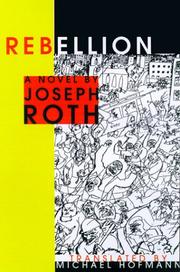
An early, angry short novel about a one-legged veteran destroyed by a bureaucratic injustice. Read it late for contrast: it shows how much rage was there before the nostalgia.

His book-length reportage on eastern Jewish migration into Vienna, Berlin and Paris. It is the non-fiction key to Job and to the whole exile strand, and the best single entry into his journalism.
Discussion
Keep reading
Paths that share books, cover the same subject, or open a related topic.