Jorge Luis Borges Reading Order: Where to Start
This curriculum guides an intermediate reader through Borges's major works in a deliberate sequence: starting with his most celebrated and accessible fiction, then moving into the denser labyrinths of his complete stories, before arriving at his essays and poetry — the intellectual scaffolding that reveals how his mind actually worked. Each stage deepens your fluency with Borgesian themes (infinity, mirrors, time, identity, the library) so that later works feel earned rather than bewildering.
The Essential Fictions — First Contact
IntermediateBuild an intuitive feel for Borges's signature moves: the false footnote, the infinite regress, the metaphysical detective story, and the labyrinth as metaphor. These two collections are the canonical entry point and contain his most anthologized masterpieces.
▸ Study plan for this stage
Pace: 6–8 weeks total: Weeks 1–3 for Ficciones (~15–20 pages/day, reading each story twice — once for pleasure, once analytically); Weeks 4–6 for The Aleph and Other Stories (~15–20 pages/day, same double-pass method); Weeks 7–8 reserved for review, cross-book comparison, and completing exercises. Aim for
- The False Footnote & Fictional Erudition: Borges's technique of inventing authors, books, and citations (e.g., in 'Tlön, Uqbar, Orbis Tertius' and 'Pierre Menard, Author of the Quixote') to blur the line between essay and fiction, scholarship and invention.
- The Labyrinth as Metaphor: Physical labyrinths ('The Garden of Forking Paths'), textual labyrinths (the Library of Babel), and conceptual labyrinths (infinite regress in 'The Circular Ruins') as stand-ins for consciousness, time, and the universe.
- Infinite Regress & Self-Reference: Stories that contain themselves or loop back on their own logic — 'The Garden of Forking Paths' as a novel about a novel about time, the Library of Babel as a universe that is also a library.
- The Metaphysical Detective Story: In stories like 'Death and the Compass,' the detective's rational system of deduction becomes the very trap that destroys him — reason as labyrinth.
- Time as the Central Obsession: Cyclical time, forking time, and the abolition of time appear across both collections — from 'The Garden of Forking Paths' to 'The Aleph,' where all moments in time coexist in a single point in space.
- The Aleph as Symbol: The Aleph (a point in space containing all other points simultaneously) as Borges's master image for the impossible totality of the universe — and the writer's impossible task of representing it.
- Identity, Doubles, and the Unstable Self: Characters who are their own doubles, authors who are their characters, and the dissolution of individual identity in 'The Circular Ruins,' 'The Theologians,' and 'Borges and I.'
- The Library/Archive as Universe: The conceit that all human knowledge, all possible books, or all possible events are contained in a single, navigable (but ultimately incomprehensible) system — the foundational Borgesian cosmology.
- In 'Tlön, Uqbar, Orbis Tertius' (Ficciones), how does Borges use the apparatus of scholarly citation and footnote to destabilize the reader's sense of what is real, and what does this suggest about the relationship between language and reality?
- How does 'The Garden of Forking Paths' function simultaneously as a spy thriller, a meditation on time, and a meta-fictional statement about the novel as a form? What is the significance of Ts'ui Pên's 'chaotic manuscript'?
- In 'The Library of Babel' (Ficciones), what is the theological and existential condition of the librarians, and how does the Library's structure mirror both the universe and the human mind's attempt to impose order on chaos?
- How does 'Death and the Compass' (Ficciones) subvert the classical detective story, and in what sense is Lönnrot's hyper-rational intelligence the cause of his own death?
- In 'The Aleph' (The Aleph and Other Stories), how does Borges use the narrator's unreliability and petty jealousy to frame an otherwise cosmic vision — and why does the story end with the narrator doubting whether he truly saw the Aleph at all?
- Across both Ficciones and The Aleph and Other Stories, how does Borges treat the concept of authorship? Consider 'Pierre Menard, Author of the Quixote,' 'The Circular Ruins,' and 'Borges and I' together — what consistent argument, if any, emerges about who or what an author is?
- The Borgesian Footnote Exercise: Write a 1–2 page fictional essay in Borges's essayistic style, complete with at least three invented citations (fake authors, fake titles, fake page numbers). The subject should be a real concept (e.g., mirrors, labyrinths, chess) treated as though it has a vast secret scholarly literature. This directly trains the 'false erudition' technique central to Ficciones.
- Story Diagram — Mapping the Labyrinth: Choose one story from each book (e.g., 'The Garden of Forking Paths' and 'The Aleph') and draw a structural diagram: map the nested levels of reality, fiction, or time within the story. Identify where the story folds back on itself. Compare the two diagrams — what structural similarities emerge across the collections?
- The Aleph List: After reading 'The Aleph,' Borges's narrator attempts the impossible — to describe everything seen at once in sequential language. Write your own 'Aleph paragraph' of 200–300 words, describing a real place you know well as if you could see all of it, at all times, simultaneously. Reflect on where language fails you.
- Detective Story Inversion: Re-read 'Death and the Compass' and write a one-page analysis answering: 'What would have happened if Lönnrot had ignored the pattern?' Then rewrite the story's final scene (one paragraph) in which Lönnrot refuses to follow the logical trap. This forces close engagement with how Borges engineers the detective's doom.
- Cross-Collection Theme Tracking: Create a two-column chart with Ficciones on one side and The Aleph and Other Stories on the other. Track the following motifs across both books: (1) mirrors/doubles, (2) infinite sets, (3) false or unreliable texts, (4) the collapse of time. Note which stories carry each motif and write two sentences on how Borges's treatment of each motif evolves between the two c
- Comparative Close Reading — The Impossible Book: Both 'The Library of Babel' (Ficciones) and 'The Aleph' (The Aleph and Other Stories) present an object or system that contains everything. Write a 400–500 word comparison: How does each story dramatize the human response to totality? What emotion — awe, despair, madness, jealousy — does each evoke, and why might Borges have chosen differently each
Next up: Mastering Borges's core fictional devices in these two collections gives the reader the conceptual vocabulary — labyrinth, infinite regress, false text, the Aleph — needed to engage productively with his essays, poetry, and later prose, where the same ideas are pursued in non-fictional and lyrical registers.
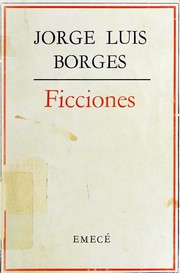
The single most important Borges collection, containing 'The Garden of Forking Paths,' 'The Library of Babel,' and 'Tlön, Uqbar, Orbis Tertius.' Reading it first establishes the core vocabulary — labyrinths, infinite libraries, invented encyclopedias — that every subsequent Borges work assumes you know.
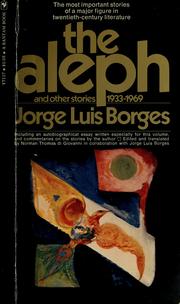
The natural companion to Ficciones, introducing the Aleph (a point containing all points), the Zahir, and the theme of obsessive, impossible knowledge. Reading it second lets you see how Borges extends and varies the ideas from Ficciones rather than merely repeating them.
The Complete Stories — Going Deeper
IntermediateEncounter the full arc of Borges's fiction in one authoritative volume, including early and late stories not in the two famous collections, and begin to see his development as a writer across decades.
▸ Study plan for this stage
Pace: 8–10 weeks, roughly 20–25 pages per day; Collected Fictions runs ~480 pages, so read one named section (e.g., A Universal History of Iniquity, The Garden of Forking Paths, Artifices, etc.) per week, preserving Borges's own internal ordering to track his evolution.
- Chronological development: tracing Borges's voice from the lurid genre pastiches of A Universal History of Iniquity (1935) through the metaphysical peaks of Ficciones and El Aleph to the quieter, more personal late work in The Book of Sand and Shakespeare's Memory
- The frame narrative and unreliable narrator: how Borges embeds stories within footnotes, prefaces, and invented citations to destabilize the boundary between fiction and scholarship
- Labyrinths as structural metaphor: circular plots, infinite regress, and forking timelines as formal enactments of philosophical ideas about time, identity, and free will
- Intertextuality and the library of influences: how Collected Fictions weaves together Norse sagas, Arabian Nights, Dante, Schopenhauer, Kabbalah, and detective fiction into a single coherent aesthetic
- The knife-fighter and the gaucho: the recurring Argentine archetype of violent honor as a counterweight to Borges's cosmopolitan erudition
- Compression and the short-short story: how Borges achieves novelistic density in two to ten pages through ellipsis, implication, and the strategic withholding of information
- Self-referentiality and metafiction: stories like 'Borges and I' and 'The Garden of Forking Paths' that comment on the act of writing and the split between author and persona
- Late-period shifts: the more confessional, elegiac tone of The Book of Sand and Shakespeare's Memory compared to the baroque intellectual games of the middle collections
- How does A Universal History of Iniquity differ in tone and method from the stories in Ficciones, and what does that difference reveal about Borges's artistic maturation?
- Choose three stories from different decades in Collected Fictions and trace how Borges's use of the unreliable or invented narrator evolves across them.
- What philosophical problem is at the heart of 'The Garden of Forking Paths,' and how does the spy-thriller plot serve as its vehicle rather than its subject?
- How does Borges use the concept of the infinite — infinite libraries, infinite lotteries, infinite books — to interrogate human meaning-making, and does his attitude toward the infinite change in his later stories?
- In what ways do the Argentine stories (those featuring knife-fighters, caudillos, and the pampas) form a thematic counterpoint to the more cosmopolitan, Europe-facing stories, and why might Borges have kept both strands alive throughout his career?
- What distinguishes the stories collected for the first time in Collected Fictions (i.e., not previously available in the famous standalone collections) and what do they add to your understanding of Borges as a complete literary figure?
- Chronological mapping: After finishing each named section, write a one-paragraph 'snapshot' of Borges's style at that moment — note his dominant themes, narrative tricks, and tone. At the end of the volume, arrange all snapshots into a single timeline essay tracing his development.
- Close-reading drill: Select one story of under five pages (e.g., 'The Lottery in Babylon,' 'Borges and I,' or 'The Disk') and write a 500-word analysis focused exclusively on sentence-level craft — how does syntax, diction, and paragraph rhythm create the story's uncanny effect?
- Source-hunting exercise: Pick any story that cites a real or invented source (e.g., 'Tlön, Uqbar, Orbis Tertius,' 'Pierre Menard'). Identify which references are real and which are fabricated, then write a short reflection on how the blending of real and fake scholarship shapes the reader's experience.
- Structural diagram: Choose a story with a nested or labyrinthine plot structure and draw a literal diagram of its narrative layers (who is telling what to whom, and at what temporal remove). Then write a paragraph explaining what the structure itself 'argues.'
- Comparative reading journal: After completing the volume, select one early story and one late story that share a theme (e.g., doubles, mirrors, time). Write a 600-word comparison arguing whether Borges resolved, complicated, or abandoned the theme over the course of his career.
- Imitation exercise: Write a one-to-two page story in the Borgesian mode — include a fictional footnote or invented scholarly citation, a paradox at the plot's center, and a final sentence that reframes everything that came before. Then annotate your own story, identifying which specific techniques you borrowed from Collected Fictions.
Next up: Having now read Borges's complete fiction in authoritative sequence, the reader is equipped to move into critical and theoretical engagement — exploring how scholars, philosophers, and fellow writers have interpreted and responded to the ideas encountered firsthand in Collected Fictions.

Andrew Hurley's complete translation gathers every story Borges published, including the early Universal History of Iniquity and the late Brodie's Report and The Book of Sand. Having read Ficciones and The Aleph, you can now place every story in context and appreciate how his style evolved.
The Essays — The Mind Behind the Fictions
IntermediateUnderstand the philosophical and literary obsessions that fuel the fiction: idealism, time, the nature of translation, the detective story, and the idea of the author. Borges the essayist is as dazzling as Borges the fiction writer.
▸ Study plan for this stage
Pace: 6–7 weeks total: Weeks 1–3 cover Labyrinths (focus on the "Essays and Parables" and "Discussions" sections, ~20–25 pages/day, pausing to annotate); Weeks 4–6 cover Other Inquisitions 1937–52 (~15–18 pages/day, slower pace to allow philosophical unpacking); Week 7 is a synthesis week — no new reading
- Philosophical Idealism: Borges's sustained engagement with Berkeley, Schopenhauer, and the idea that the universe may be a mental construct — traceable across both books as a recurring obsession rather than a settled belief.
- The Nature of Time: Borges treats time not as background but as subject — cyclical time, the unreality of the past and future, and the eternal present, explored in essays like 'A New Refutation of Time' in Other Inquisitions.
- The Author as Fiction: Borges destabilizes the idea of a singular, originating author — the writer as conduit, as mask, as one node in an infinite chain of influences, most sharply argued in 'Kafka and His Precursors' in Other Inquisitions.
- Translation as Creation: For Borges, translation is not secondary to an original but a creative act in its own right, even an improvement — a radical idea examined in 'The Translators of The Thousand and One Nights' in Other Inquisitions.
- The Detective Story as Intellectual Form: In Labyrinths, Borges champions the detective story as a vehicle for pure reason and order, contrasting it with the psychological novel — a key to understanding why his own fictions are so architecturally precise.
- The Infinite Library / Encyclopedia as Metaphor: The essay-parables in Labyrinths (e.g., 'The Library of Babel' read alongside its essayistic siblings) show how Borges uses the library, the encyclopedia, and the map as figures for the limits and excesses of human knowledge.
- Influence as Retroactive Creation: 'Kafka and His Precursors' introduces the idea that a great writer does not follow predecessors — they create them. This inverts literary history and is one of Borges's most influential critical ideas.
- The Essay-Fiction Hybrid: Both books demonstrate Borges's signature move of writing essays that behave like fictions (citing invented sources, reaching vertiginous conclusions) — recognizing this hybrid form is essential to reading him correctly.
- After reading both books, how does Borges use philosophical idealism — particularly the ideas of Berkeley and Schopenhauer — not as conclusions but as literary raw material? Cite at least two specific essays.
- What is Borges's argument in 'A New Refutation of Time,' and why does he call it 'a new' refutation? What is the irony embedded in the essay's own title and structure?
- How does 'Kafka and His Precursors' (Other Inquisitions) challenge conventional notions of literary influence and chronology? What does this imply about how we should read Borges's own precursors?
- In what ways does Borges elevate the detective story as a literary and philosophical form in Labyrinths? How does this connect to the geometric, puzzle-like quality of his own fictions?
- How does Borges's view of translation — as argued in Other Inquisitions — differ from the standard view of translation as faithful reproduction? What are the implications for the concept of an 'original' text?
- Across both books, what consistent image or metaphor does Borges return to when confronting the problem of infinite knowledge or infinite text? How does the essay form itself enact this problem?
- Annotation Map: As you read, keep a running two-column log — left column: the philosophical or literary claim Borges makes; right column: the specific thinker, text, or tradition he is responding to. By the end of Other Inquisitions, you should have a map of Borges's intellectual universe.
- The Precursor Game: After reading 'Kafka and His Precursors,' choose any author you know well and write a one-page Borgesian essay arguing that this author 'created' two or three of their apparent predecessors. Imitate Borges's tone of calm, paradoxical assertion.
- Time Essay Close-Read: Read 'A New Refutation of Time' (Other Inquisitions) twice — once straight through, once backwards paragraph by paragraph. Write a half-page note on what the structure of the essay itself argues about time, independent of its explicit claims.
- Translation Experiment: Take a single short poem or paragraph you know in another language (or use a bilingual edition). Write two different English 'translations' — one aiming for fidelity, one aiming for what Borges might call improvement. Reflect on which feels more like authorship.
- Detective Story Analysis: Re-read the essay on the detective story in Labyrinths, then read or re-read one classic detective story (Poe's 'The Purloined Letter' is ideal, as Borges references it). Write a paragraph connecting Borges's critical argument to a specific feature of the story's structure.
- Synthesis Essay (300–500 words): After completing both books, write a short essay answering: 'Is Borges an essayist who writes fiction, or a fiction writer who writes essays?' Use evidence from both Labyrinths and Other Inquisitions, and resist the urge to simply say 'both' — force yourself to take a position.
Next up: By internalizing Borges's philosophical and critical obsessions through the essays, the reader is now equipped to return to the fictions with a second, deeper layer of vision — ready to trace exactly how idealism, infinite regress, authorial self-erasure, and the puzzle-form are not themes imposed on the stories but are structurally built into every sentence.

This landmark New Directions anthology pairs key fictions with a generous selection of 'Parables and Essays,' making it the ideal bridge between the story collections and pure essay reading. It includes 'A New Refutation of Time' and 'The Argentine Writer and Tradition,' essential for understanding his self-positioning.
Borges's finest standalone essay collection, ranging from Pascal's sphere to Kafka's precursors to the nature of time in Zeno. Reading it after Labyrinths means you already have the fictional context for the ideas he now argues directly and rigorously.
The Poetry — The Original Borges
ExpertDiscover that Borges considered himself primarily a poet, and that his poems crystallize the same obsessions — Buenos Aires, mirrors, tigers, time, death — in their most compressed and personal form.
▸ Study plan for this stage
Pace: 4–5 weeks, ~8–12 poems per session (3–4 sessions/week), pausing to re-read each poem at least twice — once for surface meaning, once for formal and thematic depth. Because Borges's poems are dense and short, slow immersion matters far more than page count; aim for roughly 15–20 pages of verse per si
- Borges as a poet first: understanding that he began and ended his career in verse, and that his prose fictions are essentially poems in disguise — compressed, imagistic, and obsessively recursive
- Buenos Aires as mythological space: the early ultraísta poems and the 'Fervor de Buenos Aires' cycle treat the city's streets, patios, and suburbs as sacred, timeless geography rather than mere setting
- The mirror as ontological threat: mirrors in the poems are not decorative symbols but sites of genuine metaphysical dread — they multiply identity, mock selfhood, and suggest that the self is a fiction
- The tiger as the unattainable Real: the tiger poems ('The Other Tiger', 'Dreamtigers') dramatize the gap between language and lived experience — every tiger named in a poem is already a lesser, verbal substitute for the actual beast
- Time, circularity, and the eternal return: Borges's poems collapse past and present, treating historical figures (Heraclitus, Spinoza, his own ancestors) as contemporaries, and personal death as a philosophical rather than merely biographical event
- Compression and the lyric essay: Borges's mature sonnets fuse argumentation with image — they are simultaneously philosophical propositions and emotional confessions, a hybrid form unique to his voice
- The double and self-elegy: many late poems are written to or about a younger self, staging a dialogue between the blind old poet and the sighted young man, making autobiography into metaphysics
- Translation as interpretation: because Selected Poems presents facing-page Spanish and English, readers can directly witness how Borges's sonic and syntactic choices (assonance, Latinized diction, hendecasyllables) carry meaning that English can only approximate
- How do the early Buenos Aires poems in Selected Poems differ in tone and technique from the later metaphysical sonnets, and what continuities of obsession run through both phases?
- In what specific ways do the mirror poems and the tiger poems enact the same underlying anxiety — and how does the poetic form (sonnet, free verse, prose poem) shape the argument each makes?
- Borges frequently addresses dead philosophers, ancestors, and literary predecessors directly in his poems. What does this rhetorical choice reveal about his conception of time and literary tradition?
- Using the facing-page translations in Selected Poems, identify at least one moment where the English translation gains something and one where it loses something irreplaceable from the Spanish — what does this exercise teach you about Borges's poetic priorities?
- How does Borges use the first person in his poems, and in what sense is the 'I' of his poetry as unstable or fictional as the narrators of his prose?
- Selected Poems spans decades of Borges's career. Trace the evolution of his attitude toward his own death across at least three poems from different periods — does he move toward acceptance, irony, or something stranger?
- Close-reading journal: After each reading session, choose one poem and write a 200-word prose paraphrase of its argument, then a second 200-word entry on everything the paraphrase destroys — the sounds, the line breaks, the ambiguities. This two-part exercise trains you to feel the irreducibility of the verse.
- Parallel-text annotation: Using the facing Spanish and English pages, mark every word or phrase where the translation makes a visible interpretive choice. At the end of the book, compile your ten most interesting examples and write a short note on what each reveals about Borges's poetic DNA.
- Obsession map: Create a visual or written map connecting the recurring symbols (mirror, tiger, labyrinth, knife, Buenos Aires, blindness, ancestors) across at least ten different poems. Draw lines where the same symbol appears in a new context and note how its meaning shifts or deepens.
- Imitation sonnet: Write a 14-line poem in Borges's mature style — open with a philosophical proposition, develop it through a concrete image (an animal, a city corner, a historical figure), and close with a line that turns the argument back on the speaker. Compare your draft to 'The Other Tiger' or 'Spinoza' and diagnose the differences.
- Memorize and recite: Select one short Borges poem from Selected Poems (in English, Spanish, or both) and memorize it fully. Recite it aloud daily for one week. Keep a brief log of what new details you notice each day — memorization is the most intimate form of close reading.
- Thematic essay: Write a 600–800 word essay arguing for or against the claim that 'Borges's poems are not illustrations of his prose ideas but the original, purer form of them.' Use at least four specific poems from Selected Poems as evidence, quoting directly from the text.
Next up: Mastering Borges's poetry reveals the emotional and philosophical bedrock beneath all his work, so the reader is now equipped to return to his prose — essays, fictions, or late interviews — and recognize them not as separate genres but as expansions of the same compressed lyric impulse first encountered in verse.
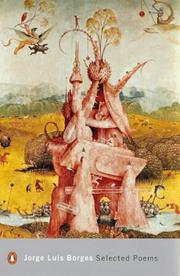
Edited by Alexander Coleman with multiple translators, this bilingual Penguin edition is the standard English poetry collection, spanning his entire career from the early ultraísta experiments to the late, lucid sonnets. The facing-page Spanish lets you hear the original music even with limited Spanish.
Critical Context — Borges in Conversation
ExpertSituate Borges within world literature and understand his own reading life — the influences he absorbed and the writers he shaped — through his own critical voice and a landmark scholarly study.
▸ Study plan for this stage
Pace: 6–8 weeks, ~25–30 pages/day — Williamson's biography is dense with historical and literary context, so a measured pace allows for reflection, note-taking, and cross-referencing with Borges's own fiction and essays read in earlier stages.
- The biographical roots of Borges's literary imagination — how personal trauma, family mythology, and Argentine identity shaped his themes of labyrinths, mirrors, doubles, and time
- Borges's reading life as creative raw material — his voracious, idiosyncratic absorption of Schopenhauer, Stevenson, Chesterton, De Quincey, Kipling, and the Arabian Nights, and how these became building blocks rather than mere influences
- The tension between Borges's public literary persona and his private psychological struggles — his fraught relationships with his mother, his failed romances, and his ambivalent masculinity as decoded by Williamson
- Borges and Argentine political history — his complex, often contradictory stances on Perónism, nationalism, and authoritarianism, and how politics both constrained and provoked his writing
- The construction of 'Borges' as a literary brand — how the author self-consciously crafted an identity through essays, prologues, and interviews, blurring the line between the man and the myth
- Borges's place in the Western canon and world literature — Williamson's argument for how Borges simultaneously inherited and subverted the European tradition while remaining distinctly Latin American
- The evolution of Borges's style across career phases — from the ultraísta poetry of his youth through the Ficciones period to his late, more personal poetry and the reasons Williamson gives for each shift
- Scholarly biography as a critical lens — understanding how Williamson uses psychobiographical and historicist methods, and evaluating the strengths and limits of reading literature through a writer's life
- According to Williamson, how did Borges's father's failed literary ambitions and the family's mythology of heroic ancestors create the psychological pressures that drove Borges toward a literature of anxiety, labyrinths, and unreliable identity?
- What specific writers and texts does Williamson identify as the most formative influences on Borges, and can you trace a direct line from at least two of those influences into a specific Borges story or essay you have already read?
- How does Williamson characterize the relationship between Borges's political positions — particularly regarding Perón and later the military dictatorship — and the reception and interpretation of his literary work both inside and outside Argentina?
- What is Williamson's central psychobiographical argument, and do you find it persuasive as a framework for reading Borges's fiction? Where does the evidence feel strongest, and where does it feel like overreach?
- How does 'Borges, a Life' position Borges within world literature — what claims does Williamson make about his global significance, and what does the biography reveal about the mechanisms (translation, international prizes, champion critics) by which that significance was constructed?
- How did Borges's own critical and editorial work — his anthologies, prologues, and reviews — function as a kind of parallel creative output, and what does Williamson's account reveal about the relationship between Borges the critic and Borges the fiction writer?
- Influence mapping: Create a visual diagram (hand-drawn or digital) placing Borges at the center and connecting him to every writer Williamson identifies as a key influence. For each connection, write one sentence linking that writer to a specific Borges text you have already read — forcing the biography to speak directly to the fiction.
- Psychobiographical stress-test: Choose one Borges story from an earlier stage of your curriculum. Write a one-page reading of it using Williamson's psychobiographical framework, then write a one-paragraph rebuttal arguing what that framework misses or distorts. This sharpens critical distance from any single scholarly method.
- Political timeline: As you read, build a chronological timeline of major Argentine political events Williamson discusses alongside the Borges works composed during each period. At the end, write three observations about patterns you notice between historical turbulence and shifts in Borges's style or subject matter.
- Persona vs. person journal: Keep a running two-column log as you read — on the left, record moments where Williamson describes the public 'Borges' persona; on the right, record the private contradictions the biography reveals. At the end of the book, write a paragraph on what this gap means for how you read his work.
- Comparative biography note: After finishing Williamson, write a one-page reflection on what a biography can and cannot tell you about a writer's work. Identify two interpretive claims Williamson makes that you would want to verify or challenge by returning directly to Borges's own texts.
- Capstone synthesis essay: Write a 600–800 word essay answering the question: 'Is Borges best understood as a European writer who happened to be born in Buenos Aires, a distinctly Latin American writer, or something that makes that distinction itself obsolete?' Use only evidence from Williamson's biography and the Borges texts you have read throughout the curriculum.
Next up: By grounding Borges's imagination in the full arc of his life, influences, and historical moment, this stage equips the reader to move from understanding Borges to evaluating and debating him — the natural foundation for any subsequent stage focused on advanced critical theory, comparative literature, or Borges's lasting legacy on postmodern and world fiction.
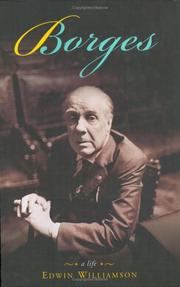
The most thorough scholarly biography in English, grounding the metaphysical games in the concrete facts of Borges's Buenos Aires life, his loves, his politics, and his blindness. Reading it last lets biography illuminate the work rather than reduce it.
Discussion
Keep reading
Paths that share books, cover the same subject, or open a related topic.