Start with Gabriela, clove and cinnamon. Amado wrote two distinct kinds of novel — angry proletarian books about the cacao plantations and the Bahian docks in the 1930s, and warm, sensual, comic novels about Ilhéus and Salvador from the late 1950s onward — and almost everyone should begin with the second kind. This is the best of them.
The obvious alternative is to start chronologically with the 1930s work, and it is a mistake for most readers: those books are bleak, programmatic and much harder going, and their real power comes from reading them after you have been charmed. The violent land in particular is the prehistory of the town you meet in Gabriela, clove and cinnamon, and it retroactively darkens it — the money paying for the bar, the newspapers and the harbour campaign was made exactly that way, one generation earlier.
Two practical notes before you buy. English editions of Amado vary considerably: the mid-century translations are the ones most widely available, some are abridged or soften the sexual content, and newer translations of the best-known novels exist, so check the copyright page of whatever you pick up. And Portuguese and Yoruba-derived words are kept in most editions — foods, Candomblé terms, the coronel as a specific rank of rural power-holder. Do not look each one up as it arrives; they repeat and settle by the third chapter.
Start here
Gabriela, clove and cinnamon is not difficult but it is populated, with a whole town of colonels, exporters, bar regulars and priests arriving in the first fifty pages. It runs two stories at once — a romance between a Syrian bar owner and a migrant cook from the drought-stricken interior, and a municipal power struggle over dredging the harbour — and Amado thinks they are the same story, so do not skim the political one. Keep a list of the colonels and what each controls.
The core: the Bahia comedies
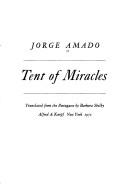
Dona Flor and Her Two Husbands, Tent of Miracles, Tereza Batista: home from the wars. Eight weeks for about 1,480 pages. Dona Flor and Her Two Husbands is the funniest thing he wrote and a straight-faced moral proposition: respectability and appetite offered as a choice, and a novel that declines to choose. Tent of Miracles makes explicit what the comedies carry implicitly, taking aim at the scientific racism of early-twentieth-century Brazilian intellectuals; its counter-argument, racial mixture as the country's defining strength, sits close to Brazil's national myth of racial democracy, and critics have argued that his festive Bahia flatters rather than confronts the country's racism. Read it knowing the argument exists. Tereza Batista: home from the wars is the darkest of the three, structured as a folk ballad, and the violence done to Tereza in its opening section is severe and explicit.
The deeper cut: the early social novels
Jubiabá, Sea of death, Captains of the sands, The violent land. Six or seven weeks, thirty pages a sitting, and keep this order with The violent land last. This is Amado in his twenties and thirties, a committed Communist writing under and against the Vargas regime, with the politics explicit and the comedy almost entirely absent. Sea of death is the most lyrical thing here and closer to a folk song than a novel; read it in two sittings, because its incantatory effect collapses if spread over a fortnight. Captains of the sands follows a gang of homeless children in Salvador and refuses to sentimentalise any of them; it was publicly burned in Brazil in 1937 under the Vargas dictatorship. The violent land is the best of the four: the cacao wars, the gunmen, and the lawyers who legalised the result afterwards.
The completist tail
Home is the sailor is genuinely slight and functions as decompression after the 1930s novels. The war of the saints is late Amado at his most playful — a wooden statue of a saint steps off a boat in Salvador — and the joke rests on Bahian religious syncretism, so it needs the earlier Candomblé novels to land. Showdown closes the path because it returns to the cacao interior four decades after The violent land and writes the same country warmer: the young writer wrote the violence, the old one writes what people built in spite of it.
Where to stop
After the Bahia comedies you have the Amado most readers mean. Go into the 1930s books only if you want the argument underneath the charm, and if you do, finish with Showdown. Discover has more ordered routes.
Follow the full ordered path here: Jorge Amado Reading Order: Where to Start.
Ready to learn something deeply?
Build a reading path — free