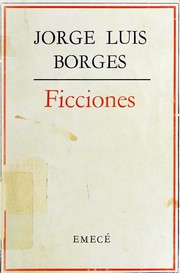
Start with Ficciones. It is the 1944 collection that contains "The Library of Babel", "Tlön, Uqbar, Orbis Tertius", "The Garden of Forking Paths" and "Pierre Menard, Author of the Quixote" — roughly seven of the ten most influential short stories written in the twentieth century, in about two hundred pages. There is no better concentration of Borges anywhere and no reason to approach him through anything else.
Read it slowly and out of sequence if you like. These are not stories in the ordinary sense; several are reviews of books that do not exist, or encyclopedia entries for invented countries. Two or three an evening is the right dose. Read straight through and the tricks start to look like mannerisms, which is a failure of pacing rather than of the writer.
Then the second collection
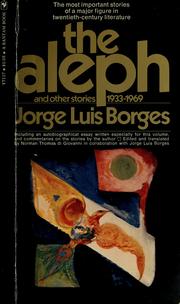
The Aleph and other stories, 1933-1969 is the natural follow-up: the title story about a point in space containing all other points, plus "The Immortal", "Emma Zunz" and "The Writing of the God". It is slightly warmer and more human than Ficciones and contains his best writing about Argentina and about knife fighters, which is a side of him that the metaphysical reputation obscures.
The edition question, which is the real controversy
Here the choice genuinely matters. Labyrinths is the 1962 anthology that introduced Borges to English readers, translated by a group including Donald Yates and James Irby, and it mixes stories from both collections with essays and parables. Its versions are lyrical, occasionally loose, and are the ones quoted in half the criticism written since.
Collected Fictions is Andrew Hurley's 1998 single-volume translation of all the story collections, produced for the estate after it withdrew rights from the earlier translators. It is complete, consistent, scholarly, and the only way to get everything in one place.
The argument between them is real and unresolved. Hurley's defenders point to accuracy and to the value of one voice across the whole body of work; his critics — including some prominent ones — argue that the earlier translations, though less faithful, caught a music his do not. There is no neutral answer. Practical recommendation: read Ficciones and The Aleph and other stories, 1933-1969 in whichever translation you find, then buy Collected Fictions for completeness and Labyrinths if you want to hear the alternative. Comparing two versions of "Funes the Memorious" is itself an extremely Borgesian afternoon.
The essays and the poems
Other Inquisitions 1937-52 collects the essays, and the boundary between these and the stories is deliberately porous — "Kafka and His Precursors" is a critical essay that is also an argument about how time works. Read it after the fiction, when the moves are familiar.
Selected Poems is the part almost everyone skips. Borges considered himself a poet first and went blind in his fifties, after which he composed largely in metre and in his head because it could be held in memory. The late sonnets about blindness, mirrors, tigers and his own name are quieter and more moving than anything in the stories. Read them last, and read them slowly.
The biography
Borges, a life by Edwin Williamson is the major English-language biography, and it argues that the work is driven by frustrated love affairs and by Argentine political history. That thesis was strongly contested on publication — several Borges scholars considered the psychological readings overdetermined — so treat it as one interpretation rather than a settled account. Read it after the work, if at all.
Where to stop
Honestly: after Ficciones and The Aleph and other stories, 1933-1969 you have read the Borges that matters, and there is no shame in stopping. Everything beyond is enrichment. More literary reading orders are on Discover.
Follow the full ordered path here: Jorge Luis Borges Reading Order: Where to Start.