Jazz Guitar: Best Books on Chords, Comping and Improvisation
This curriculum takes an intermediate guitarist from solid chord knowledge into the heart of jazz guitar — building chord voicings and comping first, then adding melodic tools (scales and arpeggios), and finally synthesizing everything into real improvisation over jazz standards. Each stage assumes the previous one's vocabulary, so the path rewards working through it in order.
Jazz Chord Vocabulary & Comping
IntermediateMaster essential jazz chord voicings (shell voicings, drop-2, drop-3, rootless chords) and develop functional comping skills behind a melody or soloist.
▸ Study plan for this stage
Pace: 8–10 weeks, ~20–30 pages/day (alternating focused reading with applied practice on guitar)
- Shell voicings (root, third, seventh) as the foundation for all jazz chord comping
- Drop-2 and drop-3 voicings: how to construct them, when to use each, and their voice-leading advantages
- Rootless chord voicings and their role in modern jazz comping (emphasizing extensions and alterations)
- Chord extensions (9ths, 11ths, 13ths) and alterations (b9, #9, b5, #5) and how they function in jazz harmony
- Voice leading principles: smooth transitions between chords, avoiding parallel fifths, maintaining voice independence
- Functional comping: responding to melody, soloist phrasing, and harmonic rhythm in real time
- Chord substitutions and reharmonization techniques for creating sophistication and harmonic interest
- Practical application: comping behind standards, navigating chord changes, and adapting voicings to different jazz styles
- What are shell voicings, and why are they the fundamental building block for jazz comping?
- How do you construct a drop-2 voicing from a shell voicing, and what voice-leading advantage does it provide?
- What is the difference between drop-2 and drop-3 voicings, and when would you choose one over the other in a comping context?
- How do rootless voicings work, and what is their relationship to the underlying chord quality and extensions?
- What are the key principles of smooth voice leading in jazz comping, and how do you apply them across a chord progression?
- How do you comp functionally behind a soloist or melody—what are you listening for, and how do you respond in real time?
- Work through Ted Greene's shell voicing exercises systematically, playing them in all 12 keys and in various inversions until they become automatic
- Build drop-2 voicings from shell voicings on a single chord (e.g., Cmaj7), then practice smooth voice-leading transitions between drop-2 voicings across a ii-V-I progression
- Practice drop-3 voicings on the same progressions, comparing the sound and feel to drop-2, and identify which sounds better in different musical contexts
- Learn 3–4 jazz standards (e.g., 'Autumn Leaves,' 'All the Things You Are,' 'Fly Me to the Moon') and comp them using only shell voicings, then drop-2, then drop-3, noting how each approach changes the texture
- Create a personal voicing library: transcribe 5–10 comping examples from jazz recordings (using Scott Henderson's framework to analyze them), then recreate those voicings on your guitar
- Practice rootless voicing exercises from Scott Henderson's system, focusing on how to voice chords without the root and how to imply chord quality through extensions alone
- Record yourself comping behind a backing track or play-along recording, focusing on responding to the soloist's phrasing and dynamics rather than just playing predetermined voicings
- Reharmonize a simple melody (e.g., 'Happy Birthday') using different voicing types and substitutions, experimenting with how far you can push harmonic sophistication while keeping the melody recognizable
Next up: This stage equips you with the harmonic vocabulary and comping muscle memory needed to move into advanced improvisation and soloing, where you'll use these same voicing concepts to construct melodic lines and navigate complex harmonic landscapes.
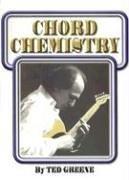
The definitive reference for jazz guitar chord voicings — Greene systematically covers every chord type, inversion, and substitution. Starting here gives you the raw harmonic vocabulary everything else builds on.

A concise, practical companion that organizes voicings into usable comping patterns and shows how to move through chord changes smoothly — bridging the gap between knowing chords and actually playing them in context.
Harmony, Voice Leading & the Fretboard
IntermediateUnderstand jazz harmony deeply — ii-V-I, chord substitutions, and voice leading — and see the entire fretboard as an interconnected harmonic map.
▸ Study plan for this stage
Pace: 8–10 weeks, ~40–50 pages/week with daily practice integration. Allocate 3–4 weeks to "The Advancing Guitarist" (focused study of harmony and fretboard mapping), then 4–6 weeks to "Joe Pass - Solo Jazz Guitar" (applied voice leading and harmonic realization).
- Chord-scale relationships and how to map jazz harmony across the entire fretboard systematically
- The ii-V-I progression as the foundational harmonic movement in jazz and its countless reharmonization possibilities
- Voice leading principles: smooth voice movement, avoiding parallel fifths/octaves, and maintaining harmonic clarity in comping and soloing
- Chord substitutions (tritone, relative minor, secondary dominants) and how they expand harmonic vocabulary without breaking the underlying progression
- The fretboard as a harmonic landscape: recognizing shapes, intervals, and chord tones across positions rather than memorizing isolated licks
- Solo guitar voice leading: voicing chords with melody, managing bass notes, and creating coherent single-line arrangements
- Connecting theory to sound: internalizing how voice leading choices affect the emotional and harmonic quality of a phrase
- How do you construct a ii-V-I progression in any key, and what are at least three ways to reharmonize or substitute chords within it?
- Explain the relationship between a chord and its available scales (chord-scale relationship). How does this inform your note choices when soloing or voicing?
- What are the voice leading principles Goodrick emphasizes, and how do they differ from classical voice leading? Why does smooth voice leading matter in jazz?
- How would you voice a jazz chord (e.g., Cmaj7) in three different positions on the guitar, and what determines which voicing to choose in a given context?
- In a Joe Pass solo arrangement, how does he handle the relationship between melody, harmony, and bass line? What voice leading techniques does he use to create coherence?
- What is a tritone substitution, and how does it function harmonically? Show how it applies to a ii-V-I.
- Map the ii-V-I progression in five different keys across the fretboard using Goodrick's systematic approach. Write out the chord tones for each chord in at least two voicings per key.
- Transcribe and analyze one complete Joe Pass solo arrangement from the book, marking voice leading decisions, chord substitutions, and how the melody relates to the underlying harmony.
- Practice voice leading a simple melody (e.g., a jazz standard head) by choosing smooth, connected chord voicings. Record yourself and listen for harmonic clarity and voice independence.
- Create your own reharmonization of a ii-V-I using at least two substitutions (e.g., tritone sub, secondary dominant). Play it and compare the sound to the original.
- Drill chord-scale relationships: for each of five jazz chords (maj7, min7, dom7, min7b5, alt), play the corresponding scale in three positions on the fretboard, then improvise a short phrase using chord tones as anchors.
- Arrange a short jazz standard (8–16 bars) as a solo guitar piece in the style of Joe Pass, focusing on integrating melody, harmony, and bass line with smooth voice leading.
Next up: This stage equips you with a deep harmonic foundation and the ability to hear and execute voice leading across the fretboard, preparing you to apply these concepts to improvisation, reharmonization, and stylistic interpretation in the next stage.

A landmark book that rewires how you think about the guitar neck, voice leading, and musical relationships. It builds the conceptual framework needed before tackling complex harmonic substitution.

Pass demonstrates how chord melody and comping flow naturally from strong voice leading. Reading this after Goodrick anchors abstract concepts in the style of one of jazz guitar's greatest practitioners.
Scales, Arpeggios & Melodic Language
IntermediateInternalize the scales and arpeggios used in jazz (Dorian, Mixolydian, melodic minor modes, bebop scales) and connect them to chord changes across the neck.
▸ Study plan for this stage
Pace: 6–8 weeks, ~40–50 pages/week with daily practice integration. Fretboard Logic III (~2–3 weeks, emphasizing application sections); Jazz Guitar Single Note Soloing Vol. 1 (~4–5 weeks, with concurrent fretboard mapping).
- Fretboard visualization: how Dorian, Mixolydian, and melodic minor modes map across the neck in multiple positions and keys
- Scale-to-chord relationships: matching specific modes and bebop scales to dominant, minor, and major chord qualities in real progressions
- Arpeggio navigation: triad and seventh-chord arpeggios as melodic anchors within scalar passages
- Bebop scale construction and application: adding passing tones to create swing feel and avoid landing on chord extensions
- Single-note soloing mechanics: phrasing, targeting chord tones, and using scales as connective tissue between guide tones
- Interval awareness: recognizing and practicing common intervals (3rds, 4ths, 5ths) within scales to build muscle memory across positions
- How do you identify which mode (Dorian, Mixolydian, melodic minor) fits a given chord in a ii–V–I progression, and how does it map on the fretboard?
- What is the relationship between a chord's root, third, fifth, and seventh, and how do you navigate these tones using arpeggios within a scalar context?
- How do bebop scales differ from their parent modes, and when would you use a bebop dominant scale over a straight Mixolydian scale?
- Given a chord change, how do you construct a single-note solo line that emphasizes chord tones while using scales to connect them?
- What are the three to four most efficient fingering patterns for playing Dorian mode across the neck, and how do you transpose them to different keys?
- How do you hear and execute the difference between playing 'inside' (chord tones) versus 'outside' (chromatic/scalar approach) on a given chord?
- Fretboard mapping drills: Play Dorian, Mixolydian, and melodic minor modes in five positions on the neck for three consecutive keys (C, F, Bb) without stopping, focusing on smooth position shifts.
- Chord-scale matching: Take a ii–V–I progression in three keys and play the correct mode over each chord using only one position, then repeat using three different positions.
- Arpeggio-through-scale exercises: Play a Cmaj7 arpeggio (C–E–G–B), then fill in the remaining scale tones of C major, repeating this pattern across the neck.
- Bebop scale application: Play a Mixolydian scale, then play the same line with an added passing tone (bebop dominant), comparing the rhythmic feel and swing quality.
- Single-note solo transcription and playback: Transcribe one solo line (8–16 bars) from Jazz Guitar Single Note Soloing Vol. 1, identify the scales and arpeggios used, then play it in two other keys.
- Interval targeting practice: Play ascending and descending 3rds, 4ths, and 5ths within each mode, then improvise short 4-bar phrases using only these intervals over a backing track.
- Real-time chord-change response: Play along with a slow ii–V–I backing track (one chord per bar) and switch scales/arpeggios cleanly on each chord change for 3–5 choruses.
- Fretboard logic application: Using Edwards' fretboard diagrams, map out a Dorian mode in a key you rarely play, then solo over a 12-bar blues using only that mode and its arpeggios.
Next up: This stage establishes the melodic vocabulary and fretboard geography needed to navigate chord changes fluently; the next stage will layer in rhythmic phrasing, bebop vocabulary, and the strategic use of tension and resolution to craft compelling, idiomatic jazz solos.

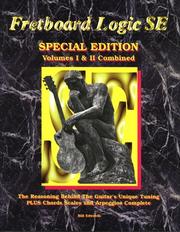
Clarifies the CAGED system and scale/arpeggio relationships across the neck in a way that is uniquely guitar-centric — essential groundwork before applying jazz-specific scale theory.

Greene methodically introduces bebop-era melodic vocabulary, scale-to-chord relationships, and arpeggio usage in a jazz context, making this the ideal bridge from scale knowledge to actual jazz phrasing.
Improvisation Over Jazz Standards
ExpertImprovise fluently over jazz standards using bebop language, motivic development, and harmonic substitution — putting all previous tools into musical practice.
▸ Study plan for this stage
Pace: 12–14 weeks, ~45–60 minutes/day (mix of reading, transcription, and instrument practice)
- Linear harmony: connecting chord changes through scalar and chromatic voice-leading lines that create smooth, singable melodies across changes
- Bebop language fundamentals: the vocabulary of phrasing, articulation, and rhythmic displacement that defines bebop improvisation
- Motivic development: taking a short musical idea and transforming it through repetition, transposition, sequencing, and variation to build coherent solos
- Harmonic substitution: tritone, ii–V, and other substitutions that expand harmonic vocabulary and create reharmonization opportunities
- Charlie Parker's language and phrasing: studying transcribed solos to internalize bebop syntax, note choices, and rhythmic feel
- Jazz vocabulary building: systematizing licks, patterns, and phrases into a personal vocabulary that can be deployed fluidly in real time
- Standards repertoire: mastering the harmonic structures and common changes of jazz standards as a foundation for improvisation
- How do you use linear harmony to create a smooth, singable line over a ii–V–I progression, and what role does chromatic approach notes play?
- What are the key characteristics of bebop language (phrasing, rhythmic displacement, articulation), and how do they differ from swing or cool jazz?
- How do you take a single motivic idea and develop it through transposition, sequencing, and rhythmic variation to build a coherent 8- or 16-bar phrase?
- What are the most common harmonic substitutions (tritone, ii–V, diminished, augmented) and when would you use each one over a standard?
- How does Charlie Parker construct his solos—what patterns, note choices, and rhythmic devices does he use repeatedly across different standards?
- How do you systematically extract and practice individual licks from transcriptions so they become part of your automatic vocabulary?
- Work through Ligon's linear harmony exercises: sing and play scalar and chromatic lines over ii–V–I progressions in multiple keys, focusing on smooth voice leading and singability
- Transcribe and analyze 3–5 Charlie Parker solos from the Omnibook (bass-clef edition), marking motivic statements, harmonic substitutions, and rhythmic displacements
- Practice Steinel's vocabulary-building drills: isolate 2–3 bebop licks, learn them in all 12 keys, and practice inserting them into improvisation over a backing track
- Improvise over 4–6 jazz standards (e.g., All the Things You Are, Autumn Leaves, Confirmation) using only linear harmony concepts from Ligon, then add substitutions
- Develop a single 2-bar motif and compose 3–4 variations using transposition, inversion, rhythmic displacement, and sequence—then practice improvising with these variations over a standard
- Create a personal lick library: extract 10–15 phrases from Parker transcriptions and Steinel's examples, notate them, practice them in all keys, and use them in real-time improvisation
Next up: This stage synthesizes all previous technical tools (chord-scale relationships, voice leading, harmonic theory) into fluid, real-time improvisation over standards, preparing you to apply these skills to composition, reharmonization, and ultimately to developing your own distinctive voice and style.
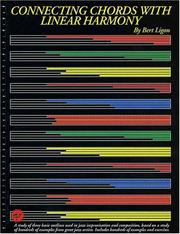
Shows exactly how to weave arpeggios, scales, and chromatic lines together to navigate chord changes — the missing link between knowing your theory and sounding like a jazz musician.
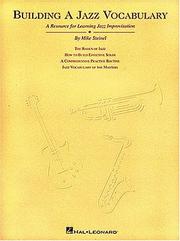
A highly practical guide to learning and internalizing bebop phrases, licks, and motivic development over real changes — ideal as a final stage book because it demands everything learned so far.
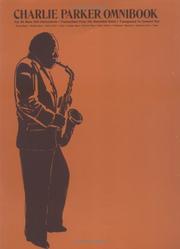
Transcriptions of Bird's solos are the ultimate jazz vocabulary source. Studying, transposing, and internalizing these lines on guitar is the capstone practice that serious jazz improvisers return to for life.
Discussion
Keep reading
Paths that share books, cover the same subject, or open a related topic.