Blues Guitar: Best Books to Learn Blues Licks, Rhythm and Soloing
This curriculum takes an intermediate guitarist from solid 12-bar rhythm foundations through authentic blues phrasing, licks, and bends, all the way to confident soloing in every key. Each stage builds on the last — locking in the harmonic and rhythmic language first, then developing a vocabulary of licks and phrasing nuances, and finally mastering the fretboard across all keys and styles. Expect to spend real time with each book before moving on; blues rewards depth over speed.
Locking In the Blues Foundation
IntermediateSolidify 12-bar blues rhythm guitar, understand dominant 7th chord voicings, and internalize the feel and groove that everything else is built on.
▸ Study plan for this stage
Pace: 4–5 weeks, ~20–25 pages/day with daily guitar practice
- 12-bar blues form and its harmonic structure (I–IV–I–V progression)
- Dominant 7th chord voicings and their role in blues comping
- Rhythm guitar techniques specific to blues (shuffle feel, swing, straight eighths)
- Groove and timing: the importance of pocket playing and behind-the-beat phrasing
- Common blues rhythm patterns and how to vary them while maintaining the form
- The relationship between chord voicings and bass movement in blues accompaniment
- Can you play a solid 12-bar blues progression in multiple keys without thinking about it?
- What are the key differences between dominant 7th voicings and major/minor chords, and why are they essential to blues sound?
- How do you maintain pocket and groove while comping a 12-bar blues—what does 'behind the beat' mean in practice?
- Can you explain the shuffle feel and demonstrate it rhythmically on guitar?
- What are 3–4 common rhythm patterns from 'Blues You Can Use' and when would you use each one?
- How does bass movement interact with chord voicings to create blues authenticity?
- Daily: Play 12-bar blues progressions in at least 3 different keys (E, A, D) until they're automatic
- Isolate and practice dominant 7th voicings (7th, 9th, 13th shapes) on the neck; move them through a 12-bar form
- Record yourself playing rhythm guitar over a 12-bar blues backing track; listen critically for pocket and timing
- Practice the shuffle feel with a metronome at 60, 80, and 120 BPM—focus on the triplet subdivision
- Learn and perform 4–5 specific rhythm patterns from the book in a 12-bar context
- Transcribe one blues rhythm guitar example from the book (or a reference recording) and play it back note-for-note
Next up: Mastering the 12-bar form and dominant 7th voicings as a solid rhythmic foundation prepares you to layer lead guitar techniques, soloing, and advanced comping variations on top of an unshakeable groove.
The definitive starting point for intermediate players — covers 12-bar patterns, shuffle rhythms, and dominant chord work in a structured, progressive way. Sets the harmonic and rhythmic vocabulary you'll need for every later stage.
Building a Lick Vocabulary
IntermediateDevelop a working library of blues licks rooted in the pentatonic and blues scales, understand call-and-response phrasing, and begin connecting licks into musical sentences.
▸ Study plan for this stage
Pace: 4–5 weeks, ~15–20 pages/day with daily practice
- Pentatonic and blues scale fingering patterns across the fretboard and their role in lick construction
- Anatomy of a blues lick: phrasing, bending, vibrato, and timing as essential expressive tools
- Call-and-response phrasing: how to answer a musical phrase and create conversational dialogue between lead and rhythm
- Lick categorization by position, scale degree, and function (opening, turnaround, fill, resolution)
- Connecting single licks into musical sentences through smooth transitions and logical phrasing
- Rhythm and groove integration: playing licks in time with the blues shuffle and 12-bar form
- Bending and vibrato technique as signature blues expression and personality markers
- What are the key differences between the minor pentatonic and blues scales, and how does each shape the character of a lick?
- How do call-and-response phrasing and space (silence) create musical conversation in blues guitar?
- Can you identify and explain the function of a lick (opening statement, response, turnaround, resolution) within a 12-bar blues?
- What techniques—bending, vibrato, timing—transform a scale run into an expressive, idiomatic blues lick?
- How do you connect two separate licks into a coherent musical sentence without losing groove or phrasing?
- What role does rhythm and shuffle feel play in making a lick sound authentically blues rather than generic?
- Daily: practice 3–5 licks from Marshall's book, focusing on one technique per session (bending, vibrato, timing, or phrasing)
- Transcribe and learn one complete lick per day, then play it over a backing track in the original key and two adjacent keys
- Record yourself playing a single lick, then overdub a call-and-response answer using a different lick or variation
- Build a 12-bar solo by chaining 3–4 licks from the book in logical sequence; identify where each lick sits in the form
- Practice bending accuracy: play each lick's bent notes in isolation, matching pitch to a reference tone or tuner
- Create a personal lick library organized by scale position (low E, A, D strings) and function (opening, fill, turnaround)
- Play licks over a slow 12-bar blues shuffle backing track, focusing on lining up phrasing with the beat and groove
- Improvise a 2-chorus solo using only licks from the book, then a third chorus mixing licks with your own phrasing
Next up: This stage equips you with a concrete arsenal of proven blues phrases and the phrasing vocabulary to use them musically, setting the foundation for the next stage where you'll learn to improvise freely by understanding how to build and vary licks in real time.
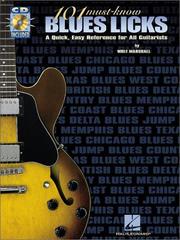
Complements the Licks Bible by focusing on the most essential, genre-defining licks with clear musical context. Wolf Marshall's explanations of phrasing and articulation bridge raw licks into expressive playing.
Phrasing, Bends, and Expression
IntermediateMaster string bending technique, vibrato, slides, and the micro-phrasing details that separate technically correct blues from emotionally convincing blues.
▸ Study plan for this stage
Pace: 4–5 weeks, ~20–30 pages/day with daily practice sessions (30–45 minutes minimum)
- String bending mechanics: full-step, half-step, and quarter-step bends with proper finger pressure and intonation control
- Vibrato techniques: hand vibrato, finger vibrato, and whammy bar vibrato to add emotional depth to sustained notes
- Slide techniques: pre-bends, post-bends, and slides between positions to create smooth, vocal-like phrasing
- Micro-phrasing and timing: the subtle delays, anticipations, and rhythmic variations that create blues feel beyond strict timing
- Blues shuffle rhythm foundation: understanding the triplet-based feel that underpins all phrasing choices
- Bending in context: applying bends within chord changes and scale positions to maintain harmonic integrity
- Expressive dynamics: controlling volume, attack, and sustain to convey emotional intent in blues phrases
- Combining techniques: layering bends, vibrato, and slides in single phrases for authentic blues expression
- What is the difference between a full-step bend and a half-step bend, and how do you ensure accurate intonation when bending?
- How does vibrato differ from a bend, and what are the three main vibrato techniques covered in the Complete Book of Electric Blues Guitar?
- Explain how slides can be used to connect phrases while maintaining the blues feel and harmonic context.
- What role does the shuffle rhythm play in phrasing decisions, and how does understanding triplet-based feel improve your bending and vibrato application?
- How can you use micro-phrasing (timing variations, note anticipation, and rhythmic displacement) to make technically correct bends sound emotionally convincing?
- Describe a practical approach to combining bends, vibrato, and slides in a single 12-bar blues phrase.
- Practice full-step and half-step bends on the third string (G string) in isolation, checking intonation against a reference pitch or tuner until bends are consistently in tune.
- Work through the shuffle rhythm exercises in 'Art of the Shuffle,' playing quarter-note and eighth-note patterns to internalize the triplet feel before applying it to bent notes.
- Perform slow-motion bending drills: bend a note up to pitch, hold it with vibrato for 4 beats, then release—repeat on each string to build muscle memory and control.
- Transcribe and learn 3–5 blues solos from the Complete Book of Electric Blues Guitar, focusing on identifying where bends, slides, and vibrato occur and why those choices work.
- Record yourself playing a 12-bar blues progression and identify moments where your phrasing feels rushed or stiff; re-record with intentional micro-phrasing (anticipations, delays, note placement variations).
- Create a 'phrasing palette' by practicing 10–15 different bend-vibrato-slide combinations (e.g., pre-bend + vibrato, slide + bend + vibrato) and use them to improvise over a backing track.
Next up: Mastering these expressive techniques gives you the vocabulary to authentically interpret blues language; the next stage will deepen your understanding of how to apply this vocabulary within specific blues styles, song structures, and ensemble contexts.
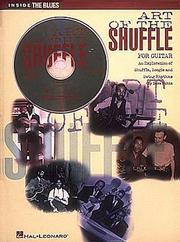
Focuses specifically on the expressive techniques — bends, vibrato, slides, and dynamics — that define blues phrasing. Coming here after building a lick vocabulary means you can immediately apply these techniques to material you already know.

Bridges phrasing technique into full electric blues style, covering how legends like B.B. King, Buddy Guy, and Albert King use bends and phrasing as their primary voice. Reinforces and deepens the expressive toolkit.
Soloing Over the Blues — All Keys and Positions
ExpertSolo fluidly over the blues in every key, navigate the entire fretboard using multiple pentatonic positions, and connect scales, licks, and phrasing into cohesive, musical solos.
▸ Study plan for this stage
Pace: 6–8 weeks, ~20–30 pages/day with daily practice integration; expect 2–3 hours/day combining reading, fretboard mapping, and soloing drills
- Pentatonic box patterns across all six strings and how they connect to form a unified fretboard map
- Transposing pentatonic shapes into all 12 keys and recognizing the same fingering patterns in different positions
- Blues scale construction (major pentatonic + flat-5) and its application over dominant 7th chord changes
- Navigating the entire fretboard by linking pentatonic positions vertically and horizontally to avoid box-bound playing
- Phrasing and targeting chord tones (root, 3rd, 5th, 7th) within pentatonic runs to create musical, intentional solos
- Applying Fretboard Logic's interval-based thinking to build scales from intervals rather than memorizing isolated patterns
- Connecting licks and motifs across positions to develop fluency and reduce reliance on pre-learned shapes
- How do the five pentatonic box positions relate to each other, and how can you move between them smoothly on the fretboard?
- Given a blues in any key, can you solo fluently using at least three different pentatonic positions without stopping or repositioning awkwardly?
- What is the difference between the major pentatonic and blues scale, and when would you choose one over the other in a blues solo?
- How do you use Fretboard Logic's interval approach to construct pentatonic and blues scales from first principles rather than relying on memorized box shapes?
- How can you target specific chord tones (root, 3rd, 5th, 7th) within pentatonic licks to make your solos more musical and less random?
- Can you transpose a lick or phrase you've learned in one key into all 12 keys without re-learning it, using fretboard logic?
- Map all five pentatonic box positions for a single key (e.g., A minor pentatonic) on paper and on the fretboard; then repeat for three other keys to internalize the transposition logic
- Play a simple blues lick in one position, then deliberately move to an adjacent position and continue the solo without stopping; repeat this 'position-shifting' exercise daily for 10 minutes
- Improvise over a 12-bar blues backing track in one key, consciously using all five pentatonic positions within a single solo; record yourself and listen for smooth transitions
- Build pentatonic and blues scales from intervals (using Fretboard Logic's methodology) in five different keys, writing out the interval sequences before playing them
- Create a 4–8 bar lick targeting specific chord tones (e.g., land on the root on beat 1, the 3rd on beat 2, the 5th on beat 3); practice this lick in all 12 keys
- Play blues progressions in three unfamiliar keys (e.g., F, B, Eb) and solo for 2–3 choruses each, focusing on fluency and fretboard navigation rather than speed
Next up: This stage equips you with the fretboard fluency and positional mastery needed to move beyond pentatonic shapes into hybrid scales, modal approaches, and advanced phrasing techniques that add sophistication and personal voice to your blues soloing.

Unlocks the entire fretboard by teaching the CAGED system and how all five pentatonic positions connect. Essential for breaking out of the 'box' and soloing in any key, anywhere on the neck.
Discussion
Keep reading
Paths that share books, cover the same subject, or open a related topic.