Learn the saxophone: an ordered reading path for new players
This curriculum takes a complete beginner from their very first sounds on the saxophone through solid tone production, breath control, fingering technique, music reading, and early improvisation. Each stage builds directly on the last — establishing physical fundamentals before adding musical complexity — so that skills compound rather than overwhelm.
Tone, Technique & Music Reading
BeginnerDevelop a consistent, resonant tone across the full range, build finger independence, and read standard notation fluently at a slow-to-moderate tempo.
▸ Study plan for this stage
Pace: 4–5 weeks, ~15–20 minutes of focused practice daily, working through 2–3 exercises per session
- Voicing and oral cavity shape as the foundation for tone production across the full range
- The relationship between embouchure firmness and pitch stability in the upper register
- Systematic progression from low to high tones using Rascher's structured approach
- Breath support and diaphragmatic control for consistent resonance
- Finger independence and relaxation to avoid tension that compromises tone quality
- Intonation control through embouchure adjustment rather than fingering compensation
- How does changing your oral cavity shape affect tone quality and pitch in the upper register?
- What is the role of embouchure firmness in achieving stable, resonant tones across the full range?
- How should breath support be applied to maintain consistent tone without forcing or creating tension?
- What does Rascher mean by 'voicing,' and how does it differ from embouchure alone?
- How can you practice finger independence while maintaining a stable, resonant tone?
- What intonation adjustments should be made through embouchure versus through fingering?
- Daily long-tone practice: play each note in the full range for 8–16 counts, focusing on consistency and resonance without forcing
- Voicing exercises: practice shifting your oral cavity shape (ah, oh, oo vowels) while holding a single pitch to hear the tonal difference
- Rascher's top-tone exercises: work systematically through the book's prescribed progressions, starting low and ascending gradually
- Finger independence drills: play scales and arpeggios slowly while maintaining a steady, resonant tone—focus on relaxed finger motion
- Intonation tuning: use a tuner to identify which notes drift sharp or flat, then adjust embouchure (not fingering) to correct
- Breath control practice: sustain single notes while varying dynamic level (soft to loud and back) to develop diaphragmatic support
Next up: Mastering tone production and reading fluency in this stage provides the technical foundation and confidence needed to tackle more complex rhythmic patterns, articulation styles, and musical interpretation in the next stage.
Rascher's landmark guide to the altissimo register and tone production is introduced here to begin expanding range awareness and to deepen the student's understanding of breath column and embouchure control.
Scales, Articulation & Stylistic Vocabulary
IntermediateMaster all major and minor scales, develop clean articulation (legato and staccato), and absorb the stylistic vocabulary of jazz and classical phrasing.
▸ Study plan for this stage
Pace: 6–8 weeks, ~15–20 minutes of focused study daily (transcription, scale work, and articulation practice)
- Bebop scale construction and application within Charlie Parker's melodic lines
- Chromatic passing tones and enclosures as stylistic devices in jazz phrasing
- Legato articulation for smooth, connected jazz lines and classical legato passages
- Staccato and tonguing techniques for crisp, articulate bebop and swing articulation
- Interval relationships and target notes in Parker's harmonic vocabulary
- Phrasing contours: how Parker shapes lines with dynamics, breath placement, and rhythmic placement
- Major and minor scale applications across different harmonic contexts in the transcriptions
- Stylistic vocabulary: the difference between classical phrasing and jazz phrasing conventions
- How does Charlie Parker use chromatic passing tones and enclosures to navigate chord changes, and how does this differ from classical scalar motion?
- What articulation techniques (legato vs. staccato) does Parker employ in different sections of his solos, and why?
- Can you identify and play the major and minor scales that underpin Parker's lines in at least three different transcriptions?
- How do Parker's phrasing contours—including breath placement, dynamic shaping, and rhythmic placement—create musical coherence and swing feel?
- What is the relationship between target notes and the scales/arpeggios Parker uses to approach them?
- How would you adapt a Parker line to emphasize classical legato phrasing versus authentic jazz articulation?
- Transcribe and learn 5–7 complete Charlie Parker solos from the Omnibook, focusing on identifying scale passages, chromatic approaches, and articulation markings
- Practice all 12 major scales and their relative minor scales in multiple octaves, then map which scales appear in each Parker transcription
- Record yourself playing Parker lines with exaggerated legato articulation, then re-record with authentic jazz staccato/swing articulation; compare the sound and feel
- Isolate 3–4 short phrases (4–8 bars) from different Parker solos and practice them at slow, medium, and fast tempos, focusing on clean articulation transitions
- Create a 'scale map' for each transcription: annotate which scales/arpeggios Parker uses over each chord, and practice those scales in the same rhythmic context
- Sing or play Parker lines without the saxophone to internalize phrasing contours, breath placement, and dynamic shaping independent of technical fingering challenges
Next up: This stage equips you with the harmonic language, articulation control, and stylistic awareness needed to move into improvisation and solo construction, where you'll apply these scales, articulation techniques, and phrasing vocabulary to create your own bebop and jazz lines.
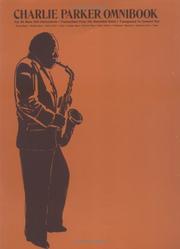
Transcriptions of Bird's recorded solos provide the essential vocabulary of bebop jazz phrasing and articulation; studying and slowly playing these lines builds idiomatic jazz language from the source.
Early Improvisation & Jazz Application
IntermediateApply scales and vocabulary to real improvisation over chord changes, understand basic jazz theory on the horn, and play confidently over common progressions.
▸ Study plan for this stage
Pace: 6–8 weeks, ~20–30 pages/day of theory reading plus 45–60 minutes daily practice with play-along recordings
- Chord-scale relationships: which scales fit over which chord types (major, minor, dominant, diminished) and why
- Improvisation vocabulary: targeting chord tones, approach notes, and enclosures to build melodic phrases
- Blues changes and the 12-bar blues form as the foundational progression for jazz improvisation
- Dominant-7th function and ii-V-I progressions: the most common harmonic movement in jazz standards
- Tension and resolution: using extensions (9ths, 11ths, 13ths) and altered tones to create musical interest
- Listening and transcription: internalizing jazz language by ear from recorded solos
- Real-time application: playing over backing tracks and chord changes with increasing harmonic complexity
- What scale would you play over a Cmaj7 chord, and why? How does it differ from playing over a C7 chord?
- Explain the ii-V-I progression in the key of C major. What are the chord tones for each chord, and how would you navigate them in an improvised solo?
- How do approach notes and enclosures work, and how would you use them to target a specific chord tone?
- What is the difference between playing 'inside' (chord tones and extensions) versus 'outside' (chromatic or non-harmonic tones), and when is each appropriate?
- Describe the 12-bar blues form and explain how the harmonic rhythm changes in the last four bars. How does this affect your solo construction?
- How do you use tension and resolution in improvisation? Give an example of playing an altered extension and resolving it to a chord tone.
- Work through Aebersold Vol. 1's chord-scale exercises: play major scales over maj7 chords, minor scales over min7 chords, and mixolydian scales over dominant 7 chords, using the included play-along tracks
- Transcribe 2–3 short saxophone solos (8–16 bars each) from jazz recordings, focusing on how the soloist targets chord tones and uses approach notes; learn these transcriptions by ear and then play them on your horn
- Practice the 12-bar blues progression in three keys (F, Bb, Eb) using Aebersold backing tracks: start with simple chord-tone melodies, then add approach notes and enclosures
- Study the ii-V-I progression in four keys using Levine's examples: map out the chord tones, extensions, and alterations for each chord, then improvise 4-bar phrases over each progression
- Record yourself improvising over a simple 8-bar major chord progression, then listen back and identify moments where you landed on chord tones versus non-harmonic tones; refine your phrasing to land intentionally on key moments
- Create a 'vocabulary notebook': write out 10–15 short melodic phrases (2–4 bars each) that work over common chord types (maj7, min7, 7, min7b5), then practice playing these phrases in multiple keys and transpositions
Next up: This stage equips you with the harmonic knowledge and improvisational vocabulary to navigate standard jazz forms; the next stage will deepen your ability to develop longer, more coherent solos and explore advanced concepts like modal interchange, reharmonization, and stylistic mastery.

Volume 1 of the Aebersold play-along series is the most widely used entry point into jazz improvisation — it explains scales, chord tones, and call-and-response practice with a real rhythm section backing track.

Once improvisation has started, this comprehensive theory reference ties together scales, modes, chord-scale relationships, and form so the student understands *why* the notes they are playing work — deepening musical decision-making.
Discussion
Keep reading
Paths that share books, cover the same subject, or open a related topic.