The Romantic Poets: Best Books to Read, in Order
This curriculum moves from a panoramic view of Romanticism as a literary and historical movement, through close engagement with each major poet's life and work, to advanced critical and theoretical reading that deepens interpretation. Because the learner starts at an intermediate level, the path skips introductory primers and opens directly with authoritative overviews before drilling into individual poets and finally into scholarly debate.
The Romantic Movement: Context and Overview
IntermediateUnderstand the historical, philosophical, and aesthetic forces that shaped British Romanticism, and gain a reliable map of all six poets before studying any one in depth.
▸ Study plan for this stage
Pace: 4–5 weeks, ~40–50 pages/day (Perkins is dense; allow time for note-taking and review)
- The historical and social conditions of late 18th-century Britain (Industrial Revolution, French Revolution, political upheaval) and their impact on Romantic thought
- The philosophical foundations of Romanticism: empiricism, idealism, and the elevation of imagination and emotion over pure reason
- The aesthetic principles defining Romantic poetry: emphasis on nature, the sublime, the individual imagination, and the authentic expression of feeling
- The six major British Romantic poets (Blake, Wordsworth, Coleridge, Byron, Keats, Shelley) and their distinct voices, themes, and historical moments
- Romanticism as a reaction against Enlightenment rationalism and Neoclassical formalism, and its embrace of the irrational, the medieval, and the visionary
- The role of nature as both external reality and mirror of inner consciousness in Romantic aesthetics
- The concept of the Romantic poet as visionary, rebel, or outcast, and the valorization of individual genius and originality
- What historical and political events of the late 18th century shaped the emergence of Romanticism, and how did they challenge Enlightenment values?
- How did Romantic philosophers and poets redefine the relationship between reason, imagination, and emotion, and why was this shift significant?
- What are the key aesthetic principles that distinguish Romantic poetry from Neoclassical verse, and how do they reflect Romantic philosophy?
- What are the major themes, preoccupations, and stylistic characteristics of each of the six major British Romantic poets?
- How did the concept of nature function differently in Romantic poetry compared to earlier literary traditions?
- What does it mean to call the Romantic poet a 'visionary' or 'rebel,' and how do these roles manifest in the work of different poets?
- Create a timeline mapping key historical events (1789–1830) alongside the birth dates and major works of the six poets; annotate how each event may have influenced Romantic thought
- Write a 2–3 page comparative essay on how Enlightenment rationalism and Romantic imagination are positioned as opposing forces in Perkins's account
- Compile a one-page profile for each of the six poets (Blake, Wordsworth, Coleridge, Byron, Keats, Shelley) listing key biographical facts, major works, central themes, and distinctive stylistic features
- Select one passage from Perkins on each poet's philosophy or aesthetics and annotate it, explaining how it illustrates the broader Romantic principles discussed in the overview chapters
- Create a visual concept map showing how Romantic aesthetic principles (imagination, nature, emotion, originality, the sublime) interconnect and relate to the historical/philosophical context
- Write a short reflective piece (1–2 pages) on which Romantic principle (e.g., the power of imagination, the spiritual significance of nature) resonates most with you, and why—this prepares you to engage with individual poets
Next up: This stage equips you with the historical scaffolding, philosophical vocabulary, and a reliable overview of all six poets' major concerns, allowing you to approach individual poets' works in depth with a clear sense of where each fits within the broader Romantic project.

A landmark anthology-with-commentary that pairs generous primary selections from all six poets with lucid critical introductions, giving the intermediate reader both the poems and the scholarly framing needed for everything that follows.
Wordsworth and Coleridge: The Lyrical Ballads Circle
IntermediateRead the foundational partnership of Romanticism closely, understanding Wordsworth's philosophy of nature and memory and Coleridge's supernatural imagination and critical theory.
▸ Study plan for this stage
Pace: 8–10 weeks, ~40–50 pages/day (alternating between Barker and Holmes in 2-week blocks to allow thematic synthesis)
- Wordsworth's philosophy of nature as the primary source of emotional and spiritual truth, and his theory of memory as the poet's essential tool
- The concept of 'emotion recollected in tranquility' and how it shapes Wordsworth's poetic practice and the Lyrical Ballads
- Coleridge's theory of imagination (primary and secondary) and how it differs from Wordsworth's naturalism
- The supernatural and the visionary in Coleridge's work, including his use of dream, opium, and the uncanny
- Coleridge's critical theory and his role as theorist of Romanticism, particularly his ideas on organic form and the imagination
- The collaborative partnership between Wordsworth and Coleridge: shared aims, creative friction, and their divergence
- The historical and biographical contexts that shaped both poets' work, including the French Revolution, personal loss, and addiction
- How the Lyrical Ballads (1798) represented a revolutionary break from 18th-century poetic convention
- How does Wordsworth's concept of nature differ from earlier Romantic or Enlightenment views, and what role does memory play in his poetic philosophy?
- What does Wordsworth mean by 'emotion recollected in tranquility,' and how does this principle manifest in specific poems from the Lyrical Ballads?
- How does Coleridge's theory of imagination (primary and secondary) challenge or complement Wordsworth's approach to poetry and nature?
- What is the significance of the supernatural and visionary elements in Coleridge's work, and how do they reflect his philosophical and personal struggles?
- How did Coleridge function as a critical theorist of Romanticism, and what were his key contributions to literary theory?
- What were the major points of creative agreement and disagreement between Wordsworth and Coleridge, and how did their partnership shape the Lyrical Ballads?
- How did biographical factors—such as the French Revolution, personal grief, and Coleridge's opium addiction—influence the development of their poetic and philosophical ideas?
- Why did the Lyrical Ballads represent a revolutionary departure from 18th-century poetic practice, and what was their immediate and long-term impact?
- Close-read 3–4 key poems from the Lyrical Ballads (e.g., 'Tintern Abbey,' 'The Rime of the Ancient Mariner,' 'Christabel') while consulting Barker and Holmes for biographical and philosophical context; annotate how each poem embodies the poet's stated philosophy
- Create a two-column comparison chart tracking Wordsworth's and Coleridge's differing views on nature, imagination, the role of the poet, and the purpose of poetry; cite specific passages from both biographies
- Write a 1,500–2,000 word analytical essay on how Wordsworth's theory of 'emotion recollected in tranquility' operates in a single poem, using biographical details from Barker to ground your analysis
- Trace the biographical timeline of the Wordsworth-Coleridge partnership (1795–1810s) using both books; create a visual timeline marking key meetings, collaborations, publications, and ruptures
- Select one major biographical event from each poet's life (e.g., Wordsworth's time in France, Coleridge's opium addiction) and write a 1,000-word reflection on how it shaped their poetic philosophy and practice
- Engage with Coleridge's critical writings (excerpts provided in Holmes) by summarizing his key theoretical concepts (imagination, organic form, etc.) and explaining how they differ from Wordsworth's more naturalistic approach
Next up: This stage establishes the philosophical and biographical foundations of Romanticism through its two most influential figures, preparing you to explore how their ideas were developed, challenged, and transformed by the second-generation Romantic poets (Byron, Shelley, Keats) and to understand the broader cultural impact of Romantic thought.

A thorough, readable biography that situates the poems in the life; reading it first gives the human and geographical context that makes The Prelude and the Lyrical Ballads resonate.
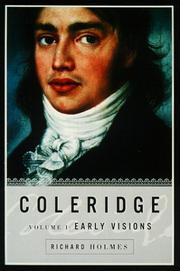
Holmes's celebrated biography of the young Coleridge is the best entry into his creative world; it should follow Barker so the reader already understands the Wordsworth friendship from the other side.
Blake, Keats, Shelley, and Byron: The Second Generation
IntermediateEngage deeply with the four remaining major poets—Blake's prophetic mythology, Keats's sensuous aesthetics, Shelley's radical idealism, and Byron's ironic self-fashioning—through authoritative individual studies.
▸ Study plan for this stage
Pace: 14–16 weeks, ~40–50 pages/day (approximately 3–4 weeks per book, with overlap for synthesis)
- Blake's prophetic mythology: how his invented cosmology (Urizen, Albion, Los) functions as political and spiritual critique of empire and rationalism
- Blake's visual-textual integration: the inseparability of illuminated text and image as a unified artistic statement
- Keats's negative capability and sensuous aesthetics: the suspension of judgment and immersion in beauty, sensation, and paradox as philosophical stance
- Keats's poetic development: the evolution from early imitation through mature achievement in the great odes and *La Belle Dame*
- Shelley's radical idealism and political engagement: how his poetry enacts revolutionary thought and critique of tyranny, monarchy, and social constraint
- Shelley's philosophical poetry: the relationship between Platonic idealism, atheism, and poetic vision in works like *Prometheus Unbound*
- Byron's ironic self-fashioning and the Byronic hero: how persona, autobiography, and literary convention collapse into each other
- Byron's satirical mastery: the use of ottava rima, digression, and comic deflation in *Don Juan* as formal innovation and ideological critique
- How does Erdman argue that Blake's prophetic mythology functions as a response to British imperialism and the Industrial Revolution?
- What is negative capability, and how does Motion demonstrate its centrality to Keats's poetic philosophy and practice?
- How does Holmes trace Shelley's political radicalism through his life and work, and what role does idealism play in his poetry?
- What is the Byronic hero, and how does MacCarthy show that Byron's life and literary persona are deliberately constructed as performance?
- How do Blake's illuminated texts differ fundamentally from conventional printed poetry, and what does this difference suggest about his artistic vision?
- Compare the aesthetic philosophies of Keats and Shelley: where do they converge and diverge in their approach to poetry's purpose?
- Read Erdman's analysis of *The Marriage of Heaven and Hell* and *America*, then annotate Blake's actual text alongside, mapping how Erdman's historical argument illuminates specific mythological figures and their political resonance.
- Create a visual chart tracking Keats's poetic development across Motion's biography—plot key works chronologically and note how Motion links biographical events (illness, love, reading) to shifts in aesthetic philosophy.
- Write a 1,500-word comparative essay on Shelley's *Prometheus Unbound* using Holmes's biographical and contextual framework: how does understanding Shelley's radicalism change your reading of the play's political vision?
- Analyze a passage from Byron's *Don Juan* (suggested: Canto I, stanzas 1–50) using MacCarthy's framework of ironic self-fashioning—identify how Byron's narrator voice performs multiple personas simultaneously.
- Create a visual or textual collage juxtaposing Blake's illuminated page designs (from the books' reproductions) with Erdman's political analysis—demonstrate how image and text together construct meaning that neither could alone.
- Conduct a close reading seminar with peers: each person takes one poet and prepares a 10-minute presentation on how their respective biographer (Erdman, Motion, Holmes, MacCarthy) shapes interpretation of a major work, then discuss how biography influences literary criticism.
Next up: This stage establishes mastery of the four canonical second-generation Romantic poets through authoritative biographical and critical lenses, preparing you to synthesize their collective influence, compare their legacies, and examine how Romanticism evolved and fractured across the early 19th century in the final stage.
The definitive scholarly study of Blake's political and mythological vision; reading it after the Wordsworth–Coleridge stage lets the learner immediately see how Blake diverges from and challenges his contemporaries.
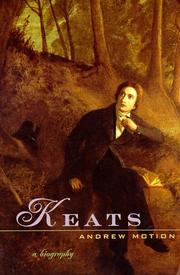
Motion's Pulitzer-winning biography is the standard modern life of Keats, weaving the poems into the story of his short life with critical sensitivity—ideal for moving from Blake's epic scale to Keats's lyric intensity.

Holmes brings the same biographical brilliance he applied to Coleridge; reading Shelley after Keats highlights the contrast between Keats's aesthetic withdrawal and Shelley's political urgency.
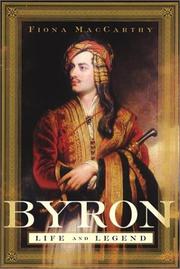
MacCarthy's authoritative biography closes the second-generation arc, showing how Byron's celebrity, irony, and Don Juan represent the movement's self-conscious late phase.
Advanced Criticism: Themes, Theory, and Legacy
ExpertRead across the poets thematically and theoretically—nature, the self, politics, gender, and the Romantic legacy—developing an independent critical perspective on the movement as a whole.
▸ Study plan for this stage
Pace: 8–10 weeks, ~40–50 pages/day (with 1–2 days per week for review and synthesis)
- Bloom's concept of the 'anxiety of influence' and how Romantic poets engaged with their literary predecessors
- The visionary imagination as a defining feature of Romanticism and its philosophical underpinnings
- Gender as a constitutive category in Romantic poetry—how male and female Romantic poets constructed identity and authority differently
- The relationship between Romantic individualism, nature, and the construction of the self across gender lines
- Political dimensions of Romanticism: revolution, radicalism, and conservatism in gendered contexts
- The role of domesticity, the feminine, and maternal imagery in both male and female Romantic aesthetics
- How Romantic legacy has been shaped by critical frameworks that privilege certain poets and themes over others
- The tension between Romantic transcendence and embodied, material concerns (especially as gendered)
- How does Bloom's theory of influence explain the relationship between Romantic poets and their predecessors, and what are its limitations when applied to female Romantic poets?
- What does Mellor mean by 'Romanticism and Gender,' and how do male and female Romantic poets construct the self, nature, and authority differently?
- How do Bloom and Mellor differ in their assessment of what constitutes the 'core' of Romanticism, and what does this reveal about critical bias?
- What role does the body, domesticity, and the private sphere play in Romantic poetry, and how is this gendered?
- How did Romantic poets engage with political revolution and social change, and how did gender shape these engagements?
- What is the Romantic legacy, and how has it been constructed or distorted by critical tradition?
- Create a visual map of Bloom's 'anxiety of influence' using 3–4 Romantic poets: trace how each poet responds to predecessors and to each other. Include both male poets (e.g., Wordsworth, Keats) and female poets (e.g., Hemans, Landon) to test Bloom's framework.
- Close-read one poem by a male Romantic poet (e.g., Wordsworth's 'The Prelude,' Coleridge's 'Christabel') and one by a female Romantic poet (e.g., Hemans's 'The Homes of England,' Landon's 'The Improvisatrice') side-by-side, analyzing how each constructs the visionary self and nature. Write a 2–3 page comparative analysis.
- Identify three key passages from Bloom on the visionary imagination and three from Mellor on gender and domesticity. Write a dialogue between these two critics addressing a single poem—what would they agree on, disagree on, and what would each miss?
- Research and write a brief critical genealogy (2–3 pages) of how one Romantic poet (e.g., Keats, Hemans) has been read across different critical periods. How have interpretations shifted? What role has gender or Bloom's influence theory played?
- Develop a thematic essay (4–5 pages) on a topic that cuts across both books—e.g., 'Nature and Gender in Romantic Poetry,' 'The Politics of the Self in Romanticism,' or 'Influence and Authority in Female Romantic Poetry.' Use specific textual evidence from both Bloom and Mellor.
- Create an annotated bibliography of 5–6 secondary sources (beyond Bloom and Mellor) on Romantic poetry and gender or influence. Write 150–200 words per entry explaining how each source extends, complicates, or challenges Bloom and Mellor.
Next up: This stage synthesizes thematic and theoretical frameworks for understanding Romanticism as a whole, positioning you to move into specialized study—whether that's deep archival work on a single poet, engagement with contemporary theory (postcolonial, queer, ecocritical), or comparative literary analysis across movements.
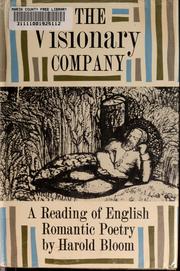
Bloom's influential reading of the entire Romantic tradition as a visionary and revisionary project synthesizes all six poets into a single argument; it rewards readers who already know the individual lives and works well.
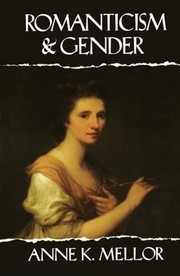
Mellor's feminist critique of the canonical six poets and recovery of women writers challenges and enriches everything read so far, pushing the learner toward a more complete and critically honest picture of the period.
Discussion
Keep reading
Paths that share books, cover the same subject, or open a related topic.