Becoming an Intelligence Analyst: The Best Books, in Order
Intelligence analysis is a craft with a small, unusually candid literature, much of it written by practitioners and published by the CIA's own centre for the study of intelligence. This path takes the core tradecraft first, because the cognitive material is what actually transfers to any analytic job; then how the American intelligence community is organised, because a finished product is shaped by who has to sign it; then the forecasting research that tests whether any of it works; then the famous failures; and finally the operational and open-source views that show where the analyst sits in a larger machine.
The Core Tradecraft
IntermediateLearn the cognitive biases that wreck analysis, the structured techniques designed to counter them, and how to apply both to a real problem set.
▸ Study plan for this stage
Pace: 7–8 weeks, about 1,340 pages, and the pacing is uneven by design. Psychology of Intelligence Analysis (184) is short and should be read slowly, a chapter every two days — everything else in the stage assumes it. Structured Analytic Techniques (384) is a reference catalogue of methods; read the frami
- Mindset as the central problem: Heuer's argument that analysts fail from cognitive limits rather than from missing information
- Analysis of Competing Hypotheses — the matrix, the emphasis on disconfirming evidence, and its known limitations
- Anchoring, confirmation bias, vividness, and the specific tradecraft counter for each
- Key assumptions checks, quality-of-information reviews, premortems, red hat analysis, devil's advocacy
- Diagnostic versus contrarian versus imaginative techniques, which is how Heuer and Pherson organise the catalogue
- Clark's target-centric model against the traditional linear intelligence cycle — collection, processing, analysis, dissemination
- The written judgment as the product: what an analyst actually delivers, and to whom
- Structured techniques as a defence against the reviewer as much as against the analyst's own bias
- Why does Heuer argue that more information often does not improve accuracy, and what evidence does he give?
- Build an ACH matrix from memory: what goes in the rows, what in the columns, and what does the analyst do with the cells?
- What is Clark's objection to the intelligence cycle, and what does the target-centric model change about who talks to whom?
- Which of Heuer and Pherson's techniques would you use on a problem with abundant but low-confidence reporting, and which on a problem with almost no reporting?
- After working the Beebe and Pherson cases, which technique produced an insight you would not have reached unaided?
- Work at least four of the cases in Cases in Intelligence Analysis end to end, producing the written product each one calls for, before moving on.
- Run a full ACH on a live question in the news — populate the matrix, score the evidence for diagnosticity, and write the resulting judgment with a confidence statement.
- Take a published intelligence assessment or think-tank report and run a key assumptions check on it, listing every assumption the authors did not state.
- Run a premortem on one of your own recent conclusions: assume it turned out wrong, and write the account of why.
- Rewrite one of your case products in Clark's target-centric framing and note what the reframing surfaced.
Next up: You have the analytic method; the next stage covers the institution that will commission, edit and sign the product you just learned to write.

The foundational text, and still the best book ever written on analytic thinking under uncertainty — mindsets, anchoring, and the Analysis of Competing Hypotheses method. Read it first and slowly; everything else in this stage assumes it.

Heuer and Pherson's practical catalogue of the techniques Psychology of Intelligence Analysis argues for — key assumptions checks, red hat analysis, premortems. The working manual, and the one to keep on the desk.

Clark reframes the intelligence cycle as a collaborative model built around the target rather than a linear production line. Read it third: it is the strongest challenge to the process assumptions the first two books work inside.

Beebe and Pherson's structured case exercises, which is the only way this material actually sticks. Do the cases rather than reading them; the difference is the whole point of the stage.
How the Community Is Organised
IntermediateUnderstand the agencies, the collection disciplines and the customer relationship — who commissions intelligence, who clears it, and what politicisation looks like in practice.
▸ Study plan for this stage
Pace: 4–5 weeks. Lowenthal's Intelligence — catalogued under the bare title, the book is Intelligence: From Secrets to Policy (334) — is the standard textbook and should be read through, above all for the analyst–policymaker relationship. Richelson's The U.S. Intelligence Community (524) is a reference wo
- The collection disciplines — HUMINT, SIGINT, GEOINT, MASINT, OSINT — and what each can and cannot answer
- The agencies and their customers: CIA, DIA, NSA, NGA, INR, the service components, and the ODNI's coordinating role
- The requirements process: who tasks collection, and how a policy question becomes a collection requirement
- Finished intelligence products — the President's Daily Brief, National Intelligence Estimates, current versus long-form analysis
- Coordination and the dissent footnote: how a community judgment is negotiated between agencies
- Politicisation in its actual forms — pressure on judgments, selective use, self-censorship in anticipation
- Covert action as a distinct authority from intelligence collection, and why the distinction matters legally
- Congressional oversight, the intelligence committees, and the accountability gap Johnson describes
- Trace a single policy question from a policymaker's request to a finished product, naming each organisation it passes through.
- What is the difference between an NIE and a current intelligence piece, in purpose, process and timeline?
- How does a dissent get recorded in a community estimate, and what does the mechanism do to the language of the main text?
- What forms does politicisation take, according to Lowenthal, and which are hardest to detect from outside?
- What does Johnson identify as the structural weakness in oversight, and what would fix it?
- Draw the current intelligence community org chart from memory, then check it against Richelson and against ODNI's own published structure; note everything that has changed.
- Read a declassified National Intelligence Estimate and identify its key judgments, its confidence language, its sourcing statements and its dissents.
- For one recent public intelligence question, write out which collection discipline would be able to answer it and which would not, with reasons.
- Take Lowenthal's account of the analyst–policymaker relationship and write the two-paragraph version of a judgment you would be willing to deliver to a customer who wants the opposite answer.
Next up: You know the method and the machine; the next stage tests whether either of them actually produces accurate forecasts.

Catalogued under the bare title; the book is Intelligence: From Secrets to Policy, the standard textbook on the American intelligence community and the closest thing the field has to a required course. Read it for the policymaker relationship above all.

Richelson's reference work on the agencies, their budgets, their collection systems and their histories. Use it to look up what Lowenthal summarises.

A short critical overview covering collection, analysis, covert action and oversight together. Third because it is the best treatment of accountability, which the practitioner texts largely leave out.
Judgment Under Uncertainty
IntermediateTest the tradecraft against the empirical research on forecasting, and learn to state a judgment with a calibrated probability rather than a hedge.
▸ Study plan for this stage
Pace: 4–5 weeks, about 865 pages. Thinking, Fast and Slow (528) is a popular science book summarising decades of Kahneman and Tversky's experimental work, written for a general reader — it is not a textbook and does not teach you to run the studies it describes; some of the priming and social-psychology m
- System 1 and System 2 as a descriptive frame rather than a neural claim
- Availability, representativeness, anchoring and base-rate neglect, each mapped to a tradecraft technique from stage one
- The outside view and reference-class forecasting
- Calibration versus resolution — and the Brier score as the measure that separates them
- Tetlock's finding that trained non-specialists outperformed access-holding analysts on comparable questions, and the precise scope of that claim
- The behaviours that distinguished superforecasters: granular probability, frequent small updates, active belief-updating on new evidence
- Why the phrase 'we assess it is likely' without a number is a defensive rather than an analytic choice
- Which parts of Thinking, Fast and Slow rest on findings that have replicated well and which do not
- For each of Heuer's biases, name the Kahneman experiment that established it and say how robust that literature is.
- What is the difference between being calibrated and being resolute, and can a forecaster be one without the other?
- What exactly did the Good Judgment Project measure, on what questions, and what does the comparison to intelligence analysts license you to conclude?
- What did superforecasters do differently, behaviourally, and which of those behaviours is hardest to institutionalise?
- Why do finished intelligence products so often avoid numeric probabilities, and what would be lost and gained by requiring them?
- Open forecasting accounts on a public prediction platform, make twenty numeric forecasts on questions in your area, and keep them for six months.
- Score your own past predictions with a Brier score and plot a calibration curve; you cannot improve what you have not measured.
- Take five verbal probability phrases from a real intelligence or policy document and ask five people what number each means; the spread is the argument for numbers.
- Rerun one of the Beebe and Pherson cases from stage one, this time stating every judgment as a calibrated probability with a resolution date.
Next up: With a measure of accuracy in hand, the next stage examines the canonical cases where the community got it wrong.

The underlying cognitive science that Heuer was working from decades earlier. Read it here rather than first: after the tradecraft, you will recognise each bias as something you have already been warned about operationally.
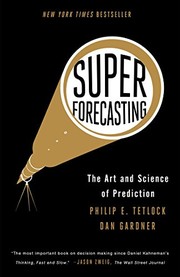
Tetlock and Gardner on the Good Judgment Project, which measured forecasting accuracy against intelligence-community analysts and found trainable amateurs beating them. The most uncomfortable and most useful book on this path.
How Analysis Fails
IntermediateStudy the canonical failures — surprise attack, Iraqi WMD, warning that was issued and ignored — closely enough to recognise the pattern rather than only the anecdote.
▸ Study plan for this stage
Pace: 3–4 weeks, about 705 pages: Why Intelligence Fails (238), Surprise Attack (284), Anticipating Surprise (184). Jervis was commissioned to write the CIA's own postmortems on the Iranian revolution and Iraqi WMD, so he is writing from inside the review process with a declassified text; Kam's is a compa
- Signals and noise in the classic surprise-attack literature, and why the signal is always visible in hindsight
- Jervis on Iran 1978–79: what the analysts believed about the Shah's stability and why the belief was reasonable at the time
- Jervis on Iraqi WMD: the absence of a smoking gun read as concealment rather than as absence
- The distinction between an intelligence failure, a policy failure and a warning that was issued and disregarded
- Kam's comparative pattern: the recurring role of assumptions about the adversary's rationality and intentions
- Indications and warning as a discipline separate from current intelligence — Grabo's central claim
- The cry-wolf problem, and the institutional cost structure of a false warning versus a missed one
- What reforms were actually adopted after each failure, and whether they addressed the diagnosed cause
- What does Jervis identify as the proximate and the structural causes of each failure he reviews?
- In the Iraq case, which specific analytic technique from stage one would have surfaced the problem, and would it have been adopted?
- What is common to Kam's cases, and what is idiosyncratic to each?
- How does Grabo distinguish warning from current intelligence, and what does a warning analyst do differently day to day?
- Which post-failure reforms addressed the cause Jervis identifies, and which addressed something else?
- Rebuild the Iraq WMD ACH matrix as it could have been constructed in 2002 using only what was known then, and see where the disconfirming column is empty.
- Take Kam's case list and write a one-page indications-and-warning watchlist for a current situation, in Grabo's format.
- Read a declassified pre-failure assessment alongside Jervis's postmortem of it and mark every hedge that turned out to be load-bearing.
- Write the counterfactual memo: the assessment an analyst could have defensibly written before one of these events, with confidence levels, using only contemporaneous evidence.
Next up: The failures are analytic; the last stage shows you the collection side that produced the reporting, and the open-source work you can start doing today.

Jervis was commissioned to write the CIA postmortems on the Iranian revolution and Iraqi WMD, and this is his declassified analysis of both. The single best case study of an intelligence failure written from inside the review process.

Kam's comparative study of why victims of surprise attacks so consistently had the information and failed to act on it. Read it after Jervis for the general pattern behind the two specific cases.
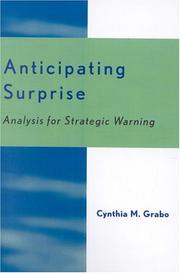
Grabo spent a career as a warning analyst and this is her distilled account of indications and warning as a discipline distinct from current intelligence. Short, practical, and largely unknown outside the field.
The Operational and Open-Source Views
IntermediateSee what the collector and the outside researcher do, so that a source description on a report means something concrete.
▸ Study plan for this stage
Pace: 3–4 weeks. The Art of Intelligence is Henry Crumpton's memoir as a senior CIA operations officer, including running the post-2001 Afghanistan campaign — it is a participant's account, cleared for publication, and should be read as such rather than as history. Open Source Intelligence Techniques (418
- The case officer's cycle — spotting, assessing, developing, recruiting, handling — and what it costs to produce one line of sourcing
- Source validation from the collector's side, and why an analyst's sourcing statement is a compressed judgment about that
- Liaison relationships and unilateral collection, and the different reliability profiles of each
- What a memoir cleared for publication can and cannot tell you, including what its omissions signal
- OSINT method: person and entity research, corporate records, domain and infrastructure, geolocation, imagery, archived pages
- Operational security for the researcher — attribution, separate identities, and not contaminating the target
- Legal and ethical limits on open-source collection, which differ sharply by jurisdiction and employer
- Where OSINT roles actually exist — government, corporate security and investigations, journalism, due diligence — and that none of the entry ones require a clearance
- Describe the recruitment cycle in order and say what could go wrong at each step.
- When an analyst writes 'a source with direct access reported', what chain of judgments sits behind that phrase?
- What does Crumpton's account leave out, and how can you tell?
- Which of Bazzell's techniques are legal and appropriate in your jurisdiction and for your likely employer, and which are not?
- Given all five stages, which analytic role would you actually be hirable for now, and what is the shortest path to being hirable for the next one up?
- Run a full open-source workup on a public company using only Bazzell's methods — corporate filings, registrations, infrastructure, personnel — and write it as a two-page finished product with a sourcing annex.
- Geolocate five photographs from public reporting using the techniques in the imagery chapters, and document the reasoning for each.
- Set up a properly separated research environment as Bazzell specifies, then verify that each technique in one chapter still works, since the tooling changes constantly.
- Take one paragraph from Crumpton about a collection operation and write the sourcing line an analyst would have received from it — then write what the analyst would not have been told.
Next up: From here the productive next steps are practical rather than bibliographic: keep a scored forecasting record, produce OSINT work you can show, and read the CIA's Studies in Intelligence and the current Intelligence Community Directives, which are where this literature continues.
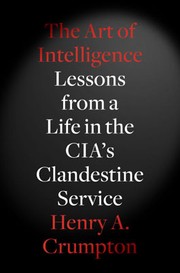
A senior CIA operations officer's memoir, including running the Afghanistan campaign after 2001. Read it as the other half of the business: what it costs to acquire what an analyst reads as a line of sourcing.

The practical manual for research using publicly available information, and the most directly employable skill on this list — OSINT roles exist in government, corporate security and journalism, and unlike the rest of this path it needs no clearance to start practising.
Discussion
Keep reading
Paths that share books, cover the same subject, or open a related topic.