Becoming an Art Therapist: The Best Books, in Order
Art therapy is a licensed mental-health profession with a master's-level credential, not a way of using art to feel better, and the literature reflects that: it is clinical, it assumes supervision, and the good books are mostly written by five or six people. This path is for someone deciding whether to pursue the credential. It starts with what the profession actually is and what training requires, goes back to the founding clinical accounts that the field still argues with, then covers how therapists read and choose media, then the practical business of running sessions and groups, and finally the populations and the wider argument about what the work is for.
What the Field Is
BeginnerUnderstand the profession's scope, the master's-and-supervised-hours credential route, and where art therapists actually work.
▸ Study plan for this stage
Pace: Three weeks for about 640 pages. The Art Therapy Sourcebook is 272 pages, written for a general reader as well as a prospective practitioner, and reads quickly; Rubin's Introduction to Art Therapy is 366 pages and is the more professionally pitched of the two, explicit about theoretical orientations
- Art therapy as a clinical mental-health profession with a master's-level credential and supervised practice, not a general term for making art to feel better
- The structure of the credential route in outline — graduate training, supervised clinical hours, registration, and in some jurisdictions a separate licence — with the specifics deliberately treated as jurisdictional
- Where art therapists actually work: hospitals, schools, community mental health, forensic and rehabilitation settings, and what proportion of that work is group rather than individual
- The theoretical orientations available inside the field — psychodynamic, humanistic, cognitive-behavioural, developmental — and the fact that a trainee chooses one
- The two founding authors you are meeting here: Rubin and Malchiodi between them wrote or edited a large share of the field's standard texts, which is itself worth knowing about a small profession
- What a session actually looks like, in enough detail to decide whether the daily work is what you want
- What distinguishes an art therapist from an artist running a workshop, and from a counsellor who sometimes uses art?
- What does the training route consist of in outline, and which parts of it are set by a registering body rather than by a university?
- In what settings is the work most commonly done, and what does that imply about the caseload and the employer?
- Which theoretical orientations does Rubin lay out, and what would choosing one commit you to?
- Having read both, what part of the daily work would you find hardest, and is that a reason not to pursue it?
- Read Rubin's account of training, then find the current requirements published by the registering body for your own country or state and write the two side by side. Where they differ is the part of the book that has aged, and locating that difference is the single most useful thing you can do at this stage.
- Take Malchiodi's description of a session and write out what the therapist is doing at each point — set-up, invitation, the making, the conversation, the ending. You will check this against Rubin's clinical cases two stages later.
- List the settings both books mention and search current job listings for each. The gap between the book's list and the actual market is real information about the profession.
- Write one page on why you are considering this field. Keep it; Allen's book in stage four asks you a harder version of the same question.
Next up: You now know what the profession claims to be, which is the necessary background for the mid-century books where those claims were first argued out.
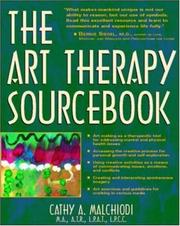
The standard general introduction, written for people considering the field as well as for clients: what art therapy claims, how a session works, and where the profession came from. The correct first book.

Rubin's overview of practice, training and the theoretical orientations available, from one of the field's most senior figures. Read it second — it is the more professionally oriented of the two introductions and is explicit about what training involves.
The Founding Clinical Accounts
BeginnerRead the mid-century work that established art therapy as a clinical discipline, and meet the art-as-therapy versus art-in-therapy split that still organises the field.
▸ Study plan for this stage
Pace: Four to five weeks for about 650 pages, and slower going than the page count suggests. Kramer's Art as Therapy with Children is 234 pages from 1971 and is an argument as much as a manual; Rubin's Child Art Therapy is 422 pages from 1978 and is dense with case material. Read Kramer first — Rubin is i
- Kramer's art-as-therapy position: the making itself is the therapeutic act, and sublimation into a finished work is where the change happens
- The art-in-therapy alternative: the image as material for the therapeutic relationship and for interpretation, which is the position Kramer is arguing against
- Sublimation as Kramer takes it from psychoanalysis, and what the concept commits a therapist to doing during a session
- The therapist as a third presence in the room alongside child and materials — helping the work succeed rather than reading it
- Rubin's case-based method, including sessions that did not work, which is rarer in this literature than it should be
- How the field's central split still organises it: almost every later author on this path can be placed relative to Kramer
- Reading a fifty-year-old clinical text usefully — taking the argument, discarding the period diagnostic vocabulary
- State Kramer's position in one sentence, then state the strongest objection to it.
- What does a therapist holding Kramer's view actually do when a child's picture appears to show something distressing?
- Where does Rubin agree with Kramer and where does she diverge — find a specific case in Child Art Therapy that illustrates the divergence.
- What does Kramer mean by sublimation, and is the concept doing real work in her clinical decisions or is it a frame added afterwards?
- Which of Rubin's cases fails, and what does she say about why?
- Take three of Rubin's cases and, for each, write what Kramer would have done differently. This is the exercise the whole stage exists for and it forces both positions to become concrete.
- Read Kramer's account of helping a child complete a piece of work, then write the same episode as an art-in-therapy practitioner would record it. The difference in the two write-ups is the field's central disagreement in miniature.
- Go through Child Art Therapy and mark every piece of diagnostic language that would not be used today. Keeping that list stops you importing 1978 categories into a current placement.
- Return to the session outline you wrote in stage one and revise it using Kramer's account of the therapist's role. Note what you had to add.
Next up: With the founding argument in hand, you can learn how therapists actually look at images and choose materials without collapsing into symbol-reading.

Kramer's 1971 book, and the founding statement of the art-as-therapy position: the making itself is the therapeutic act, not the interpretation afterwards. Everyone in the field is positioned relative to this argument.
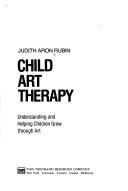
Rubin's detailed clinical account of working with children, full of case material and unusually honest about sessions that did not work. Read it after Kramer as the applied counterpart to her theory.
Reading the Work and Choosing the Media
IntermediateLearn how art therapists actually think about images and material choice, without falling into symbol-dictionary interpretation.
▸ Study plan for this stage
Pace: Five to six weeks for about 740 pages, and this is where the reading becomes technical. Understanding Children's Drawings is 252 pages and is the accessible one; the Expressive Therapies Continuum is 292 pages and is a theoretical framework text that repays slow reading and note-taking — it is the c
- Why fixed symbolic readings of images are unreliable — the single commonest beginner error, and the one Malchiodi is written to prevent
- Developmental sequence in children's drawing, and using it as context for what a given image can and cannot mean at a given age
- The Expressive Therapies Continuum's levels: kinesthetic/sensory, perceptual/affective, cognitive/symbolic, with the creative level running across them
- Media properties as clinical variables — fluid versus resistive materials, structure, and how each pulls a client toward a different level of the Continuum
- Deliberately moving a client along the Continuum by changing the material rather than the conversation, which is the framework's practical payoff
- Applying the Continuum to a specific and demanding population, which is what Drawing from Within demonstrates
- Context over content: the same image from two clients means two things, and the therapist's job is to know which questions restore the context
- Why is a symbol dictionary a clinical hazard rather than a shortcut?
- Name the levels of the Expressive Therapies Continuum in order and give one material that reliably evokes each.
- What is the difference between a fluid and a resistive medium, and when would you deliberately choose one over the other?
- How does Hinz use the Continuum with an eating-disorder population, and what does she change relative to a general clinical application?
- Given a child's drawing, what are the three questions you would want answered before saying anything about it at all?
- Run the same simple directive — draw a place you feel safe — in three media: pencil, chalk pastel, and wet clay. Do it yourself, then place each experience on the Expressive Therapies Continuum and write down what changed. This is the standard way the framework is taught and it does not work as a thought experiment.
- Take ten materials from your own supplies and rank them on the fluid-to-resistive axis Hinz uses. Then predict which level each would evoke, and test two of your predictions on yourself.
- Collect three drawings by children of clearly different ages and place each on Malchiodi's developmental sequence before saying anything else about them. The exercise is about resisting interpretation, so stop there deliberately.
- Take one case from Drawing from Within and write down the media decisions the therapist makes and the reason for each. Then say what a Kramer-influenced therapist from stage two would have chosen instead.
Next up: With a framework for materials in place, the next stage is the practical repertoire of directives and group structures that most jobs in this field actually consist of.
How to look at a child's drawing developmentally and contextually, and — importantly — why fixed symbolic readings are unreliable. Read it first here; it inoculates against the commonest beginner error.

The field's main theoretical framework for media selection: which materials evoke kinesthetic, perceptual, affective or cognitive processing, and how to move a client along it. The most genuinely clinical thinking tool on this list.
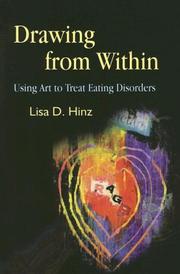
Hinz's applied companion, on using art therapy with eating disorders. Read it after the Continuum to see the framework operated in a specific and demanding population.
Running Sessions and Groups
IntermediateAcquire the practical repertoire — directives, structures, group formats — and the reflective practice that keeps a therapist making work themselves.
▸ Study plan for this stage
Pace: Four weeks. Art Therapy Techniques and Applications is a large plain collection of directives organised by goal and population — a working reference rather than a book to read front to back, so sample it rather than reading it through; Art Therapy for Groups is 226 pages and is the standard group ha
- The directive as a clinical instrument: a task chosen for a stated goal, with a rationale you can defend to a supervisor
- Group art therapy as the default employment reality — most institutional posts are group work, not individual practice
- Group structures and the dynamics they trigger: open versus closed groups, individual work in a shared room, and genuinely collaborative pieces
- Session architecture — warm-up, task, making, sharing, closing — and why the closing is the part beginners cut when time runs short
- Matching a directive to a population and a goal rather than to novelty, which is the discipline that keeps Buchalter's collection from becoming a bag of activities
- The therapist's own studio practice, which is Allen's argument: a therapist who stops making work loses something the credential does not supply
- Reflective practice and supervision as ongoing requirements of the work rather than training-stage hurdles
- What makes a directive clinical rather than recreational?
- Which group structures does Liebmann distinguish, and what does each one do to disclosure and safety?
- Why does the closing phase of a group session matter, and what goes wrong when it is skipped?
- How would you adapt one of Buchalter's directives for a population it was not written for, and what would you need to justify to a supervisor?
- Allen argues a therapist should keep making their own work. What is the strongest practical objection, and does she answer it?
- Pick five directives from Buchalter and, for each, write the clinical rationale Liebmann would ask for: population, goal, media choice justified against the Expressive Therapies Continuum, and what could go wrong.
- Plan a full 90-minute group session on paper using Liebmann's structure — warm-up, task, making, sharing, close — with timings. Then cut it to 50 minutes and note what you sacrificed.
- Keep the studio journal Allen describes for four weeks: your own art-making, unrelated to any client, with brief notes. Doing it for a month rather than reading about it is the only way her argument becomes testable.
- Take one directive and run it on yourself before ever proposing it, then write what you noticed that the instruction sheet did not mention. Every experienced practitioner in these books says some version of this.
Next up: You have the working repertoire; the last stage puts it into specialised settings and then challenges the clinical framing you have been building.

A large, plain collection of usable directives organised by goal and population. Not a theory book; keep it as the working resource it is.
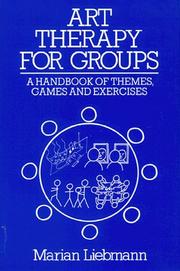
Liebmann's standard handbook on group art therapy — structures, exercises and the group dynamics they trigger. Read it second; most institutional jobs in this field are group work rather than individual.
Allen on maintaining your own studio practice as a therapist, and why a therapist who stops making art loses something the credential cannot replace. Read it here as the personal counterweight to two technique books.
Populations, Trauma, and the Wider Argument
IntermediateSee the work in specialised medical and trauma settings, and engage with the case that art therapy is a form of healing older than the profession.
▸ Study plan for this stage
Pace: Five to six weeks for about 1,060 pages. Medical Art Therapy with Children is 208 pages on hospital work; Trauma and Expressive Arts Therapy is 406 pages and is the most current and most technical book on the path, connecting expressive work to the somatic and neurobiological trauma literature — exp
- Art therapy in medical settings: hospital work with seriously ill children, procedural distress, and the reality of practising as one member of an interdisciplinary team
- Malchiodi's trauma synthesis and its grounding in somatic and neurobiological accounts — the most current clinical framing in the field and the direction it is moving
- Bottom-up versus top-down processing as the trauma literature uses those terms, and why expressive work is argued to reach what talking does not
- McNiff's counter-position: the image itself heals, and clinical interpretation is a distortion imported from medicine
- The disagreement as the field's live question — whether art therapy should become more clinical and evidence-aligned or resist that framing
- Evidence: what has actually been studied, what the studies can support, and where the literature is still largely case-based
- Trust the Process as a return to making, which is where most people entering this field started and the point at which the whole path closes
- What does an art therapist do in a paediatric hospital that no other member of the team does?
- Summarise Malchiodi's argument for expressive work in trauma treatment, and name the parts of it that rest on neurobiological claims.
- State McNiff's objection to the medical framing as strongly as you can, then state Malchiodi's likely reply.
- Where does the evidence base for art therapy stand, on the account these books give of it, and what would you want to see studied?
- Having read all five stages, which position would you train under — and can you say why in a way that would survive an interview?
- Would you now pursue this credential? What in the reading changed your answer, if anything?
- Write a two-column comparison of Malchiodi's trauma framework and McNiff's position on the same hypothetical client. Where the columns diverge is the choice you will actually be making about your own practice.
- Take one case from Medical Art Therapy with Children and identify every other professional involved, then write what the art therapist contributed that they could not. Interdisciplinary work is where the job description is defended or lost.
- Trace one directive across the whole path: pick a task from Buchalter, place it on Hinz's Continuum, then write how Kramer, Malchiodi and McNiff would each account for what it does. Doing this once shows you have the field's map.
- Reread the page you wrote in stage one about why you are considering this field, then rewrite it after McNiff. Compare the two versions.
- Look up the current registration and licensing requirements for your jurisdiction one more time, alongside two current job listings, and write your actual next step — a specific programme, a specific prerequisite, or a decision not to proceed.
Next up: This is the end of the path: you have the profession's scope, its founding argument, its clinical tools, its working repertoire and the live disagreement about what the work is for.

Art therapy in hospital settings with seriously ill children — one of the most established specialisations and a realistic picture of interdisciplinary work.

Malchiodi's recent synthesis connecting expressive work to the somatic and neurobiological trauma literature. The most current clinical book here and the one closest to where the field is heading.
McNiff's argument that art heals through the image itself rather than through clinical interpretation — the most sustained challenge to the medical framing of the previous two books. Read it here for the disagreement.

His practical companion on creative process and letting the work lead. The right closing book: it returns the path to the making, which is the reason most people enter this field in the first place.