Commercial real estate investing: the best books to underwrite and scale deals
This curriculum is built for investors who already understand basic real estate concepts and are ready to move into the commercial world with rigor and precision. Starting with the mental models and vocabulary of commercial investing, the path moves through the mechanics of valuation and underwriting, then into financing structures and deal-type specialization — giving you the analytical toolkit to evaluate, finance, and close real commercial deals.
Commercial Mindset & Core Vocabulary
IntermediateShift your mental framework from residential to commercial investing, understand how commercial assets are valued, and get fluent in the language professionals use (NOI, cap rates, cash-on-cash, GRM, etc.).
▸ Study plan for this stage
Pace: 4–5 weeks, ~40–50 pages/day. Start with Fisher's handbook (weeks 1–2.5), then transition to Gallinelli's financial measures guide (weeks 3–5). Allocate 2–3 days per week for exercises and metric calculations.
- The fundamental differences between residential and commercial real estate investing (deal structure, tenant profiles, lease terms, financing)
- Net Operating Income (NOI) calculation and its role as the foundation for commercial property valuation
- Cap rate (capitalization rate) as the primary metric for comparing and valuing commercial properties
- Cash-on-cash return and how it differs from cap rate in measuring actual investor performance
- Gross Rent Multiplier (GRM) and other quick valuation tools for initial property screening
- The complete set of 36+ financial measures (including debt service coverage ratio, cash flow, equity buildup, appreciation, and risk metrics) and when to apply each
- How to read and interpret commercial lease structures (NNN, gross leases, percentage rents) and their impact on NOI
- The commercial underwriting mindset: analyzing properties as income-producing assets, not lifestyle purchases
- What is NOI, how is it calculated, and why is it the starting point for all commercial property valuation?
- Explain the difference between cap rate and cash-on-cash return. When would you use each metric to evaluate an investment opportunity?
- How does a commercial lease structure (NNN vs. gross lease) affect the property's NOI and your analysis?
- What is the Gross Rent Multiplier (GRM), and how can you use it for quick property screening before deeper analysis?
- Describe at least 5 of the 36 financial measures from Gallinelli's book and explain when you would apply each in your underwriting process.
- How does the commercial real estate mindset differ from residential investing? What are the key mental shifts required?
- Calculate NOI for 3 sample commercial properties (office, retail, multifamily) using income and expense data; identify which property has the strongest operational performance
- Compare the same 3 properties using cap rate, cash-on-cash return, and GRM; discuss why the rankings differ and which metric matters most for your investment criteria
- Analyze 2 real commercial lease documents (or samples from Fisher's handbook): identify lease type, tenant obligations, and estimate the impact on NOI if lease terms changed
- Build a simple underwriting spreadsheet using Gallinelli's 36 measures; input data for a sample property and calculate 10–15 key metrics to practice the full financial picture
- Find 2 actual commercial properties for sale in your target market; pull financials and calculate NOI, cap rate, and cash-on-cash return; compare to market benchmarks
- Write a 1-page investment memo for a hypothetical commercial property using Fisher's framework: property overview, NOI analysis, valuation via cap rate, and a go/no-go recommendation
Next up: Mastering these core metrics and the commercial mindset equips you to move into deeper deal analysis—underwriting complex structures, evaluating risk, negotiating terms, and building a portfolio strategy aligned with your financial goals.

A practical, plain-language primer that bridges the gap from residential thinking to commercial logic — ideal first read to build vocabulary and deal intuition before diving into heavier analytical material.
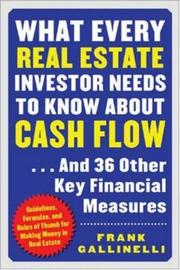
Gallinelli methodically defines and explains every key metric — cap rate, IRR, NPV, cash-on-cash — with worked examples. Reading this second ensures every formula in later books makes immediate sense.
Valuation & Underwriting Fundamentals
IntermediateLearn how commercial properties are professionally appraised and underwritten, understand the income approach to value, and build the analytical discipline to stress-test any deal.
▸ Study plan for this stage
Pace: 6–8 weeks, ~40–50 pages/day with 2–3 days/week for exercises and case study work
- The income approach to valuation: Net Operating Income (NOI), capitalization rates, and how to derive property value from cash flows
- Underwriting fundamentals: analyzing rent rolls, expense ratios, vacancy assumptions, and tenant credit quality to forecast realistic cash flows
- The T-12 (trailing twelve months) analysis and normalized income statements: adjusting historical financials to project stabilized performance
- Debt service coverage ratio (DSCR), loan-to-value (LTV), and other key lending metrics that determine financing capacity and deal feasibility
- Stress-testing and sensitivity analysis: modeling downside scenarios (rising expenses, lower rents, higher vacancy) to understand deal risk
- The relationship between cap rates, market conditions, and investment returns; how to benchmark against comparable sales
- Keller's wealth-building framework applied to commercial real estate: the importance of cash flow, equity buildup, and long-term hold strategy
- How do you calculate Net Operating Income (NOI), and why is it the foundation of the income approach to valuation?
- What is a capitalization rate, how is it determined from comparable sales, and how do you use it to value a property?
- What adjustments would you make to historical financial statements when underwriting a commercial property, and why is the T-12 analysis important?
- How do you stress-test a deal by modeling downside scenarios, and what metrics tell you when a property is no longer viable?
- What is the relationship between DSCR, LTV, and a lender's willingness to finance a property?
- How do you identify and evaluate the quality and stability of tenant income when underwriting a multi-tenant commercial property?
- Build a three-statement financial model (P&L, cash flow, balance sheet) for a hypothetical 10-unit apartment building or small commercial property using realistic assumptions
- Analyze a real property listing (from CoStar, LoopNet, or local MLS): extract the rent roll, calculate NOI, estimate the cap rate, and compare it to market comps
- Perform a T-12 analysis on a sample property: gather 12 months of actual income and expense data, normalize it, and reconcile it to the seller's proforma
- Create a sensitivity table showing how property value changes with ±1%, ±2%, and ±3% shifts in cap rate; then model the impact of 10%, 20%, and 30% rent decreases
- Underwrite a deal scenario: given a property price, loan terms (rate, amortization, LTV), and projected NOI, calculate DSCR, cash-on-cash return, and equity buildup over 5 and 10 years
- Compare two competing properties using Keller's framework: which offers better cash flow, equity buildup, and long-term wealth potential, and why?
Next up: This stage equips you with the analytical rigor and valuation toolkit to identify and evaluate deals; the next stage will focus on deal sourcing, negotiation strategy, and structuring the transaction to maximize returns and minimize risk.

Establishes the investment models and criteria-setting discipline that underpin sound underwriting decisions — best read before moving into pure appraisal theory to anchor the 'why' behind the numbers.

The canonical university-level text on real estate finance — covers income capitalization, DCF analysis, and risk in rigorous depth. This is where intermediate investors develop true underwriting fluency.
Financing Structures & Capital Stacks
IntermediateUnderstand how commercial deals are capitalized — senior debt, mezzanine, preferred equity, and syndication — and learn to structure financing that maximizes returns while managing risk.
▸ Study plan for this stage
Pace: 8–10 weeks, ~40–50 pages/day. Start with "The Real Estate Wholesaling Bible" (2 weeks), move to "Raising Private Capital" (3 weeks), then "The Due Diligence Handbook" (3 weeks), with 1–2 weeks for review and integration exercises.
- Wholesaling as a capital-light entry point: identifying off-market deals, assignment contracts, and the role of wholesalers in connecting buyers to financing opportunities
- Private capital sourcing strategies: building investor networks, structuring investor relationships, and communicating deal value propositions to accredited and non-accredited investors
- Capital stack hierarchy: understanding senior debt (bank loans), mezzanine financing, preferred equity, and common equity layers and how each tier bears risk and receives returns
- Syndication mechanics: legal structures (LLCs, partnerships), investor agreements, fund documentation, and compliance requirements for pooling capital across multiple investors
- Due diligence frameworks: financial statement analysis, underwriting assumptions, debt service coverage ratios (DSCR), and risk identification before committing capital
- Deal structuring for returns: balancing leverage, equity contributions, preferred returns, and profit splits to align investor incentives while protecting downside
- Risk management in financing: stress-testing assumptions, understanding recourse vs. non-recourse debt, and building reserves for contingencies
- How does wholesaling create opportunities for capital stack optimization, and what role do wholesalers play in connecting deals to various financing sources?
- What are the key differences between senior debt, mezzanine financing, preferred equity, and common equity in terms of risk, return expectations, and claim priority?
- How do you structure a private capital raise to attract investors, and what legal and compliance considerations must you address when syndicating a deal?
- What are the critical financial metrics and underwriting assumptions you must validate during due diligence, and how do they inform your capital stack decision?
- How do you design a financing structure that maximizes investor returns while protecting against downside scenarios and managing your own risk exposure?
- What are the differences between recourse and non-recourse debt, and how do these affect your personal liability and deal structuring choices?
- Analyze a sample wholesaling deal from 'The Real Estate Wholesaling Bible': identify the off-market acquisition, calculate the assignment fee, and sketch how different financing sources (bank, private lender, equity investor) might fund the project.
- Build a mock capital stack for a $5M commercial property: allocate senior debt (60%), mezzanine (15%), preferred equity (15%), and common equity (10%), then model returns to each tier under base, upside, and downside scenarios.
- Draft a private investor pitch deck (5–7 slides) for a hypothetical deal, incorporating lessons from 'Raising Private Capital': include deal overview, sponsor track record, financial projections, and investor return scenarios.
- Create a due diligence checklist for a commercial property using frameworks from 'The Due Diligence Handbook': include financial statement review items, underwriting assumptions to validate, and red flags to investigate.
- Model a deal's debt service coverage ratio (DSCR) under stressed assumptions (10% revenue decline, 15% expense increase) and determine how this impacts your capital stack and investor returns.
- Compare two financing structures for the same deal (e.g., 70% senior debt + 30% equity vs. 60% senior + 15% mezzanine + 25% equity) and analyze how each affects investor returns, sponsor risk, and deal feasibility.
Next up: This stage equips you with the mechanics of capital sourcing, structuring, and validation—the foundation for the next stage, which will likely focus on operational execution, value-add strategies, and exit planning to realize the returns you've engineered through your financing design.

Provides grounding in deal structuring and creative acquisition strategies that inform how investors think about capital before layering on complex financing — a useful bridge before tackling syndication mechanics.

A direct, practical guide to raising equity from private investors and structuring deals — essential reading for anyone planning to syndicate commercial acquisitions or co-invest with partners.

Covers the full due diligence and financing contingency process from a practitioner's perspective — reading this after capital-stack theory ensures you know exactly what to verify before committing funds.
Multifamily Deep Dive
ExpertMaster the acquisition, underwriting, operations, and value-add execution of apartment and multifamily assets — the most accessible and liquid commercial property type for scaling investors.
▸ Study plan for this stage
Pace: 6–8 weeks, ~40–50 pages/day with 2–3 days per week for case study analysis and underwriting practice
- Multifamily asset valuation and cap rate analysis for acquisition decisions
- Underwriting frameworks: rent rolls, expense analysis, and pro forma cash flow modeling
- Value-add strategies including unit renovations, rent optimization, and operational efficiency
- Acquisition due diligence: property inspection, market analysis, and deal structuring
- Financing strategies for multifamily: debt structures, equity partnerships, and refinancing tactics
- Operations management: tenant retention, maintenance systems, and property management best practices
- Scaling principles: building systems and teams to manage multiple properties efficiently
- Exit strategies and hold periods: refinancing, sale timing, and 1031 exchanges
- What are the key metrics (cap rate, cash-on-cash return, IRR) you would use to evaluate a multifamily acquisition, and how do you calculate them from a property's financials?
- Walk through a complete underwriting process for a 50-unit apartment building: what line items would you scrutinize, and what red flags would kill the deal?
- Describe three specific value-add strategies you could execute on an underperforming multifamily property and quantify the potential return impact of each.
- How would you structure financing for a multifamily acquisition using both debt and equity, and what are the trade-offs between different debt structures?
- What operational systems and KPIs would you implement to manage a 100+ unit property and ensure consistent cash flow?
- How do you identify and analyze the market conditions that make a multifamily deal attractive, and what economic indicators matter most?
- Build a detailed pro forma for a real or hypothetical 30–50 unit multifamily property using actual market data, including rent rolls, operating expenses, debt service, and 5-year projections.
- Conduct a full acquisition due diligence analysis on a published multifamily deal: review financials, inspect comparable properties, and write a go/no-go recommendation with supporting analysis.
- Create a value-add business plan for an underperforming property: identify specific renovations, rent increases, and operational improvements, then model the financial impact over 3–5 years.
- Analyze the financing options for a $5M multifamily acquisition: compare conventional loans, portfolio loans, and syndication structures, calculating returns under each scenario.
- Develop a property management operations manual for a 75-unit apartment complex, including tenant acquisition, maintenance protocols, rent collection, and expense controls.
- Interview or shadow a multifamily investor or property manager; document their acquisition criteria, underwriting process, and operational challenges, then synthesize lessons into your own framework.
- Perform a market analysis for a specific multifamily submarket: research rent trends, vacancy rates, supply/demand dynamics, and demographic shifts to justify or reject investment there.
Next up: This stage equips you with the operational and financial mastery of multifamily assets, positioning you to scale your portfolio and explore more complex strategies—such as syndication, institutional partnerships, or diversification into other commercial property types—in the next stage.

A comprehensive, deal-focused guide to small and mid-size multifamily investing — read first in this stage to establish the operational and acquisition framework before moving to larger-scale strategy.

A first-person account of scaling from small multifamily to larger commercial assets, with honest lessons on operations, financing, and management — bridges multifamily tactics to broader commercial thinking.
Retail, Office & Advanced Deal Mastery
ExpertUnderstand the unique dynamics of retail and mixed-use commercial assets — lease structures (NNN, gross, percentage rent), tenant credit analysis, and how to evaluate deals beyond multifamily.
▸ Study plan for this stage
Pace: 8–10 weeks, ~40–50 pages/day (mix of dense technical content and case studies). Allocate 4–5 weeks to Rappaport, then 4–5 weeks to Geltner, with 1 week overlap for integration exercises.
- NNN (triple net), gross, and percentage rent lease structures—how each shifts risk and cash flow between landlord and tenant
- Tenant credit analysis and lease creditworthiness—evaluating financial stability, covenants, and default risk
- Retail property valuation and market dynamics—anchor tenants, co-tenancy clauses, and location hierarchy (A/B/C tier)
- Mixed-use asset complexity—layering residential, office, and retail income streams and their interdependencies
- Office market fundamentals—class ratings (Class A/B/C), tenant mix, lease structures, and obsolescence risk
- Deal underwriting mechanics—NOI projections, cap rate analysis, and sensitivity testing across property types
- Geltner's investment framework—market-level analysis, supply/demand cycles, and integration of macroeconomic factors into deal evaluation
- What are the key differences between NNN, gross, and percentage rent leases, and when is each structure most appropriate for a landlord?
- How do you assess tenant creditworthiness, and what red flags should trigger deeper due diligence or lease restructuring?
- What is a co-tenancy clause, and how can it materially impact retail property value and cash flow?
- How do you underwrite a mixed-use property with residential, office, and retail components, and what are the main integration risks?
- What distinguishes Class A, B, and C office properties, and how does this classification affect valuation and tenant quality?
- Walk through a complete deal analysis for a retail or office property using cap rate, NOI, and sensitivity analysis—what assumptions drive returns?
- How do market cycles and macroeconomic conditions (from Geltner) inform your decision to buy, hold, or exit a commercial property?
- Lease structure comparison: Take 3 real retail leases (or templates). Rewrite each under NNN, gross, and percentage rent structures. Calculate the landlord's effective yield under each scenario with identical tenant and property assumptions.
- Tenant credit deep dive: Select 2–3 publicly traded retail tenants (e.g., Target, Whole Foods). Pull their latest 10-K filings. Assess debt-to-equity, liquidity, same-store sales trends, and assign a credit rating. Document your rationale.
- Retail property valuation case study: Using Rappaport's framework, analyze a real retail center (find a case study or use public data). Map anchor and co-tenant relationships, identify co-tenancy risks, and model NOI under 2–3 tenant turnover scenarios.
- Mixed-use underwriting project: Select a mixed-use property (residential + office + retail). Build a 5-year pro forma separating income by asset class. Stress-test by varying office occupancy and retail lease rates independently. Document key sensitivities.
- Office market analysis: Choose a major office market (e.g., Austin, NYC, San Francisco). Classify 5–10 buildings as Class A/B/C using Geltner's criteria. Compare asking rents, occupancy, and tenant quality. Explain why class differences justify cap rate spreads.
- Geltner integration exercise: Take a deal you've underwritten. Layer in Geltner's market-cycle framework—where is the market in the cycle? How does this affect your exit assumption and required return? Revise your underwriting accordingly.
Next up: This stage equips you with the analytical rigor and property-type expertise to evaluate complex, non-multifamily deals and understand how macroeconomic cycles drive commercial real estate returns, preparing you to synthesize portfolio strategy, risk management, and capital deployment decisions at an institutional level.

A practitioner's deep dive into retail real estate — covers site selection, lease negotiation, tenant mix, and asset management in a way no general CRE book does. Essential for anyone targeting strip centers or mixed-use.

The most rigorous and complete academic-practitioner text on CRE — read last as a capstone to synthesize everything: market analysis, portfolio strategy, pricing, and advanced investment decision-making across all asset types.
Discussion
Keep reading
Paths that share books, cover the same subject, or open a related topic.