Buy your first home without regrets
This four-stage curriculum takes a first-time buyer from zero financial literacy all the way through closing day and beyond. Each stage builds on the last: you first get your money in order, then learn how mortgages and the market work, then master the hands-on process of finding, inspecting, and closing on a home, and finally sharpen your judgment to avoid the classic mistakes that trip up new buyers.
Financial Foundations
BeginnerBuild the personal-finance bedrock — budgeting, debt elimination, credit scores, and saving for a down payment — so you enter the home-buying process from a position of strength.
▸ Study plan for this stage
Pace: 6–8 weeks total. Week 1–3: "The Total Money Makeover" (~30–40 pages/day, ~250 pages). Week 4–7: "I Will Teach You to Be Rich" (~25–35 pages/day, ~350 pages). Week 8: Review, reflection, and exercise completion across both books.
- Dave Ramsey's 7 Baby Steps — especially Steps 1 (starter emergency fund), 2 (debt snowball), and 3 (fully funded emergency fund of 3–6 months) as the prerequisite runway before saving for a home
- The Debt Snowball Method (Ramsey): listing all debts smallest-to-largest, paying minimums on all but the smallest, and attacking that one with intensity to build momentum and behavioral wins
- Ramsey's 'Gazelle Intensity' mindset: treating debt elimination as a crisis-level priority, cutting lifestyle expenses radically and temporarily to accelerate progress
- The role of a credit score in home buying — how FICO scores are calculated (payment history, utilization, length of history, credit mix, new inquiries) and why a score of 740+ unlocks the best mortgage rates
- Ramit Sethi's Conscious Spending Plan: allocating take-home pay across Fixed Costs (~50–60%), Investments (~10%), Savings Goals (~5–10%), and Guilt-Free Spending (~20–35%) — and carving out a dedicated 'Home Down Payment' savings bucket
- Automation as a wealth-building system (Sethi): setting up automatic transfers so saving for a down payment happens before you can spend the money, removing willpower from the equation
- The true cost of homeownership beyond the purchase price: Sethi's framework for evaluating rent-vs-buy, factoring in property taxes, insurance, maintenance (1–2% of home value/year), HOA fees, and opportunity cost of the down payment
- Credit card optimization (Sethi): using cards responsibly for rewards and credit-building while paying the full statement balance every month — building the credit history that mortgage lenders will scrutinize
- After reading Ramsey, can you list your debts in snowball order and calculate exactly how many months it will take to eliminate them at your current extra-payment rate?
- What is your current credit score, and which of the five FICO factors (as discussed by Sethi) represents your single biggest opportunity for improvement before applying for a mortgage?
- Using Sethi's Conscious Spending Plan percentages, does your current take-home pay support a dedicated down payment savings bucket — and if not, which spending category needs to shrink first?
- Ramsey argues you should save a 20% down payment to avoid PMI — what would 20% look like on a home in your target market, and how many months of focused saving (using your Conscious Spending Plan) would it take to reach that number?
- Sethi presents a rent-vs-buy analysis framework — applying it to your local market, does buying currently make financial sense, or does renting while you build your foundation come out ahead?
- How does Ramsey's Baby Step sequence protect you from entering the home-buying process prematurely, and at which specific Baby Step does he say you are ready to save for a home?
- Complete Ramsey's 'Total Money Makeover' budget worksheet: write down every debt you owe (balance, interest rate, minimum payment), sort them smallest-to-largest, and calculate your debt snowball payoff timeline using a free online snowball calculator.
- Pull your free credit reports from AnnualCreditReport.com and your FICO score from your bank or a free service. Map each item on your report to the five factors Sethi describes and flag any errors to dispute immediately.
- Build your first Conscious Spending Plan (Sethi, Chapter 4): track every dollar of last month's spending, categorize it into Sethi's four buckets, and identify at least one category to cut in order to create or grow a 'Down Payment Fund' line item.
- Open a dedicated high-yield savings account (as Sethi recommends) and label it 'Down Payment Fund.' Set up a single automatic transfer — even $50 — to fire the day after your next paycheck. The amount matters less than building the habit and the system.
- Run a rent-vs-buy comparison for your target city using the New York Times Rent vs. Buy Calculator (or equivalent). Input realistic local home prices, your expected down payment, and your current rent. Screenshot the break-even point and write a one-paragraph personal verdict.
- Write a one-page 'Financial Foundation Snapshot': your current net worth (assets minus debts), your debt-free date (from the snowball exercise), your projected credit score in 12 months, your monthly down payment savings rate, and your estimated home-ready date. This document becomes your baseline for the entire curriculum.
Next up: With a debt elimination plan in motion, a Conscious Spending Plan automating down payment savings, and a clear picture of your credit health, you are now ready to move into the next stage — understanding the mortgage market and the home-buying process itself — entering those conversations as an informed, financially prepared buyer rather than a reactive one.

Establishes the core habits of debt payoff and disciplined saving that make a down payment achievable; its plain language is ideal for readers new to personal finance.
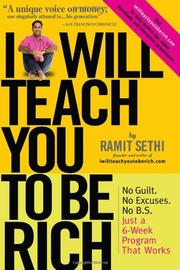
Adds credit-score optimization, automated savings systems, and a realistic framework for what 'afford' actually means — vocabulary you'll need before talking to any lender.
Mortgages & the Housing Market
BeginnerUnderstand how mortgages are structured, what lenders look for, how interest rates work, and how to read the broader real-estate market before you start shopping.
▸ Study plan for this stage
Pace: 6–8 weeks total. Week 1–4: "Mortgages for Dummies" (~25–30 pages/day, including time to pause and re-read chapters on loan types and amortization). Week 5–8: "Home Buying Kit for Dummies" (~20–25 pages/day, with extra time devoted to the worksheets and checklists embedded in the text). Set aside one
- Mortgage anatomy: principal, interest, term, and amortization — how each payment is split between interest and principal over the life of the loan (Mortgages for Dummies, Ch. 1–3)
- Loan types and their trade-offs: fixed-rate vs. adjustable-rate mortgages (ARMs), FHA, VA, and conventional loans, and when each makes sense (Mortgages for Dummies, Ch. 4–6)
- The True Cost of Borrowing: APR vs. interest rate, points, origination fees, and closing costs — and how to compare lenders on an apples-to-apples basis (Mortgages for Dummies, Ch. 7–8)
- What lenders evaluate — the 'Four Cs': Credit score, Capacity (debt-to-income ratio), Capital (down payment/reserves), and Collateral (property value) (Mortgages for Dummies, Ch. 9–10)
- Pre-qualification vs. pre-approval: why pre-approval is the stronger signal to sellers and how to obtain it (Home Buying Kit for Dummies, Part 1)
- Reading the housing market: supply and demand indicators, buyer's vs. seller's markets, seasonal trends, and how interest-rate movements ripple into home prices (Home Buying Kit for Dummies, Part 2)
- Affordability math: the 28/36 rule, calculating a realistic price range from your income and savings, and stress-testing for rate increases (Home Buying Kit for Dummies, worksheets)
- The role of the real-estate team: how mortgage brokers, loan officers, buyer's agents, and inspectors interact — and who works for whom (Home Buying Kit for Dummies, Part 3)
- After reading Mortgages for Dummies, can you explain — without jargon — why an ARM might cost less in year one but more in year five than a fixed-rate loan?
- What is the difference between APR and the stated interest rate, and why does it matter when comparing two lender offers?
- A lender says your debt-to-income ratio is too high. Based on Mortgages for Dummies, what are three concrete actions you could take to improve it before reapplying?
- Using the frameworks in Home Buying Kit for Dummies, how would you determine whether your local market currently favors buyers or sellers, and how should that affect your offer strategy?
- What does the 28/36 rule mean in practice, and how do you apply the worksheets in Home Buying Kit for Dummies to find your personal price ceiling?
- Why does Tyson recommend getting pre-approved rather than just pre-qualified before you start touring homes, and what documents will a lender typically require?
- Amortization deep-dive: Use a free online amortization calculator to model a $300,000 loan at two different rates (e.g., 6% and 7.5%) over 30 years. Record total interest paid for each and identify the crossover point where you've paid back more interest than principal — then relate your findings back to the amortization concepts in Mortgages for Dummies.
- Lender comparison spreadsheet: Collect at least three real loan estimates (from bank websites or mortgage comparison tools). Build a simple spreadsheet with columns for interest rate, APR, points, origination fees, and estimated monthly payment, using Tyson's APR framework from Mortgages for Dummies as your guide.
- Personal affordability worksheet: Complete every financial worksheet provided in Home Buying Kit for Dummies using your own real (or realistic hypothetical) income, debts, and savings figures. Arrive at a concrete price range and monthly payment ceiling you could defend to a lender.
- Credit and DTI audit: Pull your free credit report (annualcreditreport.com), identify any items that could lower your score or raise lender concern, and — using the 'Four Cs' chapter in Mortgages for Dummies — write a one-page action plan to address them within 6 months.
- Local market snapshot: Choose a specific zip code or neighborhood. Spend 30 minutes on a public listing site (Zillow, Redfin, etc.) and record: median list price, average days on market, and list-to-sale price ratio. Then use the market-reading framework from Home Buying Kit for Dummies to classify it as a buyer's, seller's, or neutral market and write a two-paragraph justification.
- Rate-change stress test: Using your affordability worksheet results, recalculate your monthly payment if rates rose by 1% and again by 2%. Determine the rate ceiling at which the home would become unaffordable, and note how this connects to Tyson's advice on ARM risk in Mortgages for Dummies.
Next up: Mastering how mortgages are priced and how the market moves gives you the financial guardrails you need before the next stage, where the focus shifts from numbers to the physical property itself — evaluating neighborhoods, interpreting listings, making offers, and navigating inspections with confidence.
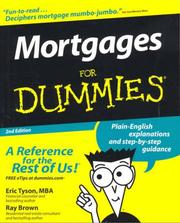
Demystifies loan types (fixed, ARM, FHA, VA), points, APR, and pre-approval in accessible terms — the essential mortgage vocabulary for every later step.

Bridges mortgage knowledge into the full purchase process, covering market timing, working with agents, and making offers; reading it after the mortgage book lets the pieces connect naturally.
Finding, Evaluating & Closing
IntermediateExecute the hands-on search: choosing a neighborhood, evaluating a property's condition, negotiating a contract, surviving the inspection, and navigating closing costs and paperwork.
▸ Study plan for this stage
Pace: 6–8 weeks total. Week 1–4: "100 Questions Every First-Time Home Buyer Should Ask" by Ilyce R. Glink (~25–30 pages/day, reading thematically by question clusters: neighborhood & search → property condition → offers & contracts → closing). Week 5–8: "The Book on Negotiating Real Estate" by J Scott (~2
- Neighborhood evaluation criteria: school districts, walkability, crime trends, future development, and resale potential — as framed by Glink's buyer-question methodology
- Property condition red flags: how to read a listing critically, what to look for on walkthroughs, and which defects are deal-breakers vs. negotiating chips (Glink)
- The role and selection of a buyer's agent: understanding agency relationships, fiduciary duty, and how to interview and choose representation (Glink)
- Crafting a competitive offer: list price vs. offer price logic, contingencies (inspection, financing, appraisal), earnest money, and timelines (Glink)
- Surviving the home inspection: what inspectors cover, how to interpret a report, and how to use findings to renegotiate or walk away (Glink)
- Closing costs decoded: lender fees, title insurance, prepaid items, escrow, and the HUD-1/Closing Disclosure — knowing what to expect and what is negotiable (Glink)
- J Scott's negotiation framework: understanding leverage, information asymmetry, and the psychology of both buyers and sellers in real estate deals
- Tactical negotiation moves: anchoring, bracketing, the 'flinch,' strategic concessions, handling counteroffers, and walking away as a power position (J Scott)
- After reading Glink, what are the five most important questions you should ask about a neighborhood before making an offer, and why does each matter to long-term value?
- How does Glink recommend you evaluate a property's physical condition during a walkthrough, and what distinguishes a cosmetic issue from a structural concern?
- What contingencies should a first-time buyer almost always include in a purchase contract, and what risk does waiving each one carry?
- According to J Scott, what is leverage in a real estate negotiation, and what are three concrete ways a buyer can increase their leverage before making an offer?
- Walk through J Scott's approach to handling a seller's counteroffer: what information should you gather, what tactics might you deploy, and when should you simply walk away?
- What closing costs are typically the buyer's responsibility, which are negotiable with the seller, and how does Glink suggest you prepare financially so they don't blindside you at the table?
- Neighborhood scorecard: Pick two real ZIP codes you'd actually consider buying in. Using Glink's question framework, score each on 8–10 criteria (schools, commute, crime, price trends, development plans, etc.). Write a one-page comparison and a final recommendation.
- Mock walkthrough checklist: Using Glink's property-condition questions, build a physical checklist of 20+ items. Take it to an open house (or use a listing's photos/video tour) and complete it as if you were a serious buyer. Note any red flags.
- Offer letter drafting: Find an active MLS listing in your target area. Using Glink's offer guidance, draft a complete purchase offer including price rationale, contingencies, earnest money amount, and proposed timeline. Have a knowledgeable friend or agent review it.
- Inspection report analysis: Download a sample home inspection report (many are freely available online from inspection associations). Using Glink's framework, categorize every finding as: (a) deal-breaker, (b) negotiating chip, or (c) accept as-is. Then draft a repair addendum or price-reduction request.
- Negotiation role-play: Using J Scott's tactical framework, pair with a friend and run two 15-minute role-plays — one where you are the buyer, one where you are the seller. Debrief: which tactics (anchoring, bracketing, the flinch) felt most natural? Which did you miss in the moment?
- Closing cost estimator: Use a real lender's Loan Estimate form (available on the CFPB website) and Glink's closing-cost breakdown to build a spreadsheet estimating your total cash-to-close on a hypothetical $350,000 purchase. Identify which line items you could negotiate and with whom.
Next up: Mastering the search-to-closing process reveals that owning a home is only the beginning — the next stage builds on this foundation by addressing what happens after you get the keys: financing optimization, ongoing ownership costs, maintenance planning, and building equity strategically.
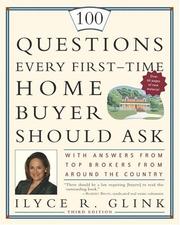
Structured as real questions buyers face in sequence — from 'What can I afford?' to 'What happens at closing?' — it mirrors the actual journey and fills in gaps left by broader overviews.

Teaches offer strategy, counteroffer tactics, and inspection-contingency leverage; reading it after you understand the process gives the negotiation context it needs to be actionable.
Avoiding Mistakes & Thinking Long-Term
IntermediateStress-test your decisions, recognize the psychological and financial traps unique to first-time buyers, and frame homeownership within a long-term wealth-building strategy.
▸ Study plan for this stage
Pace: 6–8 weeks total: Weeks 1–4 cover "The Millionaire Real Estate Investor" (~25–30 pages/day, reading in thematic chunks — Models, Myths, and Networks); Weeks 5–8 cover "Confessions of a Real Estate Entrepreneur" (~20–25 pages/day, pausing after each deal story to journal key takeaways before moving on
- The Four Stages of a Millionaire Real Estate Investor (Think, Buy, Own, Receive) from Keller — understanding where a first-time buyer sits on this spectrum and how to progress
- Keller's 'Myths of Real Estate Investing' — debunking common first-timer misconceptions (e.g., 'I need a lot of money,' 'Now is not a good time') that lead to paralysis or reckless decisions
- The Net Worth model vs. cash-flow model: Keller's framework for evaluating a property not just as a home but as a wealth-building asset
- Criteria, Terms, and Network (CTN) — Keller's three pillars for buying right: setting non-negotiable purchase criteria, negotiating favorable terms, and leveraging a power network of advisors
- Randel's deal-autopsy approach: learning from real, messy transactions — how experienced investors diagnose what went wrong and why first-timers miss the same warning signs
- The danger of emotional decision-making: Randel's case studies illustrate how attachment, FOMO, and overconfidence override rational analysis in buyers at every level
- Due-diligence depth: Randel's emphasis on uncovering hidden liabilities (title issues, zoning, environmental, seller motivation) that standard checklists miss
- Long-term wealth framing: synthesizing both books to view your first home purchase as Chapter 1 of a multi-decade real estate strategy, not a one-time transaction
- According to Keller, what are the most dangerous myths first-time buyers believe, and which one most closely matches a bias you personally hold — and why?
- How does Keller's CTN framework (Criteria, Terms, Network) change the way you would evaluate a specific property you are currently considering or have seen recently?
- Randel's deal stories frequently hinge on a single overlooked detail. After reading at least three of his case studies, what categories of due diligence do first-time buyers most consistently skip, and what would it cost them?
- How would you apply Keller's Net Worth model to calculate whether a home you could afford today is likely to accelerate or stall your long-term wealth trajectory?
- Randel argues that understanding the other party's motivation is as important as the property itself. How would you research and use seller motivation in your own negotiation?
- Having read both books, how does your definition of 'a good deal' differ from what it was before this stage — and what specific metrics or red flags would now cause you to walk away?
- Myth Audit (Keller): List every assumption you currently hold about buying your first home. Map each one against Keller's myths chapter. For any myth you believed, write a one-paragraph rebuttal in your own words — this forces genuine internalization rather than passive reading.
- Build Your CTN Sheet (Keller): Using Keller's Criteria-Terms-Network framework, create a one-page personal buying brief: your non-negotiable property criteria, the deal terms you will and won't accept, and a named list of at least five professionals (agent, lender, inspector, attorney, CPA) you would call today.
- Deal Autopsy Journal (Randel): After each major case study in Randel's book, write a half-page 'autopsy report' — what was the trap, what was the first signal something was wrong, and what would you have done differently at that moment? Aim for at least five completed autopsies.
- 10-Year Net Worth Projection (Keller): Pick one real property currently listed in your target market. Using Keller's net worth model, project its impact on your balance sheet at Years 1, 5, and 10 under three scenarios: appreciation at 2%, 4%, and 6% annually. Factor in mortgage paydown and opportunity cost.
- Seller Motivation Research Exercise (Randel): Find three active listings in your target area. Using publicly available data (days on market, price history, tax records, listing language), write a one-page hypothesis for each seller's motivation and how you would use that insight in an offer or negotiation.
- Stress-Test Checklist: Synthesizing both books, build a personal 'walk-away checklist' of at least ten red flags — financial, legal, emotional, and structural — that would cause you to abandon a deal. Share it with a trusted advisor or peer and pressure-test each item.
Next up: By internalizing the wealth-building models from Keller and the hard-won deal wisdom from Randel, the reader is now equipped to move from stress-testing decisions in theory to executing a real transaction with confidence — making the next stage focused on the mechanics of closing, negotiation tactics, and post-purchase ownership a natural and well-prepared progression.
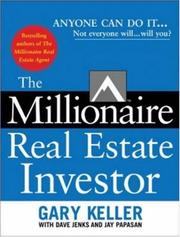
Reframes a home purchase within a lifetime wealth picture, teaching you to evaluate a property's true financial value — not just emotional appeal — before you sign anything.
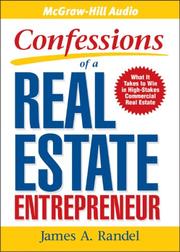
Candid war-stories about costly real-estate mistakes provide the hard-won pattern recognition that turns a cautious beginner into a confident, eyes-open buyer.
Discussion
Keep reading
Paths that share books, cover the same subject, or open a related topic.